
Russian Tu-142 Drops Sonobuoys Near British Carrier Group: What Happened in the Norwegian Sea?


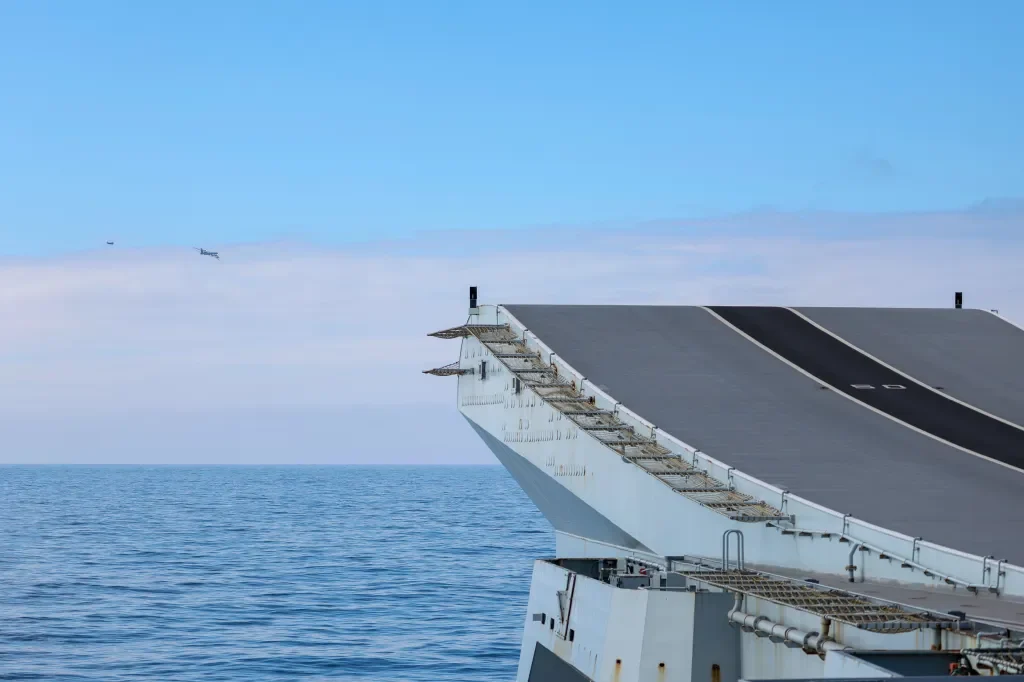
The latest encounter between Russian military aviation and NATO forces unfolded in the Norwegian Sea, where the British Carrier Strike Group led by HMS Prince of Wales once again attracted the attention of Russia’s long-range maritime patrol aircraft.
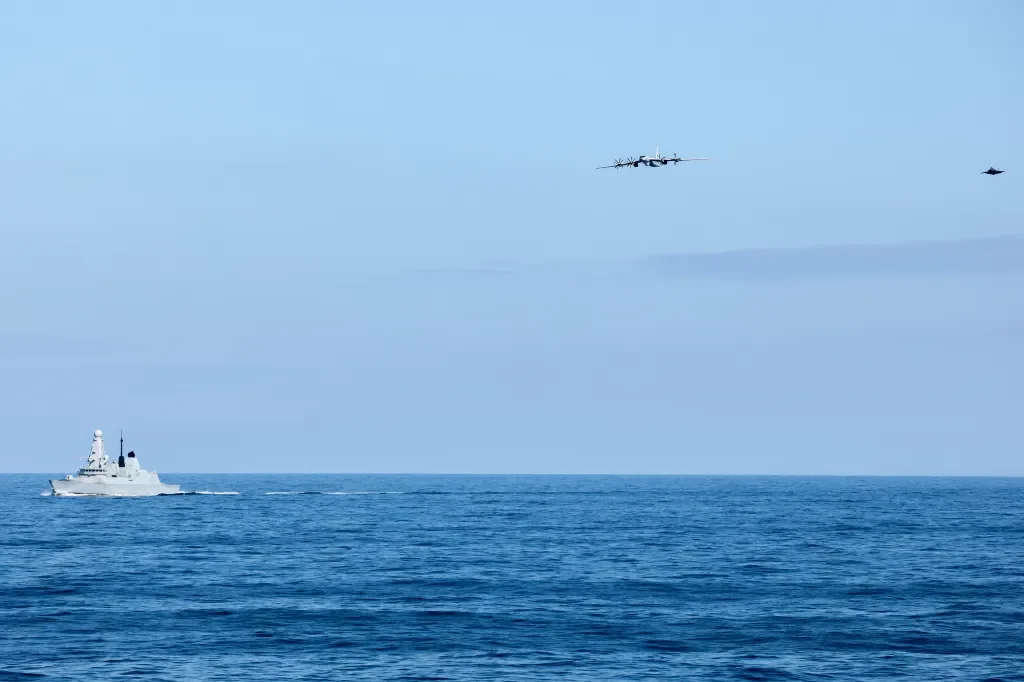
According to the UK Ministry of Defence, a Russian Tu-142MZ maritime patrol aircraft made several close passes near the carrier group and released sonobuoys into the surrounding waters. In response, Royal Navy F-35B Lightning II fighters were launched from the carrier and escorted the aircraft until it departed the area. British officials described the Russian crew’s actions as “unsafe and unprofessional,” while no official statement was released by the Russian side.
At first glance, the incident may appear to be just another routine flyby of a NATO naval formation.
In reality, the deployment of sonobuoys makes this encounter considerably more significant.
Why Drop Sonobuoys?
The most interesting aspect of the incident was not the low-altitude passes but the release of sonobuoys.
A sonobuoy is a disposable acoustic sensor dropped from an aircraft. After entering the water, it deploys a hydrophone beneath the surface and transmits underwater acoustic data back to the aircraft via radio.
For decades, maritime patrol aircraft have relied on sonobuoys as one of their primary tools for detecting submarines.
Modern sonobuoys are capable of identifying propeller noise, machinery sounds, and other acoustic signatures generated by underwater vessels.
When deployed in groups, they create an underwater detection network that allows operators to estimate a submarine’s position, heading, and speed.
For this reason, the appearance of sonobuoys near an aircraft carrier strike group is generally interpreted as an attempt to detect accompanying attack submarines or gather intelligence on anti-submarine warfare procedures.
Why Target the Carrier Group?
A modern aircraft carrier strike group is much more than a single carrier.
It is almost always escorted by one or more nuclear-powered attack submarines that provide underwater protection for the fleet.
These submarines are among the most valuable intelligence targets for maritime patrol aviation.
Even if the submarines themselves are not detected, collecting acoustic data from the surrounding naval formation helps analysts better understand the operating patterns and anti-submarine tactics of a potential adversary.
This type of intelligence gathering has been common practice since the Cold War and has never truly disappeared.
The Last Representative of a Legendary Generation
The central figure in this story is the Tupolev Tu-142.
Developed during the late 1960s, the aircraft originated as a specialized derivative of the famous Tu-95 strategic bomber.
Although the two aircraft share the same basic airframe, the Tu-142 was designed for a completely different mission.
Its primary role became the detection and destruction of enemy nuclear submarines at great distances from Soviet shores.
To accomplish this, the aircraft received an advanced maritime patrol and anti-submarine warfare suite that included radar, magnetic anomaly detection equipment, sonobuoy processing systems, and the ability to carry anti-submarine torpedoes, depth charges, and naval mines.
Even today, the Tu-142 remains one of the longest-range maritime patrol aircraft ever built.
Why Is the Tu-142 Still in Service?
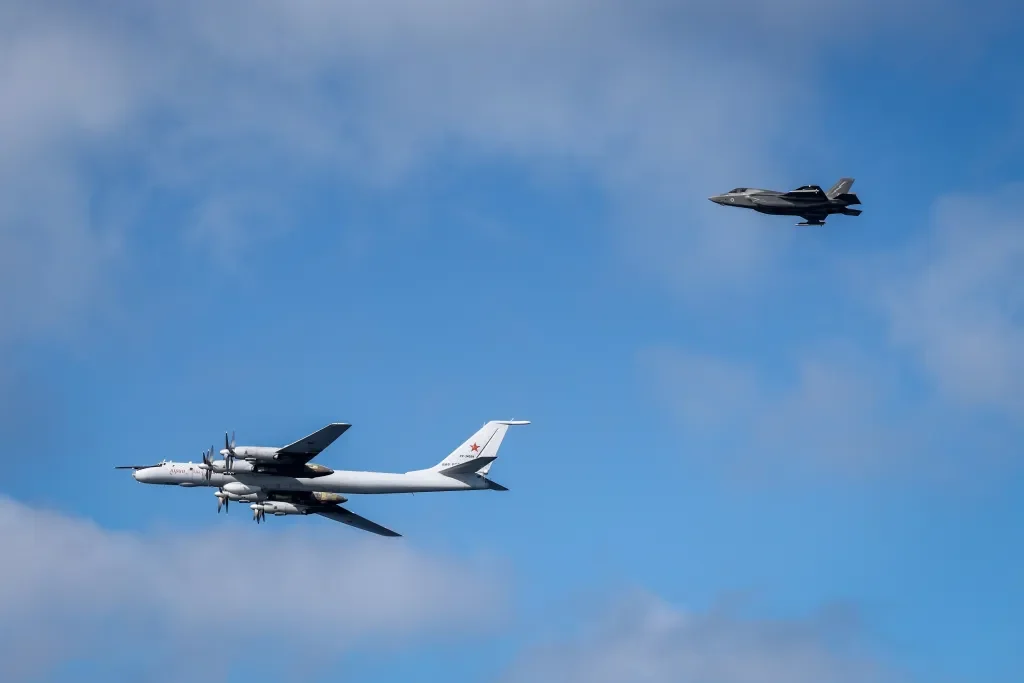
Despite the age of its basic design, upgraded Tu-142 variants remain in service with Russian Naval Aviation.
The reason is straightforward.
The aircraft combines exceptional range with extraordinary endurance, allowing it to patrol vast areas of ocean without aerial refueling.
Successive modernization programs have significantly improved its avionics, navigation systems, communications equipment, and mission electronics.
Although newer Western aircraft surpass the Tu-142 in several areas, it continues to play an important role in Russia’s maritime surveillance and anti-submarine operations.
Why Are These Encounters Becoming More Frequent?
The Norwegian Sea remains one of the most strategically important regions in the ongoing competition between Russia and NATO.
It serves as one of the principal transit routes through which Russian nuclear submarines enter the North Atlantic.
At the same time, British, American, and other NATO naval forces operate there on a regular basis.
As a result, mutual monitoring between aircraft and warships has become routine.
Military crews observe each other’s movements, record radar emissions, monitor communications, and collect electronic intelligence while simultaneously demonstrating their own presence.
How Dangerous Are These Incidents?
Most of these encounters end without serious consequences.
Nevertheless, each carries a degree of risk.
Low-altitude flybys, limited maneuvering space, and multiple military aircraft and ships operating in close proximity increase the possibility of miscalculation.
For this reason, international procedures encourage the use of emergency radio frequencies and established communication protocols designed to prevent dangerous incidents.
According to the British Ministry of Defence, the Russian aircraft did not respond to calls on internationally recognized radio channels during the encounter, contributing to London’s sharp criticism of the event.
The Story Continues
The Norwegian Sea incident is not unique.
Similar encounters occurred regularly throughout the Cold War, and they are once again becoming a routine feature of naval competition between Russia and NATO.
The difference today is technological.
Fifth-generation fighters, advanced electronic warfare systems, and modern anti-submarine technologies now accompany the same cat-and-mouse game that has existed for decades.
Yet the objective remains unchanged.
The side that locates the opposing submarine first gains a critical advantage long before any conflict begins.
Tu-142MZ Technical Specifications
Role: Long-range maritime patrol and anti-submarine warfare aircraft
Country: Soviet Union / Russia
Developer: Tupolev Design Bureau
First Flight: 1968
Entered Service: 1972
Crew: 10–11
Length: 53.1 m
Wingspan: 50.0 m
Maximum Takeoff Weight: Approximately 185 tons
Powerplant: 4 × Kuznetsov NK-12MP turboprop engines
Maximum Speed: Approximately 850 km/h
Range: Up to 12,000 km
Endurance: More than 12 hours
Weapons and Equipment:
- Anti-submarine torpedoes
- Depth charges
- Naval mines
- Various types of sonobuoys
Legacy
More than fifty years after its first flight, the Tu-142 remains one of the world’s longest-range anti-submarine warfare aircraft.
Its combination of exceptional endurance, long-range patrol capability, and the ability to deploy and manage extensive sonobuoy fields continues to make it a valuable asset for Russia’s maritime reconnaissance and anti-submarine forces, even in an era dominated by satellites, drones, and advanced networked surveillance systems.






