
Hearing a Drone Before Seeing It: Why Belarus Developed the Scanner 2.1 Acoustic Detection System

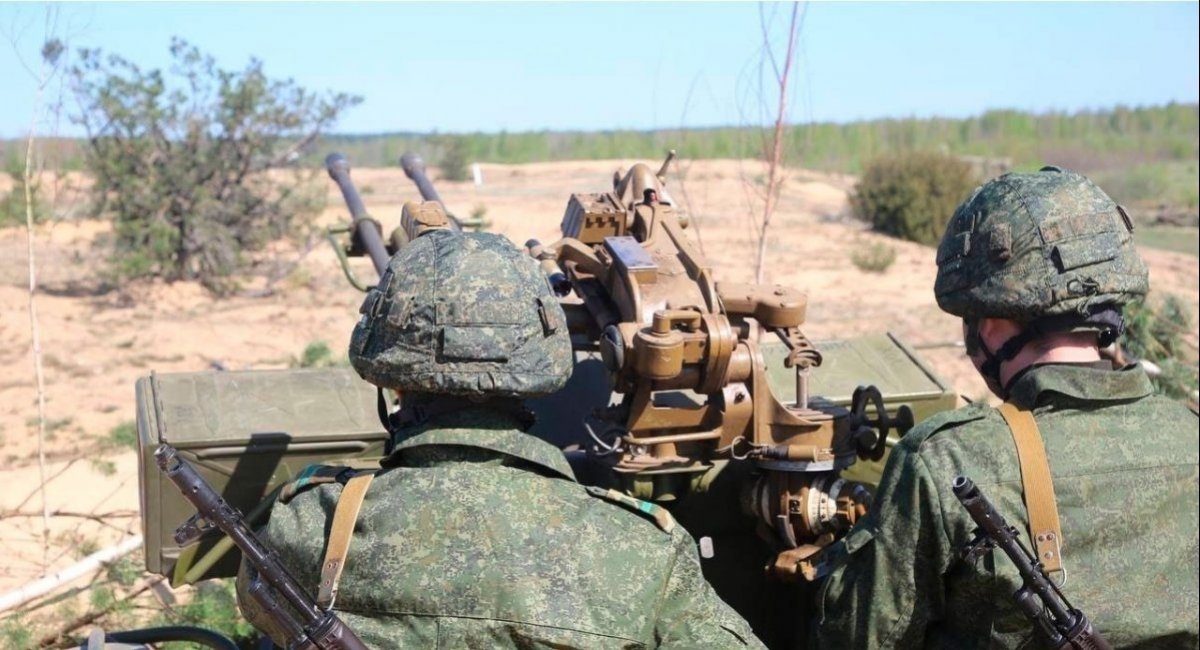
Over the past few years, unmanned aerial vehicles have fundamentally changed the nature of modern warfare. Not long ago, radars and electronic intelligence systems were considered the primary tools for detecting drones. Today, however, those technologies are no longer sufficient. More and more UAVs rely on autonomous navigation, encrypted communication links, or even fiber-optic control cables, making them largely invisible to traditional electronic warfare systems.
Against this backdrop, a technology that once seemed almost outdated is attracting renewed attention. Instead of searching for radio signals, it simply… listens to the sky.
That is precisely the concept behind Scanner 2.1, a new acoustic drone detection system unveiled by the Belarusian company Innotek Solutions at the National Security Belarus 2026 exhibition. The compact system is designed to identify drones by recognizing the distinctive sounds produced by their engines and propellers.
Why Acoustic Detection Is Making a Comeback
Just a few years ago, acoustic detection systems were generally viewed as auxiliary surveillance tools.
Most modern air defense networks relied on radar, while counter-drone operations focused heavily on electronic warfare systems capable of locating a UAV’s control link and disrupting it through jamming.
The war in Ukraine has exposed the limitations of that approach.
An increasing number of drones are now capable of completing missions without maintaining continuous radio communication with their operators. Even more challenging are fiber-optic FPV drones, which eliminate radio transmissions altogether. Because there is no wireless signal between the operator and the aircraft, traditional electronic intelligence systems have virtually nothing to detect.
In such cases, the sound produced by the drone’s propulsion system becomes one of the few reliable indicators of its presence.
As a result, acoustic sensors are once again becoming valuable—not merely as backup detection tools, but as an essential layer in modern counter-UAV defense networks.
How Scanner 2.1 Works

In essence, Scanner 2.1 is a compact passive acoustic locator.
The unit weighs approximately 1.2 kilograms (2.6 pounds), measures 23 centimeters (9 inches) in diameter, and can be deployed in less than two minutes.
An array of highly sensitive microphones positioned around the device continuously monitors the surrounding acoustic environment.
The collected data is then processed by artificial intelligence algorithms.
The software attempts to distinguish the unique acoustic signature of drone engines from background noise such as wind, traffic, construction equipment, or industrial machinery.
Once a recognizable sound pattern is detected, the system estimates the direction of the incoming drone and, for certain UAV types, can also calculate its speed and flight path.
According to the manufacturer, Scanner 2.1 can detect:
- drones powered by internal combustion engines at distances of up to 2 kilometers;
- electric FPV drones at up to 350 meters;
- large heavy-lift multirotor drones, often referred to as “Baba Yaga” types, at even greater distances due to their significantly louder propulsion systems.
Detection data can be displayed on the built-in interface or transmitted directly to smartphones and smartwatches used by mobile air-defense teams.
Why Microphones Can Sometimes Outperform Radar
The greatest advantage of acoustic systems lies in their passive nature.
Unlike radar, they emit no signals and therefore do not reveal their own location.
Equally important, microphones are completely indifferent to how a drone is controlled.
It makes no difference whether the aircraft uses satellite navigation, encrypted digital communications, autonomous flight software, or a fiber-optic control cable.
If its propulsion system generates a recognizable sound, the system has a chance to detect it.
Of course, acoustic sensors also have important limitations.
Their detection range is considerably shorter than that of modern radar systems, while strong winds, heavy rain, urban environments, and complex terrain can all reduce effectiveness.
For that reason, acoustic detectors are rarely intended to replace radar.
Instead, they are increasingly integrated into layered surveillance networks alongside radar, thermal imaging systems, electro-optical sensors, and electronic intelligence equipment.
Ukraine Has Already Demonstrated That the Concept Works
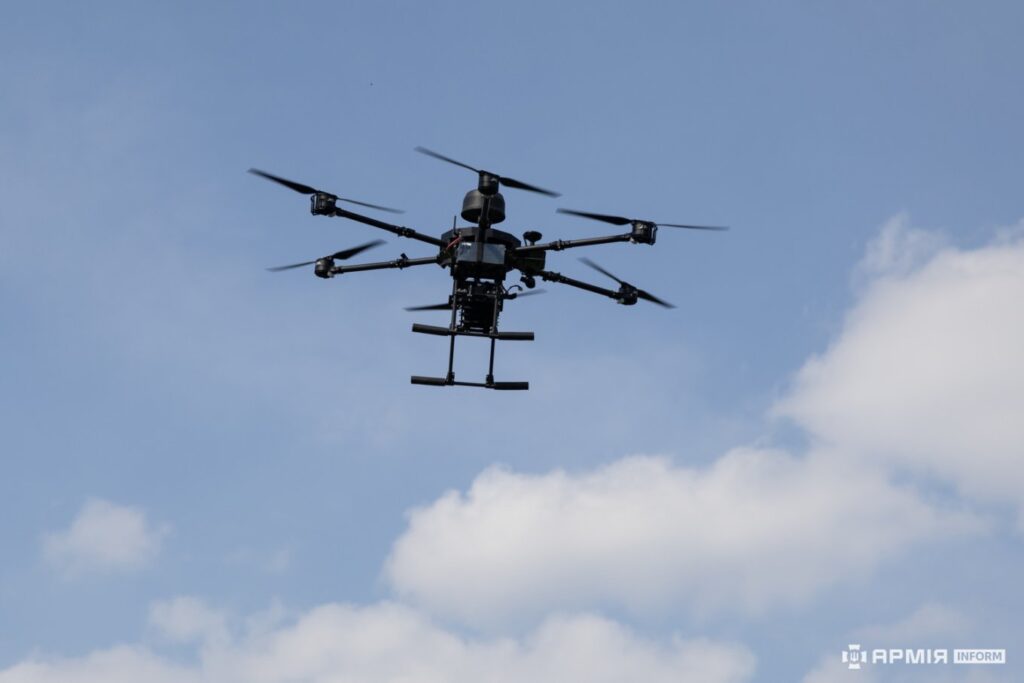
Interestingly, the large-scale operational use of acoustic drone detection has become closely associated with Ukraine.
Since the beginning of the full-scale war, Ukrainian engineers have built an extensive network of passive acoustic sensors designed to detect low-flying drones and cruise missiles.
According to the U.S. Army’s Center for Army Lessons Learned, the network now consists of approximately 9,500 to 10,000 acoustic sensors, all feeding data into a centralized processing system.
Once multiple sensors identify the same target, artificial intelligence estimates its flight path and immediately forwards the information to mobile air-defense teams, allowing them to position themselves before the drone arrives.
Perhaps the most remarkable aspect is cost.
Each sensor is estimated to cost only $400 to $500, making the entire network dramatically less expensive than traditional air defense systems while still providing valuable early warning capabilities.
Many defense analysts believe that the success of Ukraine’s acoustic detection network has encouraged other countries to develop similar technologies.
The Beginning of a New Trend
The introduction of Scanner 2.1 reflects a broader evolution in modern air defense.
Counter-drone warfare is increasingly moving away from reliance on any single detection technology.
Instead, military planners are building layered sensor networks that combine radar, electronic intelligence, thermal imaging, electro-optical cameras, and acoustic sensors into a single integrated picture of the battlefield.
Each technology has its own strengths and weaknesses.
Working together, however, they compensate for one another’s limitations.
Ironically, in an era defined by artificial intelligence, autonomous weapons, and advanced electronic warfare, one of the fastest-growing tools for drone detection is once again the humble microphone.
The difference is that today, instead of a human operator listening for an approaching aircraft, machine-learning algorithms analyze thousands of sounds every second, searching for the unique acoustic fingerprint of a drone.
For that reason, acoustic detection systems are no longer viewed as niche technology.
They are rapidly becoming another essential layer in the multi-sensor air defense architecture of the twenty-first century.






