
China Has Tested a Submarine-Launched Ballistic Missile in the Pacific. Why This Launch Matters Far More Than It Appears

Twenty years ago, Chinese ballistic missile submarines rarely attracted international attention. Unlike their American or Russian counterparts, they seldom ventured far from home waters, and their strategic capabilities were often viewed with skepticism by military analysts.
Today, that picture is changing rapidly.
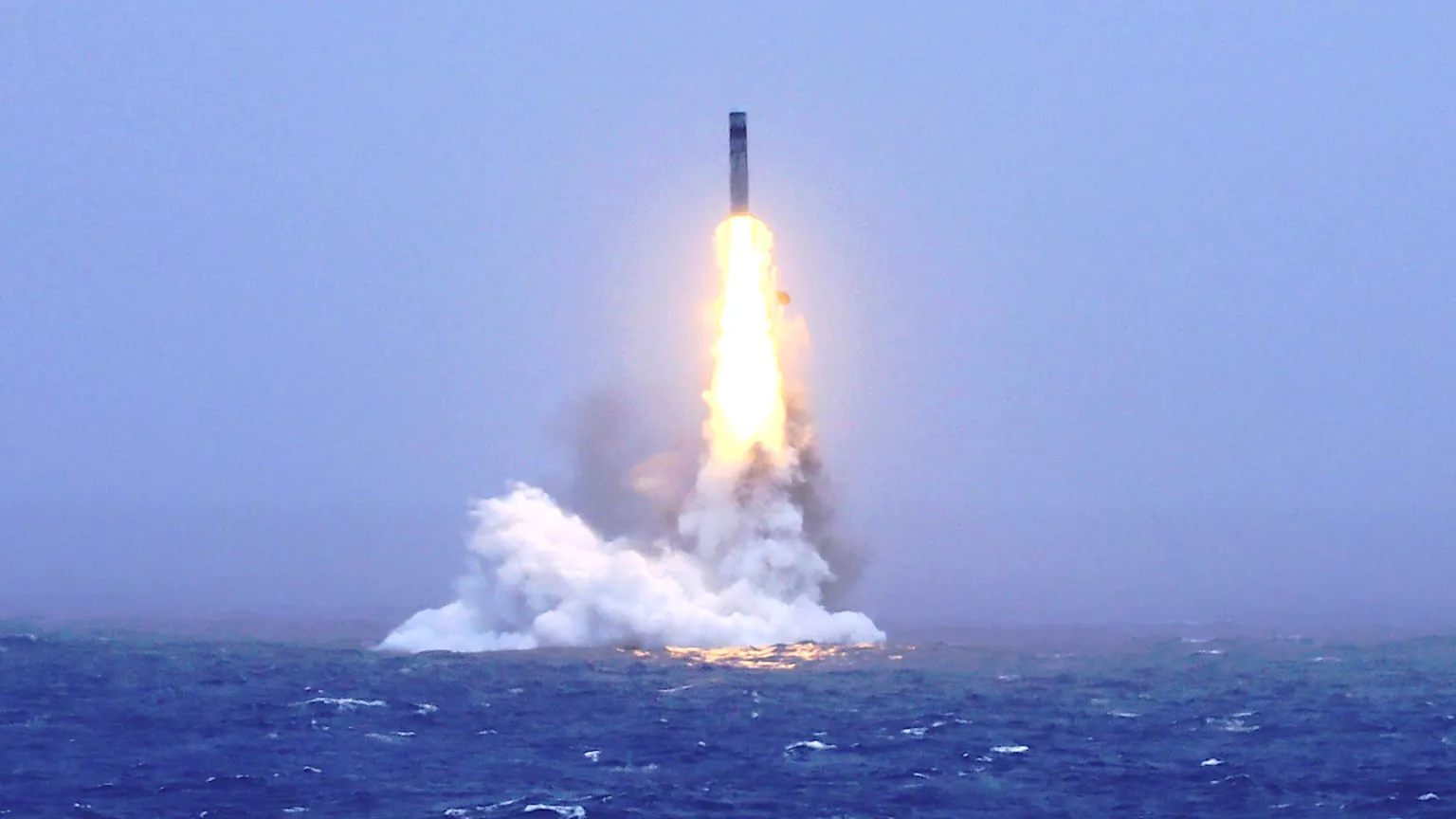
China has officially confirmed the successful launch of a submarine-launched ballistic missile (SLBM) from a nuclear-powered ballistic missile submarine somewhere in the Pacific Ocean. At first glance, it may appear to be just another missile test—something all nuclear powers conduct from time to time.
Yet defense analysts across the world immediately described it as one of the most significant milestones in the evolution of China’s strategic nuclear forces.
The reason has surprisingly little to do with the missile itself.
Instead, the launch demonstrates that Beijing is steadily completing what has long been considered the weakest component of its nuclear deterrent: a credible, survivable sea-based nuclear force.
For decades, only two countries—the United States and Russia—have possessed truly mature and continuously deployable submarine-based nuclear deterrents. China now appears determined to join that exclusive group.
A Launch China Chose to Announce
China is notoriously secretive about its strategic weapons programs.
Official confirmation of a ballistic missile launch is therefore unusual in itself.
According to the state news agency Xinhua, the missile carried a dummy warhead and was launched as part of a routine annual training exercise. Beijing emphasized that the test complied with international law, that neighboring countries had been notified in advance, and that the launch was “not directed against any specific country.”
Diplomatic language like this is hardly unusual.
Regional reactions, however, told a different story.
Japan, Australia, New Zealand, and Taiwan all expressed concern shortly after the announcement.
Their concern was not primarily about the launch itself.
It was about where it happened.
Unlike many previous Chinese missile tests conducted in waters close to the mainland, this launch took place in the broader Pacific—a region where the strategic interests of China, the United States, Japan, Australia, and several other major powers increasingly overlap.
For many analysts, the message was unmistakable.
China wanted to demonstrate that its ballistic missile submarines are becoming capable of operating beyond coastal waters and conducting strategic missions farther into the Pacific.
That is a very different signal than simply testing another missile.
Why One Missile Test Became Global News

At first glance, an obvious question arises.
Why would the launch of a single missile attract so much international attention?
After all, the United States, Russia, Britain, and France conduct similar tests on a regular basis.
The answer lies in the unique history of China’s strategic nuclear forces.
Every modern nuclear power relies on what is commonly known as the nuclear triad.
The first component consists of land-based intercontinental ballistic missiles.
The second is strategic bomber aviation.
The third—and arguably the most survivable—is the submarine force equipped with ballistic missiles.
Unlike fixed missile silos or air bases, ballistic missile submarines can disappear beneath thousands of square kilometers of ocean.
Even if an enemy successfully destroys land-based missiles and airfields during a surprise attack, submarines hidden at sea can still launch a devastating retaliatory strike.
That capability forms the foundation of modern nuclear deterrence.
The United States recognized this during the Cold War.
The Soviet Union reached the same conclusion.
Britain and France ultimately based almost their entire nuclear strategy around submarine-launched missiles.
China, however, remained the exception for decades.
China Spent Decades Catching Up
Although China successfully developed nuclear weapons during the twentieth century, its sea-based deterrent remained its weakest strategic component for a remarkably long time.
The country’s first ballistic missile submarine, Type 092 Xia, entered service in the early 1980s.
On paper, it represented a major achievement.
In reality, it faced enormous technical challenges.
The submarine proved noisy, mechanically unreliable, and expensive to operate.
According to most Western naval historians, it rarely ventured beyond Chinese coastal waters and likely never conducted a genuine strategic deterrent patrol comparable to those routinely performed by American or Soviet submarines.
The platform itself was only part of the problem.
Its primary weapon—the JL-1 (Julang-1) submarine-launched ballistic missile—was equally limited.
By modern standards, the missile’s range of approximately 1,700 kilometers was modest.
It could threaten regional targets but lacked the reach necessary to strike the continental United States.
In practical terms, China possessed a technological demonstrator rather than a truly operational sea-based nuclear deterrent.
Nevertheless, the project proved invaluable.
It provided Chinese engineers and naval planners with experience in submarine operations, missile integration, underwater launch procedures, and strategic command systems.
Every future generation would build upon those early lessons.
From Early Experiments to a Genuine Strategic Capability
China’s next major breakthrough would not arrive for nearly three decades.
During the early twenty-first century, Beijing introduced a new generation of ballistic missile submarines: the Type 094 Jin-class.
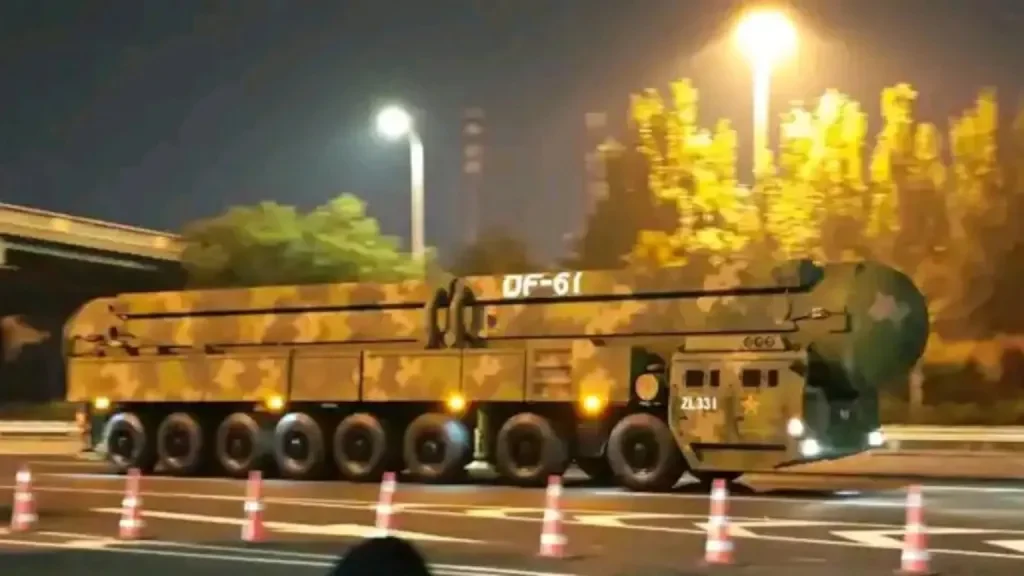
At roughly the same time, it deployed the JL-2 submarine-launched ballistic missile.
Unlike its predecessor, the JL-2 was no experimental system.
With an estimated range of 7,000 to 8,000 kilometers, it represented a dramatic leap forward.
For the first time, Chinese submarines could theoretically threaten targets well beyond East Asia.
Yet one major strategic problem remained.
To place most of the continental United States within range, Chinese submarines would still have to leave their relatively protected coastal waters and sail deep into the Pacific Ocean.
That meant passing through what military strategists refer to as the First Island Chain.
Stretching from Japan through Okinawa, Taiwan, and the Philippines, this chain of islands hosts one of the world’s most sophisticated anti-submarine surveillance networks.
American P-8A Poseidon maritime patrol aircraft, attack submarines, Japanese anti-submarine destroyers, fixed sonar systems, and allied naval forces collectively monitor many of the key maritime routes leading into the Pacific.
In other words, before a Chinese ballistic missile submarine could become strategically useful, it first had to pass through one of the most heavily monitored maritime regions on Earth.
The situation strongly resembled that faced by the Soviet Northern Fleet during the Cold War, when Soviet submarines attempting to enter the Atlantic were continuously tracked by NATO forces.
China found itself confronting a remarkably similar challenge.
The obvious solution was not simply to build quieter submarines.
It was to develop a missile capable of striking North America without requiring submarines to venture so far from home waters.
That realization ultimately led to the development of the JL-3.
JL-3: The Missile China Had Been Working Toward for Decades
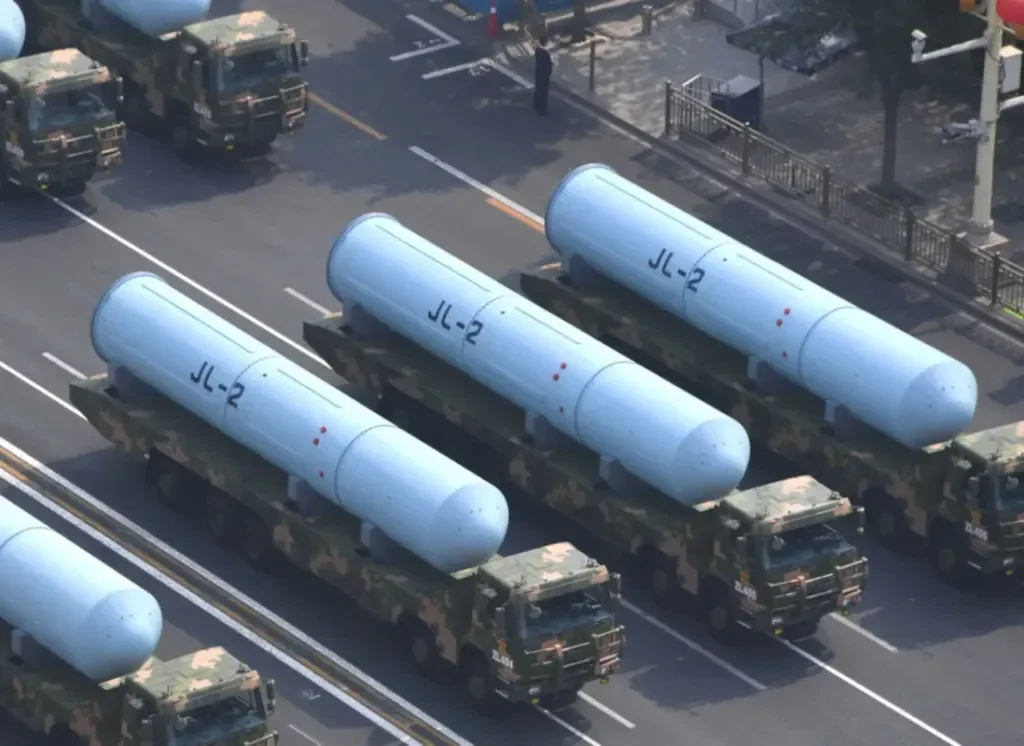
If China’s first submarine-launched ballistic missiles were largely about catching up with the world’s leading nuclear powers, the JL-3 (Julang-3, or “Giant Wave-3”) was designed with an entirely different objective.
This time, Beijing was no longer trying merely to field a functional sea-based missile.
It wanted a weapon capable of placing China alongside the United States and Russia as a fully capable maritime nuclear power.
Official specifications for the JL-3 remain classified.
Nevertheless, satellite imagery, defense intelligence assessments, patent filings, and years of missile testing have allowed analysts to build a fairly consistent picture of the new system.
Most Western estimates place its range somewhere between 10,000 and 12,000 kilometers (6,200–7,500 miles).
Some analysts suggest even greater figures, although these remain unconfirmed.
Even the conservative estimates represent a dramatic leap.
For the first time, Chinese ballistic missile submarines no longer need to cross much of the Pacific Ocean in order to threaten the continental United States.
Most potential strategic targets can theoretically be reached from patrol areas near China’s coastline or from the relatively protected waters of the South China Sea.
That single change fundamentally alters China’s strategic position.
Ironically, the greatest advantage offered by the JL-3 is not its payload or speed.
It is geography.
The farther a missile can fly, the less its submarine has to expose itself.
For ballistic missile submarines, survivability has always mattered more than almost any other characteristic.
A submarine that cannot be found is a submarine that cannot be destroyed.
Every additional thousand kilometers of missile range effectively translates into another thousand kilometers of strategic safety.
What We Know About the Missile
Although Beijing continues to keep the JL-3’s technical specifications secret, several aspects are widely accepted among defense analysts.
The missile is believed to employ a three-stage solid-fuel propulsion system, following the same design philosophy used by virtually every modern submarine-launched ballistic missile currently in service.
The choice of solid fuel is no accident.
Unlike liquid-fueled missiles, solid-fuel weapons can remain stored inside a submarine for years with minimal maintenance. They can be launched almost immediately after receiving orders and are significantly safer to operate aboard submerged vessels.
Like its American and Russian counterparts, the JL-3 is believed to use a cold-launch system.
Rather than igniting its engines inside the submarine, the missile is first ejected from its launch tube using compressed gas or a gas generator.
Only after clearing the surface of the water does the first-stage rocket motor ignite.
This method greatly reduces stress on the submarine and has become the global standard for modern ballistic missile submarines.
The JL-3 is also widely believed to carry Multiple Independently Targetable Reentry Vehicles (MIRVs).
Instead of delivering a single warhead, one missile can deploy several independently guided nuclear warheads, each capable of striking a different target.
Such a capability dramatically complicates missile defense.
Even if defensive systems successfully intercept some warheads, others may still penetrate and reach their intended targets.
Exactly how many warheads the JL-3 can carry remains unknown.
Published estimates range from three to ten, though none have been officially confirmed.
The Type 094: China’s Transitional Ballistic Missile Submarine
A missile alone cannot transform a strategic force.
It needs a capable platform.
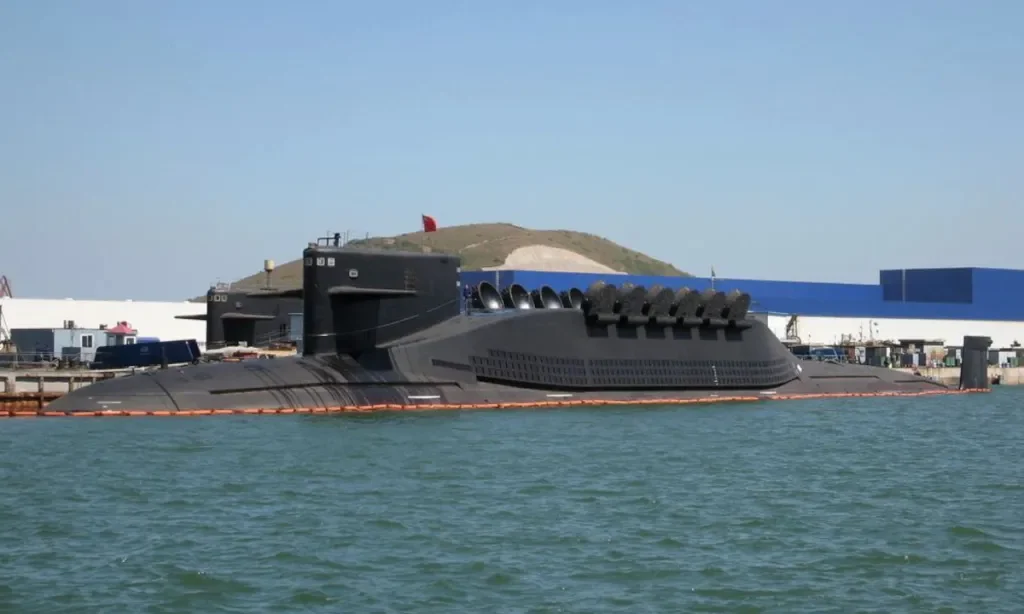
Today, the backbone of China’s sea-based nuclear deterrent consists of the Type 094, known in NATO reporting as the Jin-class ballistic missile submarine.
Most public estimates suggest that the People’s Liberation Army Navy currently operates six boats of this class.
Each submarine is believed to carry up to twelve submarine-launched ballistic missiles, initially the JL-2 and increasingly the newer JL-3.
Compared with the earlier Type 092 Xia, the Type 094 represented a massive technological improvement.
Yet Western naval experts continue to identify one major weakness.
Noise.
According to multiple American assessments, the Jin-class remains substantially louder than modern U.S. Ohio-class submarines, Russia’s Borei-class, and in some cases even older Soviet strategic submarines.
For ballistic missile submarines, acoustic stealth is often more important than speed or diving depth.
The quieter a submarine operates, the more difficult it becomes for hostile sonar systems, maritime patrol aircraft, and attack submarines to detect and track it.
This remains one of the key areas where China still trails the world’s most experienced submarine operators.
Type 096: The Submarine Intended to Change Everything
China’s answer appears to be the next-generation Type 096 ballistic missile submarine.
Remarkably little is known about the project.
Virtually all publicly available information comes from satellite imagery of Chinese shipyards, leaked industrial documentation, patent filings, and intelligence assessments.
Yet despite the limited data, most analysts broadly agree on one conclusion.
The Type 096 is expected to become China’s first truly world-class ballistic missile submarine.
It is widely believed that the new design will feature dramatically reduced acoustic signatures, improved sonar systems, more advanced combat management software, and the JL-3 as its primary weapon.
Some reports also suggest an increased missile capacity compared to the Type 094.
If those projections prove accurate, the Type 096 could finally place China’s strategic submarine fleet in the same technological generation as its American and Russian counterparts.
That would represent one of the most important milestones in the modernization of the People’s Liberation Army Navy.
How the JL-3 Compares to Its Rivals
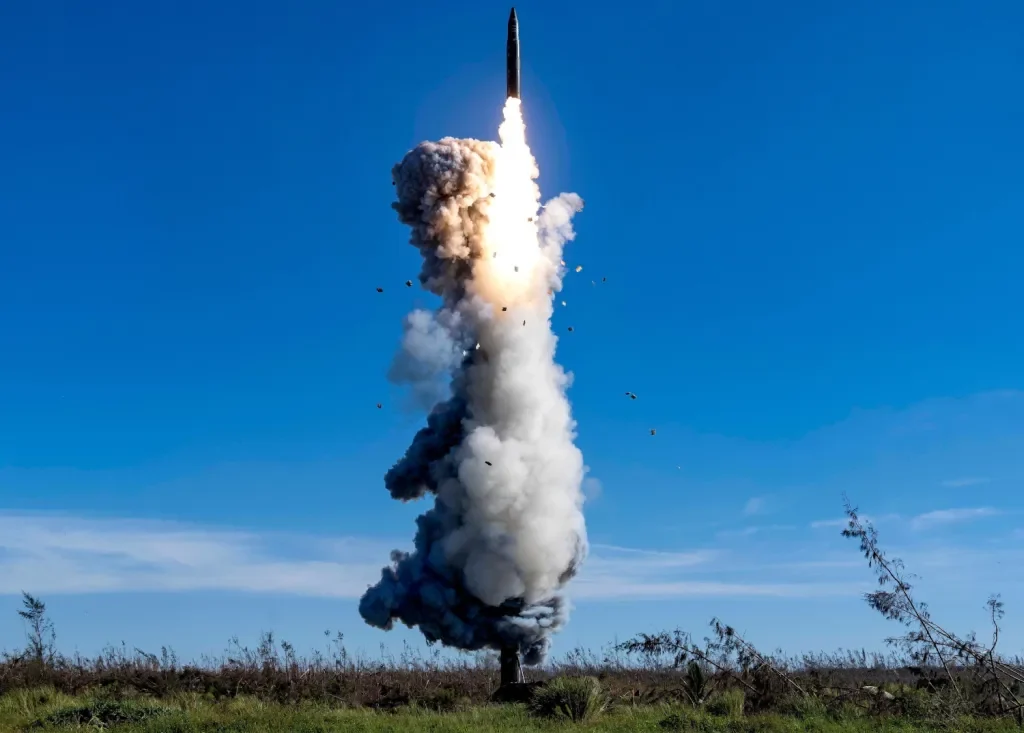
Perhaps the simplest way to understand China’s progress is to compare its submarine-launched ballistic missiles with those fielded by the other major nuclear powers.
| JL-1 | China | ~1,700 km |
| JL-2 | China | 7,000–8,000 km |
| JL-3 | China | 10,000–12,000 km |
| RSM-56 Bulava | Russia | ~9,300 km |
| UGM-133 Trident II D5LE | United States | 12,000+ km |
Fifteen years ago, such a comparison would have looked almost unimaginable.
China’s submarine-launched missiles lagged far behind those of both Washington and Moscow.
Today, the gap has narrowed dramatically.
Of course, range alone does not determine strategic capability.
Accuracy, reliability, survivability, missile defense penetration, guidance systems, and overall operational readiness remain equally important.
Still, the fact that China has approached the same class of performance as the world’s two largest nuclear powers illustrates just how rapidly its strategic missile technology has advanced.
The Test Was Never Just About the Missile
This is precisely why The War Zone described the launch as “a big deal.”
To the general public, it appeared to be little more than another missile test.
To military planners, it represented something much larger.
The launch validated not simply a missile but an entire strategic system.
For such a launch to succeed, dozens of highly complex processes must function flawlessly.
National command authorities must transmit authenticated launch instructions to a submerged submarine.
The submarine must remain undetected throughout its patrol.
Its navigation systems must determine its precise location with exceptional accuracy.
Its fire-control computers must calculate launch parameters.
The cold-launch system must safely eject a missile weighing tens of tons from its launch tube.
Only after clearing the ocean’s surface can the first-stage motor ignite.
A failure at any point could invalidate the entire mission.
That is why strategic missile launches are regarded as tests of national nuclear command-and-control systems—not merely demonstrations of rocket technology.
For defense analysts, China’s brief official announcement carried a much deeper meaning.
It suggested that Beijing’s sea-based nuclear deterrent—whose development has taken nearly half a century—is finally approaching operational maturity.
The South China Sea Is Becoming China’s Nuclear Bastion
If you look closely at the map, it becomes clear why China has spent the past decade building artificial islands, expanding naval bases, modernizing its fleet, and investing enormous resources in undersea warfare.
The answer goes far beyond territorial disputes.
Beijing is quietly creating what naval strategists call a “bastion.”
The concept itself is hardly new.
During the Cold War, the Soviet Union gradually abandoned the idea of constantly sending its ballistic missile submarines into the Atlantic. Instead, Soviet planners concentrated their strategic submarines inside heavily defended waters such as the Barents Sea and the Sea of Okhotsk.
These areas were protected by layers of air power, surface combatants, attack submarines, coastal missile batteries, naval aviation, and extensive anti-submarine warfare networks.
The objective was simple.
A ballistic missile submarine hidden inside a secure maritime fortress is vastly more likely to survive a first strike—and therefore guarantee nuclear retaliation.
China appears to be building precisely the same type of defensive system.
The South China Sea is becoming increasingly saturated with modern destroyers, frigates, anti-submarine aircraft, maritime patrol ships, underwater sensor networks, and long-range coastal missile systems.
Artificial islands equipped with airfields, radar stations, air-defense batteries, and electronic surveillance facilities now extend China’s military reach hundreds of kilometers from its mainland.
Taken together, these assets create a layered defensive zone within which Chinese ballistic missile submarines can operate under considerably greater protection than in the open Pacific.
If the JL-3 truly possesses the range currently attributed to it, those submarines no longer need to leave that protected environment in order to hold much of North America at risk.
That fundamentally changes the geometry of nuclear deterrence in East Asia.
The First Island Chain No Longer Looks Like an Impenetrable Barrier
For decades, American strategy in the Western Pacific has been built around the concept of the First Island Chain.
Stretching from Japan through the Ryukyu Islands, Taiwan, and the Philippines, this chain forms a natural maritime barrier separating China’s coastal waters from the wider Pacific Ocean.
For generations, Chinese naval planners viewed it as both a geographical obstacle and a strategic vulnerability.
Nearly every route leading into the Pacific passes through waters closely monitored by U.S. and allied forces.
American P-8A Poseidon maritime patrol aircraft, Virginia-class attack submarines, Japanese destroyers equipped with advanced sonar systems, and a dense network of surveillance assets collectively create one of the world’s most sophisticated anti-submarine environments.
During the Cold War, NATO performed a similar role by monitoring Soviet submarines attempting to leave the Arctic and enter the Atlantic.
Today, many analysts see clear historical parallels.
For years, Chinese ballistic missile submarines faced essentially the same dilemma.
To threaten the continental United States, they first had to pass through one of the most heavily monitored maritime chokepoints on Earth.
Longer-range missiles such as the JL-3 significantly reduce that requirement.
The farther the missile can fly, the less the submarine itself must travel.
In strategic terms, missile range becomes another layer of stealth.
A submarine that can remain inside protected waters while still maintaining global reach is far more difficult to detect, track, and, ultimately, destroy.
China’s Nuclear Triad Is Entering a New Era
Only a decade ago, many analysts still described China’s nuclear arsenal as significantly smaller and less sophisticated than those of the United States or Russia.
That assessment is becoming increasingly outdated.
Satellite imagery has revealed the rapid construction of hundreds of new missile silos across western China.
Meanwhile, the People’s Liberation Army Air Force continues expanding its strategic aviation capabilities.
The Xian H-6N bomber has already introduced an air-launched ballistic missile capability, while the long-anticipated H-20 stealth bomber is expected to become China’s first true strategic bomber comparable in role to America’s B-2 Spirit.
At sea, the transformation is equally striking.
At the beginning of this century, China possessed what many experts considered little more than an experimental ballistic missile submarine.
Today, it operates multiple strategic submarines, fields an entirely new generation of submarine-launched ballistic missiles, and is preparing an even more advanced class of ballistic missile submarines.
This is no longer a story of technological catch-up.
It is the systematic modernization of every leg of China’s nuclear triad.
What Does This Mean for the United States?
From Washington’s perspective, the significance of the launch is practical rather than symbolic.
If Chinese ballistic missile submarines can remain inside heavily defended waters while retaining the ability to strike the continental United States, American naval planning becomes substantially more complicated.
Tracking submarines as they leave Chinese coastal waters is one thing.
Monitoring an entire protected “bastion” defended by destroyers, aircraft, satellites, underwater sensors, and coastal missile batteries is something entirely different.
That reality is already shaping U.S. strategy across the Indo-Pacific.
The United States continues expanding military cooperation with Japan, Australia, and the Philippines.
Naval infrastructure on Guam is being strengthened.
Deployments of Virginia-class attack submarines have increased.
Maritime surveillance flights have become more frequent.
The objective is increasingly clear:
If China intends to protect its strategic submarines inside the South China Sea, the United States intends to ensure that those submarines never disappear from view.
And What About Russia?
At first glance, China’s expanding sea-based nuclear force appears to concern only Beijing and Washington.
The reality is more nuanced.
Today, Russia and China maintain close political and military ties, conduct regular joint naval exercises, and increasingly coordinate their strategic messaging.
Nevertheless, Moscow is undoubtedly watching China’s naval modernization with considerable interest.
The emergence of another highly capable maritime nuclear power inevitably influences the broader strategic balance.
Although Russian and Chinese interests currently align on many geopolitical issues, nuclear strategy has always extended far beyond current political relationships.
Strategic weapons remain in service for decades.
Submarines built today are likely to patrol the oceans well into the second half of this century.
For that reason, every major nuclear power—including Russia—carefully studies the long-term implications of China’s expanding strategic submarine fleet.
The World Is Gradually Adapting to a New Strategic Reality
This latest missile launch will not instantly transform the global balance of power.
Strategic change rarely occurs overnight.
Instead, events like this reveal the direction in which military power is evolving.
Not long ago, China was widely viewed as a nation still trying to catch up with the world’s leading naval powers.
Today, it is steadily constructing a strategic maritime deterrent designed to operate on a global scale.
True parity with the United States or Russia has not yet been achieved.
American and Russian submarine forces still enjoy decades of operational experience, superior acoustic stealth, larger fleets, more mature command-and-control systems, and far greater numbers of deployed ballistic missile submarines.
Yet the gap is narrowing.
And it is narrowing faster than many observers expected.
That is why a brief statement released by Chinese state media generated such intense interest among military analysts around the world.
Behind a few carefully worded paragraphs lay a far more consequential message.
China is no longer simply developing better missiles.
It is completing the transformation of its navy into the third truly global sea-based nuclear deterrent of the modern era.
If that process continues at its current pace, the strategic landscape of the Indo-Pacific—and perhaps the entire international nuclear balance—may look very different within the next decade.






