

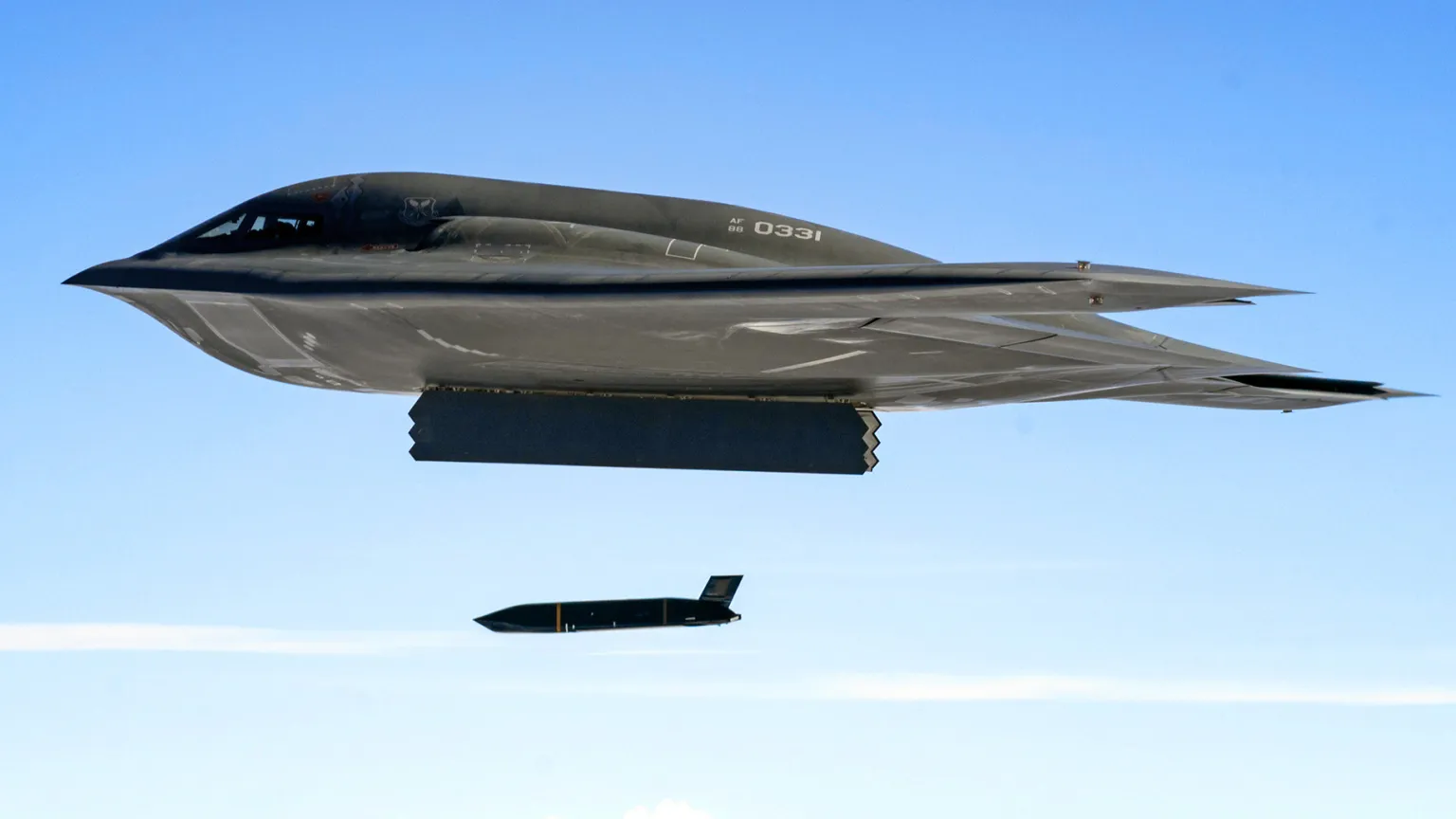
The U.S. military has made a surprising disclosure, revealing what until recently had been one of the most closely guarded capabilities of its strategic aviation. During the Valiant Shield 2026 exercise, the B-2 Spirit stealth bomber was publicly confirmed to have launched the AGM-158C LRASM (Long Range Anti-Ship Missile) for the first time. Until now, the missile was believed to be carried exclusively by the B-1B Lancer and U.S. Navy carrier-based aircraft.
At first glance, this may seem like just another weapons integration program. In reality, however, it marks a significant shift in the operational role of one of the most expensive aircraft ever built. The B-2 is now officially capable of hunting major naval formations while remaining virtually invisible to enemy radar, expanding its mission far beyond strikes against heavily defended land targets.
A New Mission for the “Spirit”
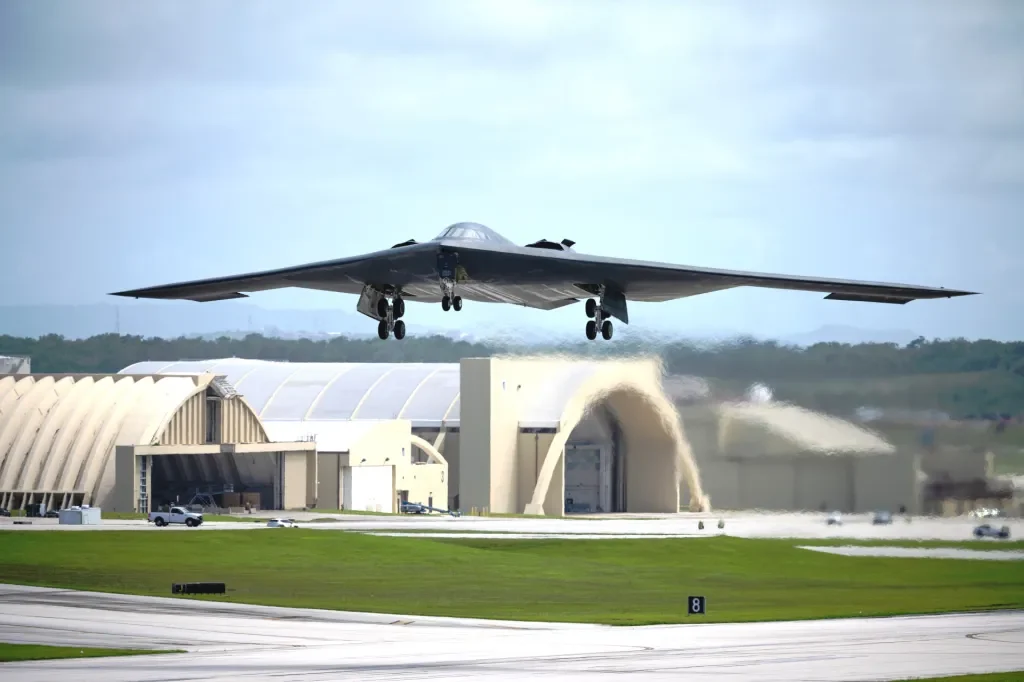
When the B-2 Spirit entered service in the late 1990s, it was designed primarily as a stealth platform capable of penetrating deep into enemy territory to deliver nuclear weapons. Over time, its role expanded to include a wide variety of conventional precision-guided munitions.
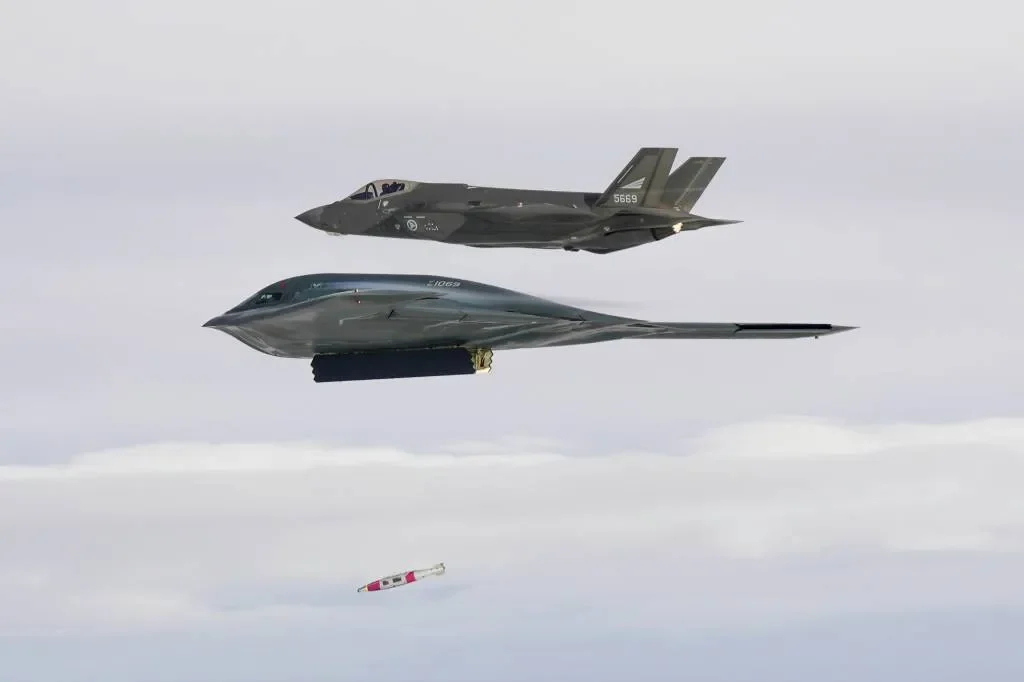
The bomber’s arsenal gradually grew to include JDAM guided bombs, the massive GBU-57 Massive Ordnance Penetrator, and the AGM-158 JASSM-ER cruise missile.
Now, the AGM-158C LRASM has officially joined that list.
What makes the announcement particularly noteworthy is the secrecy surrounding the program. The integration had never been publicly confirmed, was absent from Pentagon budget documents, and officials from the Air Force Global Strike Command have declined to provide additional details, citing operational security.
What Makes the LRASM Different?
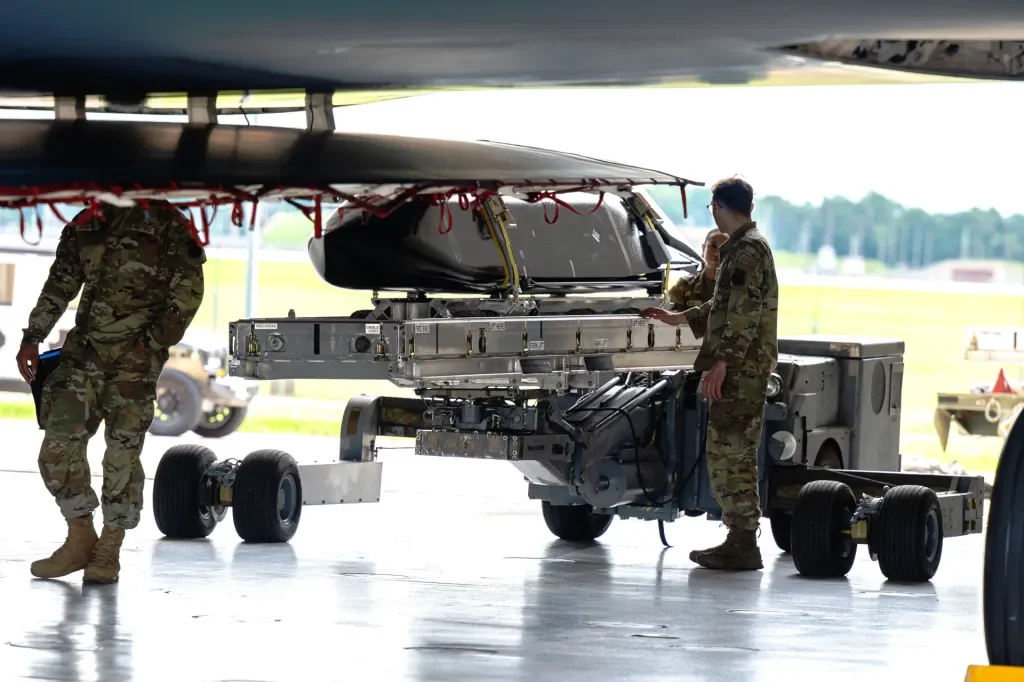
Developed by Lockheed Martin, the AGM-158C LRASM is based on the proven JASSM-ER cruise missile but features an entirely different approach to target acquisition.
Unlike conventional cruise missiles that rely primarily on pre-programmed coordinates, LRASM is capable of independently searching for enemy warships, identifying them, prioritizing high-value targets, and continuing its mission even in environments saturated with electronic warfare.
The missile combines multiple guidance systems, including passive sensors, an imaging infrared seeker, electronic support measures, and advanced onboard target-recognition algorithms.
Its stealthy airframe and low-altitude flight profile make detection extremely difficult, leaving defenders with very little time to react.
In effect, LRASM functions as an autonomous maritime hunter capable of completing its mission even if communication with its launch platform is interrupted.
Why the B-2 Changes the Equation
Before this announcement, the B-1B Lancer was considered the primary airborne carrier of the LRASM. While the B-1B can carry a significantly larger payload, it lacks stealth characteristics and must remain outside the engagement envelope of modern integrated air defense systems.
The B-2 operates under a completely different concept.
Its exceptionally low radar cross-section allows it to penetrate sophisticated air defense networks with minimal risk of detection. Previously, this capability was reserved for strikes against strategic land targets. Now, the same stealth advantage can be applied against major naval formations.
A likely operational scenario is straightforward: a B-2 approaches an enemy carrier strike group undetected, launches LRASM missiles from standoff range, and exits the area before its presence is even suspected. The missiles then independently search for and engage the highest-priority ships within the formation.
For any navy, this represents a serious challenge. Even a heavily defended fleet could face an attack without ever detecting the aircraft responsible for launching it.
Combat Validation Over the Pacific
The new capability was demonstrated during the multinational Valiant Shield 2026 exercise.
The target was the decommissioned amphibious transport dock USS Juneau, which served as a full-scale live-fire target.
According to U.S. Pacific Air Forces, a B-2 Spirit launched an LRASM during the exercise before the vessel was subjected to a coordinated attack involving aircraft, surface combatants, and submarines. The final blow reportedly came from a Japanese submarine using a heavyweight torpedo.
Interestingly, the B-2’s participation was not disclosed immediately. Its role became public only several days after the exercise concluded, highlighting the level of secrecy surrounding the entire program.
A Clear Focus on the Indo-Pacific
Although the new capability could be employed anywhere in the world, its strategic purpose is difficult to overlook.
For years, the Pentagon has been restructuring its forces around the possibility of a high-end conflict in the Indo-Pacific. Vast distances, increasingly sophisticated air-defense systems, and the rapid modernization of China’s navy have all driven the need for new long-range anti-ship capabilities.
The combination of the stealthy B-2 and the autonomous LRASM enables strikes well beyond the engagement range of most naval air-defense systems. This significantly complicates the protection of carrier strike groups and other major surface combatants.
It is therefore no coincidence that the demonstration took place near the Mariana Islands—one of the key strategic regions in any potential Indo-Pacific contingency.
Technical Specifications
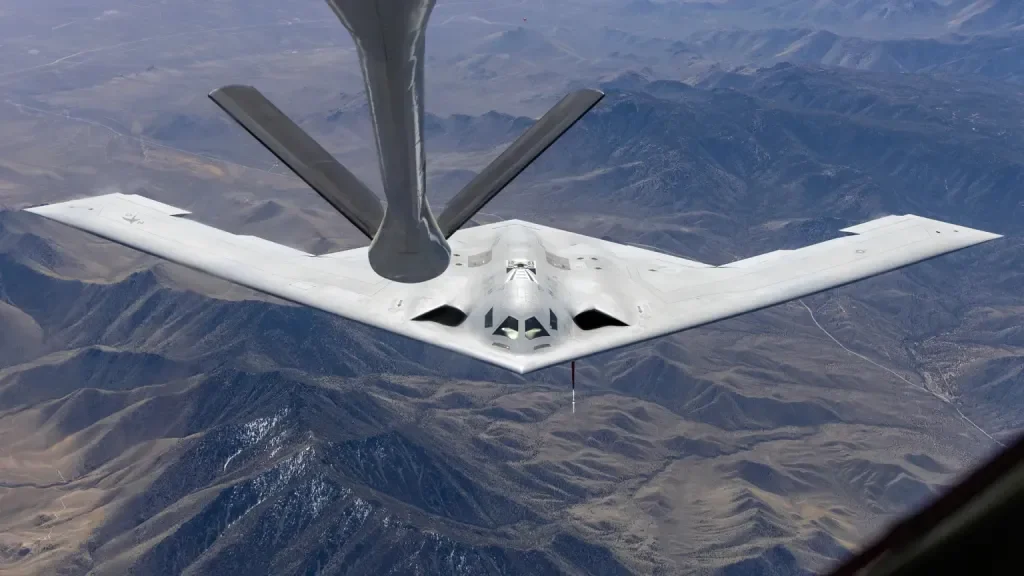
B-2 Spirit
- Crew: 2
- Wingspan: 52.4 m
- Maximum takeoff weight: approximately 170 tons
- Range: over 11,000 km without aerial refueling
- Payload: up to 18 tons
- Key feature: stealth airframe with internal weapons bays
AGM-158C LRASM
- Type: Stealth long-range anti-ship cruise missile
- Range: over 500 km (public estimates)
- Guidance: Inertial navigation, GPS, passive sensors, imaging infrared seeker
- Key features: autonomous target acquisition, high resistance to electronic warfare, low observable design
Conclusion
The confirmation that the B-2 Spirit can carry and launch the LRASM is one of the most significant developments in U.S. military aviation this year.
Rather than serving solely as a strategic bomber designed to strike fixed targets, the aircraft has now officially become a stealth maritime strike platform capable of threatening entire naval formations.
As the United States continues to shift its military focus toward the Indo-Pacific, this new capability is likely to play an increasingly important role. Until the B-21 Raider fully enters operational service, the B-2 remains America’s most capable stealth bomber—and now, officially, one of its most formidable long-range anti-ship weapons platforms.






