
Il-103: The Last Aircraft of a Great Engineering School That Even Won Over America

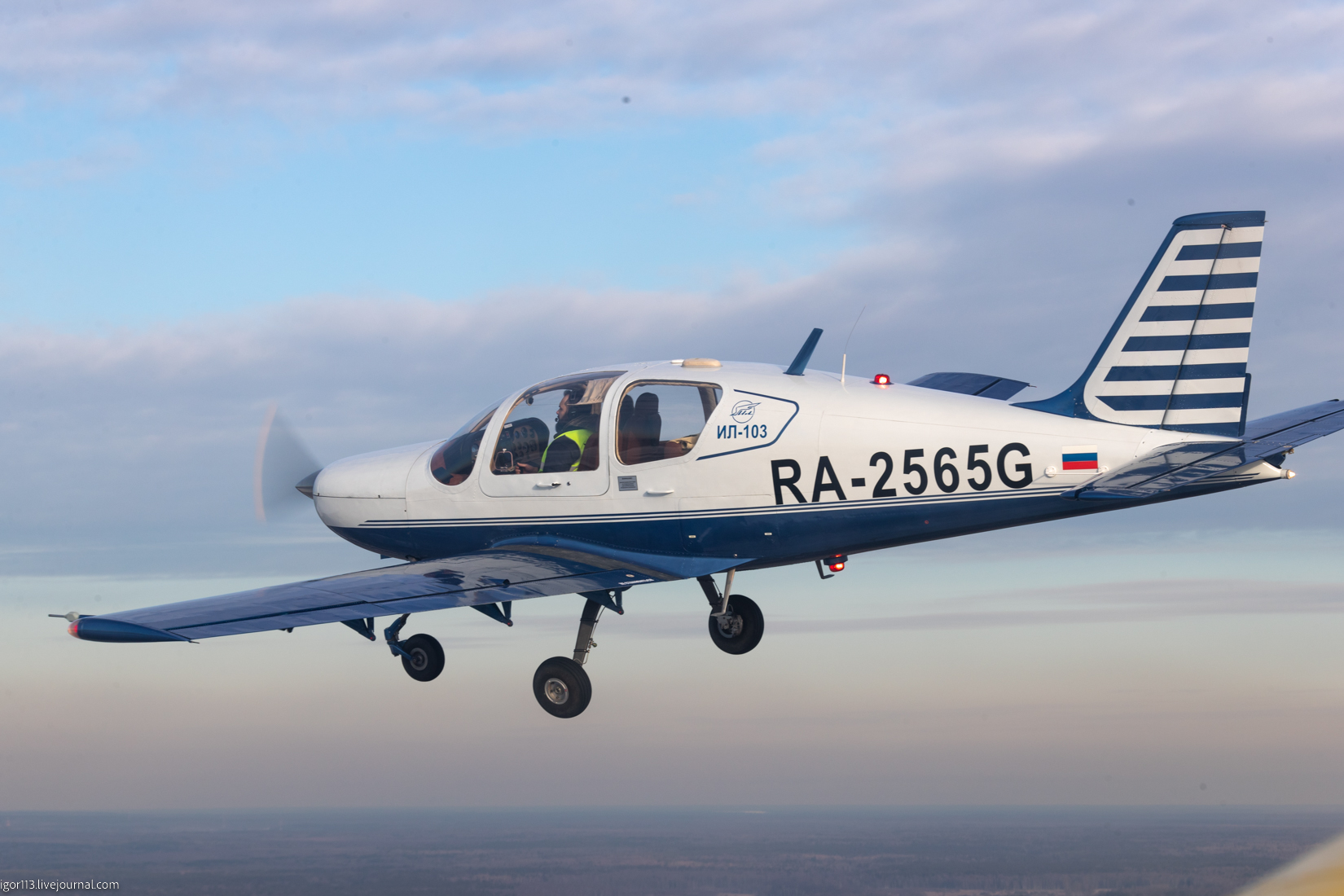
History has shown time and again that some of the most remarkable aircraft are born not during times of prosperity, but in periods of crisis. The Il-103 is a perfect example. This small four-seat aircraft was developed in the early 1990s, when it seemed that the Russian aviation industry had lost its ability to surprise the world with new designs.
Yet something remarkable happened.
Designed in a country undergoing one of the worst economic crises in its history, the Il-103 successfully earned American certification, entered the international market, and even found its way into the training fleet of the U.S. Air Force. For Russian aviation, it remains a truly unique achievement.
When the Soviet Union Realized It Lacked a Simple Airplane
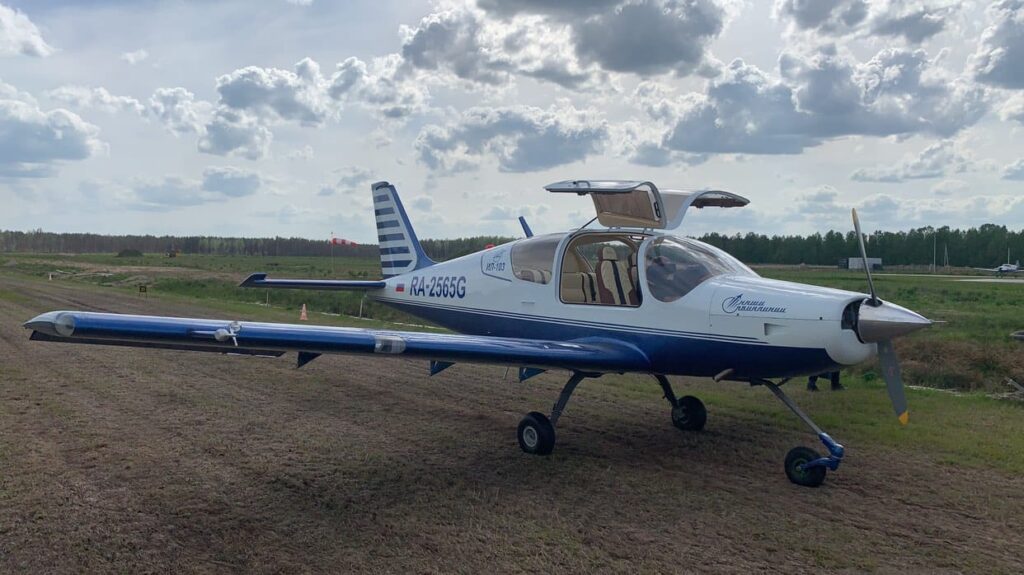
Ironically, by the late 1980s the Soviet Union was capable of building strategic bombers, supersonic airliners, and spacecraft—but no longer possessed a modern light aircraft suitable for basic flight training.
Existing training aircraft were becoming obsolete, and no adequate replacement was available.
The competition announced in 1988 for a new light trainer exposed a serious problem. Soviet design bureaus still possessed enormous expertise in creating advanced aircraft, but the entire sector of light-aircraft engines had fallen into deep decline.
It was at that moment that a team of young engineers from the Ilyushin Design Bureau, led by Alexander Pupkov, proposed a new aircraft that would eventually become the Il-103.
The project received the support of General Designer Genrikh Novozhilov, who saw it as an opportunity to revive an entire segment of domestic aviation.
Designed for Real Factories
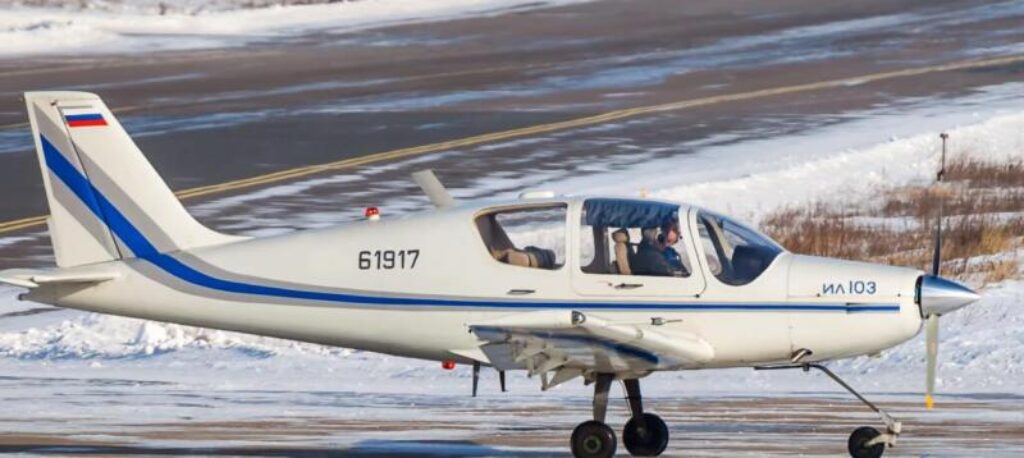
From the very beginning, the designers rejected unnecessarily complicated manufacturing solutions.
They faced an unusual challenge.
The aircraft had to be simple enough to build not only at major aircraft plants but also at maintenance and repair facilities with relatively modest production capabilities.
As a result, the structure was intentionally simplified.
The all-metal fuselage used a straightforward frame design.
The number of individual skin panels was reduced.
Large stamped components were employed wherever possible.
Compared with the Yak-18T, manufacturing labor requirements were reduced by more than thirty percent.
For the early 1990s, this was a remarkably forward-looking approach.
An American Engine for a Russian Aircraft
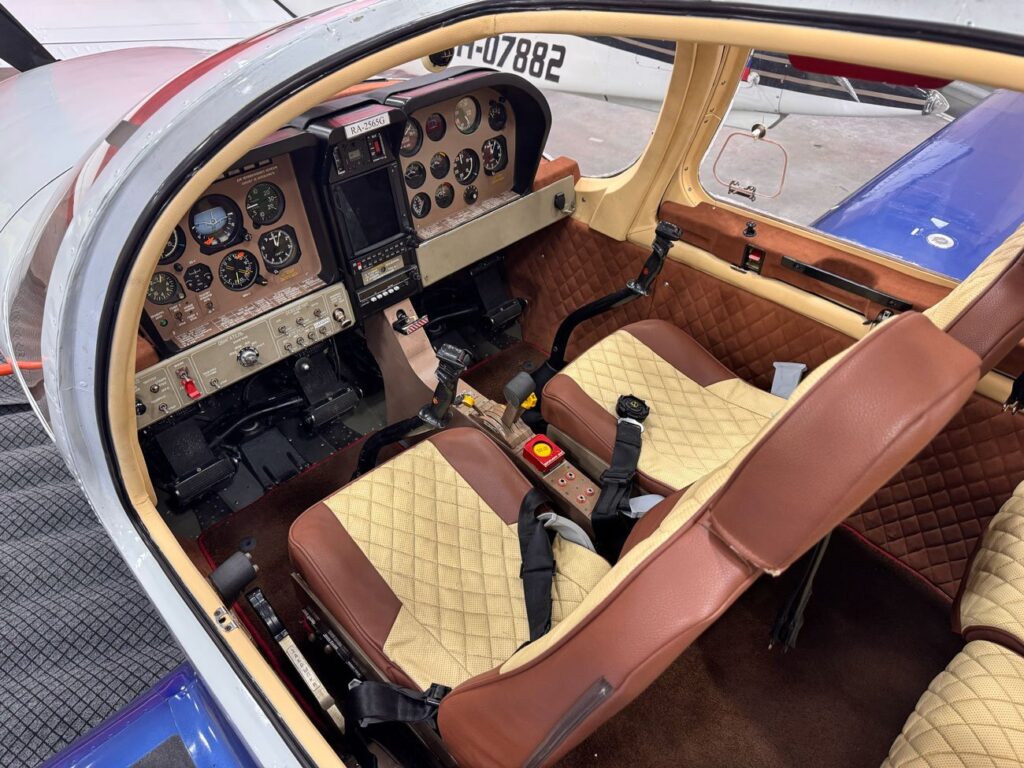
The greatest obstacle turned out to be the engine.
The airplane was nearly complete.
The engine simply did not exist.
Genrikh Novozhilov later recalled that the team initially expected to install a domestic powerplant. It soon became clear, however, that Russia no longer had a reliable modern aircraft engine in the required power class.
The solution would have been almost unimaginable only a few years earlier.
The Il-103 was equipped with an American Teledyne Continental IO-360ES engine.
It was a strategic compromise.
Without an imported engine, the aircraft might never have flown at all.
A Small Airplane with the Character of a Much Larger One
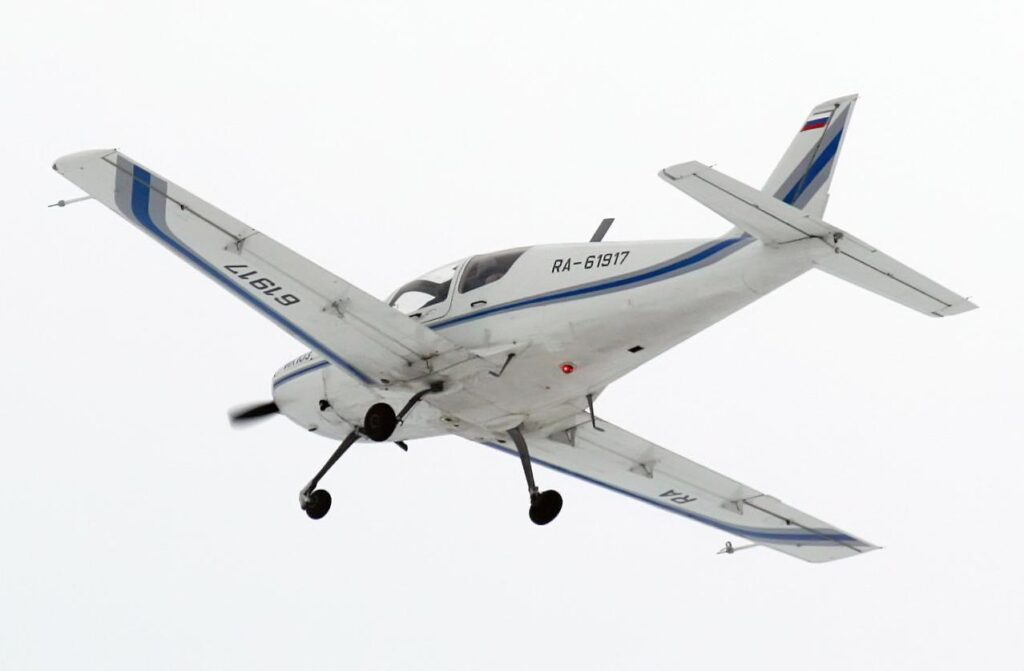
The Il-103 made its maiden flight in 1994.
Flight testing demonstrated that it possessed qualities that compared favorably with many Western competitors.
With a maximum takeoff weight of approximately 1,150 kilograms, the aircraft reached a top speed of around 265 km/h and cruised comfortably at approximately 230 km/h.
Its fuel capacity provided a range exceeding 1,100 kilometers.
But the most impressive feature was not found in the performance figures.
Test pilots consistently praised the aircraft’s exceptionally predictable handling at low speeds.
Its TsAGI-designed wing profile produced gentle stall characteristics, warning the pilot through noticeable aerodynamic buffeting before control was lost.
Even with the engine completely shut down, the Il-103 displayed excellent glide performance, significantly improving safety during emergency landings.
For a primary trainer, those qualities are often far more valuable than outright speed.
The Aircraft That Earned American Certification
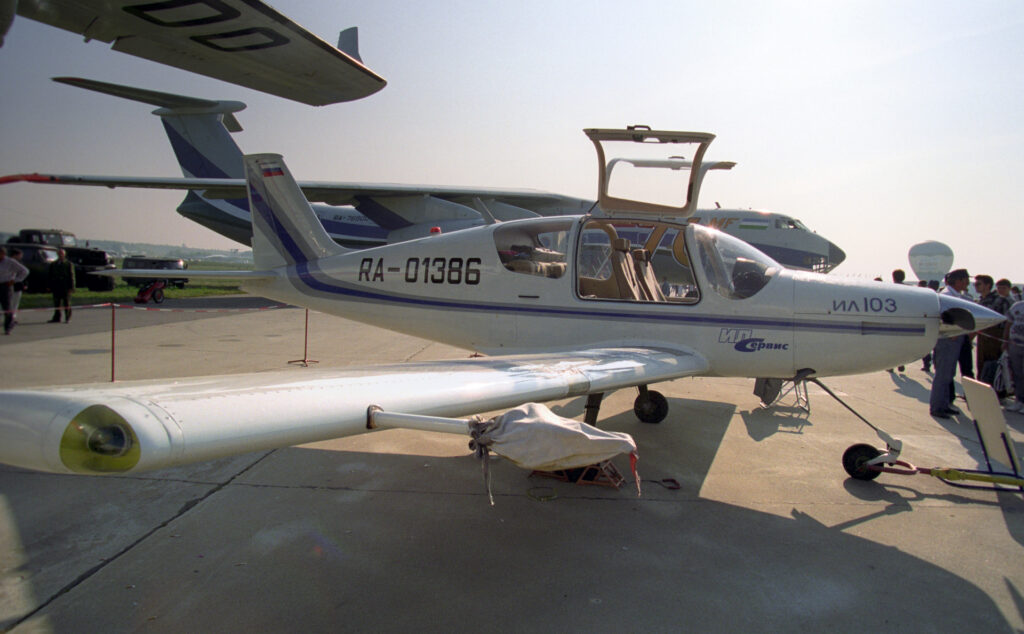
Perhaps the greatest achievement came when the Il-103 received certification under the American FAR Part 23 airworthiness standards.
For a Russian aircraft to obtain U.S. certification in the late 1990s was an extraordinary accomplishment.
During testing, American aviation authorities were particularly impressed by the aircraft’s structural strength.
The wing exceeded required load limits by roughly 15 to 20 percent, while the landing gear demonstrated the ability to withstand extremely hard landings.
The overall durability and engineering quality left a highly favorable impression.
As a result, the Il-103 became one of the very few Russian aircraft officially approved for sale on the American market.
The Only Modern Russian Aircraft Purchased by the U.S. Air Force
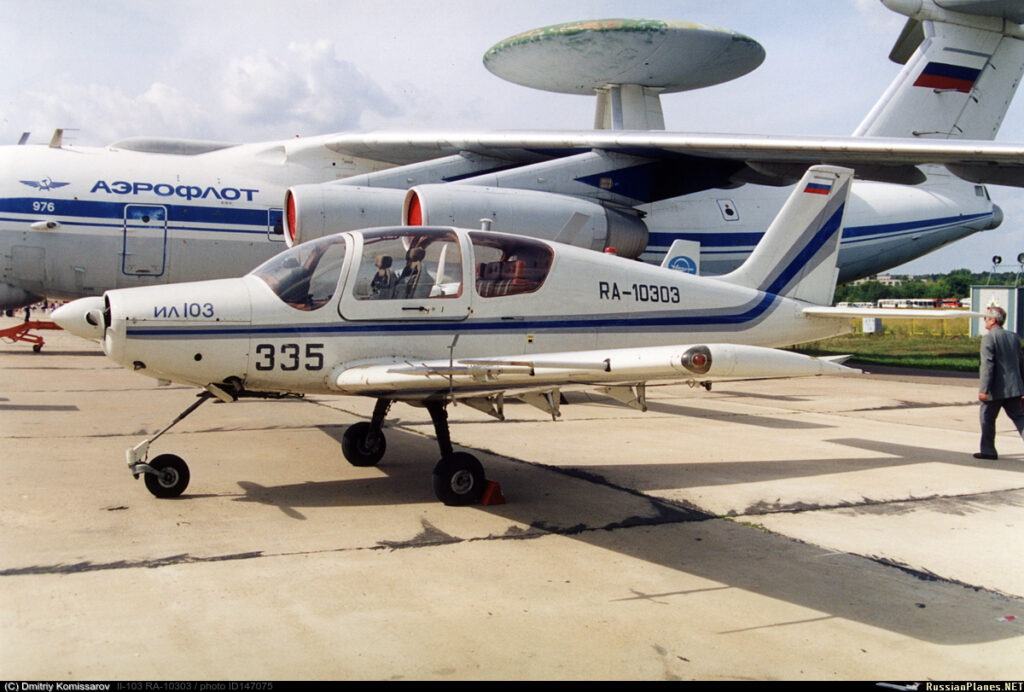
One chapter in the Il-103’s history remains surprisingly little known.
In the early 2000s, four aircraft were purchased for a U.S. Air Force training center.
They were used under the International Military Education and Training (IMET) program to provide basic flight instruction for pilots from partner nations.
For the Russian aviation industry, this remains an exceptional case.
The Il-103 became the only modern Russian-designed aircraft officially acquired by the U.S. military for operational use in a training role.
Why the Story Ended Too Soon
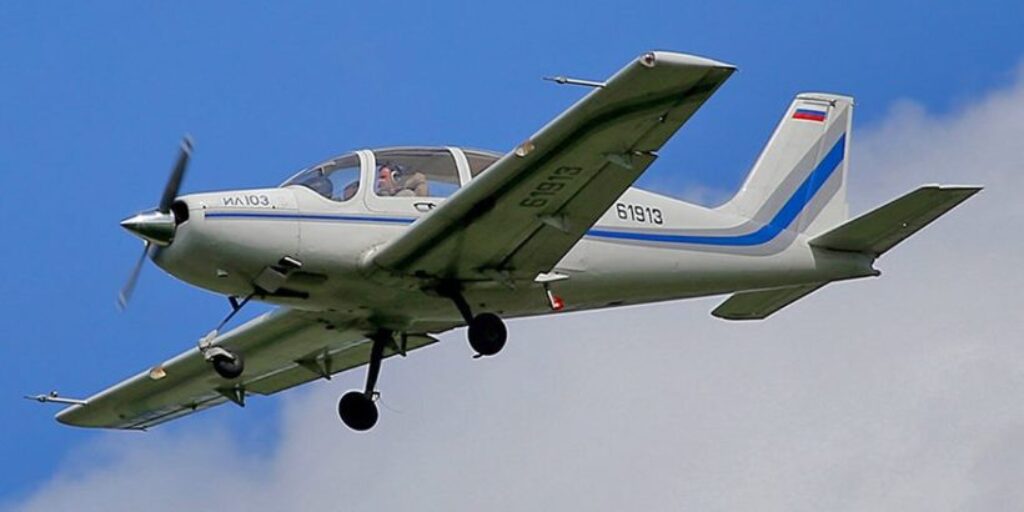
For a time, the aircraft appeared to have a promising future.
Engineers studied improved versions powered by modern diesel engines, lighter long-range variants, and even a twin-engine model intended for operations in remote Arctic regions.
None of these projects progressed beyond the design stage.
Russia’s light aircraft market had largely disappeared, and total production ended after only 66 aircraft.
Technically, the Il-103 proved to be an outstanding design.
Commercially, it became one of the many victims of its era.
The Final Success of a Great Engineering Tradition
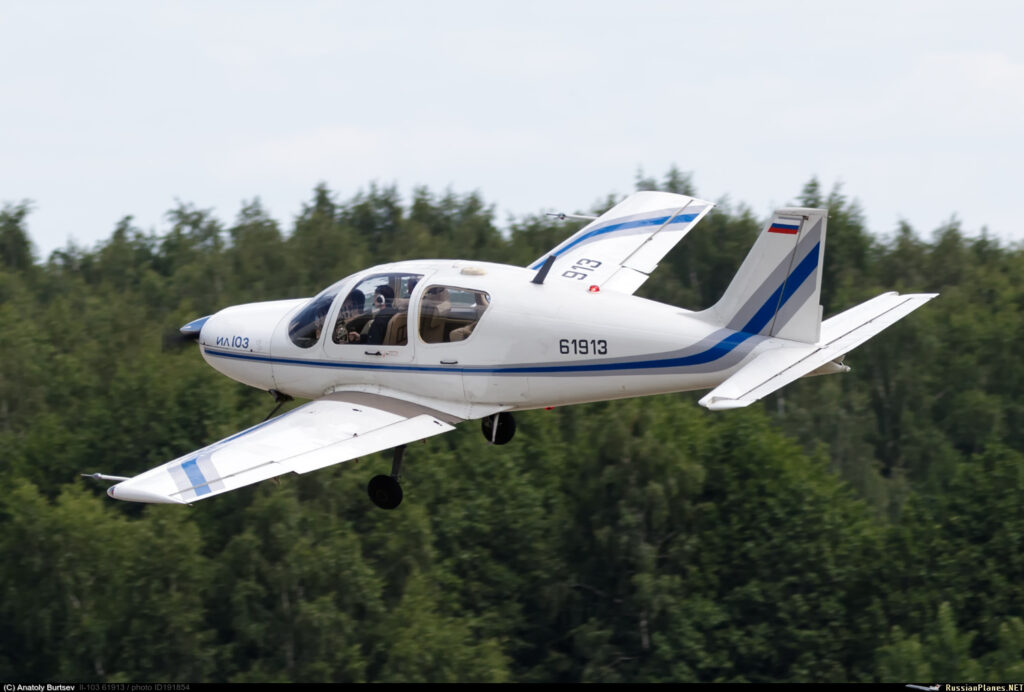
Today, the Il-103 remains one of the most fascinating aircraft produced during the difficult transition from the Soviet Union to modern Russia.
It was created at a time when the country’s aerospace industry faced unprecedented economic hardship, yet it demonstrated that the engineering traditions built over decades had not disappeared.
The Il-103 never became a mass-produced success.
It did not launch a new generation of Russian light aircraft.
But it accomplished something equally important.
It proved that even during the most difficult times, outstanding engineering ideas could still take flight.
Perhaps that is why the Il-103 continues to symbolize the final great achievement of the Soviet and Russian light aviation school before the close of the twentieth century.






