A Fifth-Generation Fighter Without a Radar? Why New F-35s Are Being Delivered in an Unusual Configuration

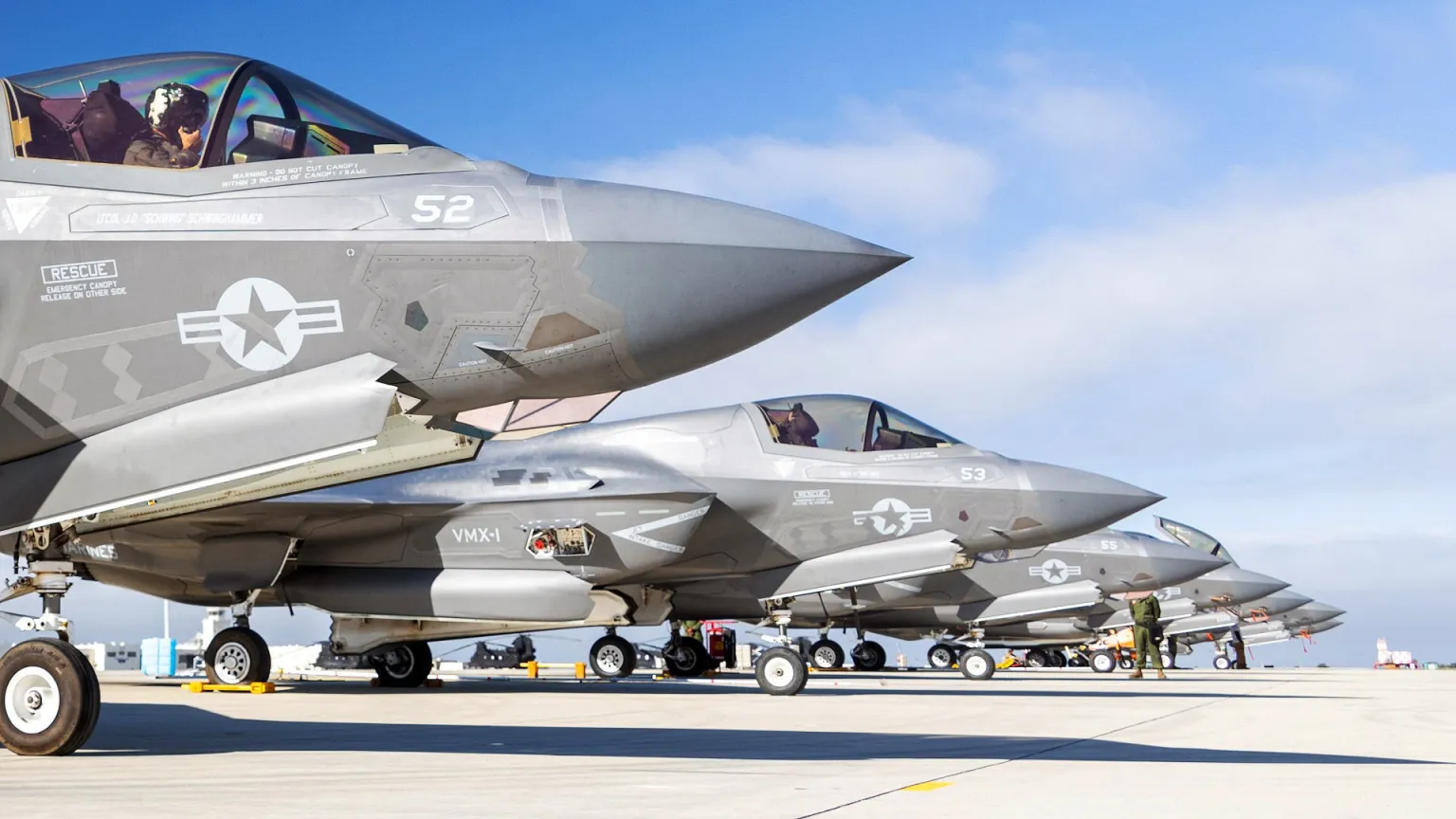
At first glance, the news sounds almost absurd.
How can a modern fifth-generation fighter costing more than $80 million be delivered without one of its most important components—its onboard radar?
Yet that is exactly what is happening with newly built F-35 Lightning II fighters. Lockheed Martin has officially confirmed that some aircraft are now being delivered without the next-generation AN/APG-85 radar. At first, this may appear to be a serious technical problem. In reality, however, the situation is far more interesting and illustrates just how complex modern fighter aircraft programs have become.
Why the F-35 Is Receiving a New Radar
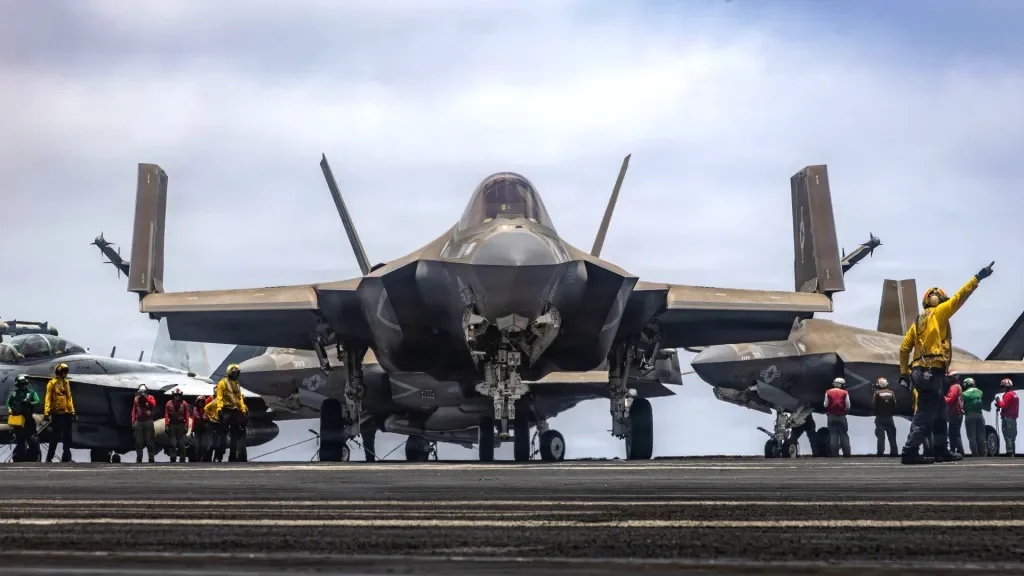
When the F-35 was developed in the early 2000s, it was equipped with one of the most advanced airborne radars of its time—the AN/APG-81 Active Electronically Scanned Array (AESA) radar.
The system is capable of detecting both air and ground targets simultaneously, producing high-resolution synthetic aperture radar (SAR) imagery, tracking dozens of targets, and even performing electronic intelligence functions.
But two decades is a very long time in military technology.
The new AN/APG-85 radar has been developed specifically for the F-35 Block 4 modernization program. It is expected to provide significantly greater processing power, improved resistance to electronic jamming, increased detection range, and deeper integration with the aircraft’s growing network of onboard sensors.
Why Aircraft Are Being Delivered Without the New Radar
The most important point is that these aircraft are not actually being delivered “blind.”
According to available information, this is a temporary production strategy rather than a design deficiency.
Production of the new radar is currently unable to keep pace with the assembly rate of the aircraft. Rather than slowing or stopping the production line, Lockheed Martin is delivering aircraft with the necessary architecture already prepared, allowing the new radar to be installed later as part of the Block 4 upgrade process.
This approach is far from unique.
Across the aerospace industry, it is often far less expensive to deliver aircraft on schedule and complete certain upgrades later than to halt an entire production line while waiting for a single subsystem.
Why Does a Fighter Need a Radar If It Already Has So Many Sensors?
This raises an interesting question.
The F-35 is surrounded by sensors.
Its Distributed Aperture System (DAS) uses six infrared cameras to provide complete spherical awareness.
The Electro-Optical Targeting System (EOTS) detects and tracks ground targets.
The aircraft exchanges information through secure Link 16 and MADL data links.
It continuously receives information from airborne early warning aircraft, other F-35s, naval vessels, and ground command centers.
So why does it still need its own radar?
The answer is simple.
Because no other sensor can fully replace it.
Why the Radar Remains the Aircraft’s Primary Sensor
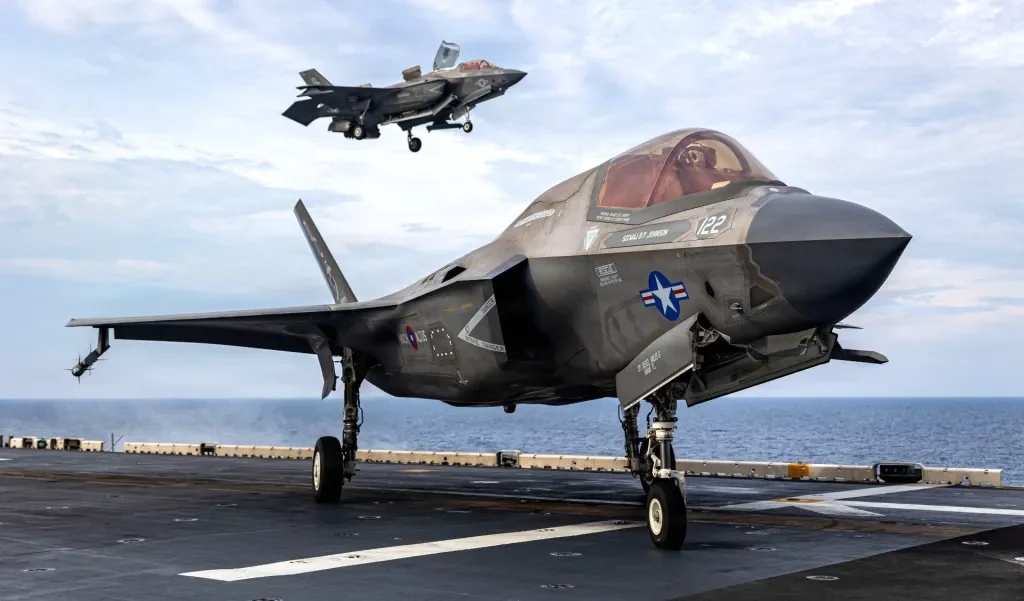
Despite tremendous advances in infrared imaging and network-centric warfare, the radar remains the single most important sensor aboard a modern fighter.
Only an active radar can independently search for targets regardless of weather conditions, cloud cover, or darkness.
It provides the tracking data required by most long-range air-to-air missiles.
It can generate detailed radar maps of the ground, detect maritime targets, and contribute to electronic intelligence and electronic warfare missions.
In other words, an AESA radar is no longer simply a radar.
It has evolved into a multifunctional information system capable of simultaneously performing surveillance, mapping, communications, and electronic warfare functions.
Why Block 4 Is the Most Important F-35 Upgrade
The new radar is only one element of a much larger modernization effort.
The Block 4 program also includes the Technology Refresh 3 (TR-3) computing architecture, dramatically increased processing power, integration of next-generation weapons such as the AIM-260 JATM, enhanced electronic warfare capabilities, and dozens of software improvements.
This is not merely a routine upgrade.
In many respects, Block 4 represents the next evolutionary generation of the F-35, ensuring that the aircraft remains operationally relevant well into the middle of the twenty-first century.
That is precisely why certain components are being introduced gradually without interrupting serial production.
The Fighter Has Become a Software Platform
The story of the AN/APG-85 demonstrates how dramatically the philosophy of fighter aircraft development has changed.
Several decades ago, an aircraft was considered complete the moment it left the factory.
That is no longer the case.
Today’s combat aircraft are continuously evolving platforms.
New computers, software, weapons, sensors, and even major hardware components may be introduced years after the aircraft first enters service.
Viewed in that context, the temporary absence of the AN/APG-85 from newly delivered F-35s is not a sign of failure.
Instead, it reflects a new reality in military aviation—one in which continuous modernization is no longer an exception but an integral part of an aircraft’s life cycle from the very first day it leaves the production line.