
BARQ: The Arab Answer to HIMARS or the Next Rising Star of the Global MLRS Market?

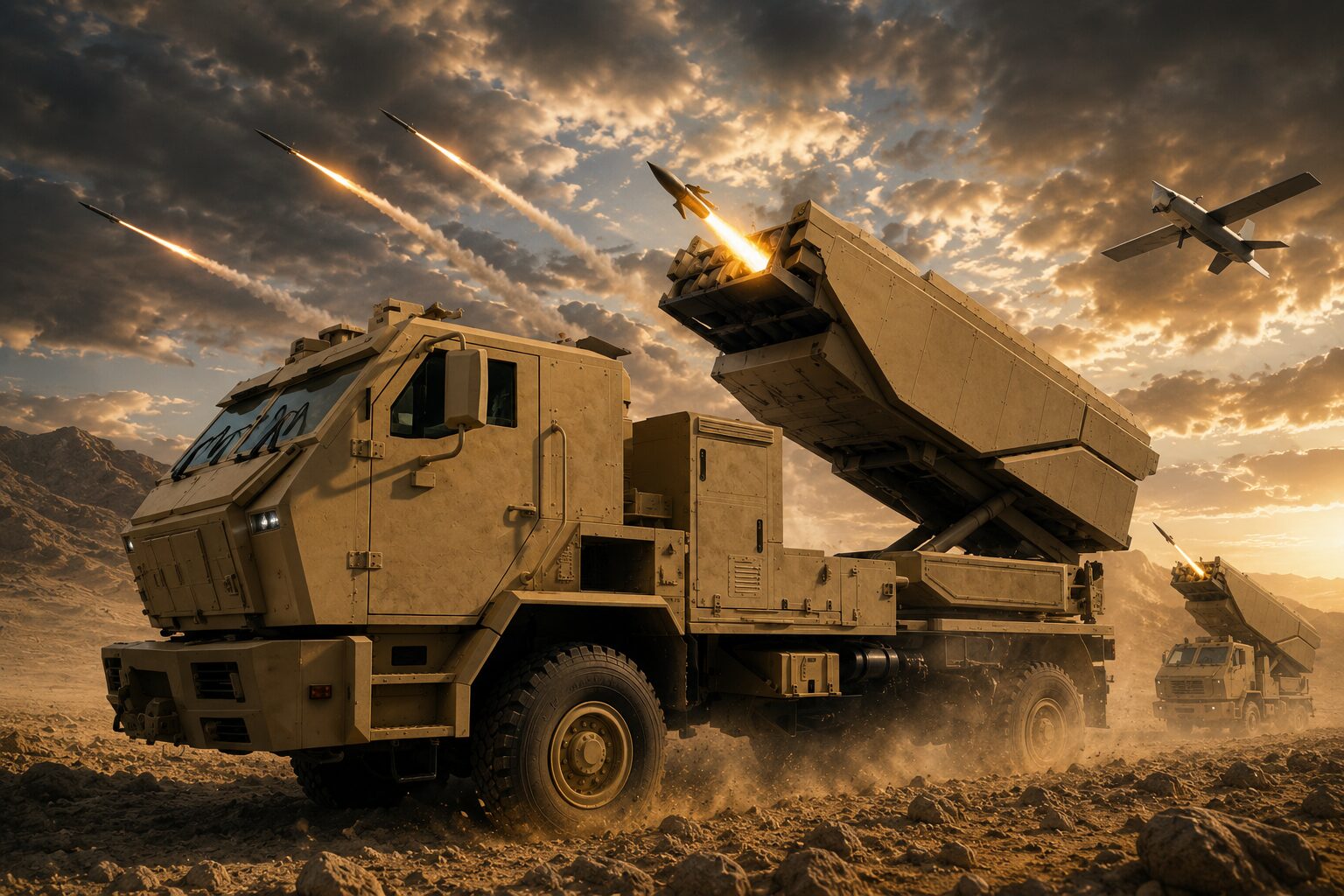
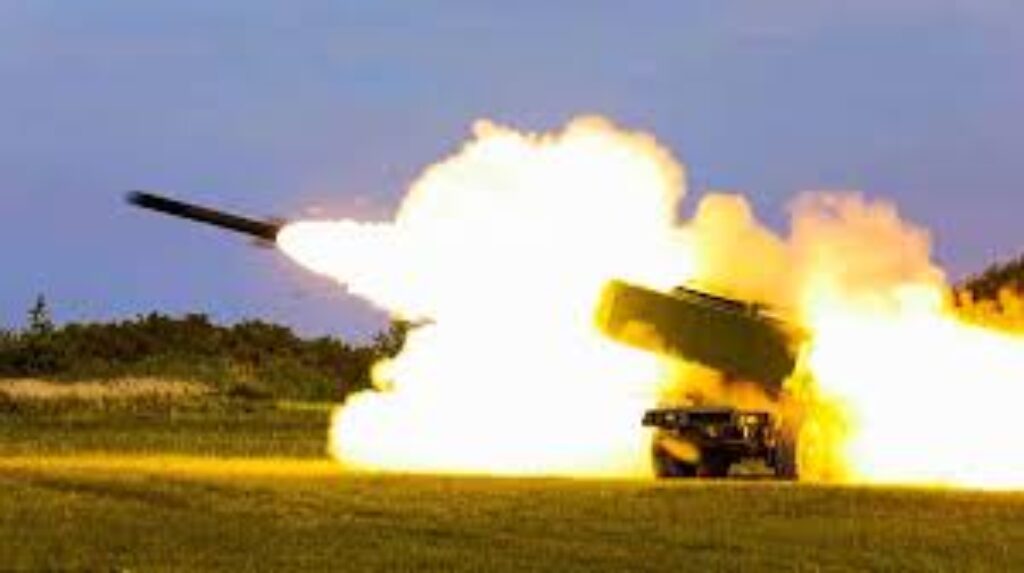
Since the outbreak of the war in Ukraine, the American HIMARS rocket artillery system has become one of the most recognizable weapons platforms in the world. Virtually every nation developing its own rocket artillery capabilities now finds itself looking at the HIMARS concept: high mobility, containerized ammunition loading, minimal deployment time, and the ability to leave firing positions before counterbattery fire arrives.
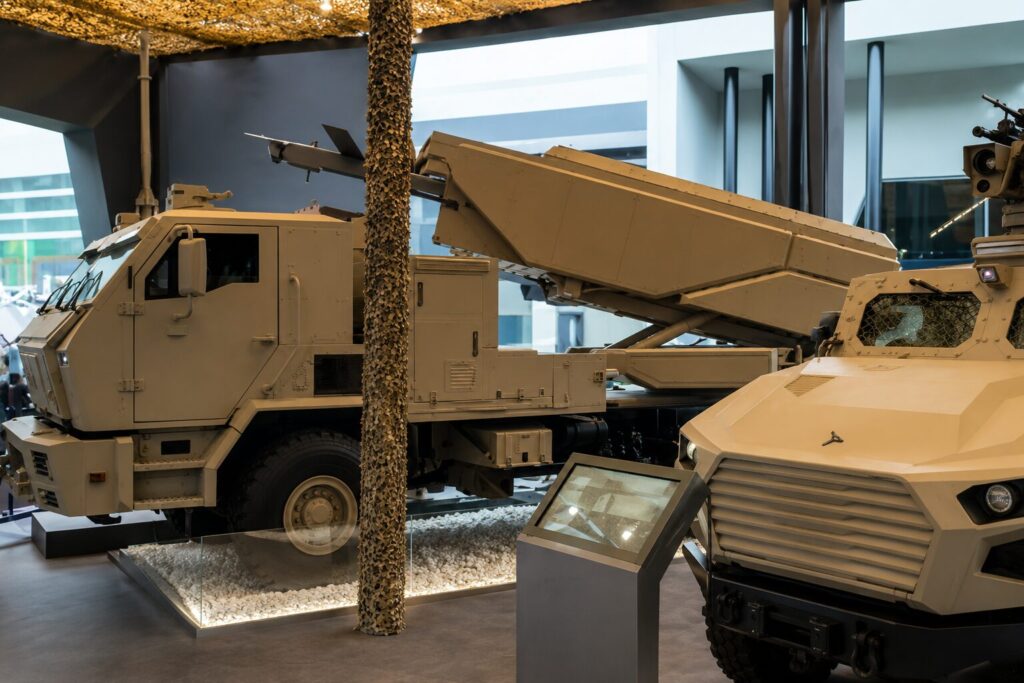
It was therefore no surprise that one of the most talked-about exhibits at IDEX 2025 in Abu Dhabi was the new BARQ multiple launch rocket system, also known as the High Mobility Multiple Rocket Launcher (HIMRL), developed by the UAE-based defense company Calidus.
At first glance, the vehicle looks like another HIMARS clone. A closer examination, however, reveals something different. Rather than copying the American system outright, Emirati engineers have created a launcher tailored for a completely different category of customers.
Why Everyone Wants Their Own HIMARS
The success of HIMARS has created an interesting challenge.
The American system is highly sought after, but many countries cannot easily acquire it. Some are constrained by cost, others by political considerations, and many by their dependence on existing Soviet-era ammunition stockpiles and logistics networks.
Dozens of countries across Africa, the Middle East, and Asia still operate Soviet-designed multiple launch rocket systems, including:
- BM-21 Grad;
- BM-27 Uragan;
- BM-30 Smerch;
- Chinese and Eastern European derivatives of those systems.
For these operators, switching to HIMARS would require not only purchasing new launchers but also building an entirely new ammunition and support infrastructure.
That appears to be exactly the gap Calidus intends to fill.
Why BARQ Looks Like HIMARS
The similarities are obvious.
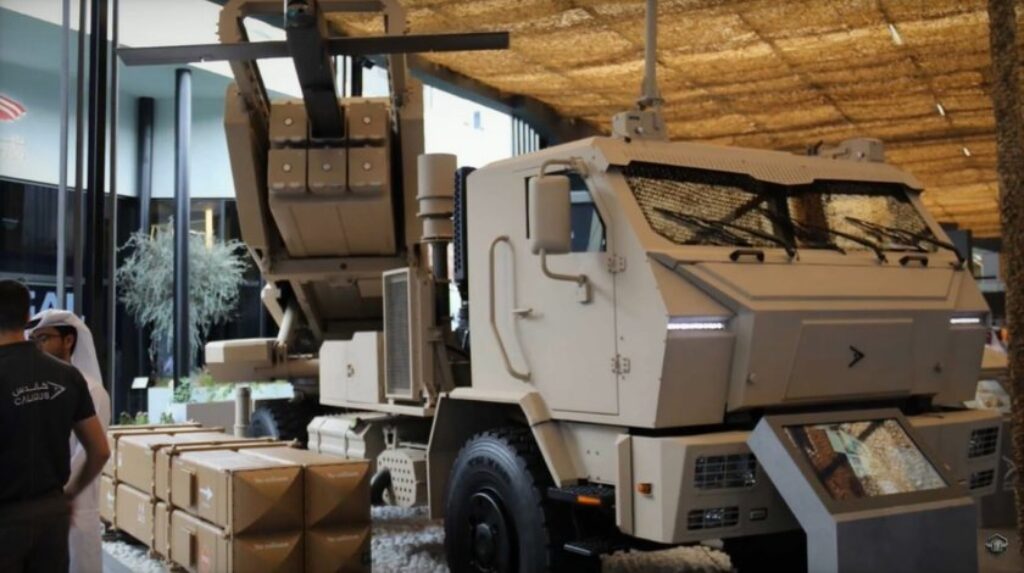
BARQ is built on a 4×4 wheeled chassis with an armored cab and uses a containerized launch system. Upon reaching a firing position, the launcher can rapidly deploy, fire, and relocate.
The designers clearly embraced the American “shoot-and-scoot” philosophy.
According to Calidus, BARQ can transition from travel mode to combat readiness in approximately three minutes and leave its firing position in under one minute after launching its rockets. In modern counterbattery warfare, such capabilities are essential.
Yet this is where the similarities largely end.
The Key Difference: Soviet-Caliber Rockets
While HIMARS fires American GMLRS rockets and ATACMS or future PrSM missiles, BARQ takes a very different approach.
The Emirati system is designed to employ three widely used rocket calibers:
- 122 mm;
- 220 mm;
- 300 mm.
These are the same calibers used by Soviet and Russian systems such as the Grad, Uragan, and Smerch.
For potential customers, this means they can retain existing rocket stockpiles while upgrading to a modern, highly mobile launch platform.
From an export perspective, the logic is clear.
Not Just Rockets — Drones Too
Perhaps the most intriguing feature of BARQ is not its rocket armament.
At IDEX 2025, Calidus also displayed launcher modules configured to deploy loitering munitions and strike drones. While the company has not yet revealed full technical details, it confirmed that the platform is capable of launching unmanned aerial systems in addition to conventional rockets.
In effect, BARQ combines the roles of a traditional MLRS and a drone carrier within a single platform.
This reflects broader trends in modern warfare. Today’s artillery systems are increasingly expected not only to deliver firepower but also to locate, track, and engage targets with precision.
Drones have become a natural extension of rocket artillery.
Mobility as a Major Selling Point
The system’s mobility is another important feature.
According to Calidus, BARQ is powered by a 375-horsepower diesel engine, reaches speeds of up to 125 km/h, and has an operational range of approximately 700 kilometers. It is equipped with a six-speed automatic transmission and a full 4×4 drivetrain. (calidus.ae)
Such characteristics are particularly attractive for customers in the Middle East and Africa, where military operations often take place across vast distances.
The company also states that the system can be transported by aircraft such as the C-130 Hercules.
A New Player in the Defense Industry
A decade ago, the United Arab Emirates was largely viewed as a customer of advanced military hardware.
Today, that perception is changing.
Calidus now manufactures armored vehicles, aircraft, missile systems, and a growing range of indigenous defense products. During IDEX 2025, the company secured contracts worth billions of dollars, underlining its ambition to become a major defense exporter. (calidus.ae)
BARQ represents another step in that strategy.
An MLRS for a New Export Market
The key question is not whether BARQ is superior to HIMARS or Russian alternatives.
The more important question is whether there is a market for such a system.
Based on its design philosophy, Calidus appears to be targeting countries that want a modern, highly mobile rocket artillery platform but are unwilling or unable to abandon Soviet-standard ammunition and logistics.
There are still dozens of such countries around the world.
If successful, BARQ could become one of the most interesting artillery systems of recent years—a platform that combines American-style mobility, Soviet-caliber ammunition, and modern drone warfare capabilities in a single package.
BARQ Technical Specifications (Known Data)
Developer: Calidus (United Arab Emirates)
Type: High-Mobility Multiple Launch Rocket System (MLRS)
Chassis: 4×4 wheeled platform
Engine: 375 hp diesel
Maximum Speed: Up to 125 km/h
Operational Range: Approximately 700 km
Ground Clearance: 400 mm
Supported Rocket Calibers:
- 122 mm;
- 220 mm;
- 300 mm.
Additional Payload Options:
- Loitering munitions;
- Strike UAVs.
Deployment Time: Approximately 3 minutes
Shoot-and-Scoot Time: Less than 1 minute
Air Transportability: C-130 Hercules and larger transport aircraft.
The BARQ may not replace HIMARS, but it was never intended to. Instead, it represents a different approach to rocket artillery—one tailored to the realities of countries that still rely heavily on Soviet-standard weapons while seeking the mobility and flexibility of modern Western systems.






