
Airbus U145: A Helicopter Without a Pilot. Airbus Turns the Proven H145 Into an Autonomous Flying Truck

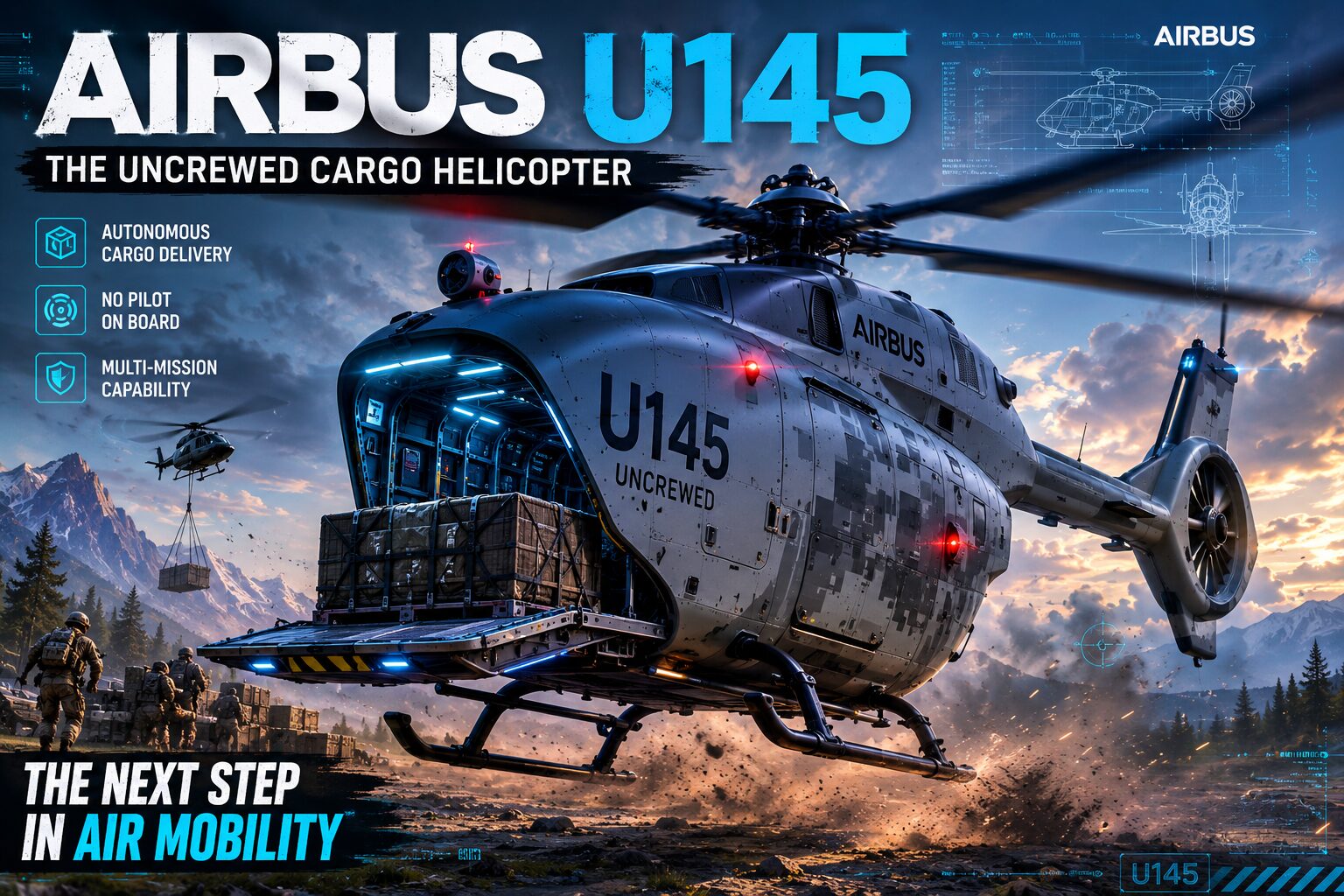
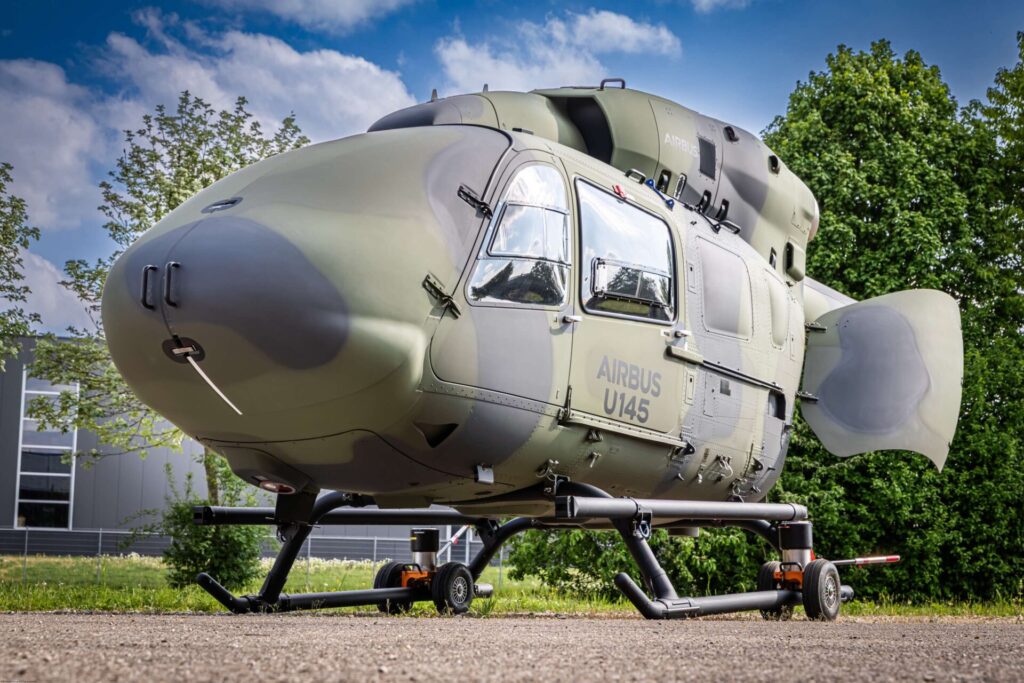
While most drone developers are focused on small fixed-wing platforms and multicopters, Airbus has chosen a different path. At the ILA Berlin 2026 air show, the European aerospace giant unveiled the U145—an entirely unmanned version of one of the world’s most successful light helicopters, the H145.
At first glance, the aircraft may appear to be just another experiment in autonomous aviation. In reality, Airbus is offering a glimpse of what the future of utility helicopters could look like. The company sees the U145 as a platform capable of transporting cargo, supporting disaster relief operations, conducting reconnaissance missions, and even acting as a mothership for smaller unmanned systems.
The first flight is scheduled for late 2026, with operational service expected in the early 2030s.
Turning the H145 Into a Drone
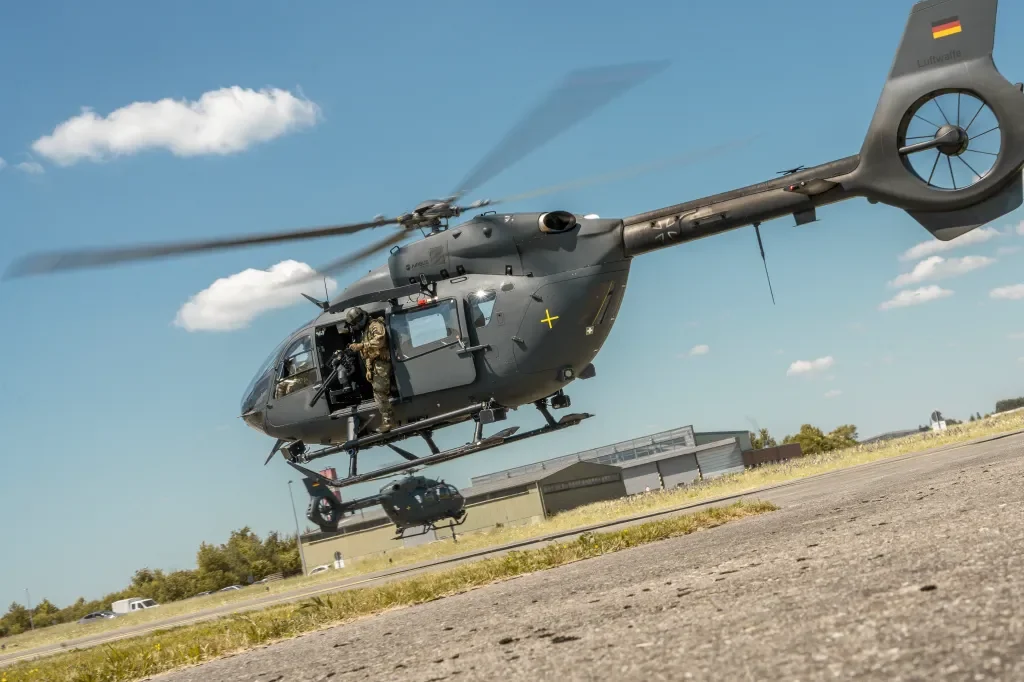
Perhaps the most interesting aspect of the project is that Airbus did not start from scratch.
Instead, engineers chose to build upon the H145, one of the most widely used twin-engine helicopters in the world. More than 1,800 H145-family aircraft have been delivered globally, accumulating over 8.5 million flight hours in military, police, emergency medical, and commercial service.
From Airbus’ perspective, the logic is obvious. Rather than investing years into developing a completely new aircraft, the company can leverage an existing platform with proven reliability, mature support infrastructure, and a vast operational history.
At the same time, the U145 differs significantly from its manned predecessor.
The Most Unusual Feature: No Cockpit
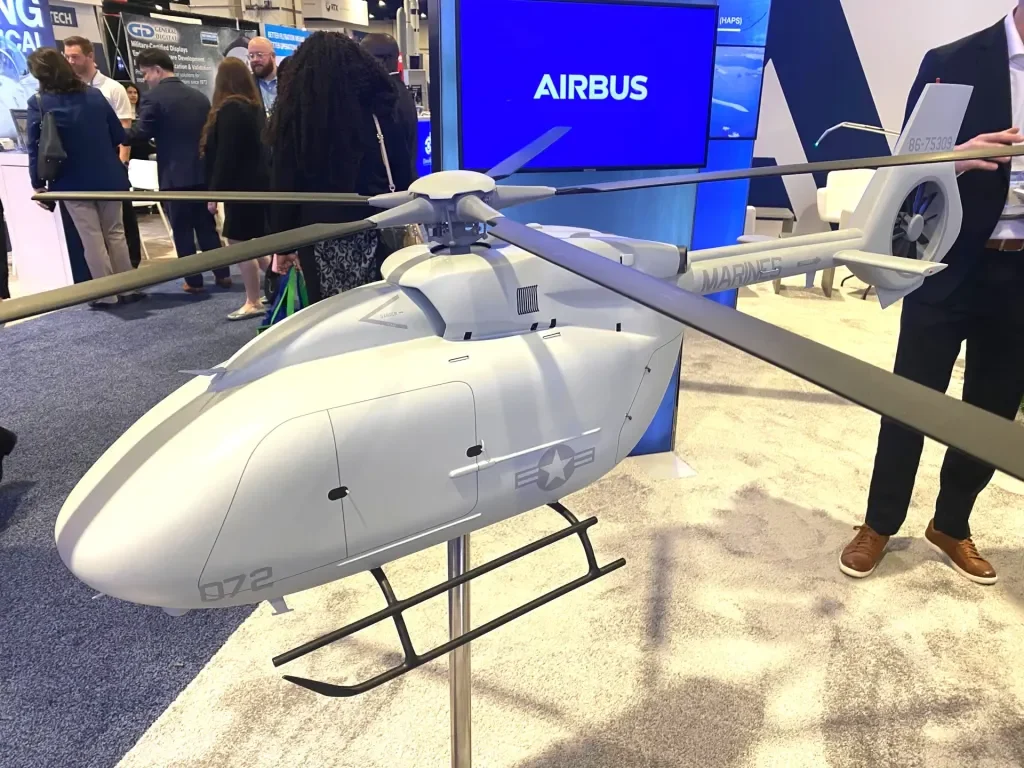
A closer look at the concept reveals its most striking characteristic—the absence of a traditional pilot cockpit.
The entire nose section has been redesigned. Instead of cockpit glazing, the aircraft features an enlarged cargo compartment equipped with a front-loading access door and integrated loading ramp. This allows Airbus to maximize internal cargo volume and improve loading efficiency.
Control of the helicopter will be handled by a fully autonomous flight system.
The aircraft will use a combination of sensors, onboard computers, and artificial intelligence algorithms to perform takeoff, navigation, and landing without direct human intervention. Airbus emphasizes that the U145 is being designed as a genuinely autonomous aircraft rather than a remotely piloted helicopter.
A Flying Truck for Military and Civil Operators
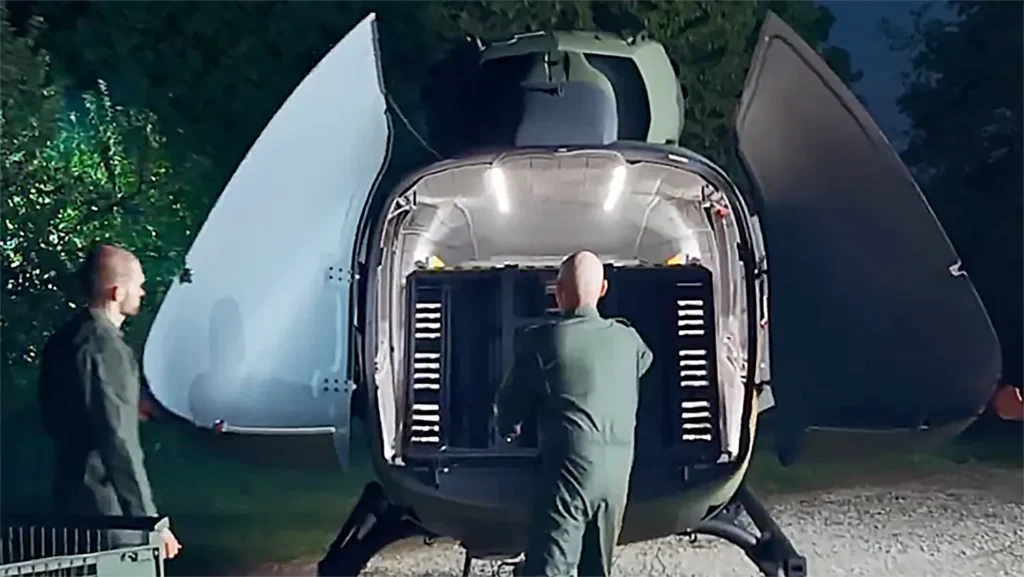
The U145 is primarily intended as an unmanned transport helicopter.
Unlike most cargo drones currently in development, this is not a lightweight platform. The aircraft is expected to retain the H145’s maximum takeoff weight of approximately 3,800 kilograms.
That places it in an entirely different category from most vertical-takeoff drones currently on the market.
Airbus envisions a wide variety of missions for the new platform.
In civilian service, the U145 could deliver supplies to remote areas, support disaster relief efforts, transport cargo to isolated communities, and assist emergency-response organizations.
Military operators see even greater potential.
The helicopter could resupply forward-deployed units, transport equipment through high-risk environments, conduct intelligence and surveillance missions, and serve as a launch platform for smaller unmanned systems. Airbus has already begun exploring such concepts in cooperation with missile manufacturer MBDA.
Why Airbus Is Betting on Helicopters
Interestingly, the U145 is not Airbus’ first attempt to create an unmanned helicopter.
The company previously developed the VSR700, based on the Cabri G2 light helicopter. The U145 represents the next step—moving from a relatively small unmanned rotorcraft to a significantly larger and more capable platform.
The reasoning behind this strategy is straightforward.
Fixed-wing aircraft and multicopters excel in specific roles, but helicopters remain uniquely valuable whenever vertical takeoff, hovering, precision cargo delivery, or operation without prepared infrastructure is required.
Military planners around the world continue searching for ways to preserve these advantages while removing the biggest limitation of traditional helicopters: the risk to the crew.
The U145 is Airbus’ answer to that challenge.
The First Step Toward Autonomous Transport Helicopters
The project remains in its early stages.
The first flight, scheduled for late 2026, will initially include a safety pilot onboard. This will be followed by an extensive testing campaign focused on autonomous flight systems and operational procedures.
If development proceeds according to plan, the aircraft could enter service during the early 2030s.
Even now, however, the program highlights a major trend in aviation.
For years, drones were primarily associated with reconnaissance and strike missions. Today, major aerospace companies are increasingly applying autonomous technologies to logistics and transport aviation.
It is entirely possible that within a decade, an unmanned cargo helicopter will be viewed as normal military equipment in the same way that armed drones are today.
Preliminary Specifications of the Airbus U145
Type: Autonomous unmanned helicopter
Manufacturer: Airbus Helicopters
Base Platform: Airbus H145
Maximum Takeoff Weight: 3,800 kg
Powerplant: Two turboshaft engines (derived from the H145)
Crew: None
First Flight: Late 2026
Expected Entry Into Service: Early 2030s
Primary Missions:
- Cargo transportation
- Military logistics and resupply
- Disaster relief operations
- Intelligence, surveillance, and reconnaissance
- Drone swarm management
- Manned-unmanned teaming operations
Airbus is effectively attempting to create an entirely new category of aircraft—heavy autonomous helicopters capable of performing the same missions as conventional rotorcraft without exposing crews to danger. If successful, the U145 could become one of the first representatives of a new generation of unmanned transport aviation.






