
FCAS Crashes Before Takeoff: Why Europe Lost Its Sixth-Generation Fighter Program

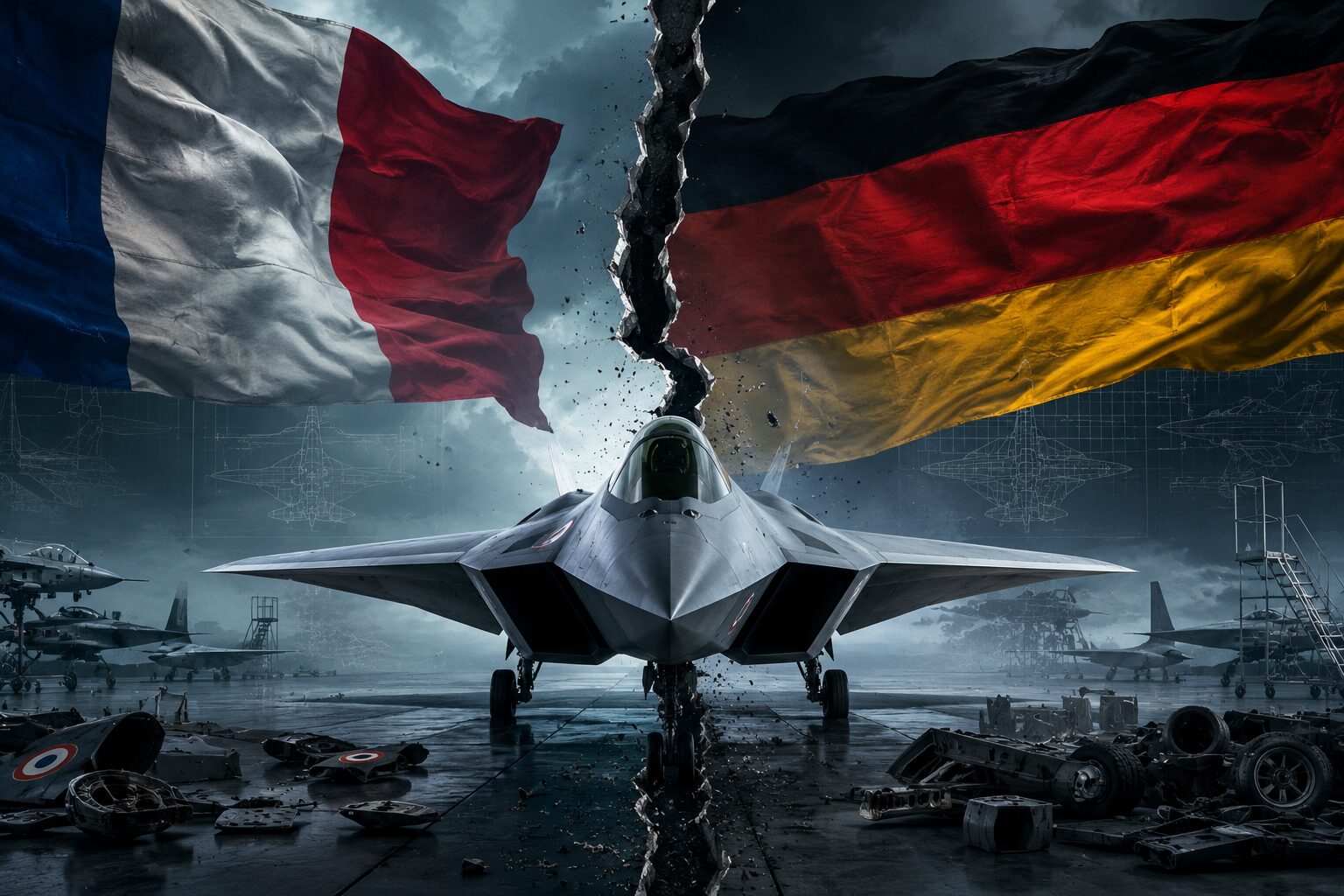
One of the most ambitious defense projects in modern European history has effectively come to an end. The Future Combat Air System (FCAS), envisioned as a common sixth-generation fighter program for France, Germany, and later Spain, has collapsed under the weight of disagreements that proved stronger than technology, politics, or strategic necessity.
When the project was launched in 2017, it was promoted as Europe’s answer to American and Chinese next-generation fighter programs. By around 2040, the aircraft was supposed to replace France’s Rafale and Germany’s Eurofighter Typhoon while serving as the centerpiece of an entire ecosystem that included unmanned combat aircraft, advanced sensors, secure data networks, and a digital “combat cloud” linking aircraft, drones, satellites, and ground forces into a single battlefield network.
The estimated cost of the program was approximately €100 billion.
One Fighter, Two Different Visions
The problems began almost immediately.
On paper, France and Germany wanted the same aircraft. In reality, they envisioned two very different machines.
For Paris, the future fighter had to become the successor to the Rafale. That meant carrier operations, nuclear strike capability, and support for France’s independent strategic deterrent.
For Germany, those requirements were far less important. The Luftwaffe needed an aircraft optimized for NATO operations, with different priorities regarding weapons, mission profiles, and overall design philosophy.
In effect, the partners were attempting to build one aircraft for two fundamentally different military doctrines.
While politicians spoke about European unity, engineers found themselves confronting reality. Every stage of development became a negotiation over whose requirements would take priority.
Airbus vs. Dassault
Yet differing military requirements were not the project’s biggest problem.
The real battle unfolded between two industrial giants: Dassault Aviation and Airbus Defence & Space.
Dassault argued that it had successfully developed the Rafale, one of Europe’s most capable and successful combat aircraft. Therefore, according to the French company, it should naturally lead development of the new fighter.
Airbus strongly disagreed.
Germany demanded equal access to technologies, intellectual property, and development responsibilities. France feared losing control over critical expertise. Germany, meanwhile, was unwilling to finance a massive project without receiving full access to the technologies being developed.
Over time, disagreements about leadership, technology sharing, and industrial participation became the greatest obstacle facing FCAS.
Eventually, it became clear that the participants were no longer arguing about an aircraft. They were arguing about who would control Europe’s next generation of aerospace technologies.
The Last Attempt to Save the Program
Throughout 2025 and early 2026, numerous efforts were made to rescue the project.
Politicians became directly involved. Mediators were brought in. Closed-door negotiations were held repeatedly. Germany even established what amounted to a deadline for reaching an agreement.
But time was running out, and compromise never materialized.
The situation became particularly revealing when German Chancellor Friedrich Merz publicly acknowledged that France wanted one type of fighter while Germany wanted something entirely different.
After that statement, many analysts concluded that the project was effectively dead.
By June 2026, the reality could no longer be ignored. Paris and Berlin officially recognized that the differences between them had become irreconcilable.
What Europe Has Lost
At first glance, this might appear to be merely another failed weapons program.
In reality, the consequences are far more significant.
FCAS was never just about building a fighter aircraft. It was intended to symbolize Europe’s ability to develop advanced defense technologies independently of the United States. The collapse of the program has become a painful reminder of how difficult it remains for European nations to align their industrial and strategic interests—even when facing common security challenges.
The timing is particularly ironic.
While Europe struggled to agree on a single fighter design, the United States continued advancing its NGAD and F-47 initiatives, while Britain, Italy, and Japan pushed forward with the GCAP program.
While Europe debated authority and intellectual property, its competitors continued building aircraft.
What Happens Next?
Despite the collapse of the fighter portion of FCAS, not every element of the program is necessarily dead.
Several components may continue independently, particularly the Combat Cloud network architecture, advanced unmanned systems, and next-generation command-and-control technologies.
In many respects, these digital and autonomous capabilities may ultimately prove more important than the aircraft itself.
Germany has already begun exploring alternative partnerships. Sweden’s Saab has emerged as a potential collaborator, and Airbus has openly expressed interest in closer cooperation with the Swedish aerospace industry.
France, meanwhile, may choose to pursue its own path, leveraging experience gained from the Rafale program to develop an independent next-generation fighter.
The Most Expensive Lesson in European Aviation
The story of FCAS demonstrates a simple reality: designing a sixth-generation fighter may be easier than persuading multiple nations to agree on what that fighter should be.
Europe successfully created Airbus. It successfully developed the Eurofighter. It possesses one of the world’s most advanced aerospace industries.
Yet FCAS revealed the limits of multinational cooperation.
The aircraft that was supposed to symbolize Europe’s future never progressed beyond the planning stage. And perhaps the most important legacy of the program will not be a revolutionary fighter aircraft, but a deeper understanding of how difficult it is to reconcile national ambitions, industrial competition, and military requirements within a single project.
Sometimes even the most advanced technology cannot overcome politics.
Key Facts About FCAS
Program Name: Future Combat Air System (FCAS)
Participants: France, Germany, Spain
Lead Industrial Partners: Dassault Aviation, Airbus Defence & Space
Primary Fighter Concept: Next Generation Fighter (NGF)
Intended Replacements: Rafale and Eurofighter Typhoon
Planned Service Entry: Around 2040
Estimated Program Cost: Approximately €100 billion
Key Components:
- Next-generation fighter aircraft
- Combat drones and remote carriers
- Combat Cloud battlefield network
- Advanced sensors and data-sharing systems
Current Status: Fighter development effectively halted due to unresolved political and industrial disagreements






