

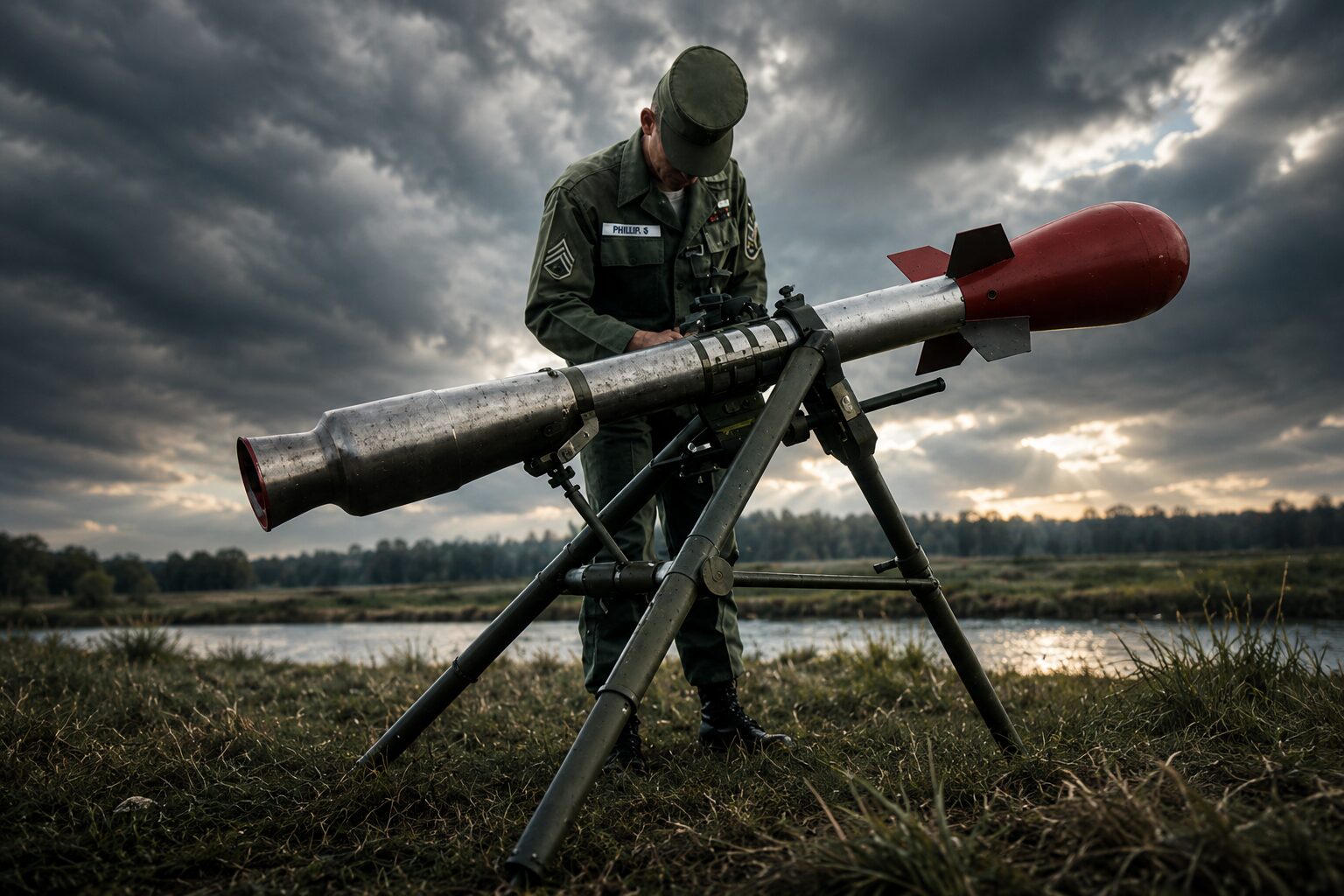
The Cold War produced countless unusual weapons. Some became symbols of their era, others disappeared into the dead ends of military technology, and a few were so bizarre that they seem almost fictional today. One of the strangest was the M28/M29 Davy Crockett system — the smallest tactical nuclear weapon ever deployed by the United States Army.
Named after the legendary American frontiersman, hunter, and hero of the Battle of the Alamo, the weapon had little in common with its namesake. While Davy Crockett earned fame through courage and marksmanship, the system that carried his name was designed to stop entire armored formations with a nuclear explosion.
It sounds like something from an alternate-history novel, but in the early 1960s it was a very real part of American military planning.
A Nuclear Weapon for the Infantry
After the advent of nuclear weapons, military planners quickly realized that atomic warheads did not have to be delivered exclusively by strategic bombers. During the 1950s, the United States invested heavily in tactical nuclear systems intended to support ground forces directly on the battlefield.
Nuclear artillery shells, short-range missiles, and even atomic demolition munitions entered service. Yet Army commanders wanted something even more mobile — a weapon that could accompany frontline troops and be used only a few kilometers from the front line.
That requirement led to the creation of the Davy Crockett.
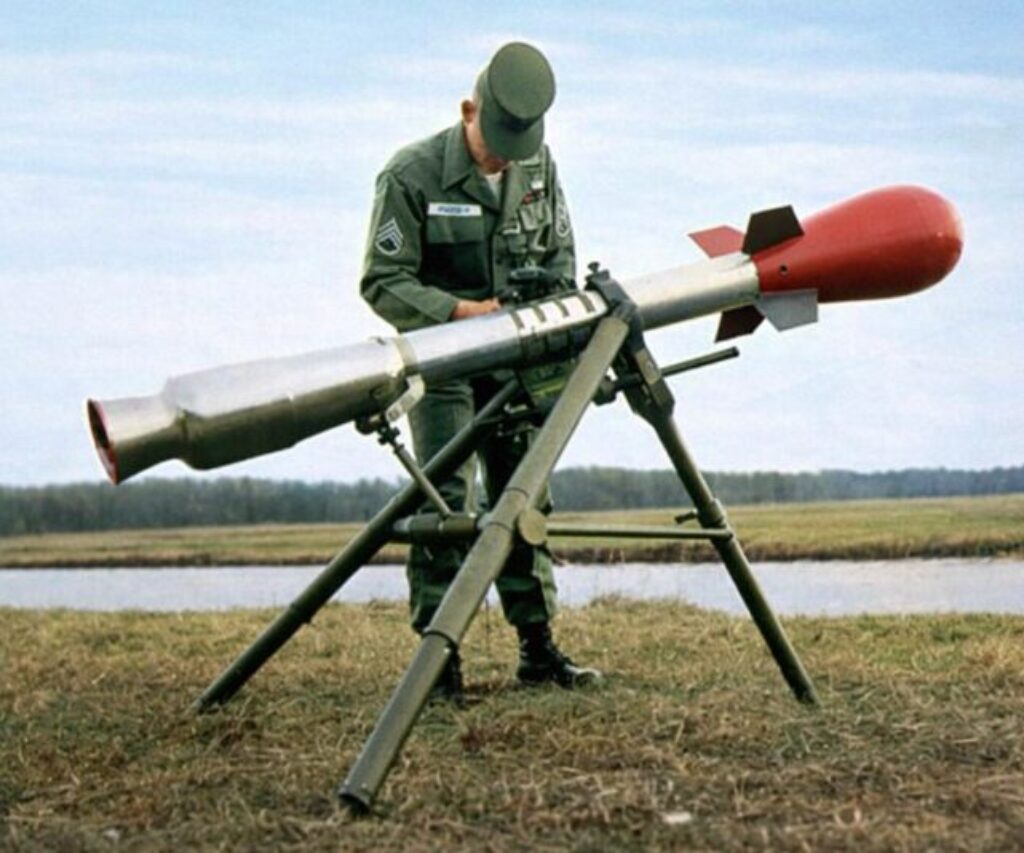
At first glance, the system resembled a large recoilless rifle. It could be mounted on military jeeps, armored personnel carriers, or deployed by a dedicated crew. The real innovation, however, was not the launcher itself but the projectile it fired.
That projectile carried the W54 nuclear warhead.
The Smallest Nuclear Warhead Ever Built
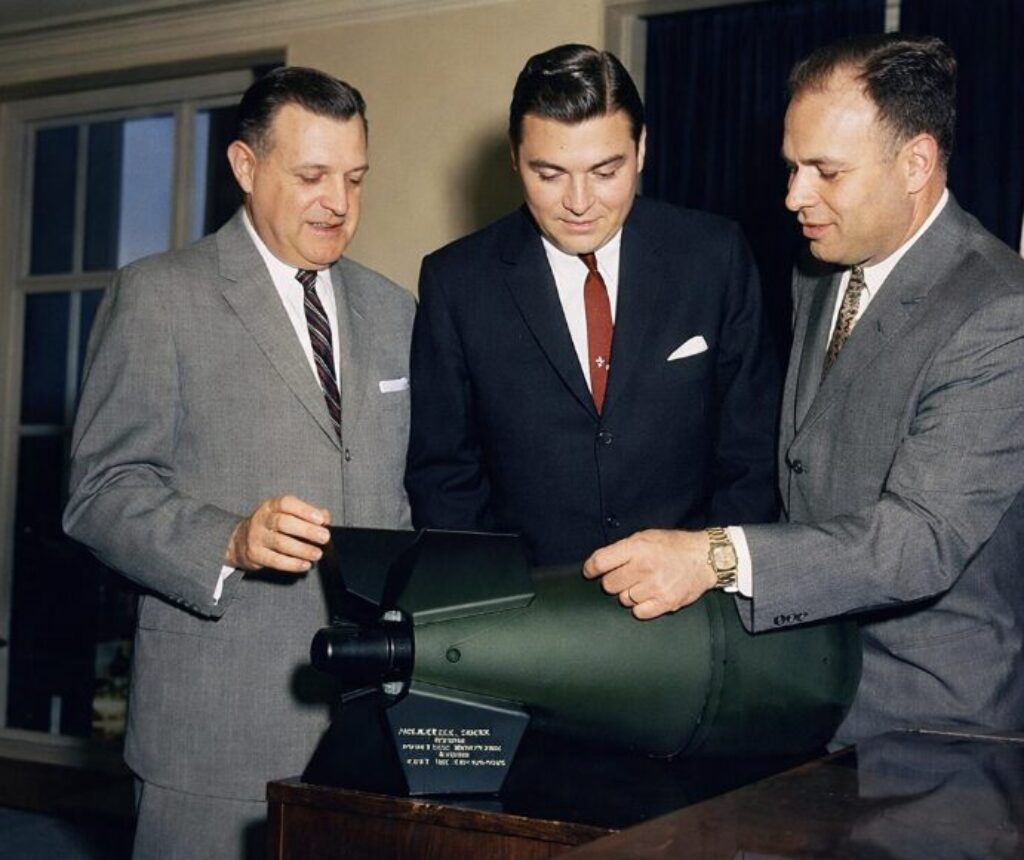
The W54 remains one of the most unusual nuclear weapons ever developed.
Its yield ranged from 10 to 20 tons of TNT equivalent. Compared to strategic nuclear weapons of the era, this was almost absurdly small. The bomb dropped on Hiroshima, by comparison, had a yield of roughly 15,000 tons.
But battlefield effectiveness is not measured solely by explosive power.
Even a detonation measured in tens of tons could create a lethal kill zone hundreds of meters across. Furthermore, the W54 relied heavily on radiation effects, making it especially dangerous to exposed personnel.
The warhead itself weighed only about 23 kilograms and was compact enough to be fired from a portable recoilless launcher.
For the first time, soldiers could effectively fire a nuclear bomb much like an artillery round.
Two Versions: M28 and M29
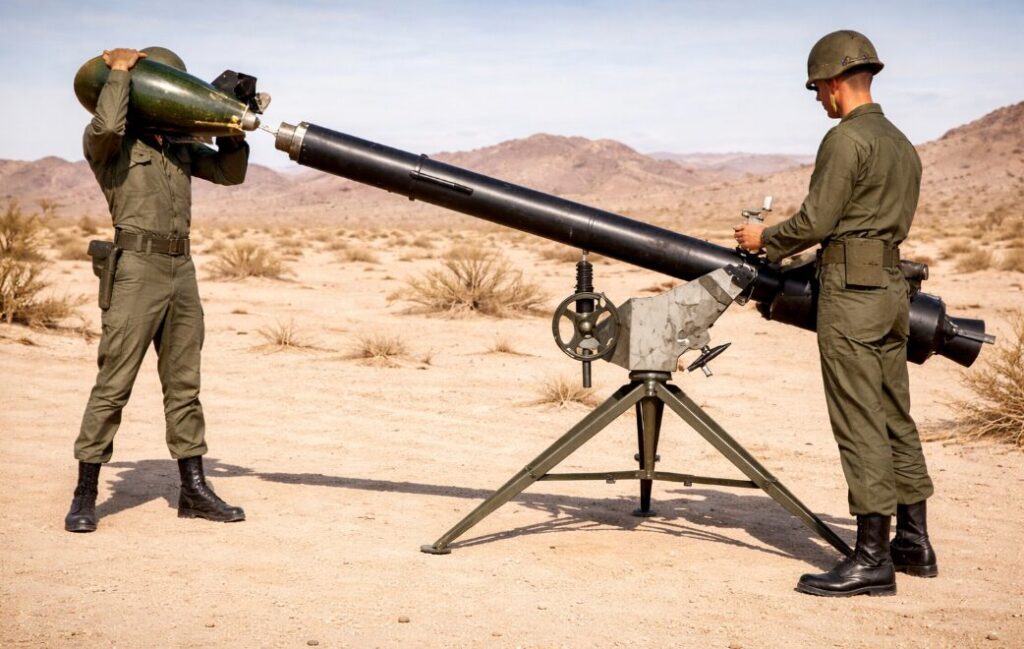
The Davy Crockett system was produced in two main variants.
The first was the M28, a 120 mm launcher weighing roughly 49 kilograms. Its maximum effective range was approximately two kilometers.
The larger M29 used a 155 mm launcher and extended the range to around four kilometers. That additional reach came at a price: the launcher weighed roughly 143 kilograms.
Both versions used a recoilless launch mechanism. The projectile was mounted on a spigot-like launch tube and propelled forward by a small propellant charge.
The design looked unusual even by Cold War standards. Yet it allowed troops to launch a nuclear warhead without the enormous recoil associated with conventional artillery.
From an engineering perspective, it was an elegant solution. From a military perspective, it was far less convincing.
The Accuracy Problem
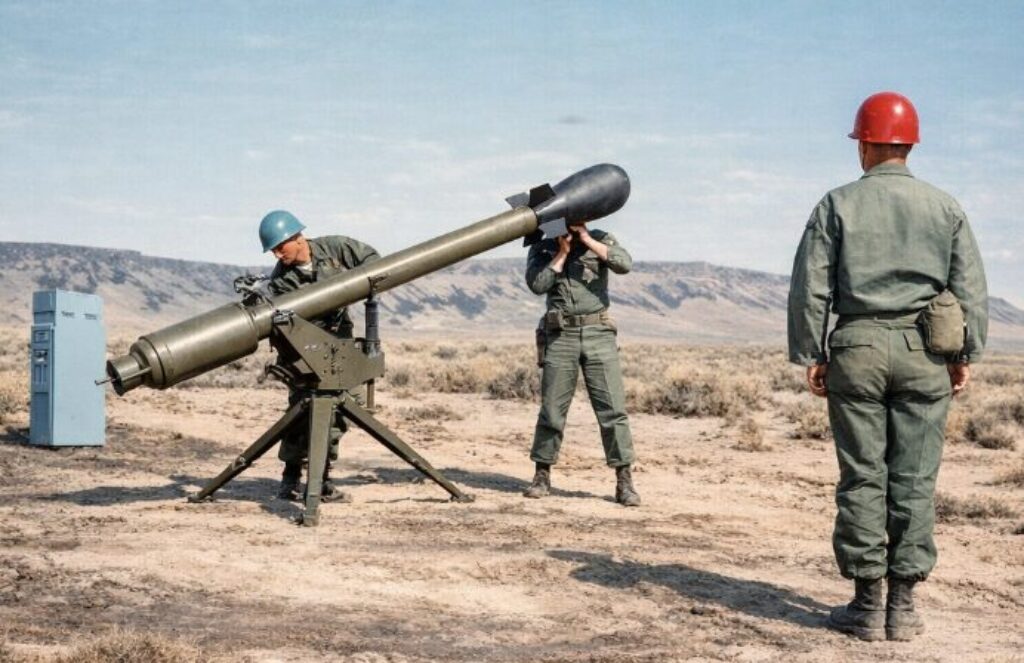
One of the Davy Crockett’s greatest weaknesses was its poor accuracy.
The projectile left the launcher at only around 100–120 meters per second — extremely slow by artillery standards. As a result, it followed a steep trajectory and was heavily influenced by weather conditions.
At maximum range, its circular error probable measured hundreds of meters.
For a conventional shell, that would be undesirable. For a nuclear projectile, it became a major operational concern.
A commander might intend to destroy an advancing tank column, only to see the warhead detonate far from the intended target.
Dangerous to Friend and Foe Alike
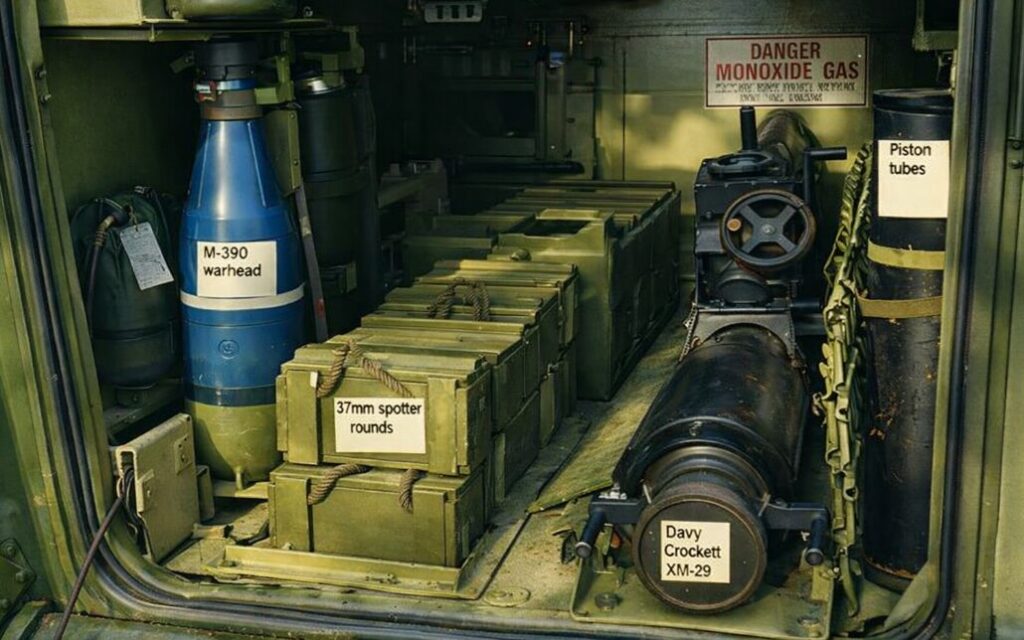
Accuracy was not the only issue.
The W54 warhead was designed to maximize radiation effects. Rather than relying solely on blast pressure, it produced intense neutron and gamma radiation.
The immediate lethal zone extended several hundred meters from the point of detonation. Dangerous radiation exposure could reach significantly farther.
The problem was that the launcher itself had a maximum range of only a few kilometers.
As a result, the soldiers firing the weapon were never particularly far from the nuclear explosion they had just created.
After launch, crews were expected to take cover immediately in trenches, bunkers, or natural terrain features. Failure to do so could expose them to dangerous radiation levels.
Not surprisingly, many American soldiers viewed the system with a mixture of fascination and skepticism.
The Only Nuclear Shot Ever Fired
The Davy Crockett earned a unique place in military history because it became the only recoilless nuclear weapon ever fired in a live nuclear test.
The event took place in Nevada during Operation Sunbeam in 1962.
The test, known as Little Feller I, involved launching a live W54 warhead and detonating it a short distance above the ground.
A brilliant flash illuminated the desert, proving that the concept worked exactly as intended.
Technically, the test was a success. At the same time, it highlighted many of the system’s limitations.
The Last Line of Defense in Europe
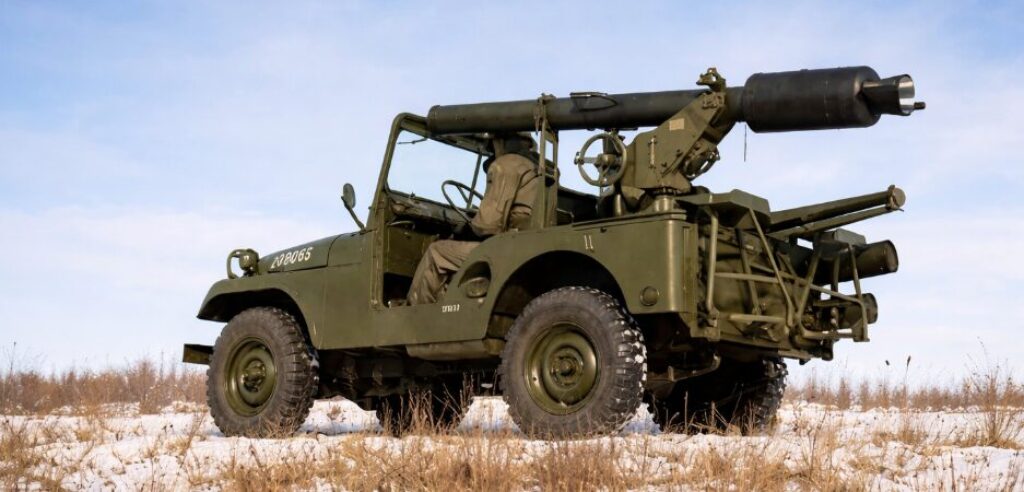
Despite its shortcomings, the Davy Crockett entered operational service.
Its primary deployment area was West Germany, where NATO planners anticipated a possible Warsaw Pact offensive through the Fulda Gap — one of the most likely invasion routes into Western Europe.
The systems were transported on M151 jeeps and M113 armored personnel carriers, ready to be deployed at a moment’s notice.
In practice, this meant that relatively young Army officers were entrusted with tactical nuclear weapons capable of being launched within minutes.
Today that idea seems extraordinary, but during the height of the Cold War it was considered a reasonable deterrent.
Why It Disappeared
By the late 1960s, enthusiasm for tactical nuclear weapons had begun to fade.
Military planners increasingly recognized the Davy Crockett’s shortcomings. Limited range, poor accuracy, and the risk posed to its own operators reduced its practical value.
Meanwhile, more capable systems were entering service.
Nuclear artillery shells for standard howitzers, along with tactical missile systems, offered far greater range and accuracy. These weapons could strike targets tens of kilometers away while keeping their crews at a much safer distance.
Compared to these newer systems, the Davy Crockett quickly became obsolete.
The weapon was withdrawn from service in the early 1970s.
A Symbol of the Cold War
Today, the Davy Crockett occupies a unique place in military history.
On one hand, it was one of the boldest and most unconventional weapons of the Cold War. On the other, it serves as a reminder of how far both superpowers were willing to go in their search for deterrence.
Few objects symbolize that era more effectively than a small military vehicle carrying a nuclear warhead measured in mere tons rather than kilotons.
In a world preparing for the possibility of nuclear war in Europe, such a weapon seemed logical. Looking back today, it appears almost surreal.
Fortunately, the Davy Crockett was never used in combat. It survives only in museums, where it stands as a reminder of a period when the line between tactical success and strategic catastrophe was perilously thin.
Specifications: M29 Davy Crockett
- Type: Recoilless nuclear launcher
- Caliber: 155 mm
- Warhead: W54 nuclear warhead
- Yield: 10–20 tons TNT equivalent
- Maximum range: Up to 4 km
- Launcher weight: Approximately 143 kg
- Crew: 3–5 personnel
- Entered service: 1961
- Retired: 1971






