Ragnarok: NATO’s New Self-Propelled Mortar That Aims to Replace Both Towed Mortars and Part of Self-Propelled Artillery

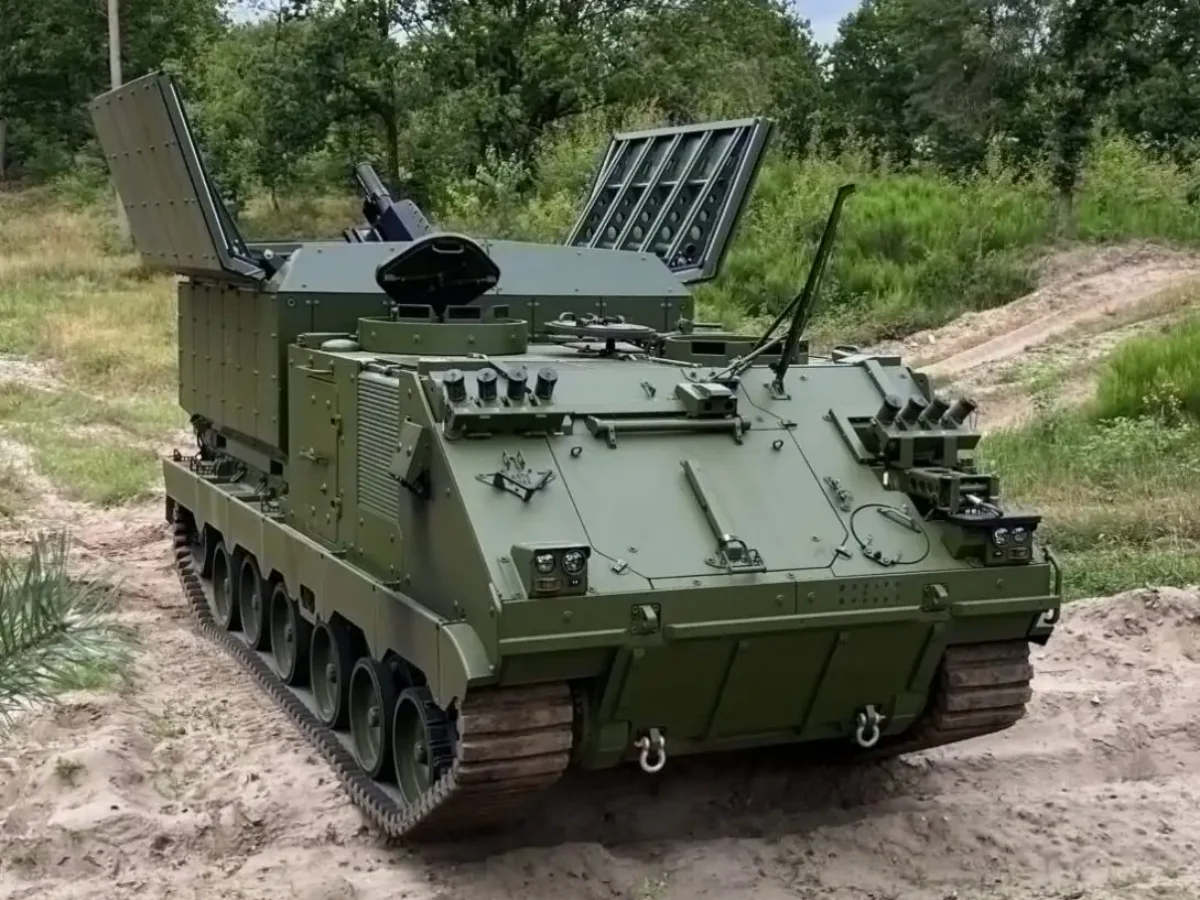
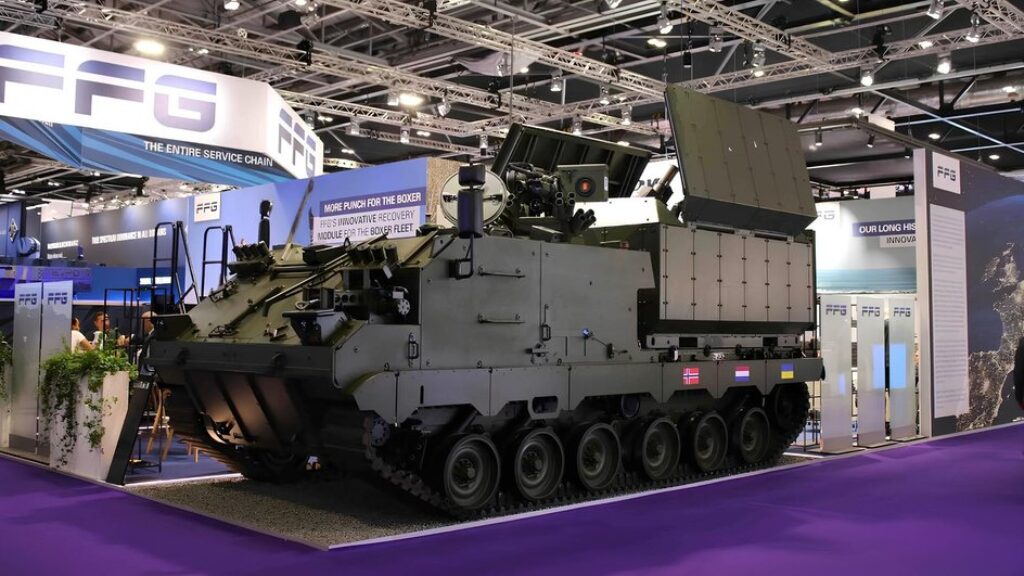
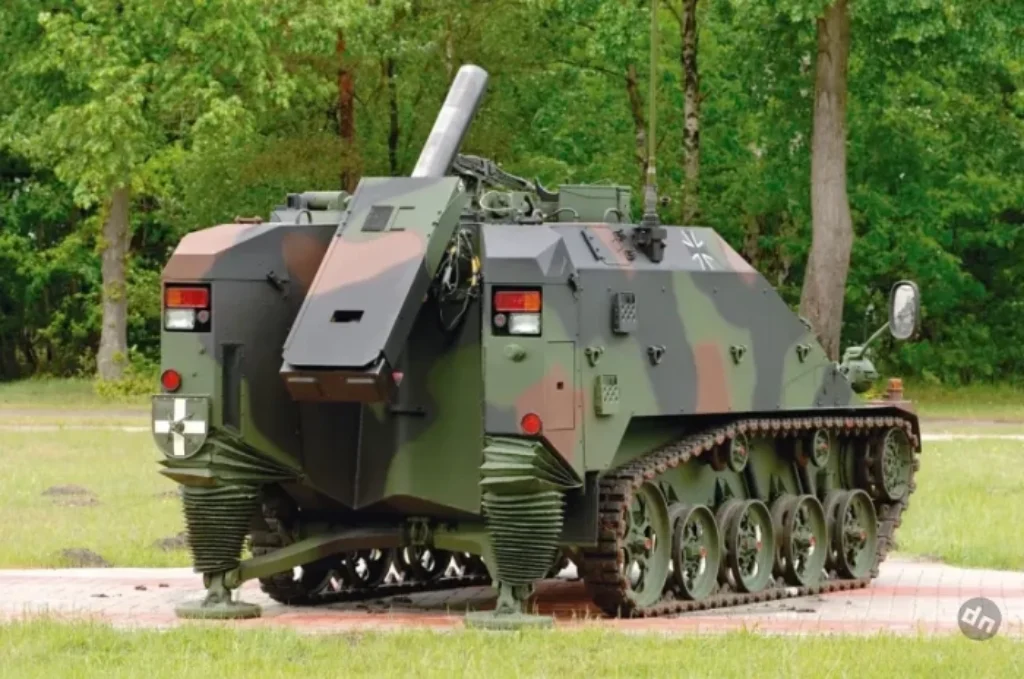
At DSEI 2025 in London, German manufacturer Flensburger Fahrzeugbau Gesellschaft unveiled the new ACSV G5 Ragnarok self-propelled mortar. At first glance, the vehicle appears rather modest. No hypersonic missiles, no artificial intelligence, no laser weapons. Just a 120mm mortar mounted on a tracked chassis.
But first impressions can be deceiving.
In reality, Ragnarok provides a glimpse into how NATO sees battalion-level fire support developing over the coming decades. More importantly, this is not simply another mortar carrier. It is an attempt to create a universal platform capable of replacing several different categories of military vehicles at once.
A Norwegian Mortar on a German Chassis
Perhaps the most interesting aspect of Ragnarok is its origin.
The vehicle is essentially a hybrid of two separate projects.
The mortar module comes from Norway. The MWS120 Ragnarok was developed by Rheinmetall Nordic. The tracked chassis comes from Germany in the form of the new ACSV G5 platform developed by FFG.
This division perfectly illustrates NATO’s modern approach to defense procurement. Instead of developing completely new vehicles from scratch, manufacturers increasingly seek to combine existing solutions into a single integrated system.
The result is a relatively lightweight self-propelled mortar weighing approximately 20 tons, capable of operating alongside mechanized units without falling behind infantry fighting vehicles.
Why Rate of Fire Became the Key Selling Point
One figure receives more attention than any other: 20 rounds per minute.
For a 120mm mortar, this is a remarkably high rate of fire.
Yet the real story is not the firing rate itself. What matters even more is the system’s reaction time.
According to the manufacturer, a complete fire mission can be executed in less than one minute, from receiving target coordinates to firing the fourth round.
That reflects the realities of the modern battlefield.
Today, an artillery system often survives only as long as it takes to complete its mission and relocate. As a result, maximum range is no longer the only critical factor. Speed of engagement has become just as important.
This is why Ragnarok features electrically powered laying systems and a highly automated fire-control process.
Not a Turret, but a Deliberate Compromise
Interestingly, the Norwegians deliberately avoided a fully automated turret.
In recent years, many manufacturers have moved toward highly automated systems such as the Finnish-Swedish AMOS or the Polish Rak.
However, such solutions come with a significant drawback: cost.
Ragnarok retains manual loading while still maintaining a very high rate of fire.
At first glance, that may appear old-fashioned. Yet the developers intentionally prioritized reliability, ease of maintenance, and lower procurement costs.
In many ways, the system occupies a niche between traditional towed mortars and fully fledged self-propelled artillery systems.
The Real Star May Be the G5 Chassis
The mortar itself may attract most of the attention, but the true centerpiece of the project could be the ACSV G5 platform.
The chassis is one of the most interesting new armored vehicle projects currently emerging in Europe.
It features:
— an MTU engine producing 460 kW,
— a ZF automatic transmission,
— Soucy composite rubber tracks,
— and a fully modular architecture.
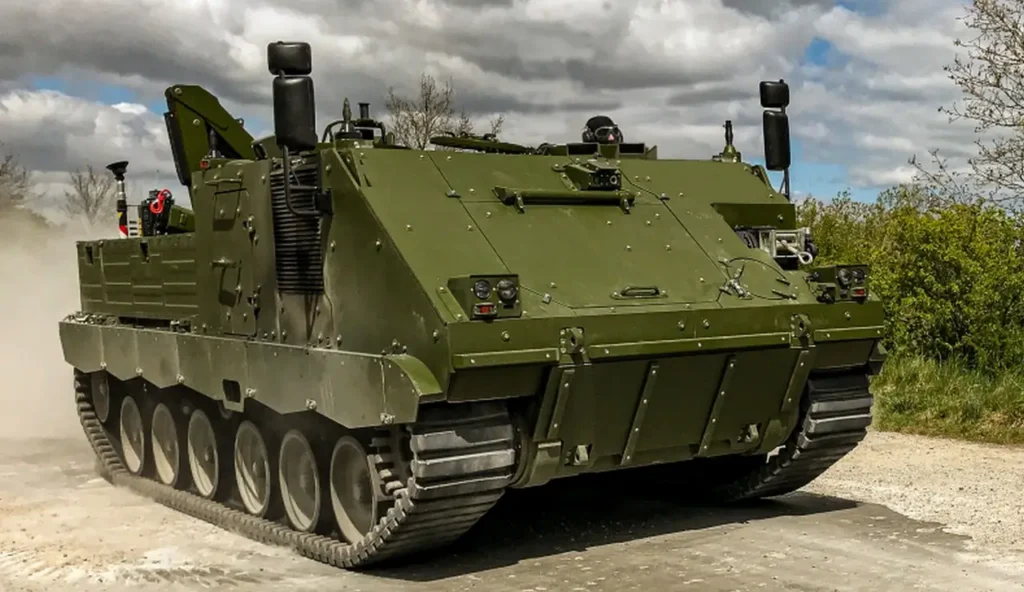
Most notably, the rear section is compatible with standard 10-foot ISO container mounts.
In practical terms, this means the same vehicle can serve as:
— a mortar carrier,
— an air-defense platform,
— a command post,
— a medical evacuation vehicle,
— a drone carrier,
— or a recovery vehicle.
For military forces operating under budget constraints, such versatility is highly attractive.
Norway Has Already Voted With Its Wallet
One of the most revealing aspects of the project is that it already has significant backing.
Norway has ordered approximately 50 vehicles from the G5 family in various configurations.
Even more interesting is the decision by the Netherlands to select the same chassis for future air-defense systems.
As a result, an entire ecosystem of military vehicles is beginning to form around the G5 platform.
Historically, that often proves far more important than the success of any individual variant.
Ragnarok Reflects NATO’s New Philosophy
Perhaps the most important takeaway is what Ragnarok says about NATO’s broader approach to military modernization.
A decade ago, many Western armies were heavily focused on highly sophisticated and extremely expensive systems.
Today, priorities are shifting.
Military planners increasingly want equipment that is:
— relatively affordable,
— easy to maintain,
— highly mobile,
— compatible with existing ammunition stocks,
— and easily integrated into digital command-and-control networks.
That is precisely why Ragnarok is generating so much interest.
It is not a revolutionary weapon.
Instead, it is a highly pragmatic attempt to create a modern self-propelled mortar that can be produced in large numbers, maintained efficiently, and adapted for multiple battlefield roles.
And military history repeatedly demonstrates that such practical systems often achieve far greater success than the most ambitious and technologically extravagant projects.