
Ukraine’s Katran Venom V2: The Naval Drone Turning Into a Mini-Destroyer for the Age of Unmanned Warfare

This material is based on reporting by Defense Express, The War Zone, and other open sources.
Ukrainian company MAC HUB has unveiled the upgraded Katran Venom V2 unmanned surface vessel, and at first glance its specifications sound almost absurd. FPV drones, torpedoes, MANPADS, machine guns, electronic warfare systems, artificial intelligence, signals intelligence, and even automated damage-control systems — all of it is now being packed onto a single unmanned combat boat.
But the most interesting part is not the amount of weaponry.
The Katran Venom V2 demonstrates how Ukraine is gradually changing the entire philosophy of naval warfare itself. Only a few years ago, naval drones were viewed primarily as relatively simple “explosive boats.” Now Ukrainian developers are attempting to transform unmanned surface vessels into fully autonomous combat platforms capable of simultaneously functioning as strike craft, FPV drone carriers, air-defense systems, reconnaissance assets, and nodes in a distributed combat network.
And when viewed in the context of the rapid evolution of Ukrainian naval drones over the past three years, it becomes clear that the Black Sea is gradually turning into a testing ground for the navy of the future.
From “Explosive Boat” to Unmanned Warship
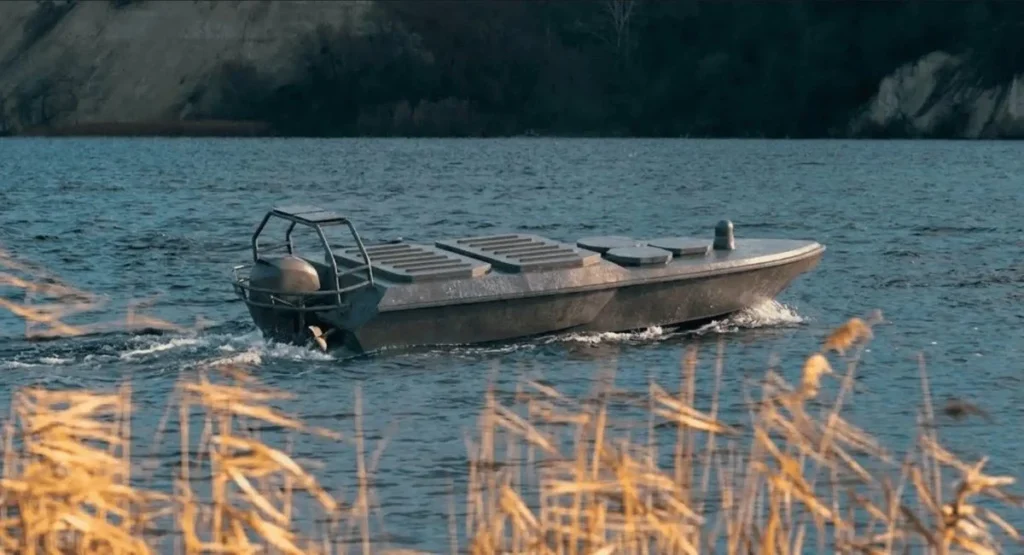
When Ukraine first began deploying naval drones against Russia’s Black Sea Fleet, many observers treated them almost dismissively.
Small remotely controlled boats carrying explosives looked more like wartime improvisation than the beginning of a naval revolution. But then came the attacks on Sevastopol, strikes against warships, oil platforms, and coastal infrastructure, and suddenly the Russian fleet discovered that large surface combatants were becoming highly vulnerable to relatively inexpensive unmanned systems.
That was when the real naval drone revolution began.
Magura, Sea Baby, Toloka, Mamai, Katran — within just a few years, Ukraine built an entire ecosystem of maritime unmanned systems. And perhaps most importantly, these platforms have gradually moved away from the concept of the disposable suicide boat.
The Katran Venom V2 may be the most radical example of that evolution so far.
Because it is no longer simply an explosive delivery platform.
In many ways, the Ukrainians are attempting to build a small autonomous unmanned destroyer.
A Small Boat Carrying the Arsenal of a Warship
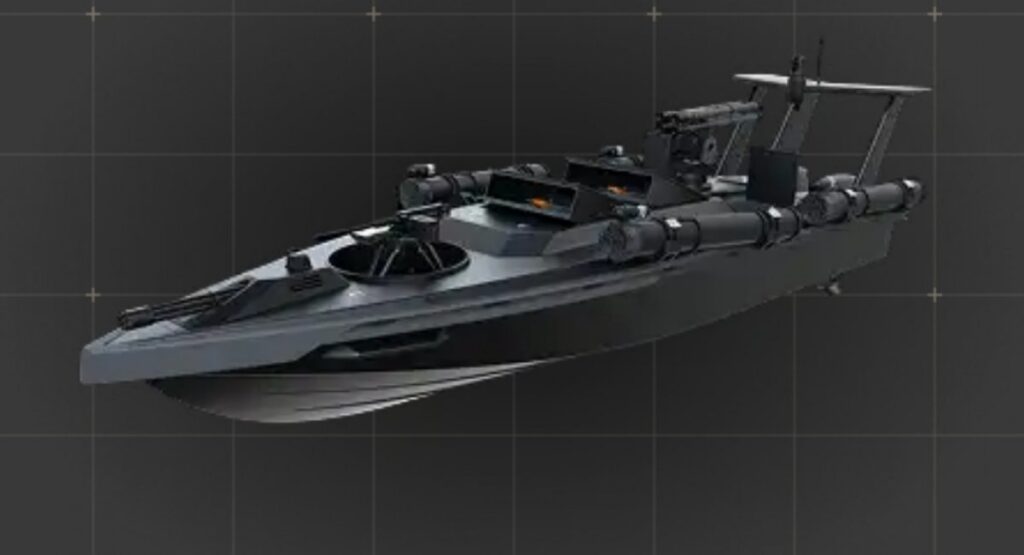
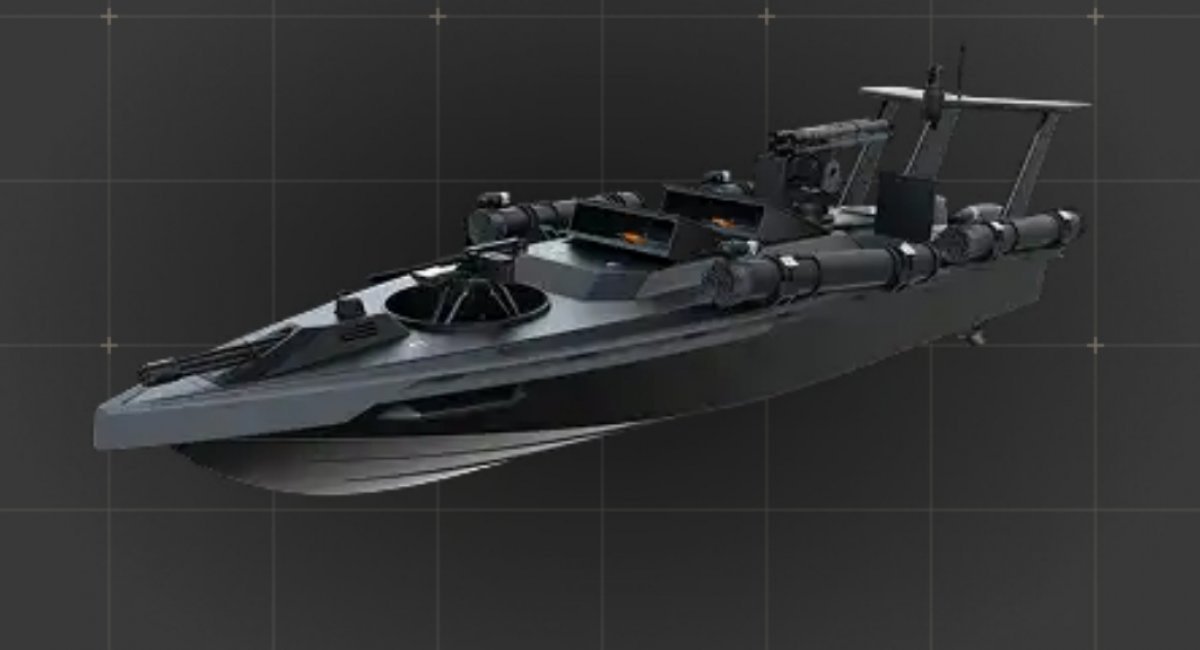
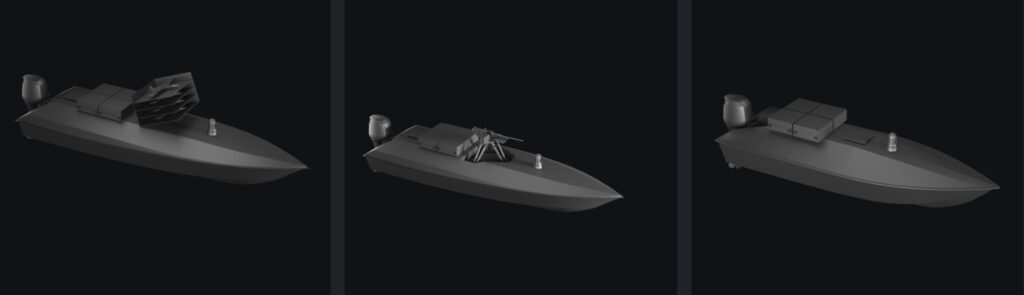
The Venom V2’s weapons package appears almost surreal for a drone of its size.
According to released information, the vessel can carry:
— six FPV drones,
— four lightweight torpedoes,
— two airborne strike FPV drones,
— a 12.7 mm Browning M2 turret,
— a forward-mounted 7.62 mm Minigun,
— and Piorun MANPADS launchers.
Initially, many analysts assumed these represented separate mission configurations, with different weapons installed depending on operational requirements. But MAC HUB now strongly suggests that multiple systems may operate simultaneously.
Even more revealing is the platform’s control structure.
Operating the Katran Venom V2 reportedly requires a team of nine operators:
— a boat pilot,
— a navigator,
— four UAV pilots,
— a weapons operator,
— and a torpedo systems specialist.
That detail is extremely important.
Because the Venom V2 is no longer simply “a drone.”
It is becoming a distributed weapons platform.
In effect, a single naval drone is being transformed into a mobile launch platform for an entire ecosystem of other drones and strike systems.
Ukraine Is Building a “Swarm at Sea”
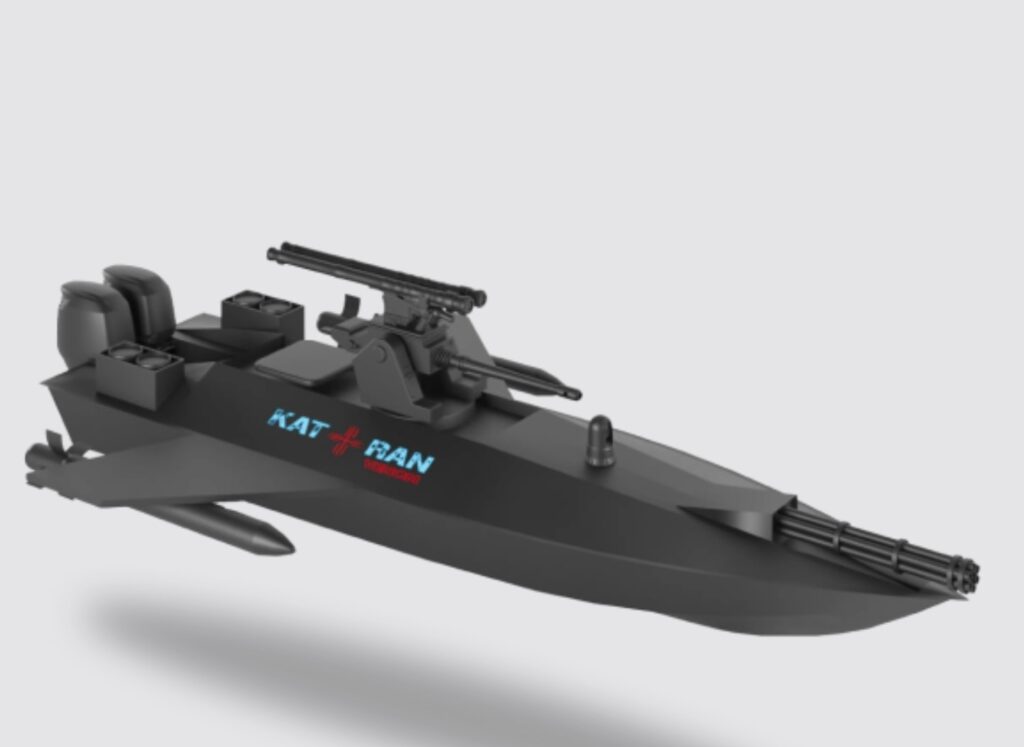
The most interesting aspect of the Katran program is not the torpedoes or machine guns themselves.
The real concept revolves around network-centric warfare.
Ukrainian developers are increasingly moving toward a model where the naval drone serves as a control node for multiple unmanned systems:
— FPV drones,
— aerial reconnaissance UAVs,
— strike drones,
— and potentially even underwater unmanned systems.
In many ways, the Venom V2 begins to resemble a miniature unmanned aircraft carrier.
That is why the vessel incorporates:
— electronic intelligence systems,
— electronic warfare suites,
— laser warning sensors,
— smoke-screen deployment systems,
— automated survivability systems,
— and artificial intelligence elements.
According to developers, the onboard AI is capable of automatically detecting targets, classifying them, determining coordinates, and synchronizing data across a larger combat network.
That means the Katran is no longer simply a remotely piloted boat.
It is becoming part of a distributed combat system in which multiple autonomous platforms function together as a single organism.
The Black Sea Is Becoming a Laboratory for the Future Fleet
Perhaps the most important aspect of the entire story is what it says about the future of naval warfare itself.
Only a decade ago, most visions of future naval combat revolved around giant destroyers, aircraft carriers, and extremely expensive missile systems. Ukraine is now actively challenging that model.
Because recent warfare has demonstrated that:
— a small unmanned boat can threaten a frigate,
— FPV drones can attack naval vessels,
— and inexpensive maritime drones can force an entire fleet to retreat into protected harbors.
Now that concept is becoming even more sophisticated.
If the first Ukrainian naval drones were essentially “waterborne kamikazes,” the latest generation is evolving into fully capable unmanned combat ships:
— with their own air defenses,
— their own drone complements,
— electronic warfare systems,
— torpedoes,
— and artificial intelligence.
In effect, Ukraine is moving toward a model where fleets are no longer centered around a handful of massive ships, but around swarms of inexpensive autonomous combat platforms.
And that is deeply uncomfortable news for traditional navies.
Because a destroyer costing billions of dollars begins to look extremely vulnerable in a world where it can be attacked by dozens of drones costing a fraction of the price.
But the Biggest Question Remains: How Much of This Actually Works?
At the same time, major questions remain surrounding the Katran Venom V2.
Some of its announced capabilities still appear closer to a future concept than a fully operational combat system — especially the simultaneous integration of such a wide variety of weapons onto a relatively compact platform.
Naval environments are also extremely harsh for unmanned systems:
— storms,
— saltwater corrosion,
— communications disruptions,
— electronic warfare,
— and endurance limitations all remain serious challenges.
But even if only part of the claimed capabilities prove practical, the direction of development itself is extremely revealing.
Because the Katran Venom V2 is not simply another Ukrainian naval drone.
It is an attempt to build a new kind of 21st-century warship — inexpensive, unmanned, networked, and mass-producible.
And increasingly, that appears to be the direction in which modern naval warfare itself is heading.






