The Bestselling Handgun in the World: Uncovering All the Secrets of the New-Generation Glock

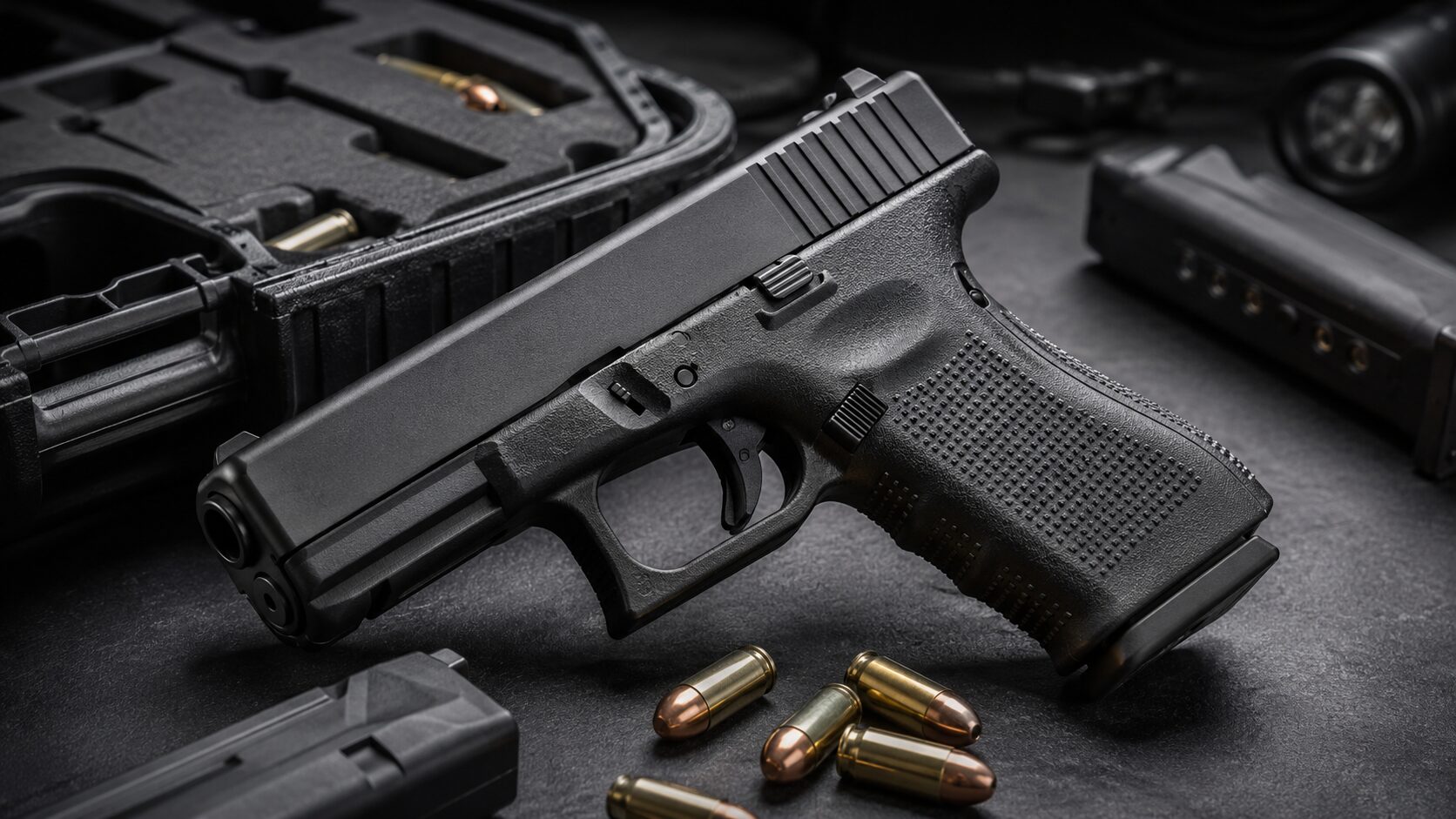
The Pistol That Changed the Handgun Market Forever
There are very few weapons that fundamentally changed an entire industry.
The Glock became one of them.
Today, it is difficult to imagine the modern handgun market without polymer-framed striker-fired pistols. But in the early 1980s, the idea seemed almost absurd. Military sidearms were still expected to be made of steel, equipped with external hammers, and designed according to traditions dating back decades.
Then an Austrian company with almost no firearms experience entered the market — and rewrote the rules.
A Company That Was Never Supposed to Build Pistols
The story of Glock begins unusually.
The company founded by Gaston Glock did not originally manufacture firearms at all. Glock produced military equipment such as knives, entrenching tools, and polymer components.
But in the early 1980s, the Austrian military announced a competition for a new service pistol.
Most established firearms manufacturers approached the project traditionally. Gaston Glock approached it differently.
Instead of improving an old design, he effectively built a pistol from scratch around modern materials and simplified engineering principles.
The result was the Glock 17.
The Polymer Revolution
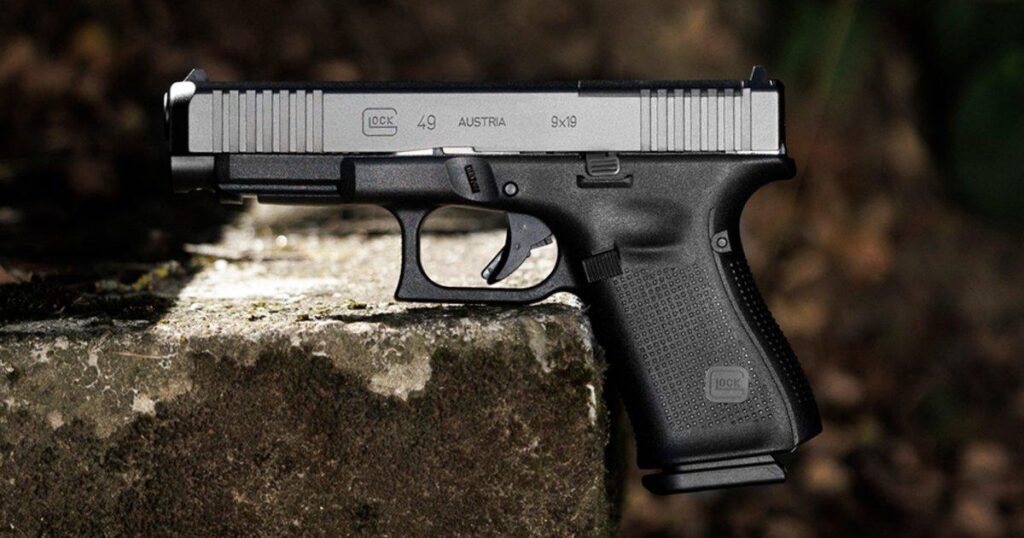
What immediately made the Glock controversial was its polymer frame.
At the time, many people viewed a “plastic pistol” with suspicion. Rumors spread that the weapon would be invisible to airport scanners or too fragile for military use. Neither claim proved true. (britannica.com)
In reality, the polymer frame offered enormous advantages:
- lower weight;
- corrosion resistance;
- reduced manufacturing complexity;
- lower production cost;
- high durability under harsh conditions.
Combined with a striker-fired mechanism and a relatively low number of parts, the Glock became exceptionally reliable and easy to maintain.
And reliability is what wins military and police contracts.
The “Safe Action” System
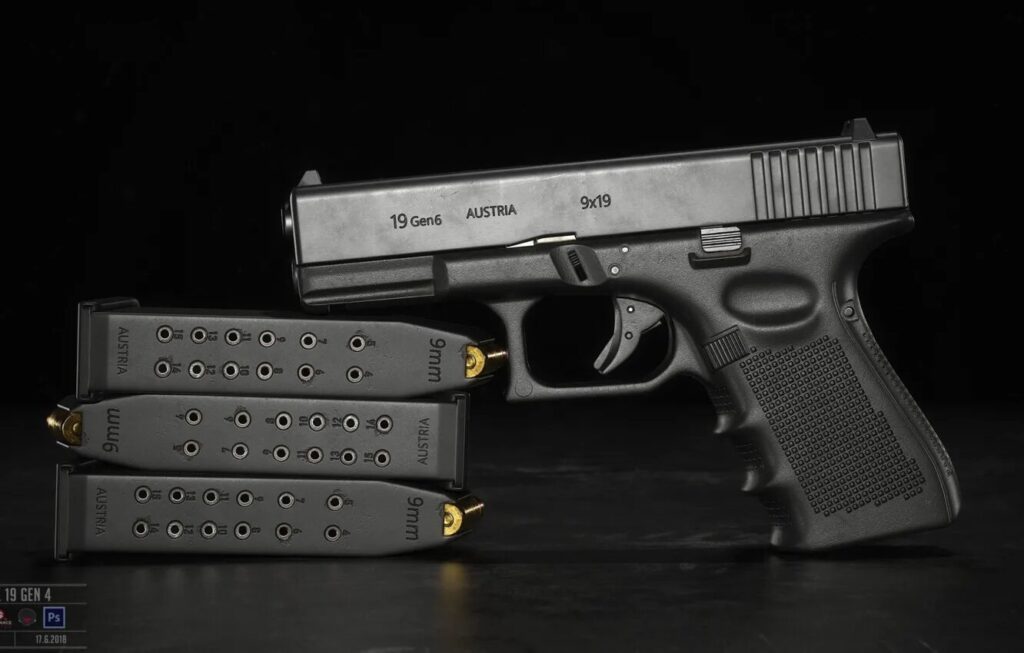
Another revolutionary feature was Glock’s “Safe Action” trigger system.
Traditional pistols often relied on external safeties or complicated trigger mechanisms. Glock simplified the concept dramatically. The pistol used a partially pre-cocked striker system with multiple internal safeties operating automatically.
This created a handgun that was:
- simple to operate;
- fast to deploy;
- consistent in trigger pull;
- easier to train with.
Critics argued that removing manual safeties increased accidental discharge risk. Supporters countered that simplicity under stress mattered more.
The market eventually delivered the verdict.
The Glock became one of the most widely adopted service pistols in history.
Why Police and Militaries Chose Glock
By the 1990s, Glock pistols were spreading rapidly through police and military organizations around the world.
Several factors drove this success.
First came reliability. Glock pistols gained a reputation for functioning under dirt, mud, sand, and poor maintenance conditions. Second came magazine capacity. The original Glock 17 offered 17 rounds in an era when many service pistols still carried significantly less ammunition.
Then came logistics.
The simplified design made maintenance easier and reduced costs for large organizations. Fewer parts meant fewer failures and easier training for armorers.
In many ways, Glock succeeded because it treated the pistol less like a handcrafted weapon — and more like an industrial tool.
The Generational Evolution
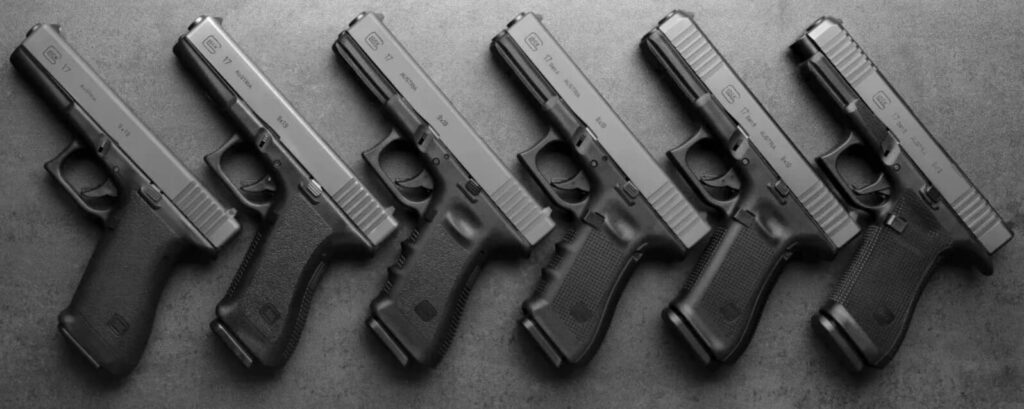
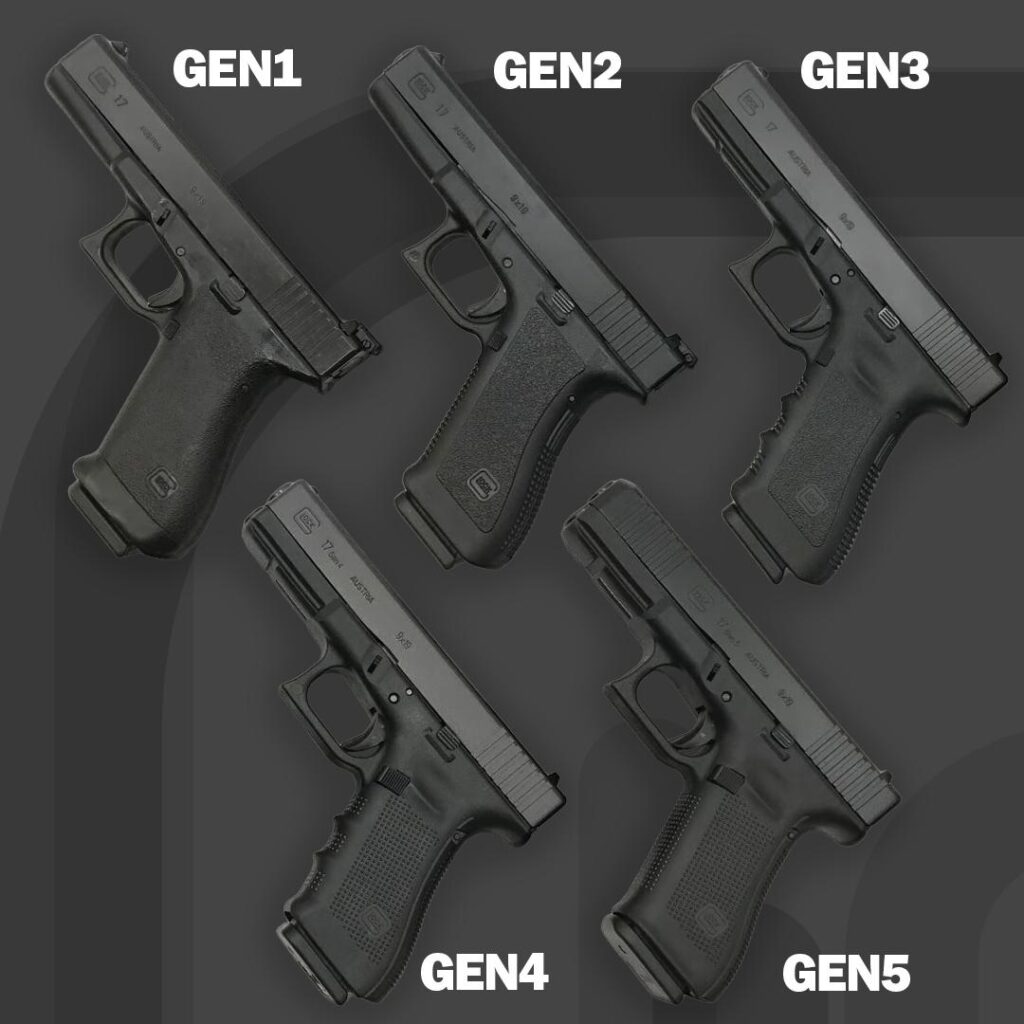
One reason Glock remained dominant for decades is continuous evolution.
Instead of radically redesigning the pistol, the company gradually refined the platform across multiple generations:
- improved ergonomics;
- interchangeable backstraps;
- enhanced recoil systems;
- ambidextrous controls;
- optics-ready slides;
- improved barrels and triggers.
The modern Gen 5 Glock pistols represent the culmination of this evolutionary approach. (glock.com)
Importantly, Glock rarely abandoned its core philosophy: simplicity, reliability, and modularity.
The Pistol That Created an Entire Industry
The Glock’s influence extends far beyond the company itself.
Today, the vast majority of modern service pistols follow the same basic formula:
- polymer frame;
- striker-fired mechanism;
- high-capacity magazine;
- simplified controls.
In other words, much of the handgun market effectively became “post-Glock.”
Competitors initially mocked the design.
Then they copied it.
More Than a Weapon — A Cultural Phenomenon
The Glock also became something larger than a firearm.
It entered movies, video games, police culture, competitive shooting, and global popular culture. Few handguns became so instantly recognizable worldwide.
At the same time, it developed an almost paradoxical reputation: brutally functional, visually simple, almost industrially plain — yet iconic precisely because of that simplicity.
The Glock was never designed to look elegant.
It was designed to work.
And that may be exactly why it became the bestselling handgun platform in the world.
The Legacy of Glock
Today, it is easy to forget how radical the Glock once seemed.
A polymer-framed striker-fired pistol without a traditional manual safety looked almost heretical in the early 1980s. But over time, the design proved so effective that it permanently reshaped military, police, and civilian handgun markets.
Few weapons can truly claim to have changed the industry.
The Glock can.