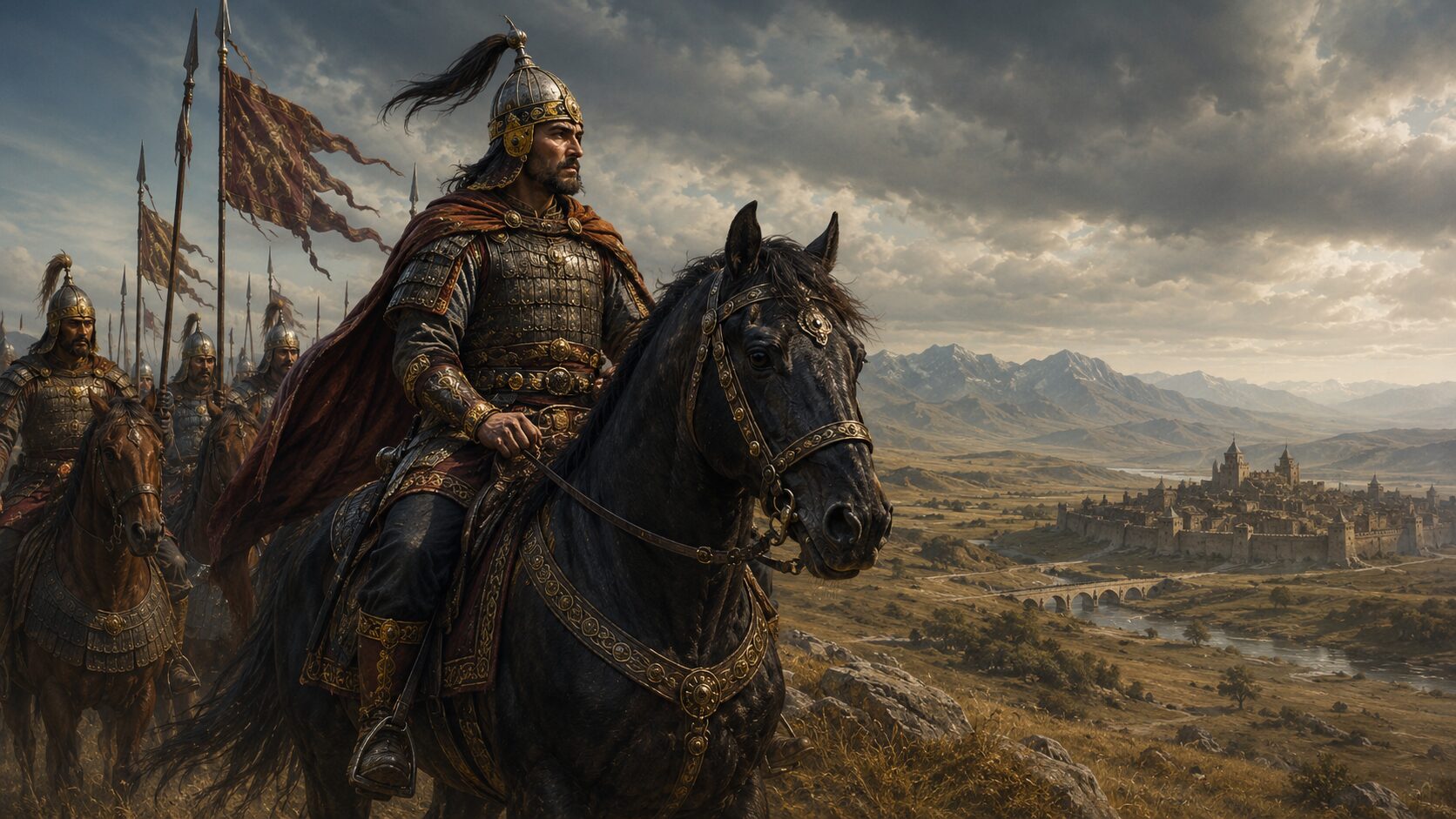
The Riders Who Came Out of the Eurasian Steppe
When people speak about the peoples who shaped Europe, the same names usually appear: Romans, Franks, Vikings, Mongols.
The Sarmatians are mentioned far less often.
And yet, for several centuries, these Iranian-speaking nomadic tribes dominated enormous territories stretching from the Don to the Danube, fought Rome, influenced military traditions across Europe, and may even have left traces in medieval knightly culture itself.
At their peak, the Sarmatians were one of the most formidable cavalry civilizations of the ancient world.
And their influence reached much farther west than many realize.
The Successors of the Scythians
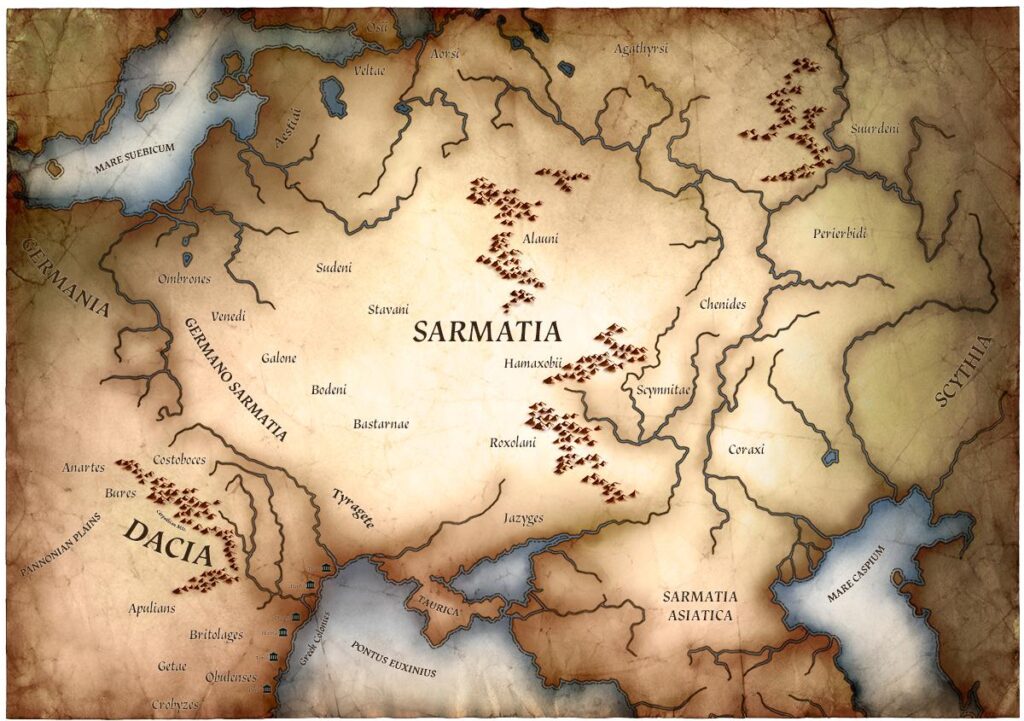
The Sarmatians emerged from the great steppe world north of the Black Sea and Caspian Sea.
By roughly the 4th–3rd centuries BC, they gradually displaced or absorbed the Scythians, becoming the dominant nomadic force in the Pontic steppe.
Like the Scythians before them, the Sarmatians were masters of mounted warfare. Their societies revolved around horses, mobility, and military prestige. Greek and Roman authors often described them as fierce and warlike people whose entire way of life centered around combat.
But the Sarmatians also represented something new.
They brought cavalry warfare to an entirely different level.
The Rise of the Armored Horseman
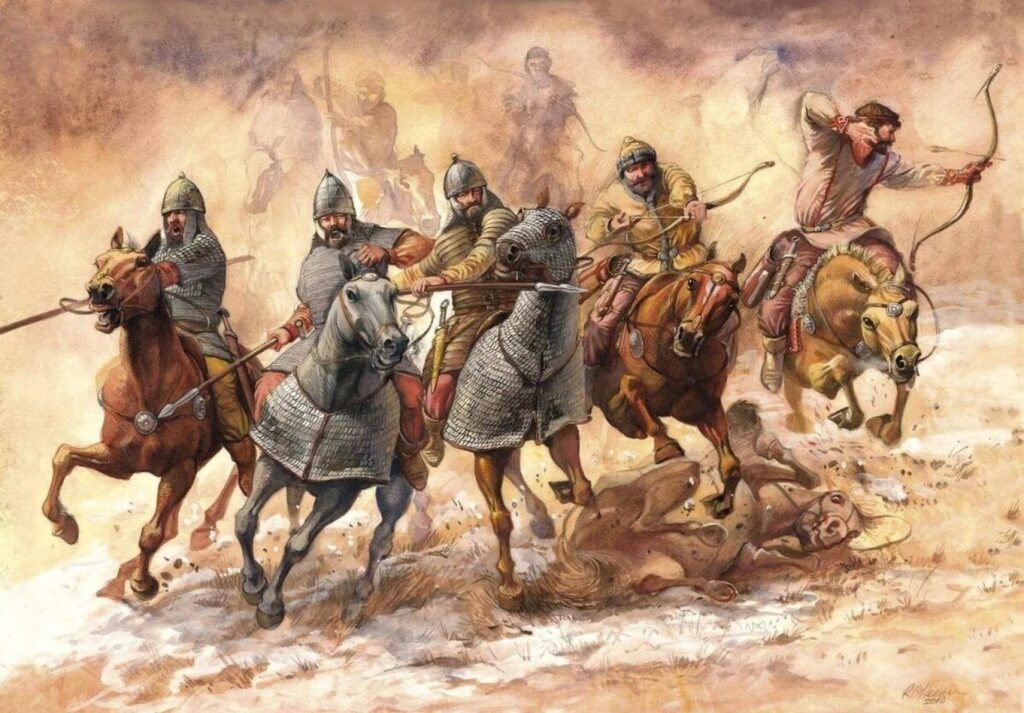
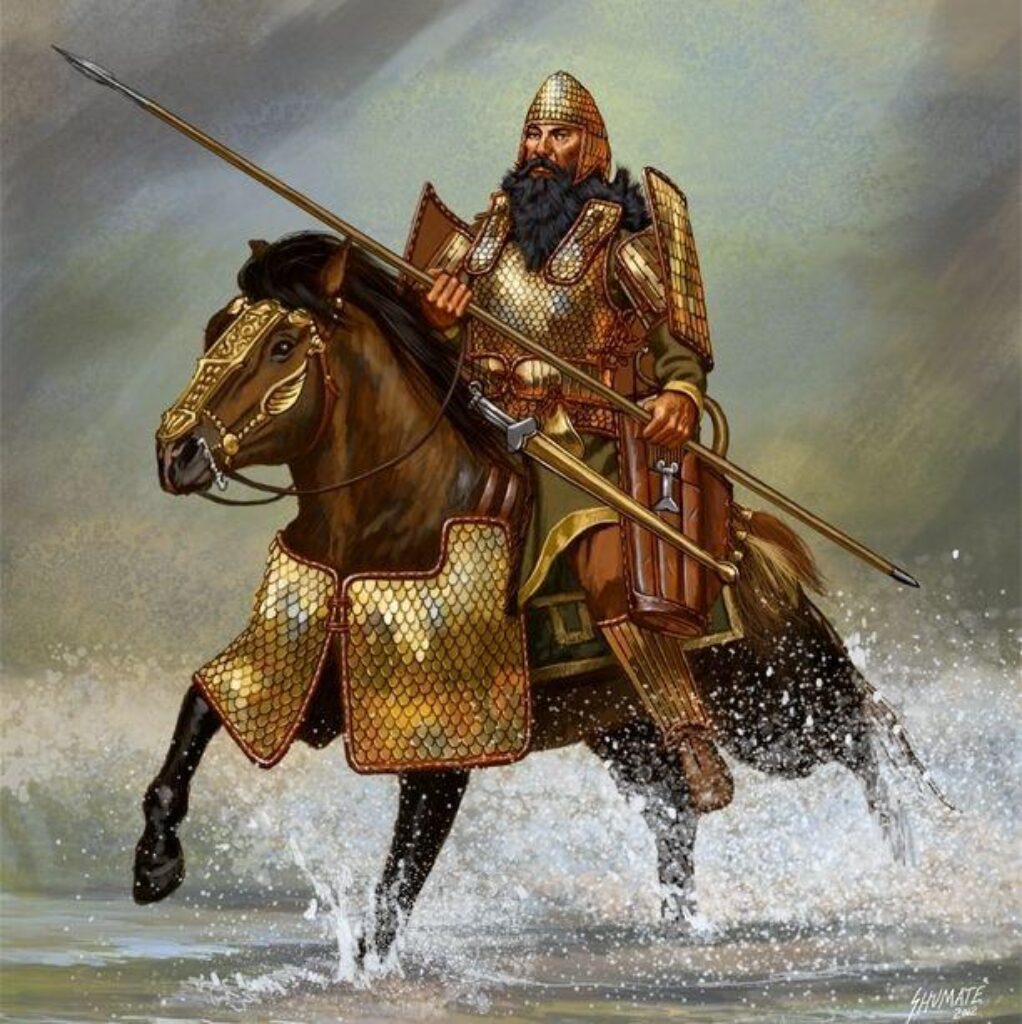
One of the most important Sarmatian contributions to military history was the development of heavily armored cavalry.
Sarmatian nobles and elite warriors fought as cataphracts — riders protected by armor, often alongside armored horses, using long lances capable of smashing through infantry formations.
For Rome, this style of warfare was both dangerous and fascinating.
The Roman military machine had been built around disciplined infantry. But against fast-moving armored cavalry from the steppe, traditional tactics often struggled. Over time, the Romans increasingly adapted by incorporating cavalry forces of their own, including Sarmatian auxiliaries.
In this sense, the Sarmatians helped push Europe toward the age of heavy cavalry.
Sarmatians in Roman Service
The relationship between Rome and the Sarmatians was complex.
Sometimes they were enemies. Sometimes allies. Often both within a single century.
After various wars along the Danube frontier, Rome recruited large numbers of Sarmatian cavalry into imperial service. One of the most famous examples came after Emperor Marcus Aurelius defeated the Iazyges in the 2nd century AD and transferred thousands of Sarmatian horsemen into Roman military service.
Some of these cavalrymen were reportedly sent as far as Roman Britain.
And this is where history begins to blur into legend.
The Sarmatians and the Arthurian Myth
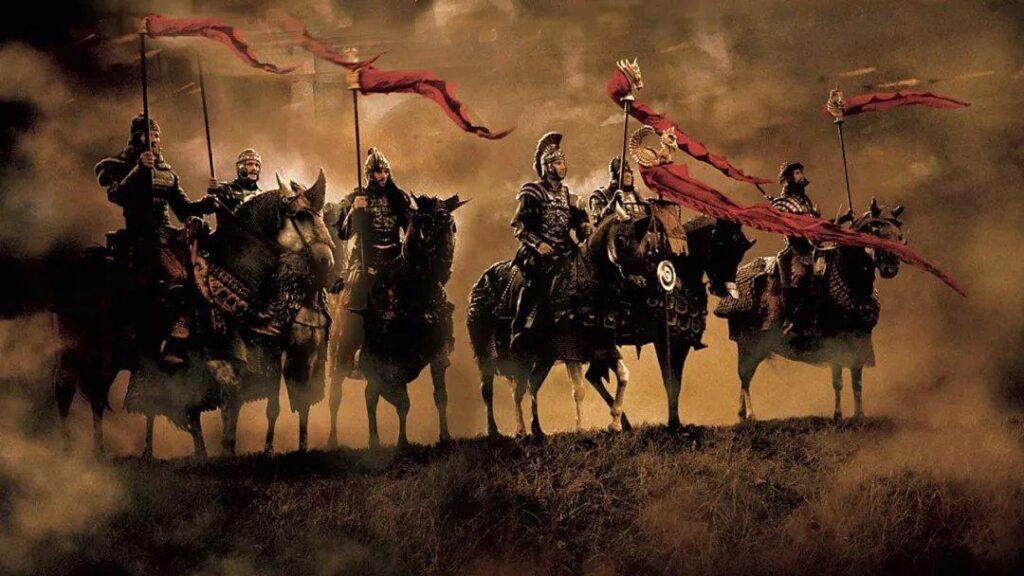
For decades, historians and enthusiasts have debated one particularly intriguing theory: that elements of the Arthurian legends may have roots in Sarmatian cavalry traditions.
The idea became especially famous after researchers noted striking parallels between certain Sarmatian symbols and later Arthurian imagery — including dragon standards, cavalry brotherhoods, and heroic mounted warriors stationed in Britain under Roman rule. (history.com)
The theory remains controversial.
There is no direct proof that King Arthur himself was “Sarmatian.” But the possibility that fragments of steppe warrior culture survived within late Roman Britain — and later merged into medieval myth — remains one of the most fascinating cultural crossroads in European history.
If true, it would mean that echoes of the Eurasian steppe survived inside one of Europe’s greatest legends.
How the Steppe Changed European Warfare
Even beyond myth, the military influence of the Sarmatians was enormous.
The spread of heavy cavalry tactics across late antiquity and the early medieval world cannot be understood without the steppe peoples. The idea of the armored mounted elite — a warrior aristocracy defined by cavalry combat — increasingly became central to European warfare.
The Sarmatians were not solely responsible for this transformation. But they were one of its most important carriers.
In many ways, they helped create the military environment from which medieval knighthood would later emerge.
The People Who Vanished Into Europe
By the early Middle Ages, the Sarmatians as a distinct people largely disappeared.
Some were absorbed into Slavic populations. Others merged with Alans and different steppe groups. Waves of migration, invasion, and assimilation gradually erased their political identity.
But disappearance is not the same as irrelevance.
Their military traditions, cultural influence, and genetic traces survived across Eastern and Central Europe. Even centuries later, echoes of Sarmatian identity appeared in places like the Polish-Lithuanian Commonwealth, where parts of the nobility embraced “Sarmatism” — the belief that they descended from the ancient Sarmatians.
The steppe riders had become part of Europe itself.
The Forgotten Architects of Europe
The Sarmatians rarely occupy the center of popular history.
They left no empire comparable to Rome, no monumental architecture like the Greeks, no medieval kingdom remembered by modern schoolbooks. They existed between worlds — between Europe and Asia, between antiquity and the Middle Ages.
And yet, their influence can be found almost everywhere:
in cavalry warfare,
in frontier Rome,
possibly even in Arthurian legend itself.
They came from the steppe.
And in many ways, Europe still carries their shadow.
source https://alternathistory.ru/oni-prishli-iz-stepi-i-doshli-do-franczii-kak-sarmaty-izmenili-evropu/