The Tank That Made Soldiers Run Before It Fired — The Best Flamethrower Tank of World War II

Fire as a Weapon: From Concept to Battlefield
The idea of installing a flamethrower on a tank emerged as early as the First World War. German designers even considered placing a pair of flamethrowers on the super-heavy K-Wagen, although that project never reached operational status.
Truly widespread use of flamethrower tanks began in the 1930s.
However, from the very beginning, they suffered from two critical limitations that severely restricted their effectiveness. First, the range of flamethrowers rarely exceeded 50 meters — and in practice was often even less. Second, most flamethrower tanks had only bulletproof armor, which led to heavy losses in combat.
Lessons of War
The Second World War became the peak period of flamethrower tank usage — and once again confirmed their fundamental problems.
It became clear that such vehicles required not only thicker, shell-resistant armor, but also a significant increase in flamethrower range — ideally up to at least 100 meters. Equally important was the issue of fire control and the presence of conventional gun armament.
The most significant progress in solving these problems was achieved by British and Soviet engineers.
And when these improvements were combined with mass production, the answer to the question of the “best” flamethrower tank became surprisingly straightforward.
Churchill Crocodile: A Different Approach
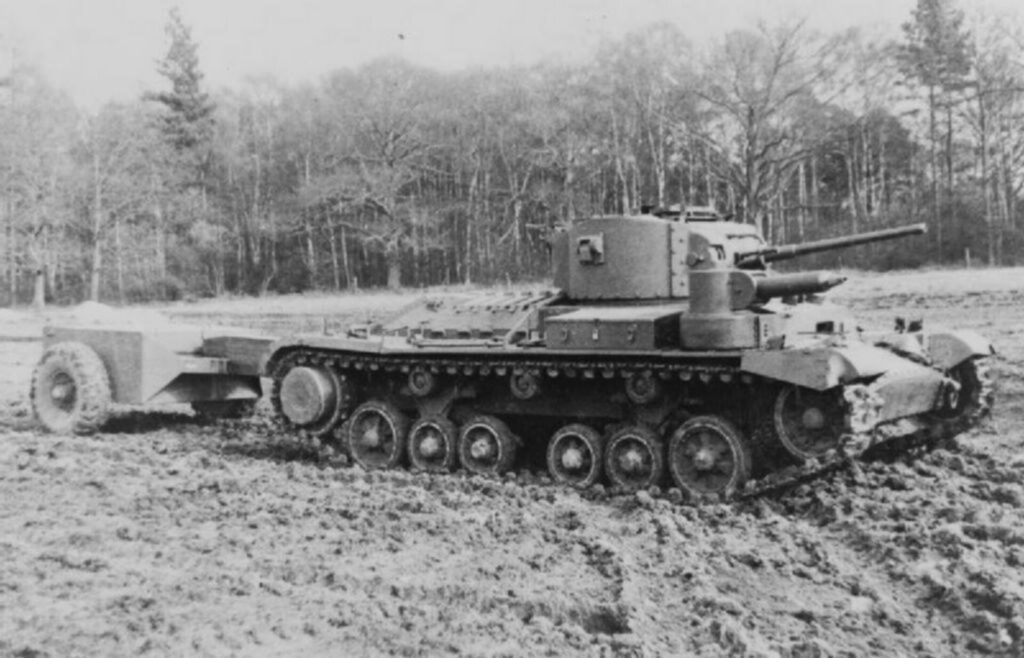
The answer lies in the British Churchill VII Crocodile.
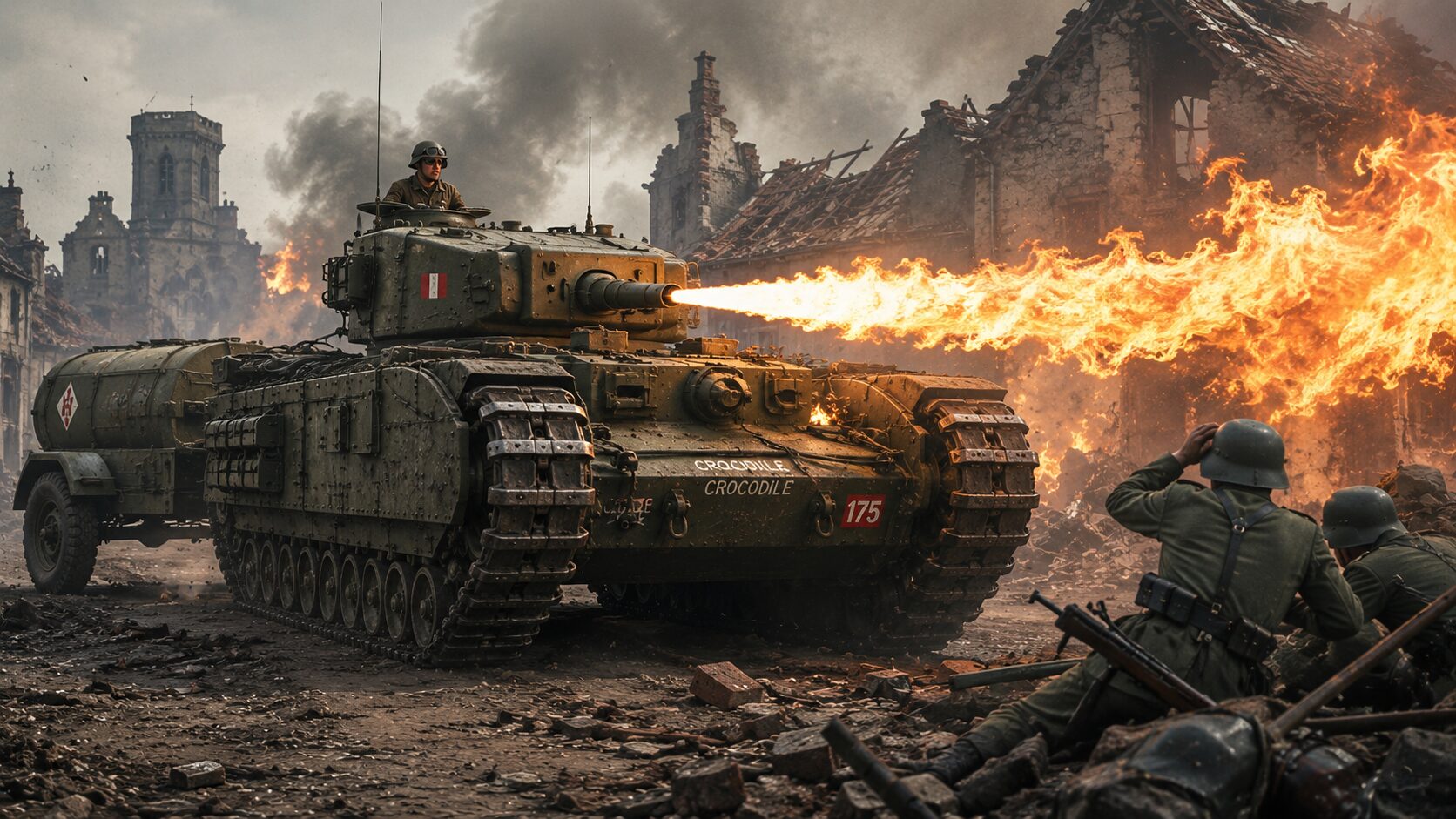
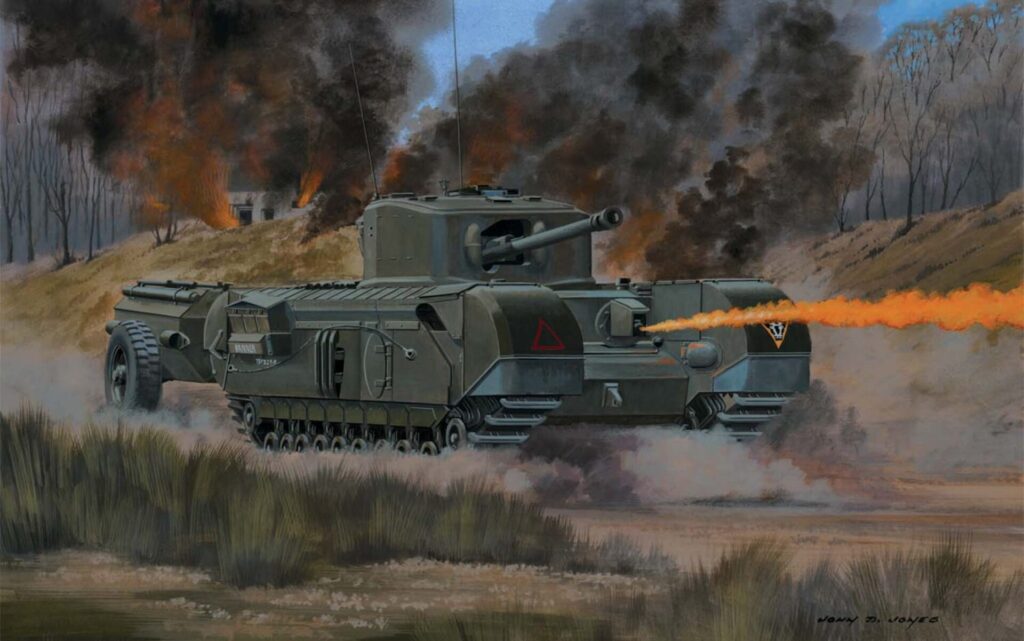
This vehicle was not simply another flamethrower tank — it represented a fundamentally different approach to the concept. It was based on the heavily armored Churchill infantry tank, which already provided strong protection against anti-tank weapons.
But the key innovation was elsewhere.
Instead of placing the flamethrower fuel inside the hull, the Crocodile used a towed armored trailer carrying the fuel mixture. This solution significantly reduced the risk of catastrophic destruction if the tank itself was hit.
At the same time, it allowed for a much greater supply of fuel — and therefore a longer and more sustained use of the flamethrower.
Firepower and Psychological Effect
The flamethrower of the Crocodile had a range significantly exceeding that of earlier designs, making it far more effective in combat.
But its true strength lay not only in physical destruction.
Flamethrower tanks exerted a powerful psychological effect on the enemy. Soldiers in fortified positions often abandoned them at the mere sight of such machines.
In this sense, the Crocodile was not just a weapon — it was an instrument of suppression.
A Weapon of Breakthrough
The Churchill Crocodile was actively used during the later stages of the war, particularly in the Normandy campaign and subsequent operations in Western Europe.
It proved especially effective against fortified positions, bunkers, and urban defenses — exactly the kind of targets where conventional tanks often struggled.
Importantly, the Crocodile retained its main gun, allowing it to operate as a full-fledged combat vehicle rather than a narrowly specialized machine.
This combination of survivability, firepower, and psychological impact made it uniquely effective.
The Most Successful Flamethrower Tank
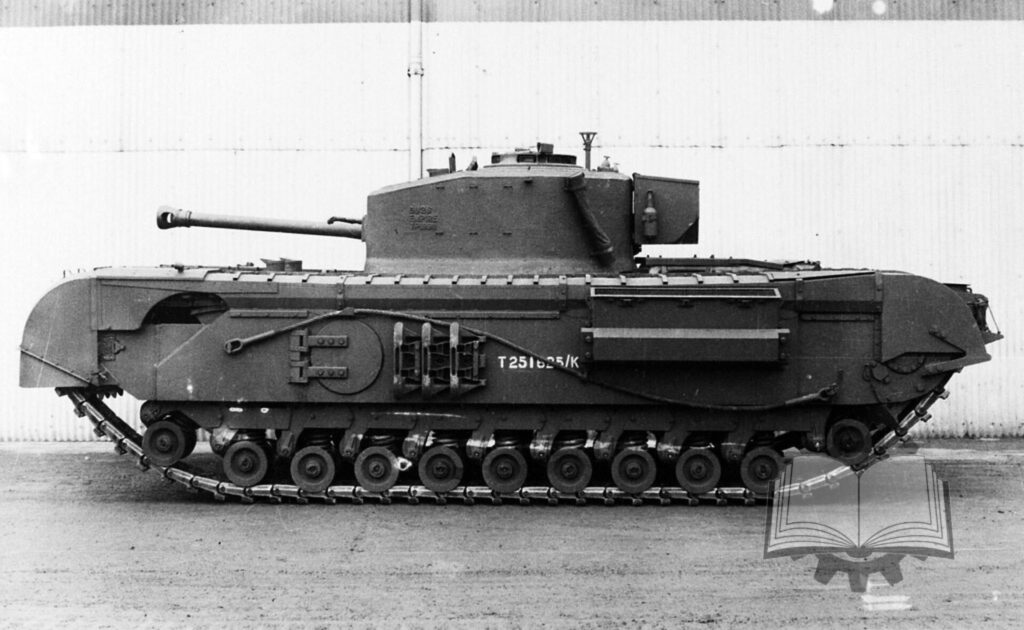
When evaluating flamethrower tanks as a class, several factors must be considered: survivability, range, effectiveness, and production scale.
In all of these categories, the Churchill Crocodile stands out.
It was not only one of the most advanced designs of its kind — it also became the most mass-produced flamethrower tank of the Second World War.
This combination ultimately secured its place as the best in its category.
A Niche Weapon That Found Its Role
Flamethrower tanks never became universal.
Their role was always specific: assaulting fortified positions, clearing trenches, and breaking resistance in difficult terrain. They were not designed for maneuver warfare or large-scale tank battles.
But within this niche, they proved extremely valuable.
The Crocodile represents the peak of this concept — a machine that fully realized the potential of flamethrower weapons on the battlefield.
The Legacy of the Crocodile
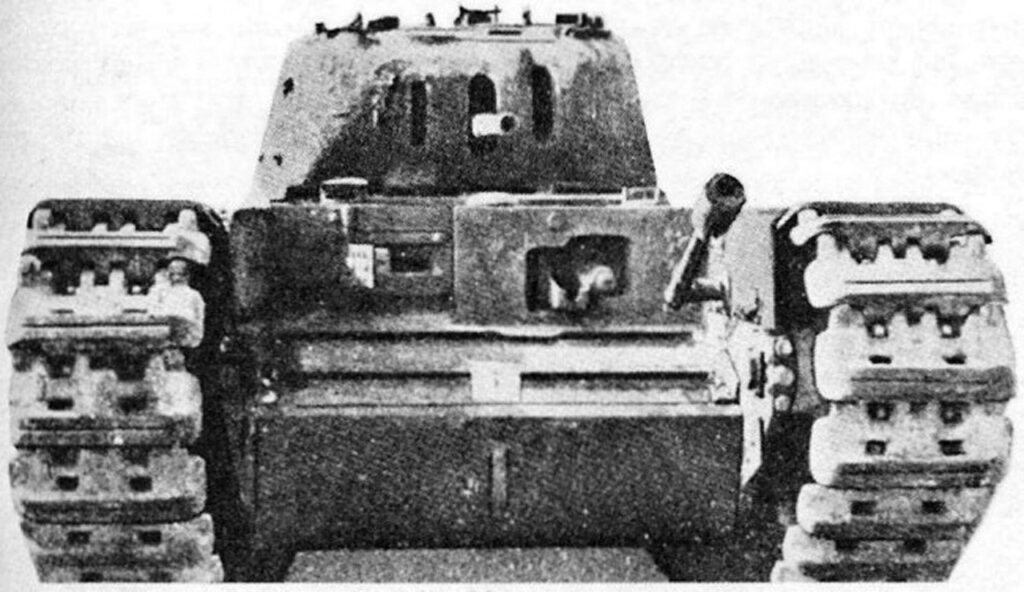
Today, the Churchill Crocodile is remembered not only as a technical success, but as a symbol of a very particular approach to warfare.
It demonstrates how even highly specialized weapons can become decisive — if used in the right context.
And in the case of flamethrower tanks, it remains the clearest example of what this concept could achieve at its absolute peak.