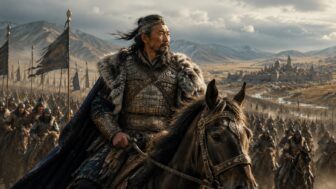
The Mongols Conquered China on Land. So Why Did the Song Dynasty’s Final Battle Take Place at Sea?

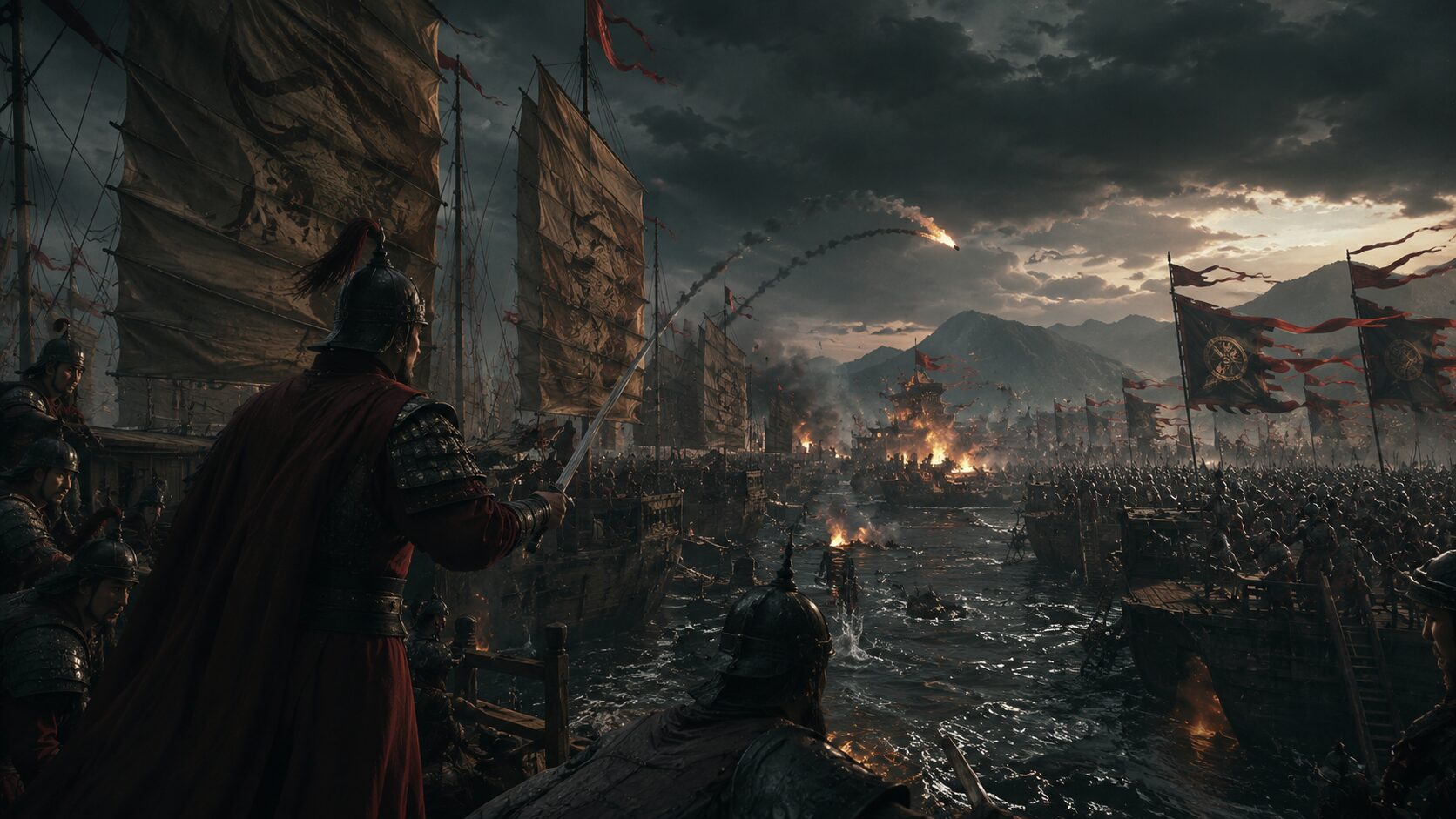
On March 19, 1279, the Chinese Song Empire had, in practical terms, already ceased to exist. Its capital was lost, most of its provinces had fallen under enemy control, its armies had been defeated, and the imperial court had spent years retreating farther south until it was finally pushed against the sea in what is now Guangdong. Yet the emperor was still alive. His name was Zhao Bing, he was seven years old, and formally this child remained the Son of Heaven, the legitimate ruler of a dynasty that had governed China for more than three centuries. Only now he had no palace, no capital, and almost no territory left. His empire had become a flotilla.
More than a thousand vessels lay in the waters near Yamen, carrying the remnants of the army, officials, courtiers, military families, and thousands of refugees. The last fragment of the Song state no longer existed on Chinese soil — it floated just off the coast. Around it, the fleet of the new Yuan dynasty was gradually closing the ring. The Mongols were about to complete the conquest of China in the one place where their traditional weapon was useless: at sea. And they would do it against a state that had possessed one of the most advanced naval traditions of its age.
The Mongols won. By the evening of March 19, Song resistance had effectively collapsed. When defeat became inevitable, the senior official Lu Xiufu took the young emperor in his arms and jumped into the water with him. According to traditional chronicles, many courtiers and loyalists followed. Sources speak of losses reaching at least 100,000 people — an enormous figure that, like many medieval estimates, has to be treated cautiously, but the scale of the catastrophe is beyond dispute.
That was the end of the Song dynasty. But the more interesting question is how it happened at all. How did the Mongols, who began their conquest of China as an army of steppe horsemen, learn within a few decades to build fleets numbering in the thousands, conduct river blockades, employ heavy siege technology and finally destroy one of China’s greatest dynasties in a naval battle? The answer reveals one of the central secrets of Mongol success. They did not win because they always fought in a uniquely Mongol way. They won because they learned astonishingly quickly to fight like their enemies.
The Song Was Not the Kind of China Cavalry Could Easily Conquer
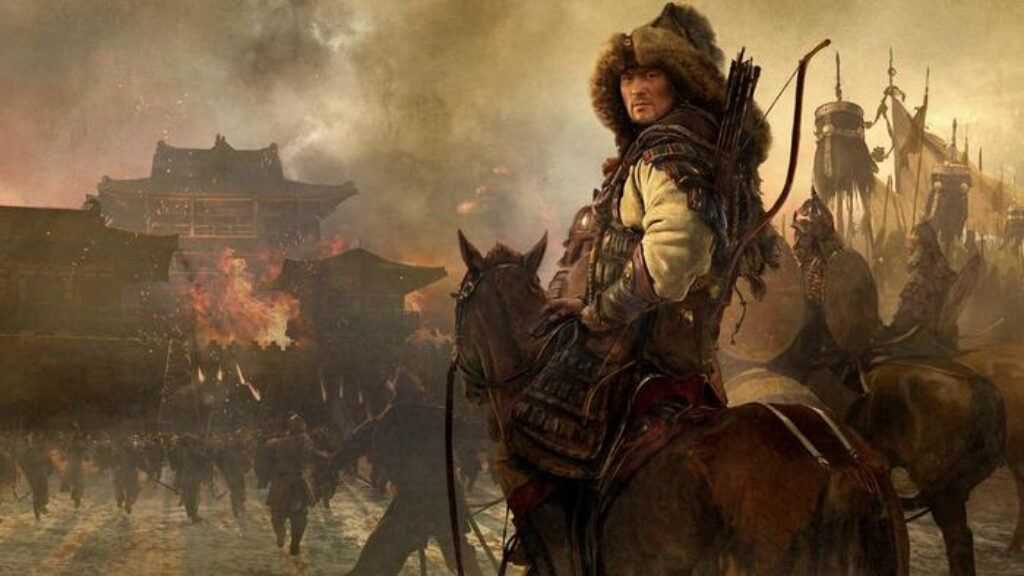
The Mongol conquest of China is easy to oversimplify: steppe, mounted archers, maneuver, shattered Chinese armies, falling cities. In northern China, that picture works to some extent. In the south, it largely breaks down. The Southern Song existed in a very different geographical environment. Great rivers, canals, rice paddies, wetlands, hills, dense cities and powerful fortresses made much of southern China a deeply inconvenient battlefield for steppe cavalry.
Water formed the country’s main transportation system, above all the Yangtze. The river functioned as a strategic highway carrying troops, food, weapons and tax revenue, while its tributaries and canals connected the economic core of the Southern Song. The Mongols therefore faced a fundamental problem: cavalry could be superb, but horses could not capture a river fortress and certainly could not sink ships.
Conquering the Song required the Mongol Empire to do something many of its earlier campaigns had barely demanded. It had to transform its own military. And in reality, the force that conquered southern China was no longer simply a Mongol army in the conventional sense.
War Turned the Mongol Army Into an Empire of Specialists
Kublai Khan’s army in the 13th century consisted of far more than steppe cavalry. The Mongol Empire possessed a remarkable capacity to absorb the military technologies of conquered peoples. Chinese engineers built ships and worked with gunpowder weapons. Koreans brought sophisticated shipbuilding traditions. Specialists from Central and Western Asia contributed siege technology. Most importantly, Chinese commanders defected to the Yuan and brought with them a detailed understanding of how the Song fought.
One of them was Liu Zheng, a former Song commander who played an important role in developing the Yuan river fleet. At Xiangyang, Chinese, Mongol, Uyghur and other troops fought together, while siege equipment was operated in part by specialists brought from the western reaches of the Mongol Empire. This was no longer a national army in the modern sense. It was the military machine of an empire capable of gathering the people and technologies it needed from across Eurasia.
That machine eventually arrived before the fortress without whose capture the conquest of the Southern Song could hardly continue.
One City Delayed the Advance for Five Years
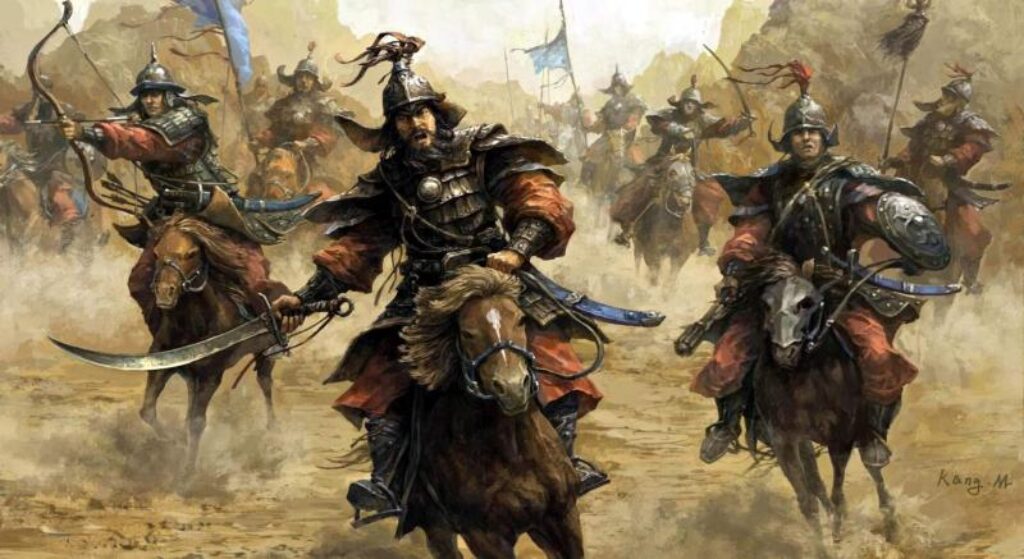
Xiangyang and neighboring Fancheng guarded a strategic route into the Yangtze basin. If the Mongols wanted access to the heart of the Southern Song, these strongholds had to be destroyed or forced to surrender. The siege began in 1268 and ended only in 1273. Five years was an extraordinary length of time for an army famous for rapid campaigns.
This was where the changing character of Mongol warfare became unmistakable. Instead of a fast-moving cavalry offensive, the Yuan had to conduct a systematic blockade, build fortifications, create a fleet, intercept Song supply ships and deploy heavy siege engines. Hundreds of vessels were assembled for the blockade, Chinese sailors served on the Yuan side, and various types of artillery were used against the defenses, including counterweight trebuchets of western origin. Both sides also employed gunpowder weapons.
Xiangyang fell in 1273, and with it collapsed one of the Southern Song’s most important strategic barriers. The Mongols gained access to the river system leading directly into the empire’s economic core. From that point onward, the character of the war changed dramatically.
The Mongols Built a Fleet That Began Destroying Chinese Fleets
After Xiangyang, the Yuan no longer tried merely to ferry cavalry armies across rivers. It built a genuine naval instrument of conquest. Studies of Chinese military shipbuilding show how quickly this force expanded: around 2,000 warships were reportedly built for the Yuan in 1273 alone, roughly half near captured Xiangyang and half around Kaifeng. Construction continued the following year, and the total fleet may have reached several thousand vessels.
Even more revealing was the method. The Mongols copied Song ships. Captured vessels were studied and used as models for new production. Chinese sailors and commanders joined the Yuan fleet, and even pirate leaders were recruited along with their ships and experienced crews. The result was almost a perfect machine for military adaptation. If the enemy builds better ships, capture one. Copy it. Hire his shipwrights. Recruit his sailors. Then build a thousand more.
That was increasingly what happened on the Yangtze. During the winter of 1274–1275, the expanding Yuan fleet began moving downriver. In a series of operations, thousands of Song vessels were destroyed or captured. By the end of the summer of 1275, the Yuan had effectively gained control of the Yangtze. Geography, which had protected the Southern Song for decades, now began working against it. Rivers ceased to be defensive barriers and became highways for the invading army.
By 1276, the War Seemed to Be Over
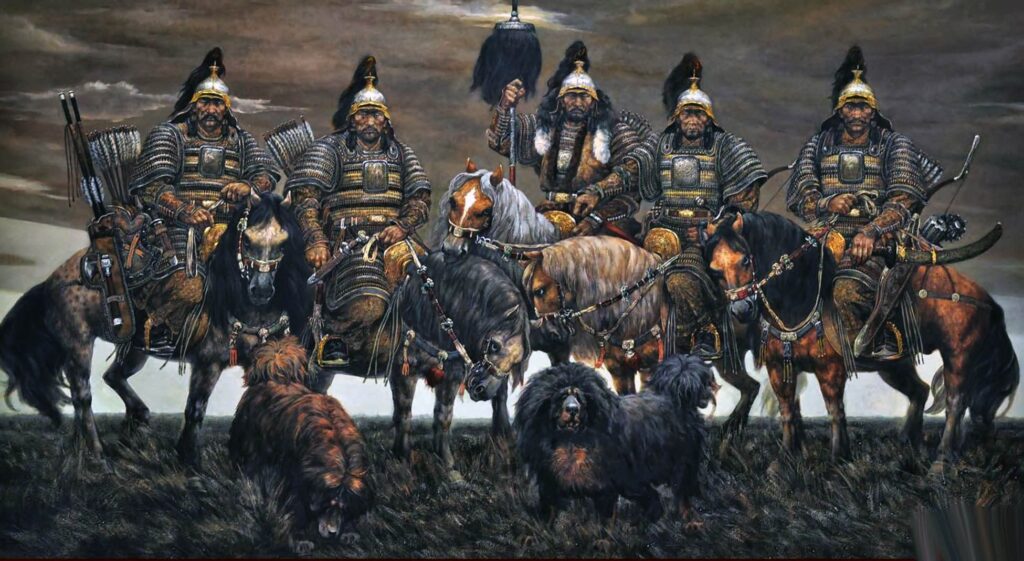
In early 1276, Yuan forces approached Lin’an, modern Hangzhou. The capital surrendered. The child emperor Gong and the imperial seal fell into the hands of the victors, while most of the remaining Southern Song territory soon acknowledged the new regime. Kublai also treated the surrendered Song imperial family more leniently than the Mongols had treated some earlier defeated dynasties.
By the normal logic of medieval warfare, the story might have ended there. The capital was lost. The emperor had been captured. The government had surrendered. Yet part of the elite refused to accept defeat. The Song proclaimed another emperor and continued the war.
Loyalists evacuated two younger princes southward. The elder, Zhao Shi, was proclaimed emperor. Officials, troops, sailors, courtiers and civilian refugees moved with him. The state itself was now mobile. The court traveled along the coast looking for another base, while Yuan forces kept advancing. Zhao Shi died in 1278. His younger brother, Zhao Bing, became the final emperor.
A seven-year-old child obviously exercised no real authority. Decisions were made by the officials and commanders around him. Politically, however, his importance was immense. As long as an emperor of the Song remained alive, the idea of the Song itself survived. So the fleeing court continued to resist until there was nowhere left to retreat.
Only the sea remained.
China’s Last Capital Was Essentially Made of Ships
By early 1279, the remaining Song forces had concentrated around Yamen near the Pearl River Delta. There, one of the strangest “capitals” in Chinese history emerged: more than a thousand vessels carrying soldiers, officials, courtiers, servants and huge numbers of civilians. Modern estimates suggest a total population of roughly 200,000 people, many of whom were not combatants at all.
That distinction matters. The Yuan was not facing a gigantic battle fleet composed of a thousand proper warships. It was confronting the remnants of a state loaded onto ships. The fleet was simultaneously an army, a refugee camp, an imperial court, an administrative center and the last refuge of the ruling family.
Commander Zhang Shijie made a decision intended to transform this mass of vessels into a fortress. He ordered the ships to be tied together. The logic was understandable: scattered vessels might flee, crews might desert, and the defensive line could collapse. Bound together, the ships became a vast stationary platform, with the emperor’s vessel protected inside the formation. Zhang Shijie was effectively trying to build a floating fortress in the middle of the bay.
A Thousand Ships Became One Giant Ship
This is where a popular story is especially tempting: the Yuan supposedly launched fire ships at the chained fleet, the vessels caught fire, and the whole armada was destroyed in flames. That is not what happened. The Yuan did try to use fire ships, but the Song expected such an attack. Their vessels had been coated with fire-resistant mud, so the first attempt failed to destroy the fleet.
The real problem with tying the ships together was more mundane: the formation lost almost all maneuverability. Once the Yuan imposed a blockade, the floating fortress began to become a floating prison. The fleet’s exit was sealed, supplies of fresh water and wood from the shore were cut, and tens of thousands of people had to be fed and supplied aboard the ships. Chronicles report that some were forced to drink seawater, quickly leading to illness and dehydration.
Here the Yuan’s greatest advantage became obvious: it could wait. The Song could not. On March 19, 1279, the decisive battle began.
The Chained Fleet Became a Death Trap
Yuan forces attacked from several directions. Deception was used: some troops were concealed aboard ships, and the signal to strike came at a moment when the Song expected a less decisive clash. Arrows, boarding actions and close combat followed. The Song line began to collapse, and now the decision to bind the ships together worked against the defenders.
The vessels could not maneuver properly, withdraw in an organized fashion or rapidly reform. Their decks were crowded not only with soldiers but with enormous numbers of civilians. Once Yuan troops began breaking toward the center of the formation, the battle turned into a mass catastrophe. Zhang Shijie tried to escape with a small group of ships, but the emperor remained inside. At that point, Lu Xiufu understood what had happened.
It was over.
The Last Emperor Was Seven Years Old
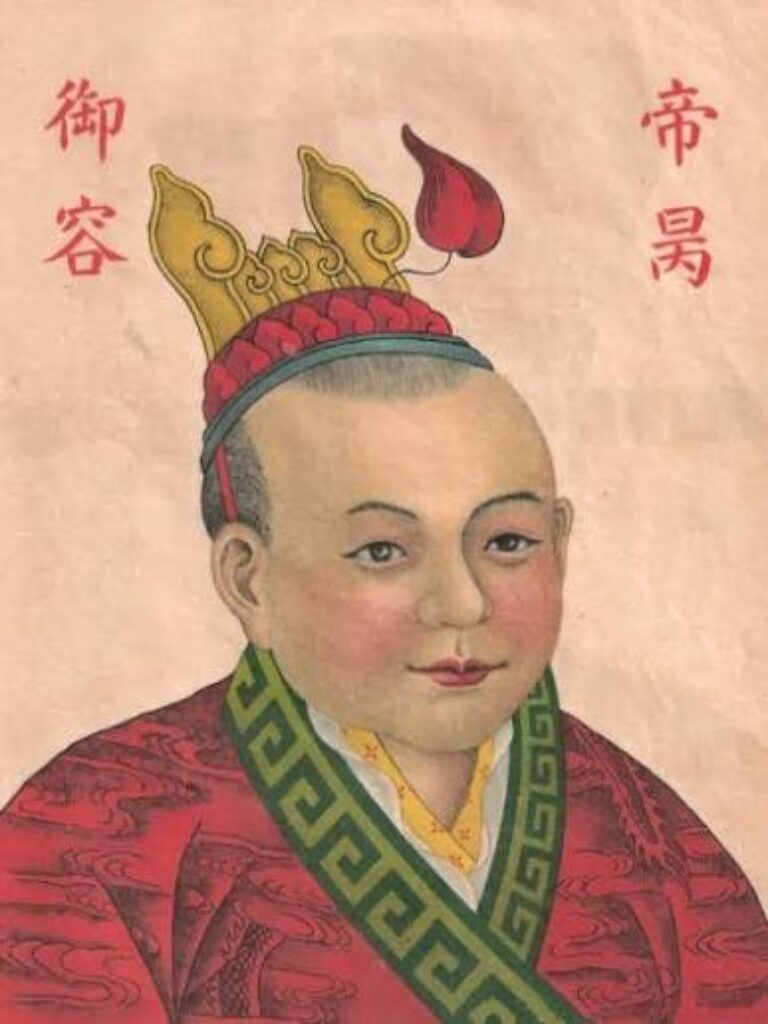
The final moments of Zhao Bing became one of the most famous scenes in the fall of the Song. Lu Xiufu was a senior civilian official and one of the last leaders of the imperial court. As Yuan forces approached the center of the fleet, he took the boy in his arms and jumped into the sea. Both drowned.
According to the chronicles, many members of the imperial family, officials and courtiers followed. Traditional accounts speak of more than 100,000 deaths during the battle and the panic that followed. The exact figure cannot be verified, but modern historical accounts also describe the losses as catastrophic.
Zhang Shijie escaped, but the last major Song military leader survived the destruction of his state only briefly. His fleet later encountered a storm, and he died as well. On March 19, 1279, the Song dynasty ended after more than three centuries.
Yet the most interesting part of the story is not the death of the child emperor.
It is the people who defeated him.
The Song’s Final Battle Was Not Won by Steppe Horsemen
The Yuan fleet at Yamen was commanded by Zhang Hongfan.
He was Chinese.
His family came from northern China and had entered Mongol service. It is a highly symbolic detail.
The final battle of the great Mongol conquest of China was not won by an army of mounted archers charging onto ships with composite bows. Victory belonged to a multiethnic imperial war machine built by the Mongols and using Chinese commanders, Chinese sailors, Chinese ships and the technologies of conquered peoples.
That is why the familiar phrase “the Mongols conquered China” hides the most interesting part of the story. The Mongols learned to use the resources of China to continue conquering China. At every new stage of the war, Kublai’s forces looked less like the armies that had once emerged from the Mongolian steppe and more like the armed forces of a vast Eurasian empire.
This Was One of the Real Secrets of Mongol Success
We tend to imagine Mongol military superiority through the mounted archer: the small steppe horse, the composite bow, high mobility, feigned retreats and strict discipline. All of these things mattered enormously. But none of them can explain the conquest of southern China by themselves.
At Xiangyang, engineers were required. On the Yangtze, ships. At Yamen, sailors. Fortresses demanded siege artillery. Conquered territories required Chinese officials. The Mongol military system was so dangerous precisely because it was not dogmatic.
If victory required Chinese technology, they used it. If a Persian or Central Asian engineer was needed, he was brought in. If a Chinese admiral was useful, he could command. If the enemy built better ships, those ships were copied. The Yuan did not force southern China to fight on terrain convenient to the Mongols.
It learned how to fight on terrain convenient to the Chinese.
And that proved far more dangerous.
What Actually Died With the Song?
The Southern Song was far more than just another Chinese dynasty. By the 11th–13th centuries, China was experiencing an extraordinary period of economic and technological development. Cities and trade expanded, monetization deepened, printing advanced, iron production grew, paper money spread, and maritime commerce flourished.
The Song era also saw technologies emerge or mature that would later have enormous global significance. The magnetic compass found maritime use. Gunpowder was increasingly incorporated into weapons. Bi Sheng experimented with movable type in the 11th century. Chinese iron production reached a scale remarkable for the medieval world.
Some economic historians therefore view the Song as one of history’s most unusual examples of early intensive economic growth. That naturally raises an enticing question: was China already moving toward its own industrial revolution?
This Is Where One of History’s Biggest Debates Begins
It is tempting to draw a clean line: Song → technological development → expanding markets → proto-industrialization → Mongol conquest → catastrophe → a lost Chinese industrial revolution. But history is rarely that simple.
Yes, the economic achievements of the Song were extraordinary. Yes, later centuries developed differently. But we cannot claim that without the Mongol conquest China would inevitably have undergone an industrial revolution centuries before Europe. Economic historians still debate which factors made the European breakthrough of the 18th and 19th centuries possible and why such an advanced Chinese economy followed a different trajectory.
Yamen therefore matters not as the day when the Mongols supposedly “cancelled” an industrial revolution. It matters as the moment when one of the medieval world’s most unusual political and economic trajectories was definitively interrupted at the dynastic level. We will never know where that path might otherwise have led.
China Did Not Disappear After 1279
The phrase “the death of Chinese civilization” is dramatic, but historically misleading. Chinese civilization did not die.
The Song dynasty did.
Kublai had already proclaimed the Yuan dynasty in 1271 and consciously presented his rule as a Chinese imperial dynasty. He had no interest in turning China into a gigantic burned-out steppe. The new state needed taxes, cities, artisans, trade and administration. Many Chinese institutions continued or were later restored. Even the imperial examination system, interrupted under early Yuan rule, returned in the 14th century.
China continued to develop. But for the first time, the entire territory of traditional China came under a dynasty created by conquerors from the steppe. To many Song loyalists, that was a civilizational catastrophe.
For Lu Xiufu, defeat did not mean merely changing one ruling surname for another. The entire political world he had served was collapsing. That is why he entered the water with the emperor.
And the Victors Were Already Thinking About the Next Sea
Here the story takes another remarkable turn. It had taken the Mongols decades to learn how to wage major war on the rivers and coasts of southern China. But by the time the Song fell, Kublai possessed an enormous fleet and intended to use it elsewhere.
The Yuan had already attempted to invade Japan in 1274. A much larger expedition followed in 1281. Mongol-led forces also fought in Vietnam, and later a fleet sailed toward Java. In other words, the conquest of the Song changed not only China.
It changed the Mongol Empire itself.
A steppe power acquired naval forces. The army of Genghis Khan reached the Pacific and tried to continue conquering across it. But here the Mongols’ capacity for adaptation finally began to encounter limits. Japan could not be conquered. Vietnam proved an exceptionally difficult opponent. The expedition to Java ended unsuccessfully.
The Mongol war machine could learn to build ships.
The ocean was another matter.
Yamen Is Not Really a Story About the Mongols Destroying China
It is a much more interesting story.
At the beginning of the Mongol conquests, the new empire’s principal weapon was steppe cavalry. By the end of the war for China, its armies were using heavy siege engines, gunpowder weapons, massive river fleets, seagoing ships and multiethnic military formations.
The Mongols began the war as enemies of the Chinese military system.
They ended it having partially absorbed that system into their own.
That is why the last day of the Song did not take place beneath the walls of a great city, on an open battlefield, or during a charge by Mongol cavalry.
It took place at sea.
On March 19, 1279, more than a thousand vessels carrying the last Song court were trapped at Yamen. On one of them sat a seven-year-old child who formally remained emperor of one of the world’s oldest civilizations. When the defense collapsed, Lu Xiufu took him in his arms and disappeared beneath the water.
It was a powerful symbol of the dynasty’s end.
But the real reason for the Song defeat was not contained in that final jump.
It was visible all around him.
In the enemy’s ships.
Because the Mongols’ most dangerous weapon was not the bow, the horse, or even the siege engine.
It was their ability to encounter a weapon they did not know how to use — and within a few years learn to use it against the very people who had mastered it first.
At Yamen, a steppe empire completed the conquest of China.
And it did so from the deck of a ship.