Poland Is Bringing the “Badger” to the Global Market: The New Borsuk IFV Is Being Prepared Not for Europe, but for Asia

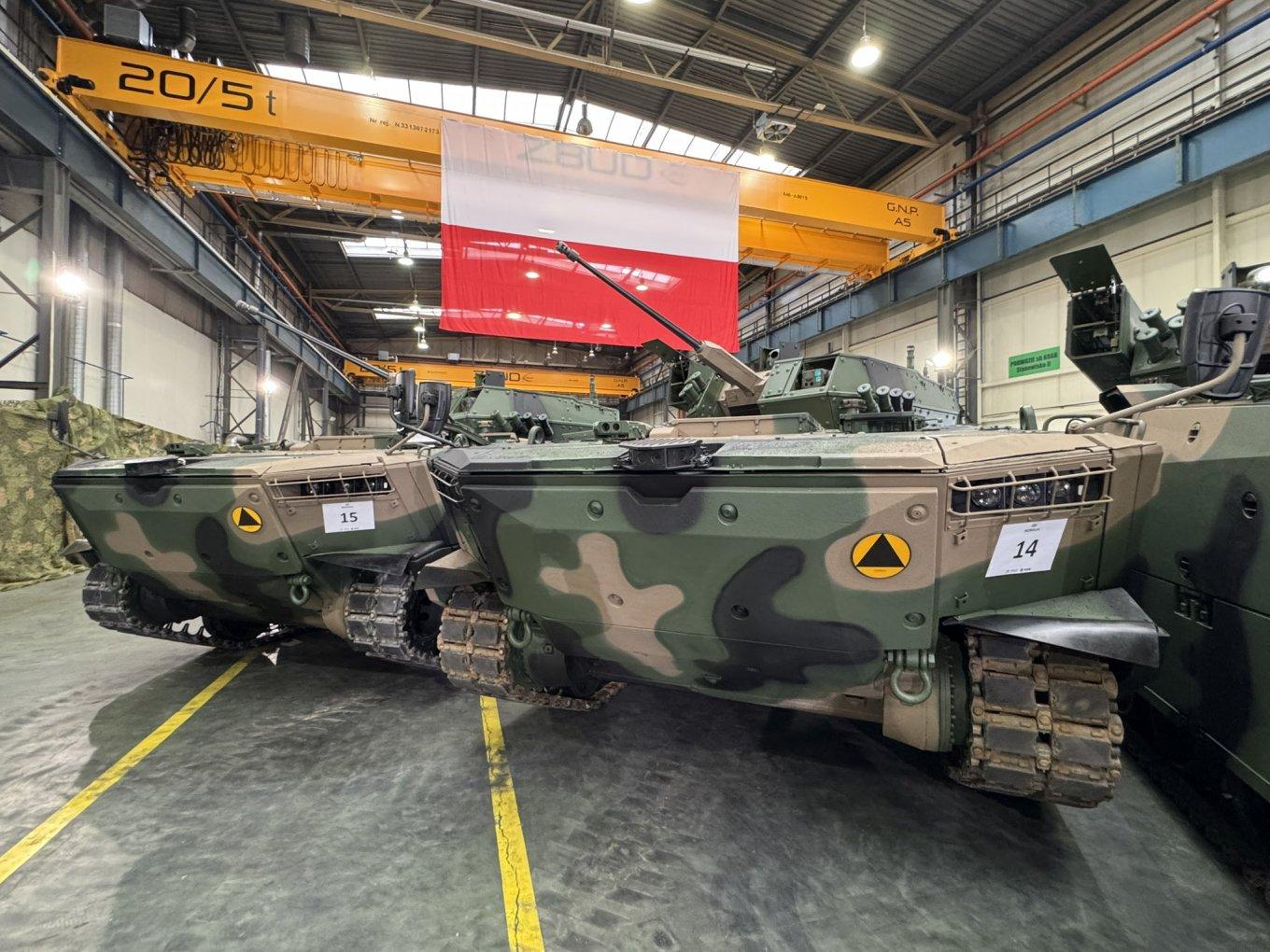
Poland’s New Infantry Fighting Vehicle Is No Longer Just a Domestic Program
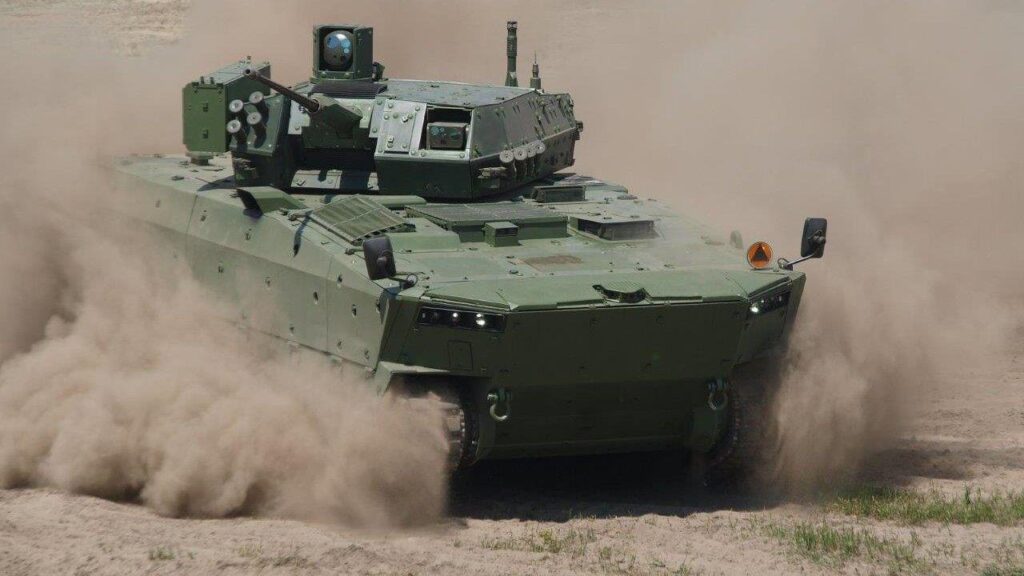
For years, the Borsuk infantry fighting vehicle was viewed primarily as an internal Polish military project — a long-awaited replacement for the aging Soviet-era BWP-1 fleet.
But now the situation is changing.
Warsaw is increasingly turning the Borsuk into an export product, and recent developments suggest that the vehicle is being prepared not only for NATO markets, but for a much broader international audience — particularly in Asia and the Middle East.
And this says a great deal about how Poland now sees its own defense industry.
The “Badger” of the Polish Army
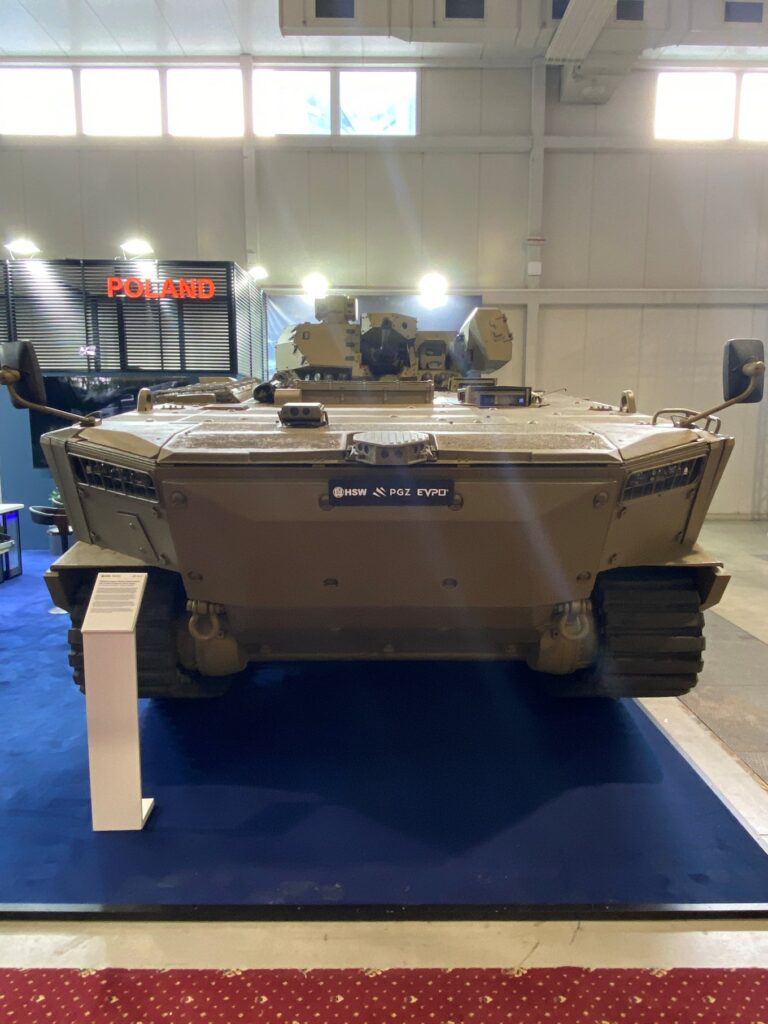
The Borsuk — whose name literally means “Badger” in Polish — is Poland’s new-generation tracked amphibious infantry fighting vehicle developed by Huta Stalowa Wola as part of the broader modernization of the Polish Armed Forces.
The vehicle was designed to replace the Soviet-designed BWP-1, which had remained in service since the 1970s.
Unlike many older Eastern European IFVs, however, the Borsuk was conceived as a thoroughly modern platform from the beginning. It combines:
- amphibious capability;
- modular armor;
- an unmanned turret;
- modern digital systems;
- NATO-standard weaponry.
In many ways, it reflects lessons drawn directly from the war in Ukraine and from broader NATO modernization trends.
A New Generation Polish IFV
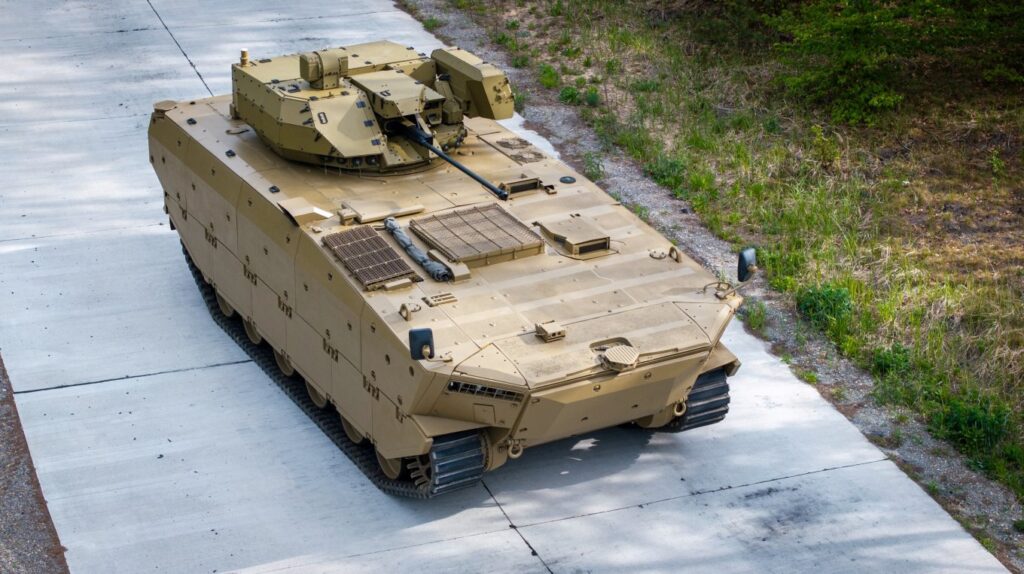
The Borsuk is armed with the unmanned ZSSW-30 turret equipped with a 30 mm Bushmaster II autocannon and Spike-LR anti-tank guided missiles.
This immediately places it in a much more serious category than many legacy IFVs still operating across Eastern Europe.
At the same time, the vehicle retains amphibious capability — something increasingly rare among modern infantry fighting vehicles because heavier armor usually sacrifices flotation. Poland deliberately chose a lighter and more mobile configuration, prioritizing operational flexibility in river-heavy terrain.
This decision reflects Poland’s own geography.
But it may also prove highly attractive to export customers in Asia.
Why Europe May Not Be the Main Target
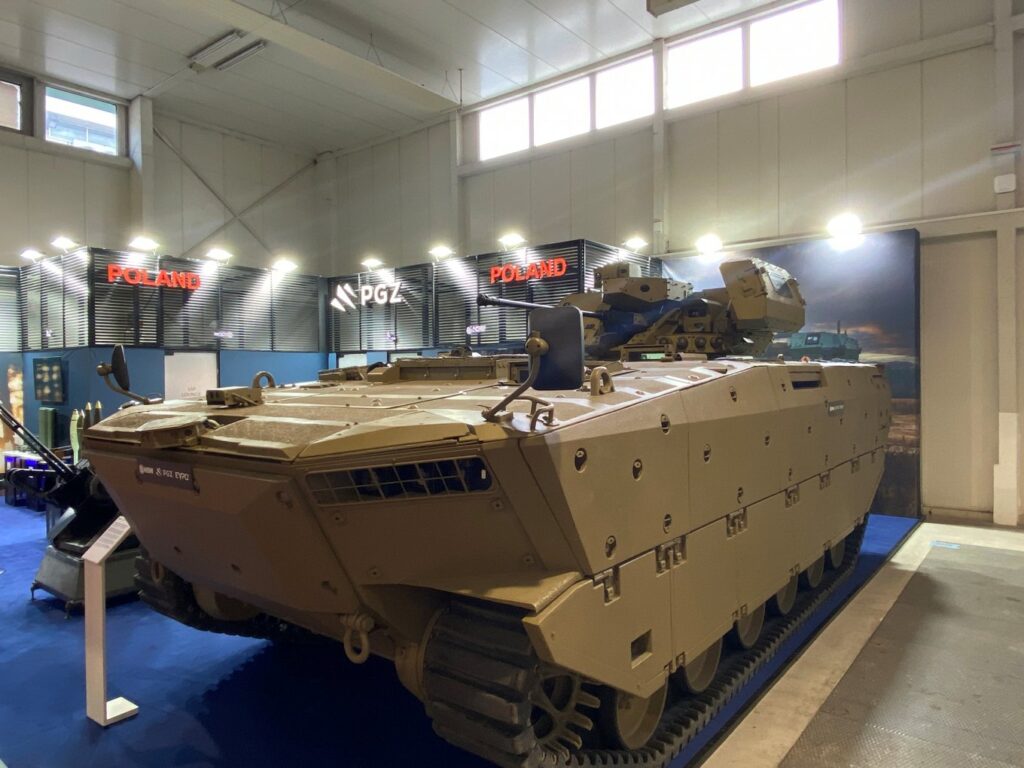
Officially, Poland recently showcased the export version of the Borsuk at the IDEB 2026 exhibition in Slovakia.
But there is a problem with the “Slovak market” explanation.
Slovakia has already committed to the Swedish CV90 program, making a major Borsuk acquisition relatively unlikely. This has led analysts to conclude that the Slovak presentation may actually serve as a gateway for broader export ambitions aimed outside Europe.
And there are strong reasons for that.
Asian and Middle Eastern militaries are increasingly searching for modern IFVs that are:
- cheaper than Western premium platforms;
- NATO-compatible;
- lighter and more mobile;
- amphibious;
- available without the political complications often attached to American systems.
The Borsuk fits this niche surprisingly well.
Poland’s Defense Industry Is Becoming Aggressive
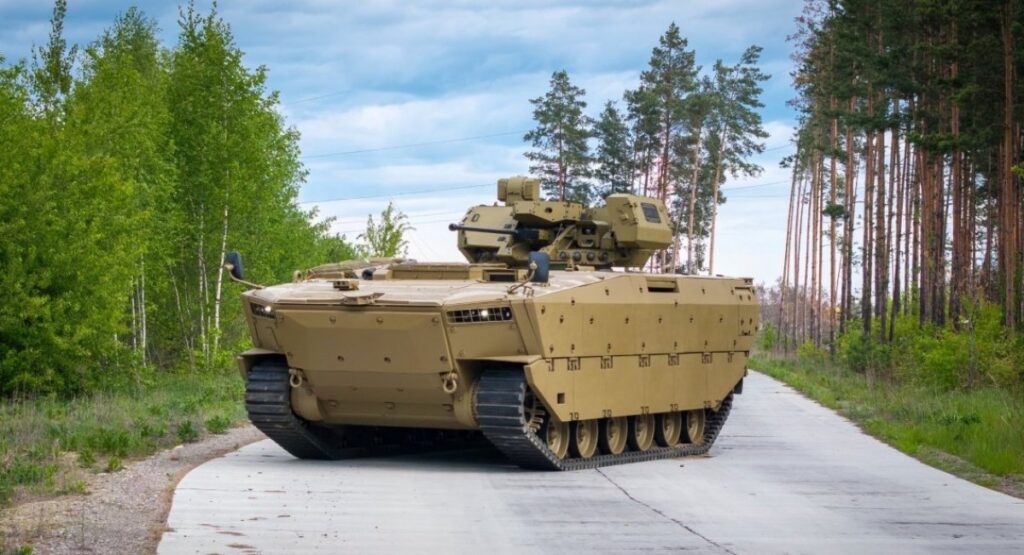
The export push surrounding the Borsuk reflects a much larger transformation.
Over the last several years, Poland has rapidly expanded its defense-industrial ambitions. Warsaw is no longer behaving merely as a consumer of NATO weapons — it increasingly wants to become a producer and exporter in its own right.
This includes cooperation with South Korea, expansion of domestic production capacity, and active promotion of Polish systems abroad.
The Borsuk is becoming one of the flagship symbols of that strategy.
The Vehicle Was Designed for Modern War
The timing of the Borsuk’s emergence is also important.
The war in Ukraine radically changed how militaries evaluate armored vehicles. Survivability, drone protection, mobility, network integration, and modern optics suddenly became more important than theoretical Cold War requirements.
Poland appears to have adapted quickly.
The Borsuk combines relatively moderate weight with modern sensors, unmanned combat systems, and advanced anti-tank capability.
This makes it especially attractive for countries that cannot afford extremely expensive heavy IFVs, but still want modern battlefield capability.
Not a Heavy IFV — and That May Be an Advantage
One of the most interesting things about the Borsuk is what it is not.
It is not a super-heavy infantry fighting vehicle like the Israeli Namer or some Western heavy IFV concepts. Poland deliberately avoided turning it into a massive armored “mini tank.”
Instead, the Borsuk prioritizes mobility and operational flexibility.
And for many regions outside Europe — especially Southeast Asia — that may actually be a major advantage. Dense terrain, river systems, poor infrastructure, and tropical environments often favor lighter amphibious vehicles over extremely heavy armored platforms.
In other words, the Borsuk may be better suited for Asian warfare conditions than many European competitors.
The “Badger” Goes Global
Poland has already ordered more than a thousand Borsuk-based vehicles for its own armed forces, making the platform one of the largest armored vehicle programs in Europe.
But Warsaw clearly does not intend for the vehicle to remain purely domestic.
The export version now being demonstrated abroad suggests something bigger: Poland wants the Borsuk to become an international platform competing directly with established Western IFVs.
That is an ambitious goal.
But for the first time in decades, Poland may actually possess a vehicle capable of doing exactly that.