A 1945 Tank Made It Into the 21st Century: How the Centurion Became the 60-Ton Olifant Mk2

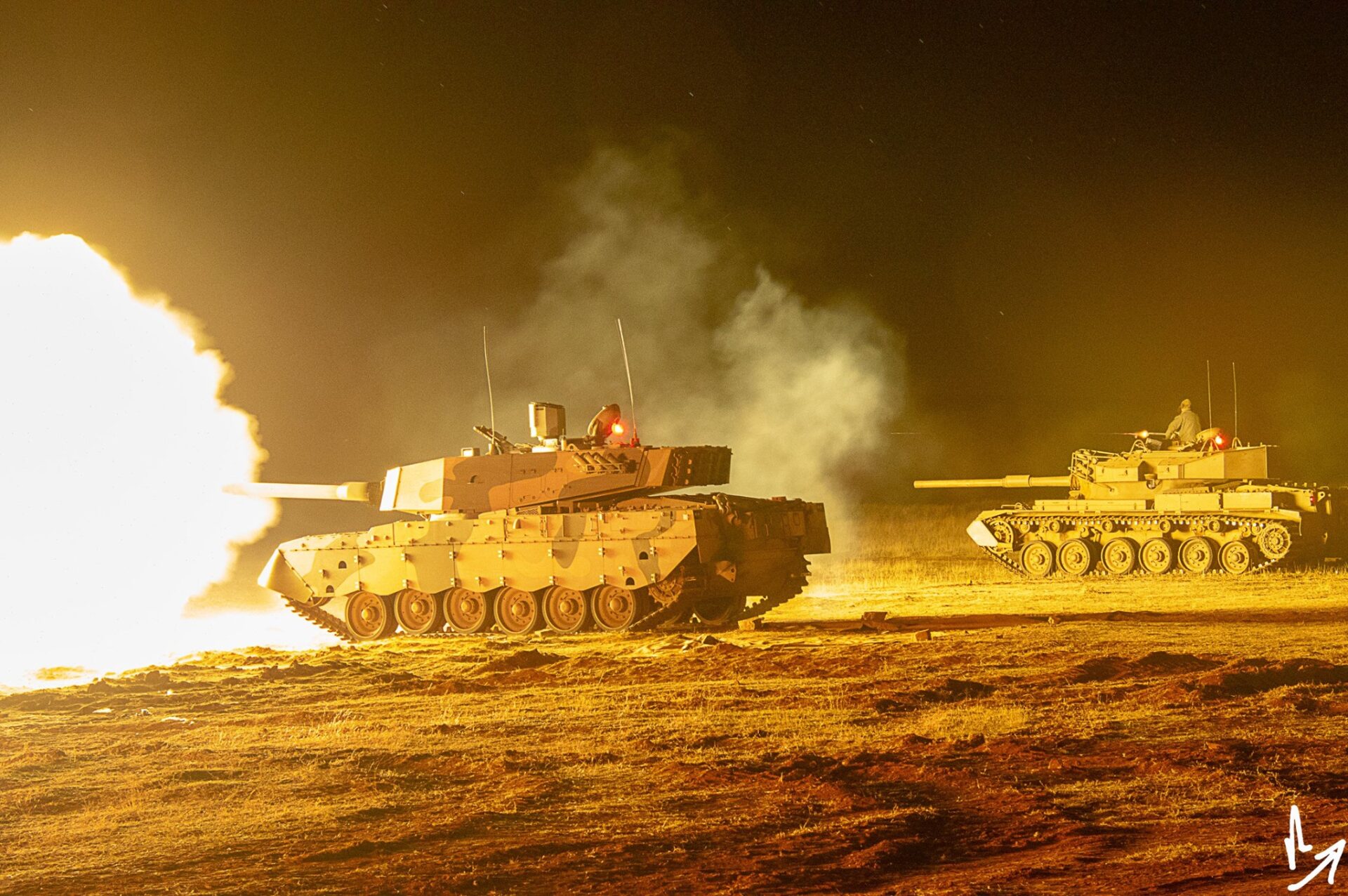
There is a simple way to understand just how far the modernization of an old armored vehicle can go. Put an early British Centurion next to a South African Olifant Mk2. More than half a century separates them. The first was designed during the Second World War, used a roughly 650-hp Meteor-family gasoline engine, and was initially armed with a 17-pounder and later a 20-pounder gun. The second entered the 21st century with a modern fire-control system, thermal imaging, significantly improved protection, a 105 mm gun, and a diesel engine producing roughly 1,000 horsepower. The combat weight of the late Olifant approached 60 tons.
And the most remarkable thing is that, technically, it was still a descendant of the same Centurion.
South Africa never intended to turn a British tank into a 21st-century fighting vehicle. In fact, in the early 1960s, the country sold a large proportion of its Centurions and for a time concluded that wheeled armored vehicles were much better suited to local conditions. But international isolation, wars in southern Africa, and the appearance of Soviet T-54/55s and T-62s in the hands of potential opponents eventually forced the old tanks back into service.
Over the following decades, South African engineers replaced or modified their engines, transmissions, guns, suspension, armor, sights, and electronics. Eventually, the program raised an almost philosophical question: how much of a Centurion has to remain before it stops being a Centurion?
Two Hundred British Tanks for South Africa
The story began conventionally enough. In 1952, the Union of South Africa ordered 203 Centurion tanks from Britain — 87 Mk.3s and 116 Mk.5s — together with 17 armored recovery vehicles. The first tanks arrived for trials in August of that year, the main deliveries began in 1953, and the final batch was received by 1956.
For its time, the Centurion was one of the most successful Western tank designs. Development had begun in 1943, and production started in 1945. The tank arrived just too late to see combat in Europe during the Second World War, but the basic design proved so successful that it offered enormous potential for future modernization.
South Africa’s Centurion story could easily have ended relatively quickly. The country’s military became increasingly interested in wheeled armored vehicles, which were better suited to the enormous distances of the region. In 1961, 110 South African Centurions were sold to Switzerland. The remaining vehicles gradually became more difficult to keep operational: spare parts were increasingly problematic, while the original power pack was poorly suited to hot local conditions.
Then the strategic environment around South Africa began to change.
Restrictions on arms supplies increasingly complicated the maintenance and replacement of imported equipment. In 1977, United Nations Security Council Resolution 418 made the arms embargo against South Africa mandatory for UN member states. At the same time, fighting in Angola demonstrated that an almost exclusive reliance on light wheeled armored vehicles had its limits.
Soviet tanks were appearing across the border.
Suddenly, the old Centurion was needed again.
When Buying a New Tank Is Not an Option
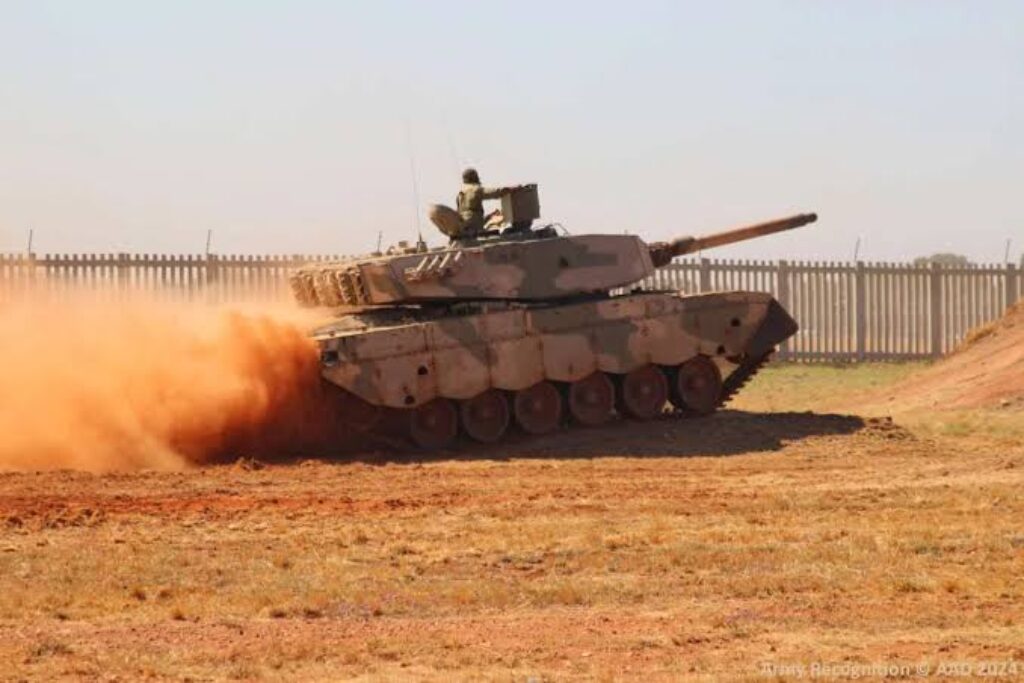
International isolation largely determined the future of South African armored forces. An army in a more conventional position might simply have replaced its 1950s tanks with a new generation. For South Africa, that option was becoming increasingly difficult.
The country had to modernize what it already possessed.
In October 1976, Sandock Austral and the South African Defence Force reached an agreement to modernize the Centurion fleet. The initial program became known as Skokiaan. New engines and transmissions were tested, followed by another development stage known as Semel. The Olifant Manufacturing Company was established in 1978, and by the end of the decade the upgraded vehicles had acquired the name Olifant — “elephant” in Afrikaans.
The name turned out to be remarkably appropriate.
The modernization gradually became so extensive that this was no longer a matter of replacing individual components. South African engineers were effectively rebuilding the Centurion around a new power pack, armament, and equipment.
One of the original tank’s most serious problems was its engine. The British Rolls-Royce Meteor gasoline engine had been derived from the Merlin aircraft engine and was an excellent solution by 1940s standards, but by the 1970s its fuel consumption, range, and operating characteristics were increasingly unattractive.
The Olifant eventually received a diesel engine and a new transmission.
But the real transformation had only just begun.
Olifant Mk1A: The Centurion Goes to Angola
The first genuinely significant production version was the Olifant Mk1A, which entered service in the mid-1980s.
Instead of the old armament, the tank received a South African version of the famous British 105 mm L7 rifled gun. A laser rangefinder, night-vision equipment, and other fire-control improvements were introduced. Its Continental diesel produced around 750 hp, combat weight was approximately 56 tons, and maximum road speed was about 45 km/h. South Africa’s Armour Museum gives the Mk1A a road range of roughly 350 km.
More important than the specifications, however, was the fact that the Olifant was tested in a real war.
In Angola, South African forces encountered T-54/55s and later T-62s. Light Eland and Ratel armored vehicles armed with 90 mm guns were extremely mobile and fitted South African tactics well, but the need to fight actual tanks gradually demonstrated the limits of that approach.
By late 1987, Olifant Mk1As were in combat. On 9 November, South African tanks destroyed two Angolan T-55s in a short engagement. During subsequent operations, Olifants operated at the front of mechanized formations, while wheeled Ratel-90s worked around their flanks.
But the war taught the South Africans another lesson.
Enemy armor was far from the only major threat.
Mines could cause serious damage to heavy tracked vehicles. During Operation Packer, three Olifants had to be abandoned in a minefield; one was later captured by Cuban forces. Other vehicles suffered suspension and running-gear damage from mines and enemy fire.
The next modernization therefore had to do more than improve the tank’s ability to shoot.
The vehicle needed to be substantially rebuilt.
Mk1B: The Point Where the Centurion Becomes Hard to Recognize
The Olifant Mk1B, which appeared in the early 1990s, was arguably the most important stage in the entire program.
The tank received significantly improved armor protection, modifications to the hull, a double armored floor to improve mine protection, a new torsion-bar suspension replacing the Centurion’s characteristic Horstmann system, a new fire-control system, and a more powerful engine. Diesel output increased to approximately 950 hp.
This is where the boundary between modernization and the creation of a new tank becomes increasingly difficult to define.
The original Centurion’s gun had already been replaced. Then its engine. Then its transmission. Then the sights. Then the suspension. Protection of both hull and turret was significantly redesigned. Internal systems were altered as well.
The basic architecture, design lineage, and parts of the original hull remained, but technically the vehicle was moving farther and farther away from the British tank of the late 1940s.
Increased protection inevitably increased weight. South Africa’s “Elephant” was becoming heavier, which in turn demanded an even more powerful engine.
But by the time the Mk1B appeared, the world around South Africa had changed again.
The Cold War was over. The conflict in Angola had ended. Apartheid was dismantled. International sanctions gradually disappeared.
South Africa could once again buy foreign military technology.
Logically, this would have been the moment to end the Centurion story and purchase a new tank.
Instead, the South Africans modernized it again.
Olifant Mk2: A Thousand Horsepower for a Tank Born in 1945
Further development eventually produced the Olifant Mk2, externally similar to the Mk1B but considerably different inside.
This time, the most important improvements were not simply in armor but in electronics.
The Mk2 received a new fire-control system, modern observation equipment, and computing systems capable of providing a hunter-killer capability. Under this arrangement, the commander can independently search for the next target while the gunner engages one that has already been designated. For a vehicle whose ancestry begins with a 1945 tank, this is almost symbolic: the Centurion was designed in an age of relatively simple optical sights, while its South African descendant acquired a fire-control architecture associated with late-20th and early-21st-century main battle tanks.
The power pack was upgraded as well. Published figures for Mk2 weight and engine output vary somewhat between sources. The late vehicle is most commonly described as using a roughly 29-liter Continental turbocharged diesel producing around 1,000–1,040 hp, while its combat weight is generally given at around 60 tons. The popular description of the Olifant Mk2 as a 60.5-ton tank with a 1,000-hp engine is therefore best treated as a convenient approximation rather than a universal factory figure for every configuration.
The main armament remained a 105 mm rifled gun derived from the L7 family. A South African LIW 120 mm smoothbore weapon was also considered, but production vehicles retained the 105 mm gun.
The result was an extraordinary combination.
Within a single design lineage, the tank had evolved from a vehicle with a roughly 650-hp gasoline Meteor to one with a diesel producing around a thousand horsepower. The original guns gave way to the 105 mm L7 family. Simple optical sights were replaced by a modern fire-control system. The Horstmann suspension disappeared. Protection was repeatedly strengthened.
Yet the fundamental vehicle still traced its ancestry to a British wartime project.
Why Not Simply Buy a Leopard 2?
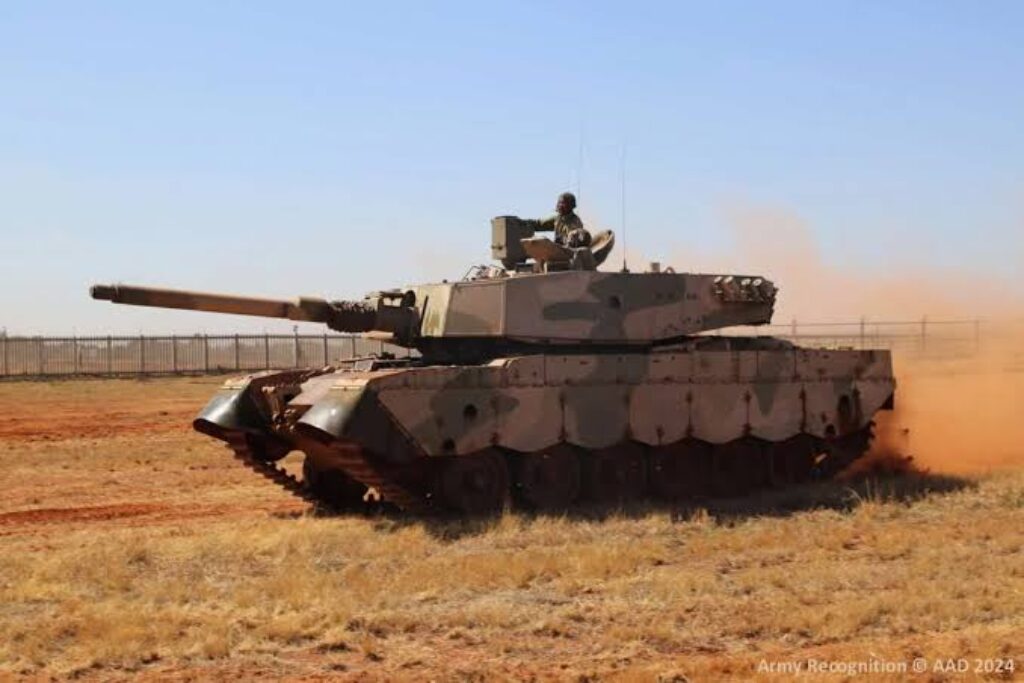
This is where the story becomes far more interesting than a conventional account of an upgrade program.
By the time the Olifant Mk2 appeared, South Africa was no longer trapped in its previous international isolation. In theory, the country could consider importing a modern main battle tank. Moreover, South Africa’s own defense industry had developed the Tank Technology Demonstrator in the late 1980s and early 1990s, a considerably more modern vehicle that could potentially have served as the basis for a new generation of domestic tanks.
But something else had changed: the requirements of the South African Army itself.
With the end of the Border War, the scenario that had driven South Africa’s development of heavy armored forces largely disappeared. The likelihood of major tank battles in southern Africa declined sharply. At the same time, the defense budget could no longer easily support the purchase of a large fleet of completely new main battle tanks.
Modernizing the existing Olifant fleet therefore became a rational compromise.
It did not transform an old chassis into a Leopard 2A6 or an M1A2 Abrams. But South Africa did not necessarily require a vehicle of that level. In its regional context, a heavily modernized Olifant remained a serious opponent for most tanks it was realistically likely to encounter on the African continent.
Most importantly, the supporting infrastructure already existed.
The army knew the vehicle. Domestic industry knew how to repair it. Spare parts, trained crews, maintenance units, and decades of operational experience already existed.
Buying a completely different tank would have meant replacing much of that ecosystem.
Modernization allowed South Africa to preserve it.
But How Much Centurion Is Left in an Olifant Mk2?
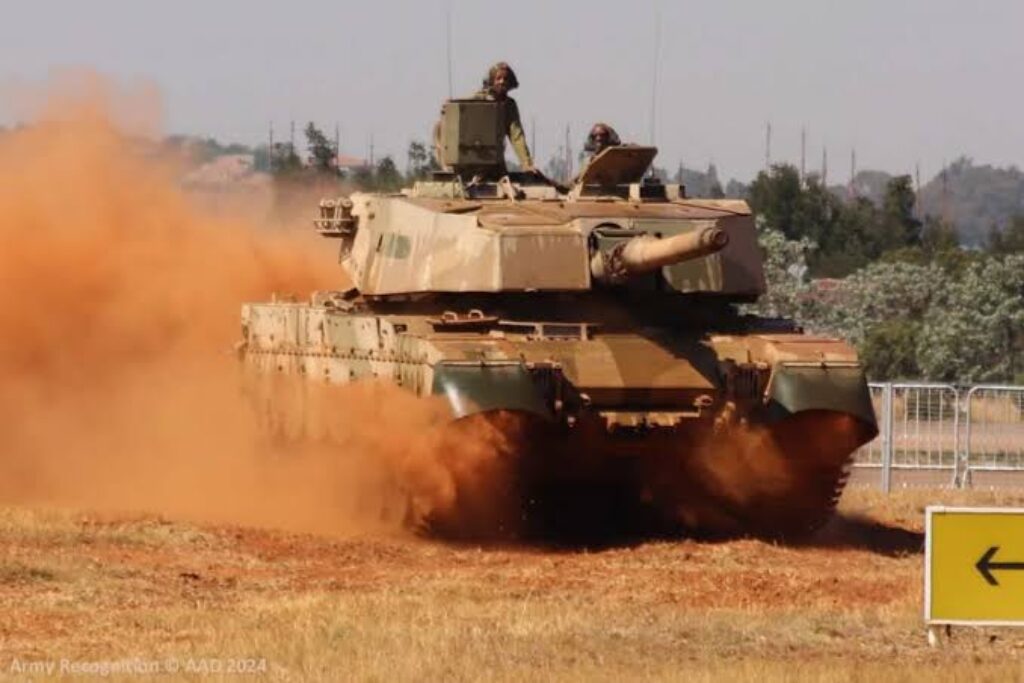
This may be the most interesting question in the entire story.
If a tank is defined primarily by the origin of its hull and basic design, then the Olifant is unquestionably a Centurion descendant. That is why it is routinely described as one of the most extensive modernization programs ever applied to the British tank.
But consider the list of changes.
The engine is different.
The transmission is different.
The gun is different.
The fire-control system is different.
The observation equipment is different.
The suspension is different.
The protection has been extensively redesigned.
The electronics belong to an entirely different technological generation.
Even the missions envisioned for the late Olifant were different from those British engineers had in mind during the 1940s.
The Mk2 is therefore better understood not simply as an “old Centurion with modern electronics,” but as the product of the continuous evolution of a single platform, with each generation correcting the weaknesses of the one before it.
That is what separates the Olifant from many conventional modernization programs for old tanks.
South Africa did not take a Centurion in the 2000s and suddenly attempt to transform it into a modern vehicle. It had been rebuilding the platform progressively for almost three decades. Every modernization became the foundation for the next one.
The Centurion evolved into the Semel.
Then came the Olifant.
Then the Mk1A.
Then the substantially rebuilt Mk1B.
And finally the Mk2.
There was therefore no single enormous technological leap between the British tank of the 1950s and the final Olifant. Instead, there was a long staircase of small and large modifications.
Why This Could Happen in South Africa
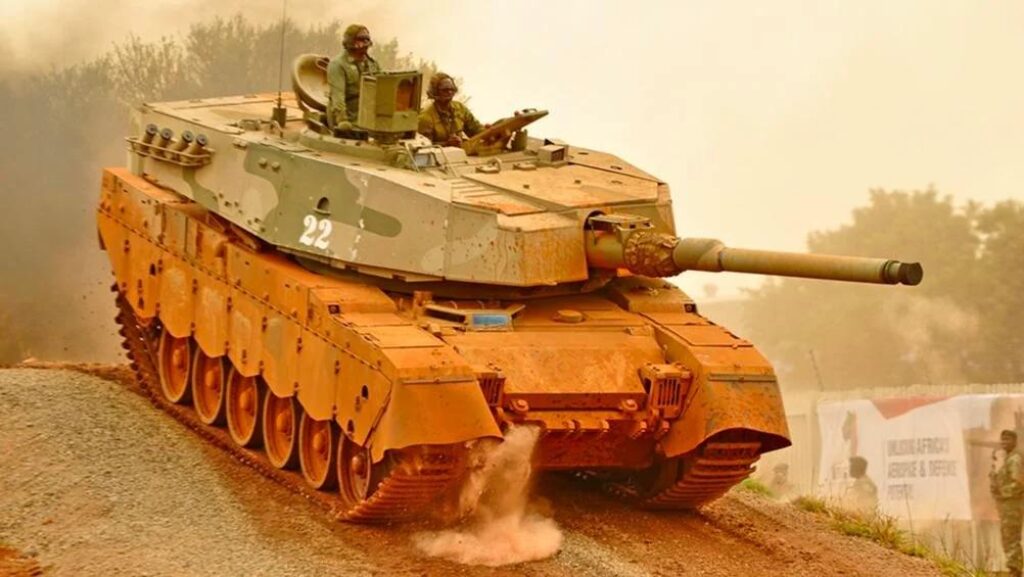
The Olifant is often presented as proof of just how successful the Centurion’s original design was. That is only half the story.
Yes, the British tank undoubtedly possessed enormous modernization potential. Israel’s Sho’t, Sweden’s Strv 101/102/104, and South Africa’s Olifant all demonstrate this very clearly.
But a good chassis alone was not enough.
South Africa was effectively pushed toward such extensive modernization by circumstances. The country initially purchased a substantial fleet of modern British tanks, then sold many of them, and later found itself under restrictions on arms imports while simultaneously facing Soviet-designed armor in Angola.
Buying a new foreign tank became difficult.
Abandoning tanks altogether proved dangerous.
That left a third option: learning how to rebuild the vehicles already available.
This is why the Olifant is more than an African version of the Centurion. It was the product of a highly unusual military-industrial environment in which restricted access to foreign systems encouraged the country to extract the maximum possible service life from existing designs.
The paradox is that international isolation, which might have been expected simply to accelerate the technological decline of South Africa’s armed forces, also stimulated the development of a relatively sophisticated domestic defense industry. Tanks, armored vehicles, artillery, missiles, and aviation systems increasingly had to be upgraded or developed within the country.
The Olifant became one of the clearest examples of that process.
The Tank That Outlived Its Own Era
The Olifant Mk2 cannot objectively be placed in the same category as the latest versions of the Leopard 2, Abrams, or K2. The limitations of the original architecture did not disappear. Even an extremely deep modernization cannot compensate indefinitely for the age of the basic design.
But that is precisely what makes the Olifant Mk2 so interesting.
Its significance is not that South Africa somehow transformed the Centurion into the “best tank in the world.” It did not.
The real achievement is much more interesting.
South Africa received its British Centurions in the early 1950s. Several decades later, those vehicles found themselves in a completely different political and military environment. Instead of being scrapped, they were progressively rebuilt. The old gasoline engine gave way to a diesel. Power eventually increased to roughly a thousand horsepower. The tank received a 105 mm gun, new suspension, improved mine protection, modern sights, thermal imaging equipment, and an advanced fire-control system.
As a result, a tank designed during the Second World War survived the Cold War and entered the 21st century almost unrecognizable.
And perhaps the Olifant demonstrates better than almost any other vehicle just how relative the term “old tank” can be.
Because once you replace the engine, transmission, suspension, gun, sights, electronics, and much of the protection, one obvious question remains:
Are we still looking at a modernized Centurion — or at a new tank that simply inherited its bones?