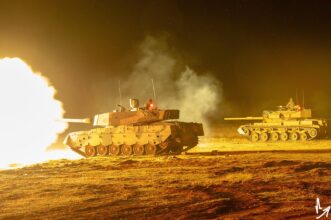
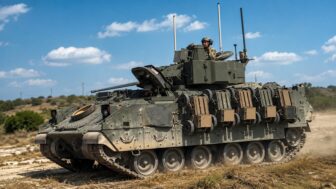
Arjun Against the World: Why India Built a Completely Different Main Battle Tank

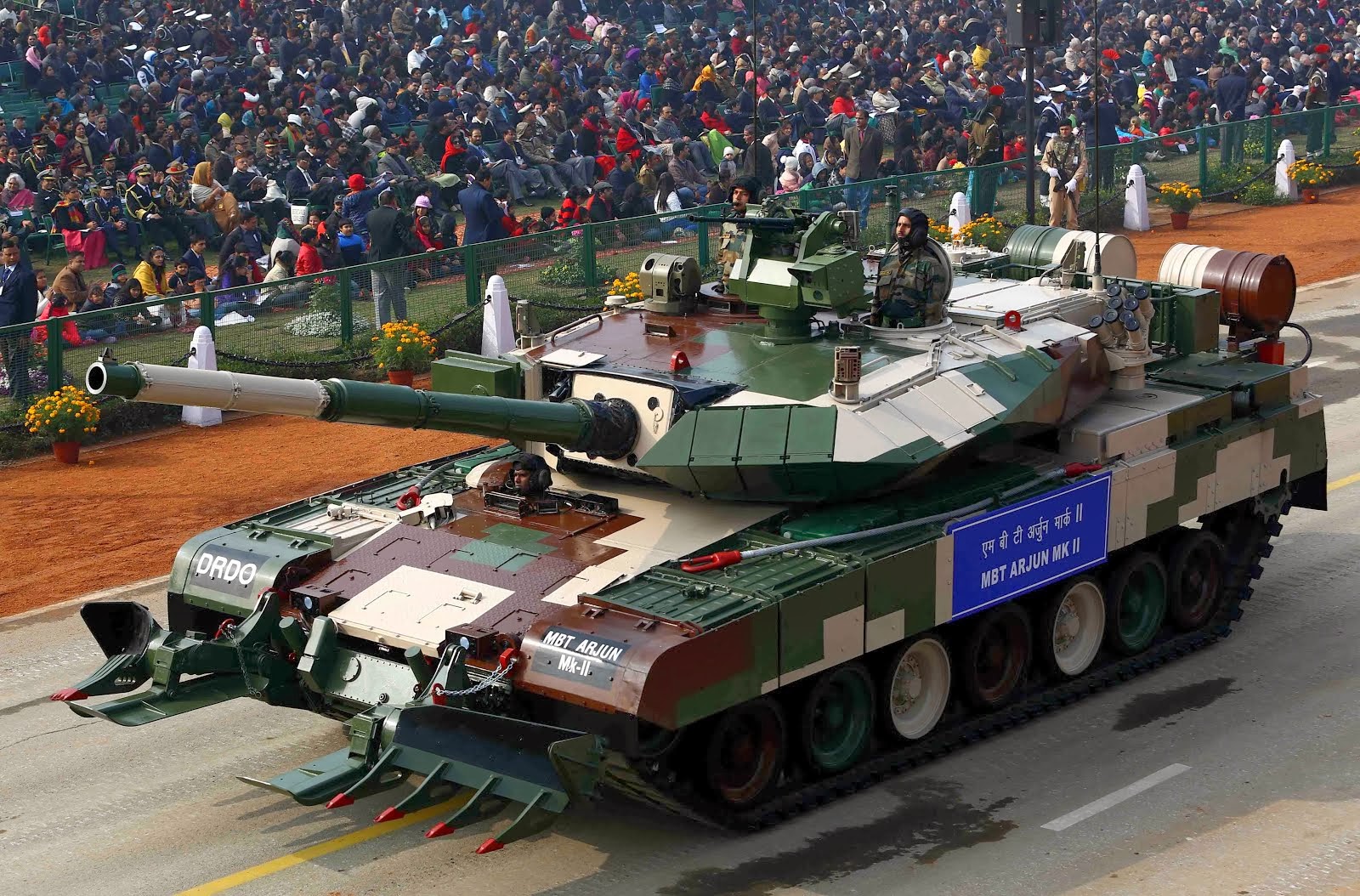
Put modern main battle tanks from different countries side by side, and something curious becomes apparent: despite their different design traditions, they have gradually become more alike. Main armament has converged around 120–125 mm guns, engines producing roughly 1,500 hp have become almost standard for heavy Western tanks, fire-control systems now offer broadly similar capabilities, and designers everywhere have spent decades searching for the right compromise between protection, weight, and mobility. India’s Arjun looks almost as if it were designed by engineers who studied these global trends and repeatedly chose to go their own way.
It has a four-man crew and manual loading. An enormous protected internal volume. Hydropneumatic suspension. A 120 mm rifled gun in an era dominated by smoothbore tank weapons. The original production Arjun Mk.1 already weighed 58.5 tonnes, while the current Mk.1A has grown to approximately 68 tonnes — while retaining the same 1,400 hp engine. Where the first version could reach up to 70 km/h on roads, the 68-tonne Mk.1A is officially rated at 58 km/h, with a power-to-weight ratio of 20.59 hp per tonne.
And throughout all of this, India continued buying and producing the much smaller T-90.
At first glance, this seems like an almost perfect story of a failed national defence programme. Arjun development began in the 1970s, yet the first fully operational units received the tank only in the following century. The vehicle became heavy, expensive and, especially in its early form, highly dependent on imported components.
But that simple explanation begins to fall apart once the Arjun is examined as a fighting vehicle rather than merely as a procurement programme.
When India eventually placed the Arjun alongside the T-90 and subjected both tanks to comparative trials, the indigenous vehicle turned out to be anything but a helpless technological dead end.
In some areas, it performed remarkably well.
And that raises a far more interesting question: if the Arjun could genuinely become a good tank, why did the Indian Army never make it its principal main battle tank?
A Tank Intended to Free India from Imports
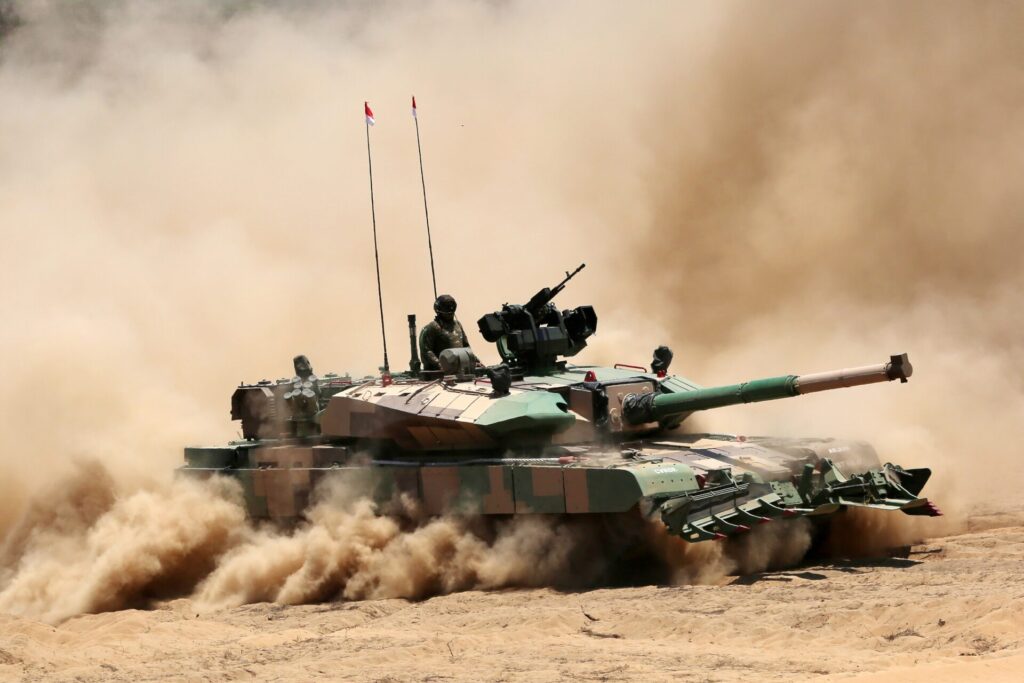
The story of the Arjun officially begins in May 1974, and the original ambition went far beyond designing another armoured vehicle. India wanted its own main battle tank and, with it, greater independence from foreign suppliers.
The initial plan was to have the vehicle ready for mass production by April 1984, allowing it to become one of the Indian Army’s principal tanks during the 1985–2000 period.
That did not happen.
Requirements changed. The design was repeatedly revised. Trials uncovered new problems. The project was initially allocated 15.5 million rupees; by 1980 the estimate had risen to 56.55 million. After the final requirements were established in 1987, projected development expenditure climbed to 280.8 million rupees. By the formal completion of development in March 1995, the figure had reached 305.6 million.
India ultimately produced 12 prototypes and 15 pre-production vehicles.
The numbers alone, however, fail to convey the scale of what happened. More than twenty years passed between the initial decision and formal completion of development. India then had to wait even longer before a complete regiment equipped with Arjun entered service.
The first regiment was formed only in 2009 — 35 years after the programme officially began.
This is why Arjun acquired its reputation as a seemingly endless development project. Yet when the tank is examined not as a schedule but as a piece of engineering, a different story emerges.
India was effectively learning how to build a modern main battle tank while simultaneously trying to design one.
The programme required the country to master armour technology, armament, suspension, fire-control integration, fire-suppression systems and dozens of other technologies. India’s DRDO identifies Kanchan armour, hydropneumatic suspension, armament and the integration of numerous vehicle systems among the indigenous achievements of the programme.
True technological independence, however, remained elusive. Indian government auditors noted that even 24 years after the programme began, the power pack, gun-control system, fire-control system and several other components — together accounting for roughly 60% of the tank’s cost — still depended on imports.
The result was a particularly revealing paradox: the Arjun was created to reduce India’s dependence on foreign technology, yet it became the programme that demonstrated just how difficult genuine independence in modern tank production really was.
Why Did It Become So Huge?
It is difficult to mistake an Arjun for a T-72 or T-90 even at a distance. The Indian tank is substantially larger.
That was no accident.
For decades, the Soviet school of tank design had attempted to minimise protected internal volume. The result was a low silhouette, a three-man crew, an autoloader and extremely compact internal arrangements.
India chose a different path.
The Arjun retained four crew members: commander, gunner, driver and loader. The absence of an autoloader allowed the fighting compartment to be arranged differently, but inevitably increased the volume of both the turret and the vehicle as a whole.
The original production Arjun Mk.1 weighed 58.5 tonnes and was powered by a 1,400 hp engine, giving it a maximum road speed of up to 70 km/h. Its principal weapon was a 120 mm gun supplied with 42 rounds, while the manufacturer lists a maximum rate of fire of up to eight rounds per minute.
But the most unusual feature is not its calibre.
The Arjun’s gun is rifled.
By the time the tank was being developed, most of the world was moving in the opposite direction. The Soviet T-62 had introduced a smoothbore gun back in the 1960s, and the concept was subsequently established in Soviet 125 mm tank armament. In the West, the appearance of the German 120 mm Rh-120 similarly accelerated the transition towards smoothbore guns. Britain’s Challenger family remained one of the most notable exceptions for many years.
India developed its own 120 mm rifled system.
DRDO describes it as a high-velocity 120 mm main armament and developed a dedicated family of ammunition for it. The principal anti-armour weapon became a fin-stabilised armour-piercing discarding-sabot round, or FSAPDS.
In other words, choosing a rifled barrel did not mean returning to an obsolete concept of tank armament. India attempted to combine a rifled gun with modern high-velocity ammunition.
The resulting Arjun therefore resembled not an evolution of the Soviet-derived vehicles already serving in India, but a separate, broadly Western-style heavy tank concept.
The Desert Versus 60 Tonnes
This leads to another apparent contradiction.
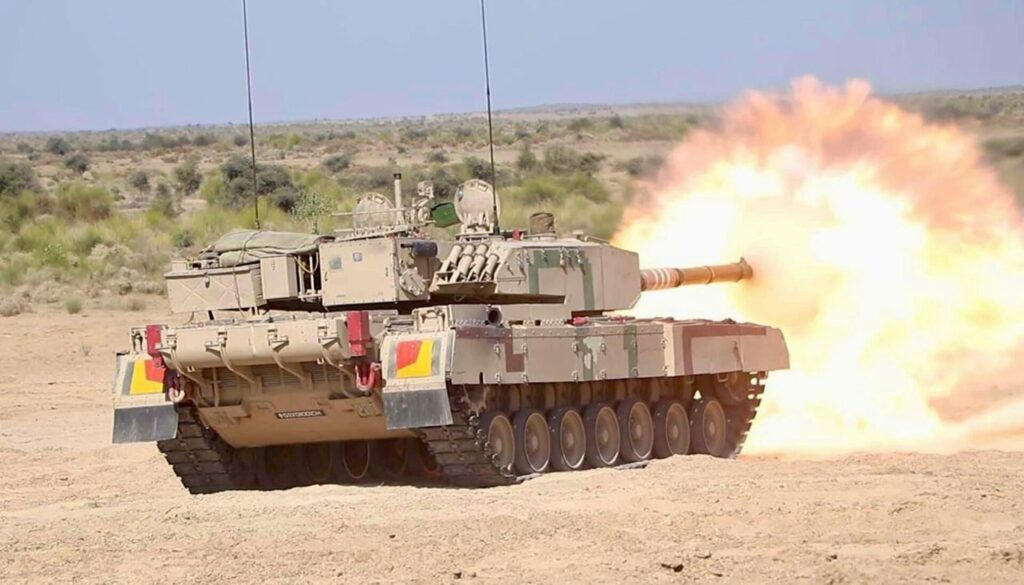
One of the principal potential operating environments for Indian armour is Rajasthan: heat, sand and vast open spaces. At first glance, the last thing such terrain seems to require is an exceptionally heavy tank.
Yet weight alone does not determine cross-country mobility.
Ground pressure, track width, weight distribution, transmission characteristics and suspension behaviour all matter. One of the defining features of the Arjun became its hydropneumatic suspension, which Indian sources associate with strong cross-country performance.
Testing was extensive. The first 12 prototypes accumulated more than 20,000 km and fired approximately 1,100 rounds. The following 15 pre-production tanks covered more than 70,000 km and fired roughly 8,000 rounds.
The heavy Arjun therefore genuinely learned to operate in India’s desert environment.
The price was paid elsewhere.
Even early government audits noted that the dimensions and weight of the Arjun required special railway wagons, with transportation on them expected to cost roughly 150% more.
Here, one of the fundamental problems of the tank becomes visible for the first time.
Tactical mobility and strategic mobility are two very different things.
A tank may perform exceptionally well in sand, move quickly on roads and provide excellent working conditions for its crew. An army, however, must ask additional questions. How quickly can hundreds of these tanks be moved across the country? Which bridges can support them? What railway equipment is required? How will maintenance and supply be organised?
At this level, the advantages of a large heavy tank begin turning into constraints.
Arjun Versus T-90
The most famous episode in the Arjun story came in 2010.
The Indian Army conducted comparative trials between the Arjun and T-90. Afterwards, a popular story emerged claiming that the indigenous tank had effectively “defeated” its Russian rival.
Reality is considerably more interesting.
Indian government auditors later compared the requirements imposed on the two tanks and found that they were not always identical. In several cases, the Arjun was actually subjected to more demanding conditions.
The Indian vehicle, for example, was tested on medium and heavy dunes at Mahajan, while automotive trials of the T-90 were conducted under easier conditions at Chaba. Arjun faced stricter oil-condition requirements, a higher required degree of laser-rangefinder accuracy, more demanding firing conditions against moving targets and zero permitted water ingress during fording tests. Even the required gradient was 35 degrees for Arjun compared with 30 degrees for the T-90.
Across several categories, the audit explicitly identified less demanding requirements for the T-90.
This matters because it undermines two popular myths at once.
Arjun was not an incapable machine being artificially forced into service. But neither should the 2010 trials be treated as a simple duel from which one tank can be declared the absolute winner.
The trials were comparing more than two vehicles.
They were comparing two fundamentally different philosophies of tank design.
The T-90 is considerably smaller and lighter, uses a three-man crew and an autoloader, and belongs to an enormous family of vehicles with which the Indian Army was already deeply familiar.
Arjun offered something different: more internal volume, four crew members, a different suspension system, different armament and a fundamentally different vehicle layout.
Following the desert trials, the Indian Army decided to order another batch of Arjuns. A government statement from 2010 explicitly connected the decision to procure an additional 124 vehicles with successful trials in desert conditions.
The argument appeared to have been settled.
Yet the Arjun still did not become India’s mass-produced main battle tank.
Because a Tank Never Fights Alone
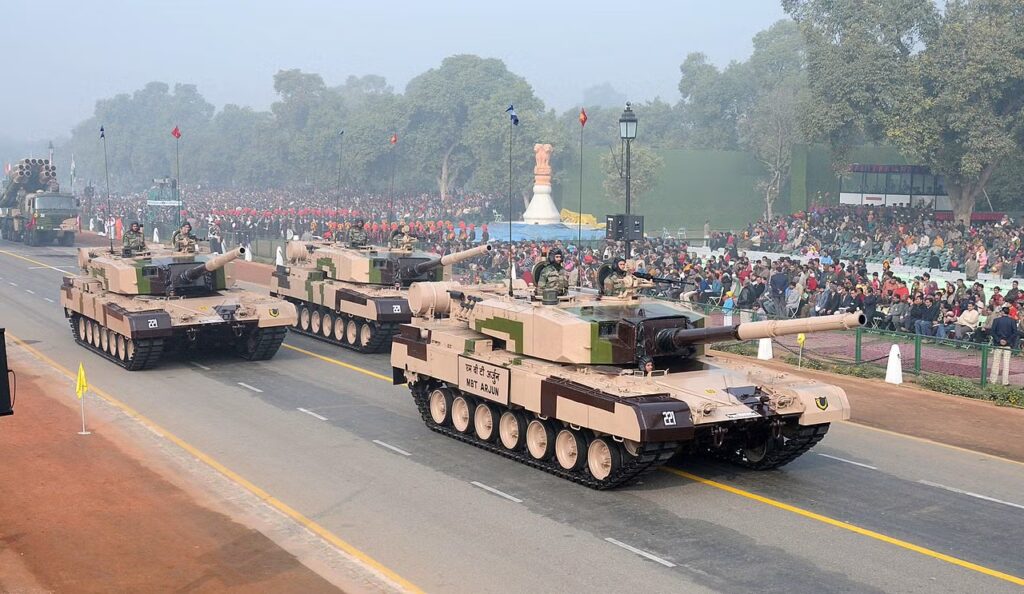
To understand why, it is enough to look at the numbers from the beginning of the 2000s.
In 2000, the Indian Army was approximately 38% short of its authorised tank strength of 3,717 vehicles. India did not need a few dozen experimental tanks several years later.
It needed hundreds of tanks relatively quickly.
In February 2001, India therefore ordered 310 T-90s from Russia: 124 complete vehicles and another 186 in kit form, accompanied by technology transfer. Production of another 300 T-90s in India was also planned.
The corresponding production order for Arjun covered only 124 vehicles.
This created a dynamic that would become increasingly difficult to reverse.
While Arjun was becoming a good tank, the T-90 was becoming a system.
Production facilities were established around it. Maintenance infrastructure expanded. Spare parts accumulated. Training systems developed. Units became familiar with the vehicle, and logistics adapted around it.
The Heavy Vehicles Factory was expected to acquire the capacity to produce as many as 100 T-90s per year, while the manufacturing infrastructure for Arjun was designed around an annual output of just 30 vehicles.
Meanwhile, the Arjun programme continued to fall behind schedule.
The original plan called for all 124 tanks to be produced by 2006–2007. By March 2007, only 53 had been manufactured and just five delivered to the Army. The deadline was first moved to 2007–2008 and then delayed again. By March 2010, the Army had received only 69 vehicles.
Design changes continued until 2010, even though the configuration had officially been considered frozen in 2004.
A vicious circle had emerged.
Small production numbers made dedicated Arjun infrastructure less economical. Limited infrastructure made increasing production numbers less attractive. At the same time, the number of T-90s continued to grow.
The question of “which tank shoots better?” therefore became progressively less important.
Armies do not need isolated good tanks.
They need armoured forces.
India’s Most Indian Tank Was Not Entirely Indian
There was another problem, and for a project originally intended to deliver technological independence it was particularly painful.
Arjun remained dependent on imported components.
A 2016 government audit recorded an uncomfortable figure: when the Arjun Mk.1 began entering service, 69% of its components were imported. Moreover, a comprehensive system for supplying spare parts had still not been established, while the Army was already approaching the point where future overhauls had to be considered.
This may be one of the most important results of the entire programme.
Building the hull of a tank is not enough.
A country can design its own gun. It can develop armour. It can engineer a suspension system. It can integrate a fire-control system. But a modern main battle tank consists of an enormous number of specialised assemblies, optics, electronics, powertrain components, materials and manufacturing technologies.
The Arjun became a kind of measuring instrument for Indian industry. It revealed, with unusual precision, what India had already learned to produce independently and what it still could not.
And this is precisely why the story did not end with the Mk.1.
68 Tonnes Instead of 58
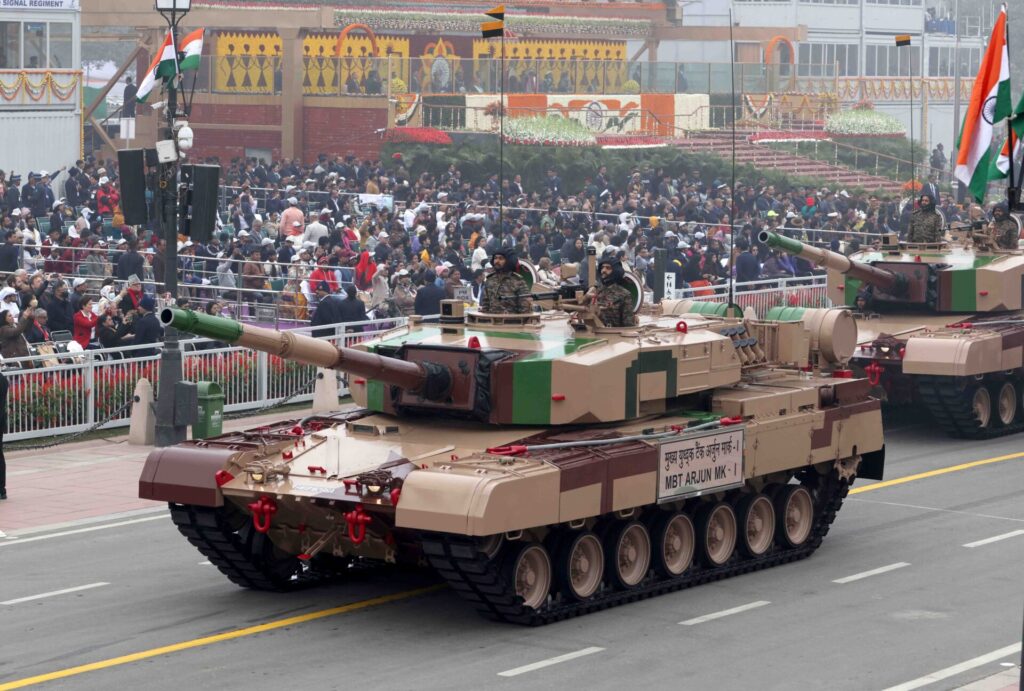
The next version was initially known as the Arjun Mk.2 before entering production configuration as the Mk.1A.
One might expect decades of experience to have encouraged Indian engineers to shrink the tank and bring it closer to the T-90 concept.
Almost the opposite happened.
Arjun became even heavier.
The current Mk.1A weighs 68 tonnes. It is 10.642 metres long with the gun forward, 3.95 metres wide and 3.182 metres high. The crew still consists of four men. The engine continues to produce 1,400 hp, reducing the power-to-weight ratio to 20.59 hp per tonne, while maximum speed is listed at 58 km/h. Ammunition capacity for the 120 mm rifled gun has fallen to 39 rounds.
The additional weight did not appear without reason.
It reflects improved protection, upgraded Kanchan armour, explosive reactive armour modules, protected ammunition stowage with individual shutters, a remotely operated 12.7 mm machine gun, laser-warning and countermeasure systems, improved observation equipment and numerous other changes.
The increased mass also required modifications to the running gear and hydropneumatic suspension.
In total, India’s Ministry of Defence identifies 72 improvements over the Mk.1. In September 2021, an order was placed for 118 Arjun Mk.1A tanks at a cost of 75.23 billion rupees, with more than 200 Indian companies expected to participate in the production chain.
The changing level of indigenous content is particularly revealing. The manufacturer lists 54.3% for the Mk.1A, compared with 41% for the earlier version.
That is still far from complete independence.
But the direction of travel is obvious.
So Was the Arjun a Failure?
Half a century after the programme began, it is surprisingly difficult to answer that question with a single word.
Judged against the original timetable, cost expectations and the 1974 ambition of rapidly equipping India with an indigenous main battle tank, the results are difficult to defend. The plan to begin mass production by 1984 slipped by decades. Reducing dependence on imports proved far harder than expected. Serial production proceeded slowly. The design continued to change, while the Indian Army had to address a huge shortage of tanks by acquiring the T-90.
But there is another side to the story.
When the programme began, India lacked many of the technologies required to independently develop a modern main battle tank. The programme ultimately produced an indigenous 120 mm tank gun, Kanchan armour, hydropneumatic suspension, experience in fire-control development, expertise in integrating an extremely complex armoured fighting vehicle and an industrial network capable of gradually increasing the share of domestically produced components.
Most importantly, the tank eventually worked.
The Arjun Mk.1 entered service. Two regiments were formed and operationalised. The vehicle completed extensive trials, and comparative testing alongside the T-90 did not support the idea that it was fundamentally incapable. The Army subsequently accepted continued development of the platform, eventually resulting in an order for 118 substantially upgraded Mk.1A tanks.
The Arjun is therefore more interesting when viewed not simply as India’s answer to the T-90 or Leopard 2.
It was never quite that.
India developed the tank in a country already operating a vast fleet of Soviet-derived vehicles while simultaneously trying to build an indigenous armoured-vehicle industry. The result was a machine that broke with almost every established Indian convention: large rather than compact, four-man rather than three-man, manually loaded rather than autoloaded, armed with a rifled 120 mm gun rather than a smoothbore 125 mm weapon, equipped with hydropneumatic suspension and, in its latest version, weighing 68 tonnes.
Remarkably, those differences became both its strength and its weakness.
The central problem of the Arjun may not have been that India built a bad tank. It may have been that India built a tank that was simply too different.
Making it the Army’s standard tank required more than proving that it could shoot accurately and cross the desert. India would also have needed to expand a different logistics network, a different maintenance system, a different production chain and effectively a second armoured ecosystem alongside thousands of T-72s and T-90s.
This produced one of the most unusual situations in modern tank development. India spent decades creating its own main battle tank, eventually brought it to the point where it could compete alongside one of the Army’s principal foreign-derived designs — and discovered that technical success alone was not enough.
The Arjun was not merely an alternative to one particular tank.
It was an attempt to create an Indian school of tank design of its own.
And that may ultimately make its story more interesting than those of many far more numerous main battle tanks.