S-500 Prometheus: Why Russia’s New System Can No Longer Be Considered Just Air Defense

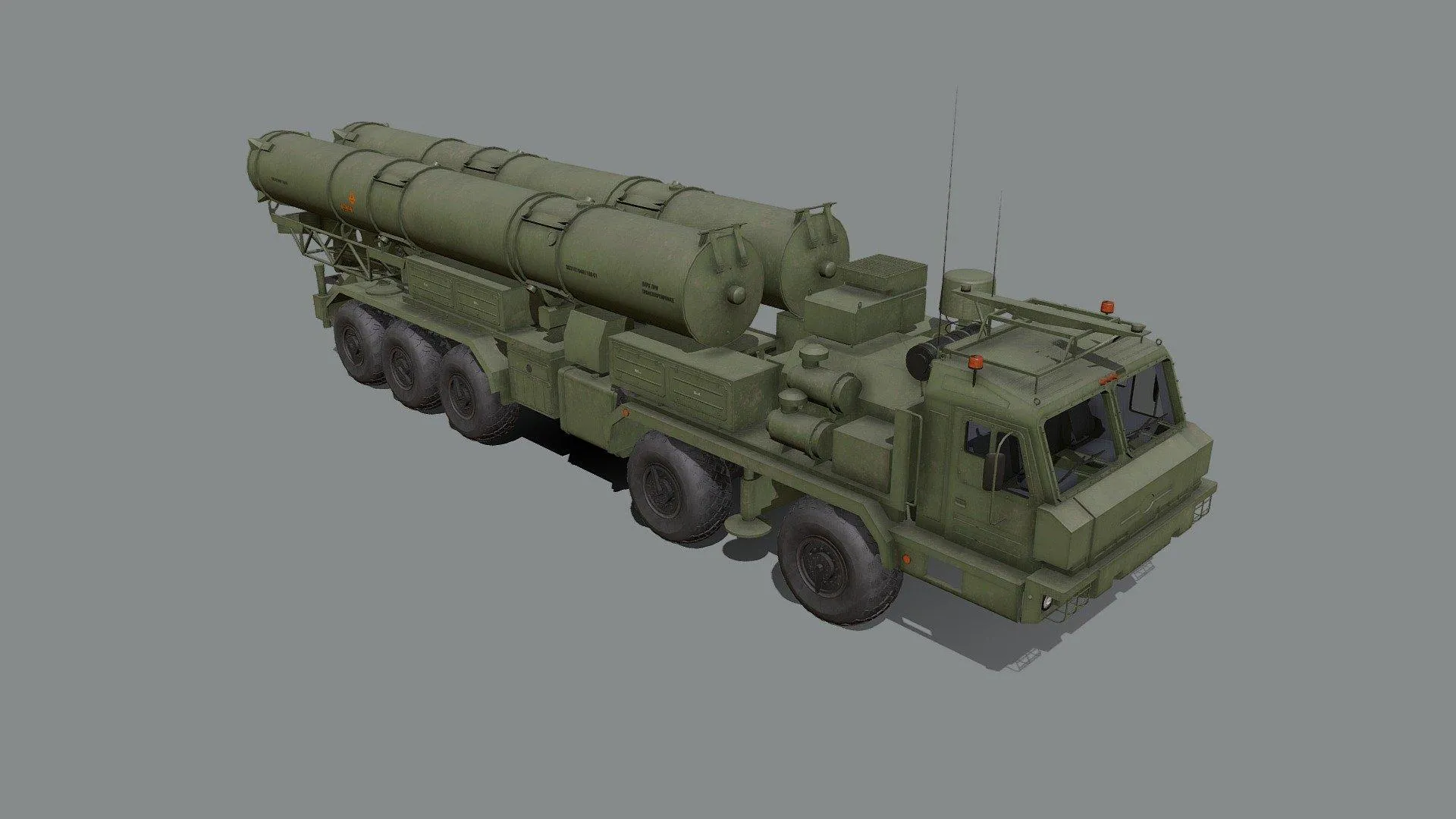
The S-500 Prometheus is usually described through an impressive set of specifications: hundreds of kilometers of engagement range, the ability to intercept ballistic and hypersonic targets, operations in near space, and even the potential to engage satellites. This can easily create the impression that the S-500 is simply a greatly enlarged S-400 — essentially the same concept equipped with more powerful radars and longer-range missiles. But this is where the main misconception begins. What makes the S-500 particularly interesting is not simply its range. With the Prometheus, Russia has attempted to combine capabilities that previously belonged to different layers of defense: engagement of aerodynamic targets, ballistic missile interception, and a limited counter-space capability.
At the same time, an unusual amount of confusion surrounds the Prometheus. Detection range is frequently mixed up with engagement range, specifications belonging to different missiles are attributed to the entire system, and the ability to engage high-speed ballistic targets is sometimes transformed into claims that the S-500 can reliably intercept virtually any hypersonic weapon. It therefore makes more sense to examine the S-500 not as another supposed “wonder weapon,” but as an engineering concept. What has actually changed compared with the S-400? Why does the system require several types of radar and interceptor missiles? And why is the distinction between air defense and missile defense becoming increasingly blurred?
The S-500 Is Not Simply the Next S-400
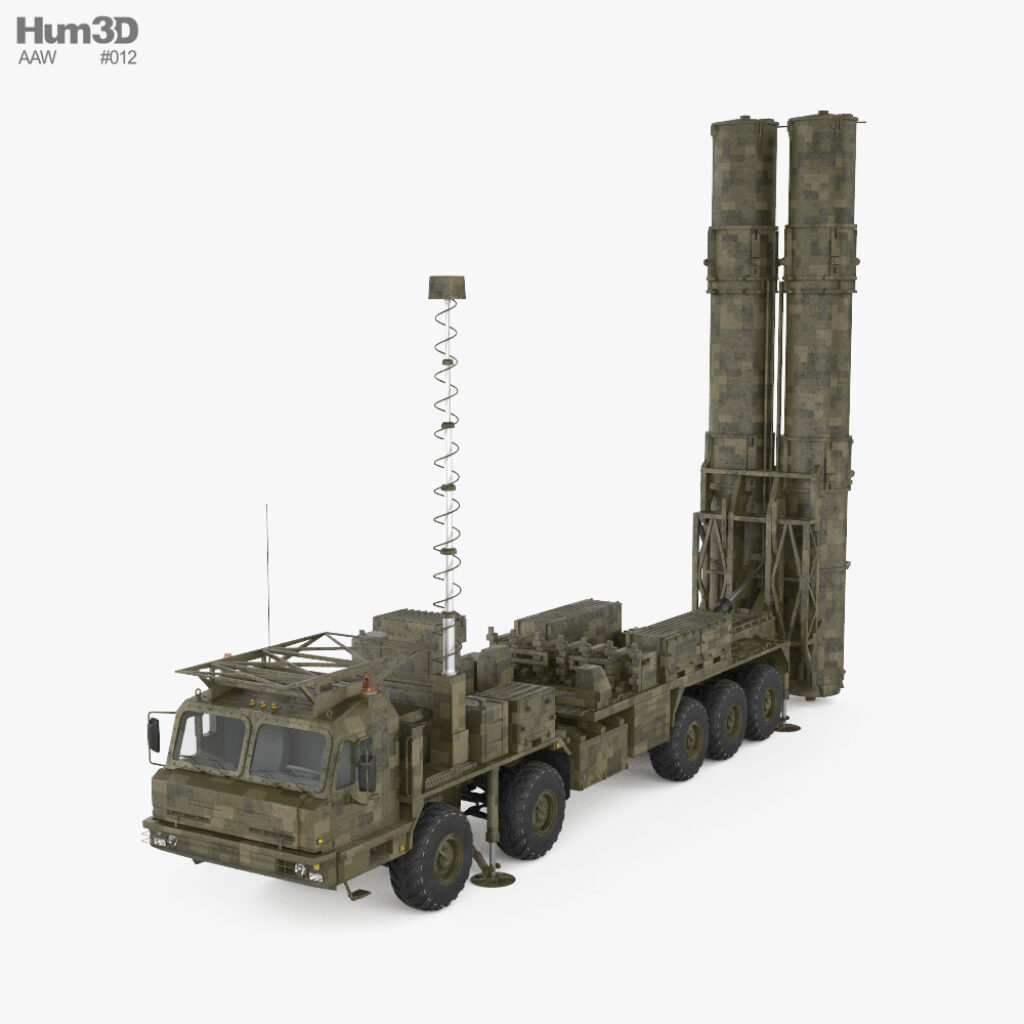
The S-400 Triumf was originally developed as a versatile long-range surface-to-air missile system. Its primary targets remain aircraft, cruise missiles, and other aerodynamic threats, although the system also possesses capabilities against certain types of ballistic missiles. This versatility became one of the defining characteristics of the family: by using different interceptors, a single system can establish several engagement zones.
The S-500 develops a very different side of this concept. Defeating ballistic targets is no longer an additional capability but one of the system’s primary missions.
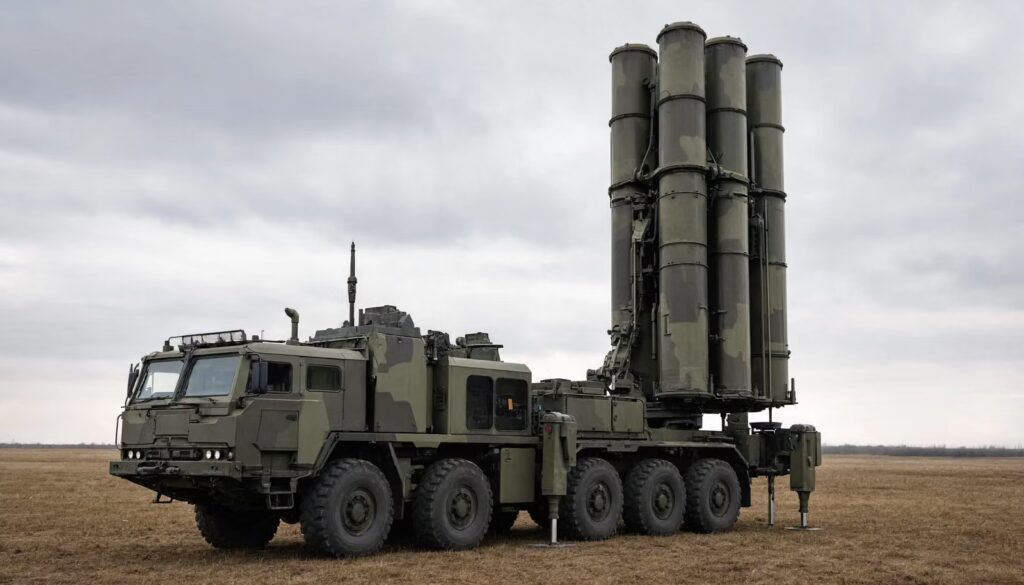
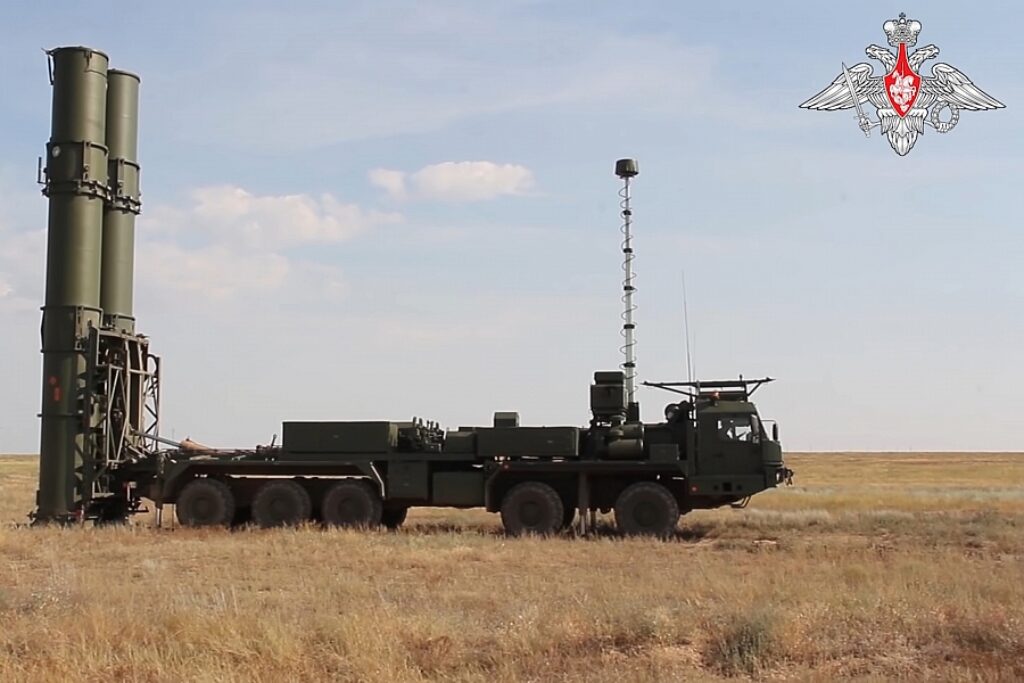
This can be seen in the reported composition of the system itself. According to the Missile Threat project at the Center for Strategic and International Studies (CSIS), the S-500 employs several specialized radar systems. These reportedly include the 91N6E(M) and 96L6-TsP surveillance radars, the 76T6 multifunction radar, and the specialized 77T6 missile-defense radar.
Such a collection of sensors is not required merely to produce impressive detection-range figures. An aircraft, a cruise missile, and the reentry vehicle of a ballistic missile present fundamentally different challenges. They operate at different altitudes and speeds, have different radar signatures, and give the defender dramatically different amounts of time in which to react.
The S-500 is therefore better understood as a mobile system occupying the boundary between conventional air defense and ballistic missile defense.
Two Different Wars Within One System
The new concept becomes particularly apparent when looking at the S-500’s missile armament. Open sources associate at least two fundamentally different families of interceptors with the system.
For aerodynamic targets, the 40N6M is commonly mentioned, representing a further development of Russia’s family of long-range surface-to-air missiles. CSIS lists an engagement range of around 400 kilometers for this interceptor. A very different mission is associated with the 77N6 and 77N6-N1 missiles. These interceptors are primarily linked to ballistic missile and potentially counter-space missions, with their claimed engagement range generally estimated at approximately 500–600 kilometers.
This leads to an important detail that is frequently lost in descriptions of the Prometheus.
A 600-kilometer range for an anti-ballistic missile does not mean that the S-500 can necessarily shoot down an aircraft from 600 kilometers away.
These are different interceptors operating under very different conditions. When engaging aircraft, the radar horizon also becomes critically important: a low-flying target may simply disappear behind the curvature of the Earth regardless of the theoretical maximum range of the missile.
Claims that the S-500 can engage aerodynamic targets at ranges of 600–800 kilometers should therefore be treated with considerable caution. More reliable open-source assessments generally place the relevant interceptor’s range at around 400 kilometers. Higher figures tend to concern the missile-defense component of the system or, in some cases, radar detection rather than actual engagement range.
It is precisely the presence of a specialized missile-defense component that represents one of the S-500’s most significant differences from the S-400.
Why a Ballistic Missile Is Much Harder to Intercept
At first glance, the mission of any air-defense system appears similar: radar detects an object, computers calculate its trajectory, and an interceptor is launched. Once a ballistic target enters the equation, however, the scale of the problem changes dramatically.
A conventional aircraft may travel at several hundred meters per second. A ballistic missile reentry vehicle can move at several kilometers per second. The time available for detection, classification, trajectory calculation, and interception shrinks enormously.
The target may also approach from above at altitudes where conventional surface-to-air missiles were never designed to operate. A system therefore requires different radars, different tracking algorithms, and much faster interceptors.
In effect, the S-500 is expected to fight two fundamentally different wars. In one, its opponent is an aircraft or cruise missile. In the other, it is an object descending from the upper atmosphere at enormous speed.
The second mission explains many of the Prometheus system’s unusual characteristics.
What About Hypersonic Weapons?
This is probably the most confused aspect of the S-500 story.
Russian sources have repeatedly claimed that the system is capable of engaging hypersonic targets. CSIS also notes reports concerning the development of interceptors for such threats, while emphasizing that the actual extent of this capability remains uncertain.
The first problem is the word “hypersonic” itself.
Hypersonic generally means speeds above approximately Mach 5. But ballistic missile warheads were traveling at hypersonic velocities long before the modern term “hypersonic weapon” became commonplace. Missile-defense systems have been designed to intercept such objects for decades.
The American THAAD system, for example, is officially designed to destroy ballistic missiles during the terminal phase of their flight, both inside and just outside the atmosphere. It uses the hit-to-kill principle, destroying the target through a direct kinetic collision between the interceptor and the incoming threat.
Therefore, the claim that the S-500 is the “world’s first system capable of shooting down hypersonic targets” is misleading even at the level of terminology.
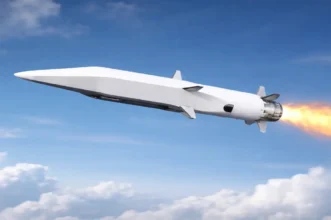
The genuinely difficult problem is posed by maneuvering hypersonic glide vehicles and hypersonic cruise missiles. Unlike a conventional ballistic warhead following a comparatively predictable trajectory, such weapons can maneuver and change altitude, forcing the defensive system to continuously recalculate the interception point.
The S-500 is claimed to have been designed with such threats in mind. However, there is insufficient publicly available information about testing conditions to establish the real limits of this capability. It is therefore more accurate to say that engagement of high-speed and advanced hypersonic threats formed part of the system’s design requirements, rather than claiming that the S-500 has demonstrated an ability to intercept any type of hypersonic weapon.
The distinction may appear small, but technically it is crucial.
Why Does an Air-Defense System Need to Reach Space?
The S-500’s reported counter-space capability is even more unusual.
The 77N6 family of interceptors has been associated not only with ballistic missile defense but also with the ability to engage objects in low Earth orbit. CSIS specifically lists ballistic missiles and satellites among the reported targets for these interceptors.
This is where the widely repeated claim that “the S-500 can shoot down satellites” originates.
Technically, such a capability fits the system’s overall concept. If an interceptor can operate above the dense layers of the atmosphere and possesses sufficiently precise guidance, a ballistic missile warhead and a satellite can become related types of targets from the interceptor’s perspective.
There is, however, an important limitation.
Satellites do not all orbit Earth at the same altitude. A large proportion of operational spacecraft fly hundreds of kilometers above the surface, while some constellations operate considerably higher. The ability to engage objects in “near space” therefore does not mean that the S-500 can destroy any satellite in low Earth orbit.
It is more useful to describe this as a limited counter-space capability: the ability to engage certain spacecraft when their orbital parameters bring them within the interceptor’s accessible engagement envelope.
The fact that such a mission is being assigned to a mobile air- and missile-defense system is nevertheless significant. Airspace, the upper atmosphere, and near space are gradually becoming a single operational environment for modern defensive systems.
S-500 vs THAAD: The Comparison Is More Complicated Than It Looks
This naturally creates a temptation to place the S-500 next to the American THAAD system, compare maximum ranges and interception altitudes, and determine which system is more powerful.
Such a comparison explains surprisingly little.
THAAD was designed from the outset as a specialized ballistic missile-defense system. The U.S. Missile Defense Agency defines its mission as intercepting ballistic missiles during their terminal phase, both inside and immediately outside the atmosphere. A THAAD battery includes launchers, interceptors, the AN/TPY-2 radar, and command-and-control equipment.
The S-500 has a broader claimed target set. Alongside its missile-defense component, it is intended to retain the ability to engage aerodynamic targets.
This reveals an interesting difference in approach.
The American architecture largely distributes different missions among specialized defensive layers. Patriot PAC-3 operates in the lower portion of the system, THAAD engages ballistic threats higher up, while Aegis Ballistic Missile Defense with SM-3 interceptors can conduct exo-atmospheric engagements during the midcourse phase of flight. The U.S. Missile Defense Agency explicitly describes these systems as elements of a broader layered defense architecture.
The S-500 attempts to concentrate more of these capabilities around a single mobile system.
This does not automatically make either approach superior. Specialization allows each layer to be optimized for a particular mission, while greater versatility can provide different advantages, particularly mobility and the ability to deploy a broader set of defensive capabilities within one formation.
For this reason, the S-500 and THAAD are better viewed not as direct equivalents, but as systems whose missions partially overlap.
So Why Is the S-400 Still Needed?
The arrival of the S-500 does not make the S-400 obsolete.
Quite the opposite: the logic of layered air defense requires different systems to operate together. There is little reason to expend an expensive anti-ballistic interceptor on a target that can be destroyed by a lower-tier system.
The S-400 remains a long-range system primarily intended to engage aerodynamic targets and some missile threats. Pantsir and other shorter-range systems protect positions against low-flying threats, unmanned aircraft, and precision-guided weapons. The S-500 is intended to operate above this structure, taking on the most demanding ballistic targets while simultaneously expanding the capabilities of the overall defensive network.
The popular simplified formula of “Pantsir — S-400 — S-500” therefore captures the general idea but does not reflect the full complexity of the architecture. A real integrated air-defense network also includes surveillance radars, command posts, and multiple weapon systems exchanging information and overlapping one another’s engagement zones.
The effectiveness of this integration can be just as important as the maximum range of any individual missile.
The First Regiment Exists — but Many Questions Remain
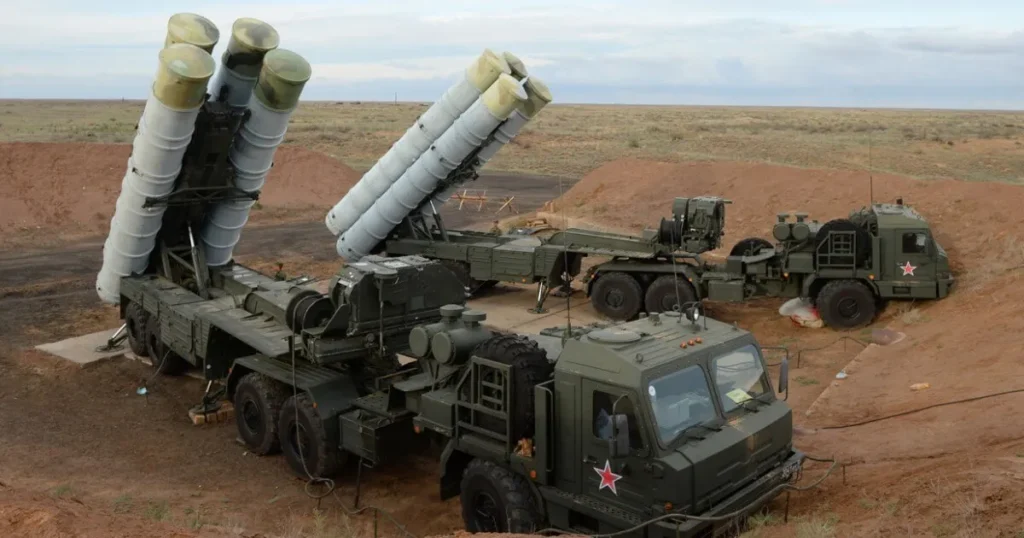
The S-500 has long since moved beyond being purely an experimental project. It is nevertheless important to distinguish between the different stages of the program.
For several years, Russian officials reported deliveries of individual elements and initial sets of the system. By late 2024, Russia’s military leadership was describing the formation of the first S-500 regiment as nearing completion. In December 2025, Russian Defense Minister Andrei Belousov announced that the first S-500 regiment had entered combat duty.
It is therefore more accurate today to describe the system as entering operational deployment rather than remaining merely an experimental complex.
The amount of publicly available information, however, remains limited.
We have a reasonably clear picture of the S-500’s general architecture and the intended roles of its principal components. Far less is known about its actual detection performance against difficult targets, probability of interception, effectiveness against maneuvering hypersonic vehicles, resistance to electronic warfare, and the real performance of the 77N6 family of interceptors.
This is a fundamental limitation of any assessment of the Prometheus.
The S-500’s Most Important Innovation Is Not Its Range
This is why the competition over headline numbers surrounding the S-500 can distract from the system’s most interesting characteristic.
One can debate whether a particular interceptor has a maximum range of 400, 500, or 600 kilometers. The claimed interception altitude and potential ability to engage low-orbiting spacecraft can also be discussed. From a technological perspective, however, something else appears more significant.
The S-500 demonstrates the gradual disappearance of the traditional boundary between air defense and missile defense.
Once, a surface-to-air missile system was primarily expected to shoot down aircraft. Cruise missiles were subsequently added to the target set, followed by tactical ballistic missiles. Today the discussion includes the reentry vehicles of longer-range ballistic missiles, maneuvering high-speed threats, and objects operating in near space.
Meeting these requirements involves much more than simply building a larger surface-to-air missile. It requires an entire network of specialized radars, different interceptors, powerful computing systems, and external sources of targeting information.
That is what the S-500 is attempting to become.
Calling the Prometheus simply the successor to the S-400 is therefore somewhat misleading. It is better understood as an attempt to transfer some capabilities associated with strategic missile defense onto a mobile platform while retaining the functions of long-range air defense.
How successfully this concept has been implemented in practice cannot yet be determined from open information. The first regiment is now on combat duty, but detailed public test data that would allow many of the system’s claimed capabilities to be independently assessed remains unavailable.
And this is perhaps the most important distinction to keep in mind when discussing the S-500: its architecture and overall concept genuinely represent a major step beyond conventional air defense. But it is still too early to treat every claimed characteristic of the Prometheus as a demonstrated operational capability.