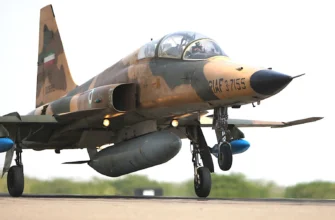
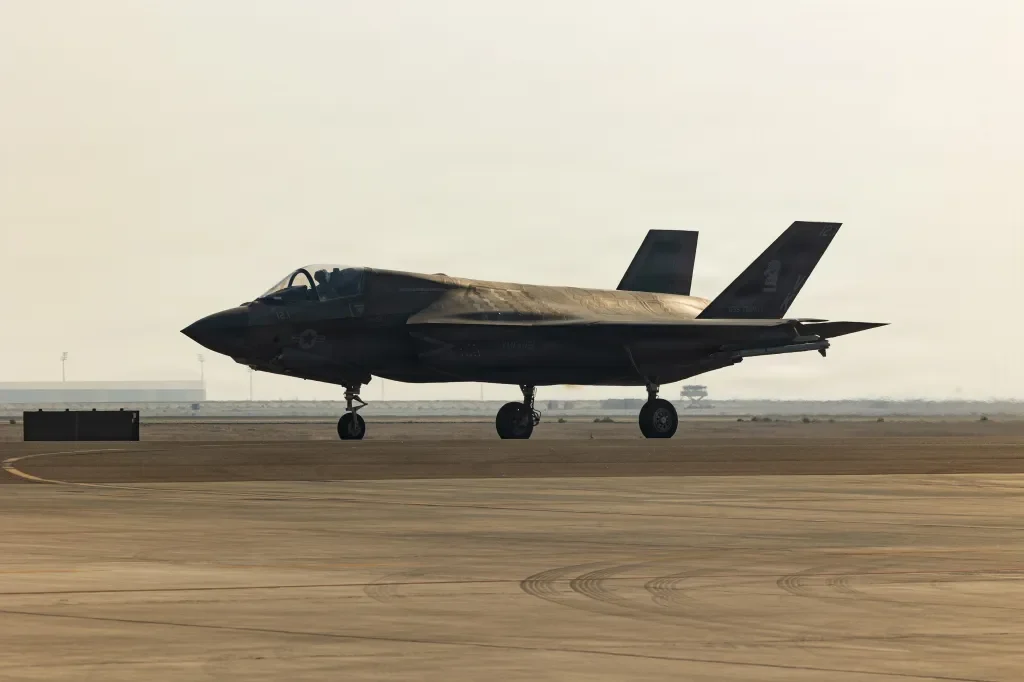
During Operation Epic Fury, the U.S. Marine Corps employed a concept in actual combat that it had spent years practicing during exercises in the Pacific. F-35Bs and other aircraft began operating through remote forward arming and refueling points, Marines established separate sensor sites, and logistical support was distributed among small temporary bases. The basic idea was straightforward: if an adversary can strike major airfields with missiles and drones, concentrating aircraft, fuel, ammunition, and personnel at a handful of known locations becomes increasingly dangerous. It may be better to force the enemy to search for numerous small sites, some of which can disappear before a strike can be organized. The Marine Corps confirmed that Epic Fury marked the first combat use of Expeditionary Advanced Base Operations, or EABO.
At first glance, the Americans appear to have simply revived the old practice of dispersing aircraft. EABO, however, goes considerably further than maintaining alternate airfields. The Marine Corps is effectively trying to break a conventional military base into separate components and spread them across a large area. Aircraft can be refueled and rearmed at one location, radars and reconnaissance assets operate from another, communications equipment is positioned somewhere else, and anti-ship missiles can occupy yet another site. All these elements are linked through an information network and are expected to move frequently. The result is not so much a collection of small bases as a single large base physically broken into numerous pieces.
A Large Air Base Has Become a Very Convenient Target
For decades, American military aviation has been organized around major airfields. In peacetime, this is an almost ideal arrangement. A large base can hold enormous stocks of fuel and ammunition, maintenance units, warehouses, protected command posts, and thousands of specialists. An aircraft lands, is inspected, refueled, rearmed, and sent back into the air. The more support functions concentrated in one place, the simpler the logistics.
The problem begins when the enemy can reach that place.
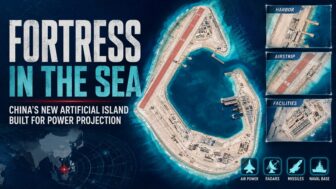
The coordinates of a major air base cannot be hidden. A runway several kilometers long is clearly visible from satellites, and neither fuel farms nor hangars can simply disappear. A massed attack does not necessarily have to destroy every aircraft on the ground. Damage to a runway, ammunition depot, or fuel infrastructure can sharply reduce the number of sorties a base is able to generate.
Modern EABO grew largely out of this problem. The concept was formalized as part of the Force Design 2030 reforms and was developed primarily with operations in the Pacific in mind. Small Marine units would occupy islands and other coastal positions, deploy radars, communications equipment, aviation support points, air defenses, and anti-ship weapons, carry out their mission, and move again when necessary. Mobility and a relatively small physical footprint became fundamental requirements.
The idea itself is far from new. During exercises in 2024, Assistant Commandant of the Marine Corps General Christopher Mahoney explained EABO by referring to lessons from World War II and the Korean War: a unit arrives at a site, establishes the required combat capability, operates for a period, and then moves before it becomes a convenient target. What has changed is the range of modern weapons, the sophistication of reconnaissance, and the information networks connecting all these scattered sites.
Until 2026, however, one major question remained unanswered: how well would this arrangement work when the enemy was actually shooting back?
Instead of an Air Base: A Few Trucks and a Patch of Pavement
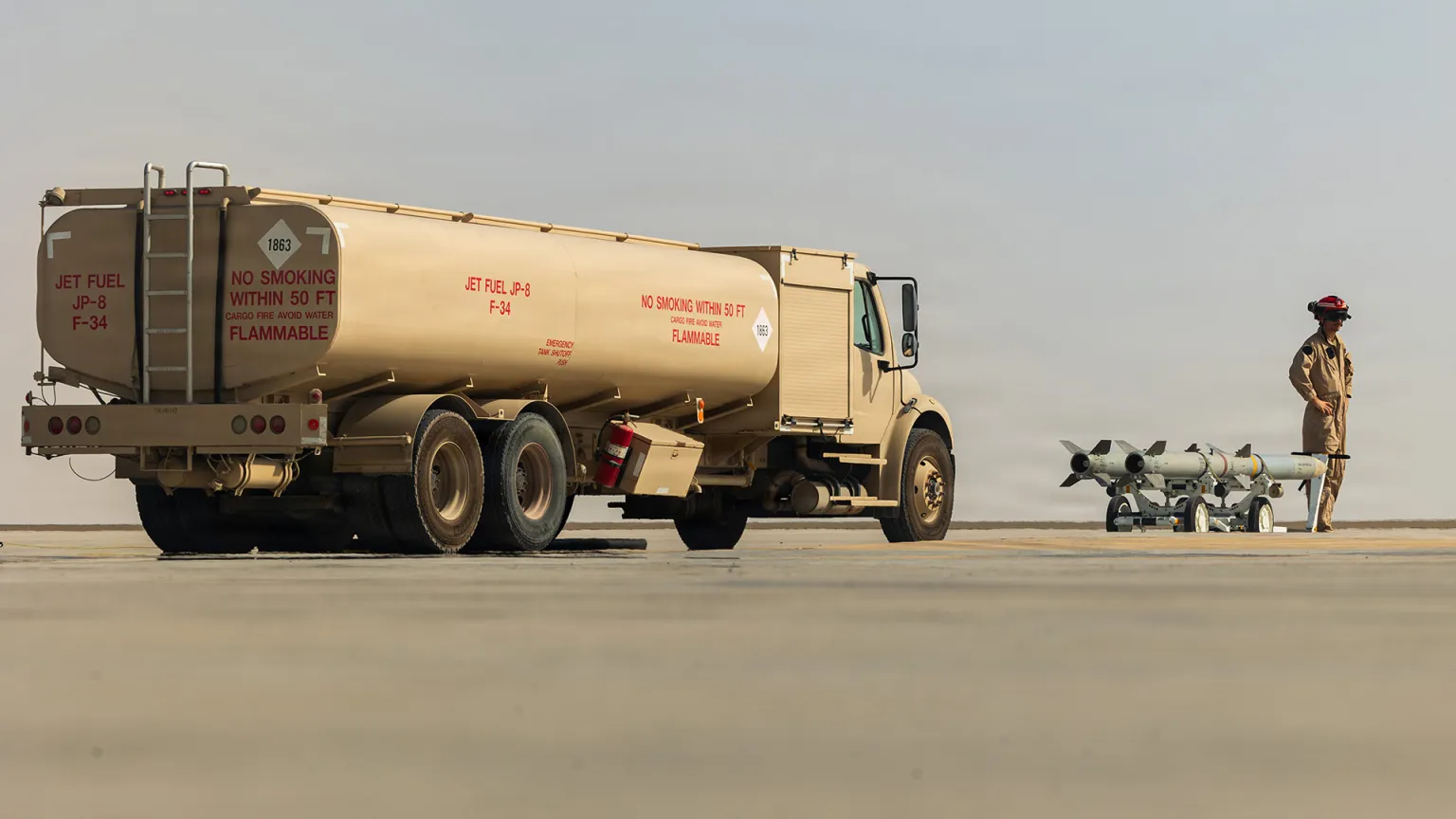
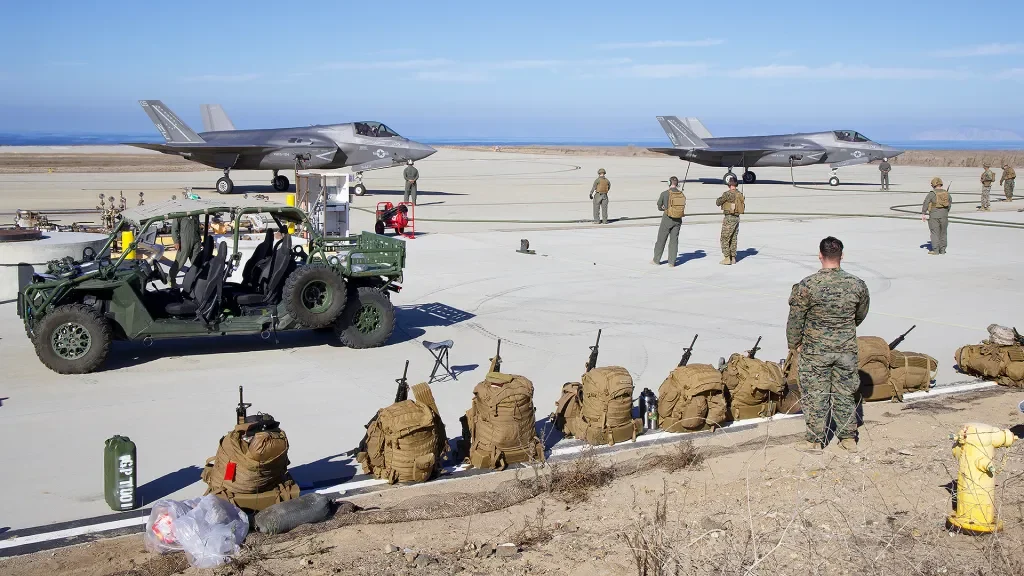
One of the central elements of EABO is the FARP — Forward Arming and Refueling Point. In practical terms, it is the minimum package of equipment and personnel needed to refuel and rearm aircraft away from a full-scale air base.
There is no need to build a huge airfield with permanent warehouses and hangars. Fuel trucks, ammunition, equipment, and technicians are moved to a suitable location. An aircraft lands, receives fuel and weapons, and returns to the mission. Once the requirement disappears or the threat of attack becomes too high, the equipment can be moved somewhere else.
The F-35B is particularly well suited to this approach. It sacrifices some internal fuel capacity compared with other F-35 variants in exchange for short takeoff and vertical landing capability, making it far less dependent on conventional long runways. Colonel Chris Niedziocha, commander of the 31st Marine Expeditionary Unit, described the problem as a trade-off: amphibious ships should ideally remain farther from the threat while their aircraft still need enough range and endurance to conduct combat missions.
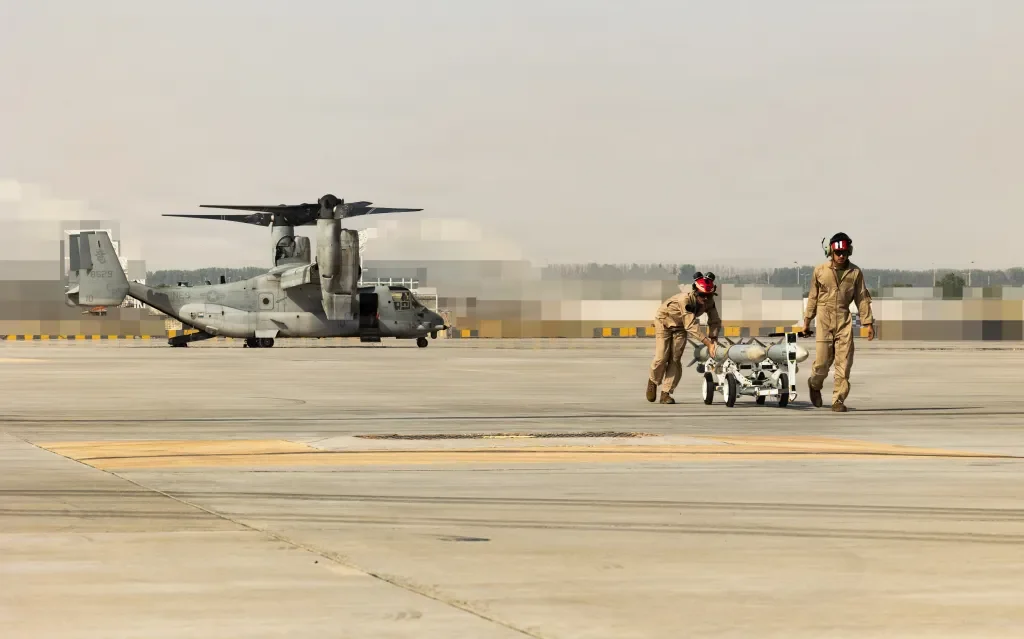
During Epic Fury, these forward points were actually put to use. They supported more than Marine F-35Bs. Army helicopters, MV-22B Ospreys, and unmanned aircraft also passed through them. The Pentagon released imagery showing AIM-120 AMRAAM missiles being delivered to one such FARP. The locations of operational sites have not been disclosed; U.S. officials have only said that they were dispersed across the Middle East. Some continued operating even after the main deployment of the 31st MEU had ended.
The scale was large enough that this can no longer be described as a purely experimental exercise. During its six-month deployment, the formation accumulated more than 1,600 combat aviation flight hours, transported roughly 800,000 pounds — about 360 metric tons — of cargo and moved 5,000 personnel. The Marines also reported refueling more than 300 aircraft ashore and at sea. Those figures cover the entire deployment rather than FARP operations alone, but they illustrate the scale of activity within which the new concept was tested.
The F-35s Were Only Half of the Experiment
Reducing EABO to a network of alternate airfields misses perhaps the most interesting part of the concept. At the same time, the Marines established what they call sensing expeditionary advanced bases — small forward sensor nodes.
Coastal radars, electronic surveillance equipment, and units operating small drones can be deployed ashore. A radar detects a contact at sea, after which a UAV can approach, visually identify the vessel, and continue tracking it. The information is then passed through a common command-and-control network to other participants in the operation. The Marine Corps used this kind of arrangement during Epic Fury, although the exact composition and locations of the sensor sites remain undisclosed.
This element would become especially important in the Pacific. A small Marine detachment on an island does not necessarily have to destroy the ship it detects. Its greatest contribution may simply be information. Marines find the target; a ship, submarine, aircraft, or another missile battery receives the coordinates; whichever platform is best positioned then conducts the strike.
The Americans are therefore gradually moving away from the idea of a base as a specific physical location. A base becomes a collection of functions. The radar is here. Missile launchers are several dozen kilometers away. A FARP operates on another island. The aircraft themselves may normally be based aboard a ship or at a major airfield but use this distributed network for refueling and rearming.
Destroying one element is painful, but it does not necessarily disable the entire system.
Why Land an F-35 in the Middle of Its Mission?
FARPs offer another advantage that is less obvious on operational diagrams: they can reduce demand for one of the most valuable resources in long-range air operations — aerial refueling tankers.
When a fighter operates far from its main base or ship, a substantial portion of its fuel is consumed simply flying to and from the mission area. Aerial refueling can extend its reach, but this requires KC-130s or other tankers to become part of the operation. Those aircraft require their own crews, fuel, maintenance, and protection.
A small intermediate landing site moves part of the refueling process back to the ground.
Niedziocha explicitly said that FARPs were used in part to reduce the burden on aerial tankers. An F-35B can fly part of the route, land closer to the operating area, take on fuel and fresh weapons, and return to combat. Meanwhile, the amphibious ships supporting Marine aviation can remain farther from the coastline.
This is where the broader logic becomes apparent. Each individual FARP looks rather modest. Several of them, however, allow commanders to vary aviation routes while making it more difficult for an adversary to predict where the next aircraft will appear and where it will go after completing its mission.
But this is also where one of the concept’s biggest weaknesses emerges.
The Aircraft Are Dispersed. Now Try Dispersing the Fuel
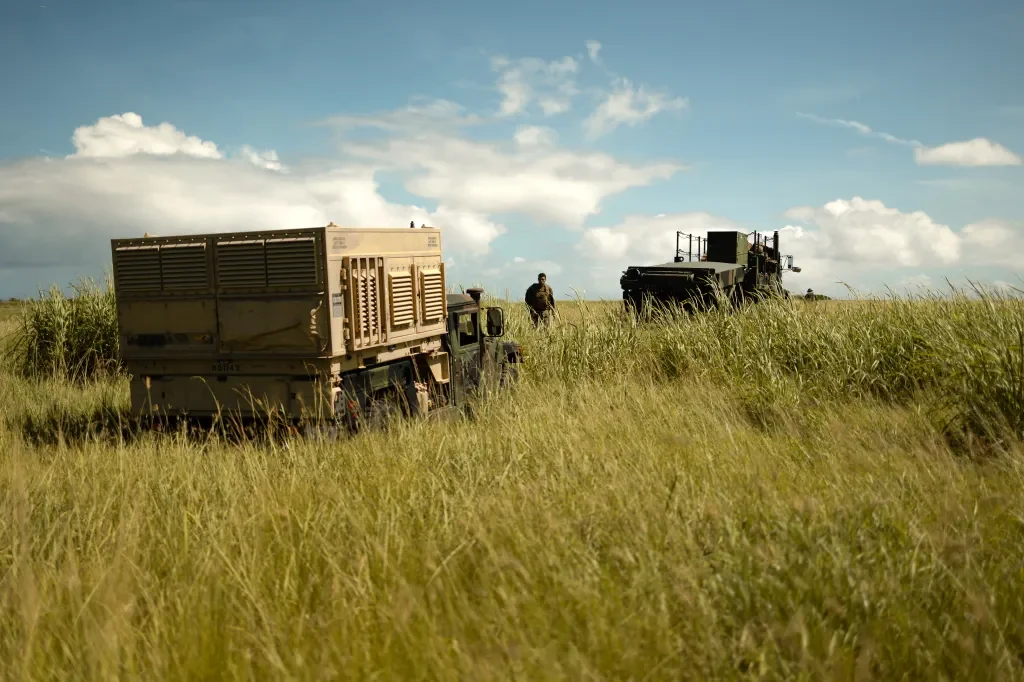
For an F-35 to land at a temporary site, a suitable piece of pavement is not enough. Aviation fuel has to be delivered in advance. Missiles and bombs have to arrive as well. Technicians, communications equipment, generators, tools, security personnel, and transport vehicles are required. If an aircraft suffers serious damage or develops a major technical fault, the capabilities of a small forward support point are quickly exhausted.
A major air base is convenient precisely because all of this already exists in one place.
EABO deliberately gives up some of that convenience in exchange for survivability. Instead of one major supply flow, there are many smaller ones. Fuel trucks and cargo vehicles have to keep moving between depots and temporary sites. In an island campaign, much of the cargo would also have to travel by sea or air.
After Epic Fury, Niedziocha specifically identified logistics as a persistent challenge for this type of operation. That may be the most important observation to come out of the first combat test of EABO.
As long as a FARP is close to a developed road network and major American bases, the problem is difficult but manageable. On a small island in the western Pacific, the situation would be very different. Several tons of fuel, missiles, spare parts, and food first have to cross the sea, where the transport ships and aircraft carrying them may themselves become targets.
This is why an entire logistics ecosystem is beginning to develop around EABO: small landing ships, unmanned cargo platforms, distributed supply depots, and new transport aircraft. Even the recently unveiled unmanned Cessna SkyCourier UX fits neatly into this requirement. Distributed bases need a constant flow of cargo measured in a few tons at a time, while sending a C-130 for every small shipment would be inefficient.
A Small Base Still Leaves Tracks
There is another problem. Dispersal does not make a unit invisible.
A fuel truck can be detected by a satellite or drone. Operating radios produce electromagnetic emissions. Regular aircraft landings attract attention. Cargo vehicle movements create recognizable traffic patterns. Even if an adversary does not know a FARP’s coordinates beforehand, it can attempt to locate the site by combining these signatures.
The viability of EABO therefore depends heavily on speed.
There is a limited period between detection and attack. The adversary has to notice the activity, determine what the site is, obtain sufficiently accurate coordinates, pass them to a strike system, and launch the weapon. If the Marines have refueled their aircraft, packed up the equipment, and moved before the strike arrives, the concept has worked. If the FARP remains in the same location for several days and gradually accumulates tents, stores, and parked vehicles, it increasingly becomes an ordinary small air base — with all the vulnerabilities that entails.
That is why, even before Epic Fury, the Marine Corps was training not merely to operate aircraft from austere locations but to establish and dismantle such nodes quickly. During Exercise Steel Knight 24 on San Clemente Island, units operated an expeditionary aviation hub with F-35Bs and supporting aircraft for 48 hours under conditions intended to simulate a future Pacific operation.
In a real war, an adversary would try to make those 48 hours much shorter.
Iran Was a Useful Test, but Not a Model for War With China
Epic Fury gave the Americans something that even the best exercise cannot fully reproduce: the need to use the system under a genuine threat. During the conflict, U.S. facilities in the Middle East were subjected to missile and drone attacks, with personnel killed and aircraft, buildings, and equipment damaged. Dispersing aviation and infrastructure therefore had a practical purpose.
But this does not automatically mean that EABO has already proved itself in the kind of war for which it was originally designed.
The Pacific is much more demanding in terms of distance and logistics. China possesses a far more extensive network of satellite, aerial, and electronic reconnaissance capabilities, as well as a large arsenal of long-range strike weapons. Island bases would also depend heavily on maritime and air supply routes. An F-35 can be hidden at a small airfield, but it becomes useless if fuel and missiles cannot be delivered there regularly.
Scale presents another problem. Supporting several dispersed sites during a limited operation is one thing. Sustaining dozens of them for months while moving thousands of tons of supplies every day is something entirely different.
Epic Fury is therefore better understood not as proof that the concept has won its argument, but as the first successful transition from exercises to combat employment.
So Did the New Tactics Work?
For now, one conclusion can be made with reasonable confidence: the technical and organizational elements of EABO survived their first combat test.
The Marine Corps demonstrated that it could establish remote FARPs where none had previously existed, support multiple types of aircraft from them, operate forward sensor nodes, and connect those elements to the broader joint force. According to the 31st MEU leadership, this was exactly what the concept was intended to accomplish.
There is still not enough public information to measure its actual effectiveness. The Pentagon has not disclosed how many attacks were avoided because of dispersal, whether the temporary bases were detected by the adversary, how long individual sites remained active, or how much EABO changed the overall sortie rate. It would therefore be premature to conclude that the system has already demonstrated an ability to survive against an adversary with comparable reconnaissance and long-range strike capabilities.
What has become clearer is the logic behind the American approach.
The Marines are not trying to make an air base invulnerable. They assume that in a modern war, a large fixed facility will eventually be detected and attacked. The problem is therefore reframed: instead of presenting the enemy with several large, permanent targets, create dozens of smaller ones, keep some of them moving, and ensure that destroying one does not stop the entire operation.
That survivability comes at a price. Supply becomes more complicated, maintenance becomes less convenient, more transport and personnel are required, and commanders have to make sure that a temporary base does not remain in one place long enough to become a permanent target.
This is probably where the future of EABO will ultimately be decided. Hiding a handful of F-35s is much easier than hiding the entire chain of fuel trucks, missiles, cargo vehicles, technicians, and transport platforms required to keep those F-35s flying.
Epic Fury showed that the U.S. Marines can break a large base into many smaller pieces and make the resulting system work under combat conditions. The harder question is what happens when an adversary begins hunting not only the aircraft, but everything that keeps them in the air.