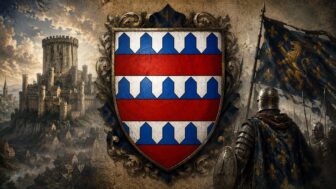
From the Knight’s Shield to the National Coat of Arms: How Heraldry Emerged and Why It Follows Such Strict Rules

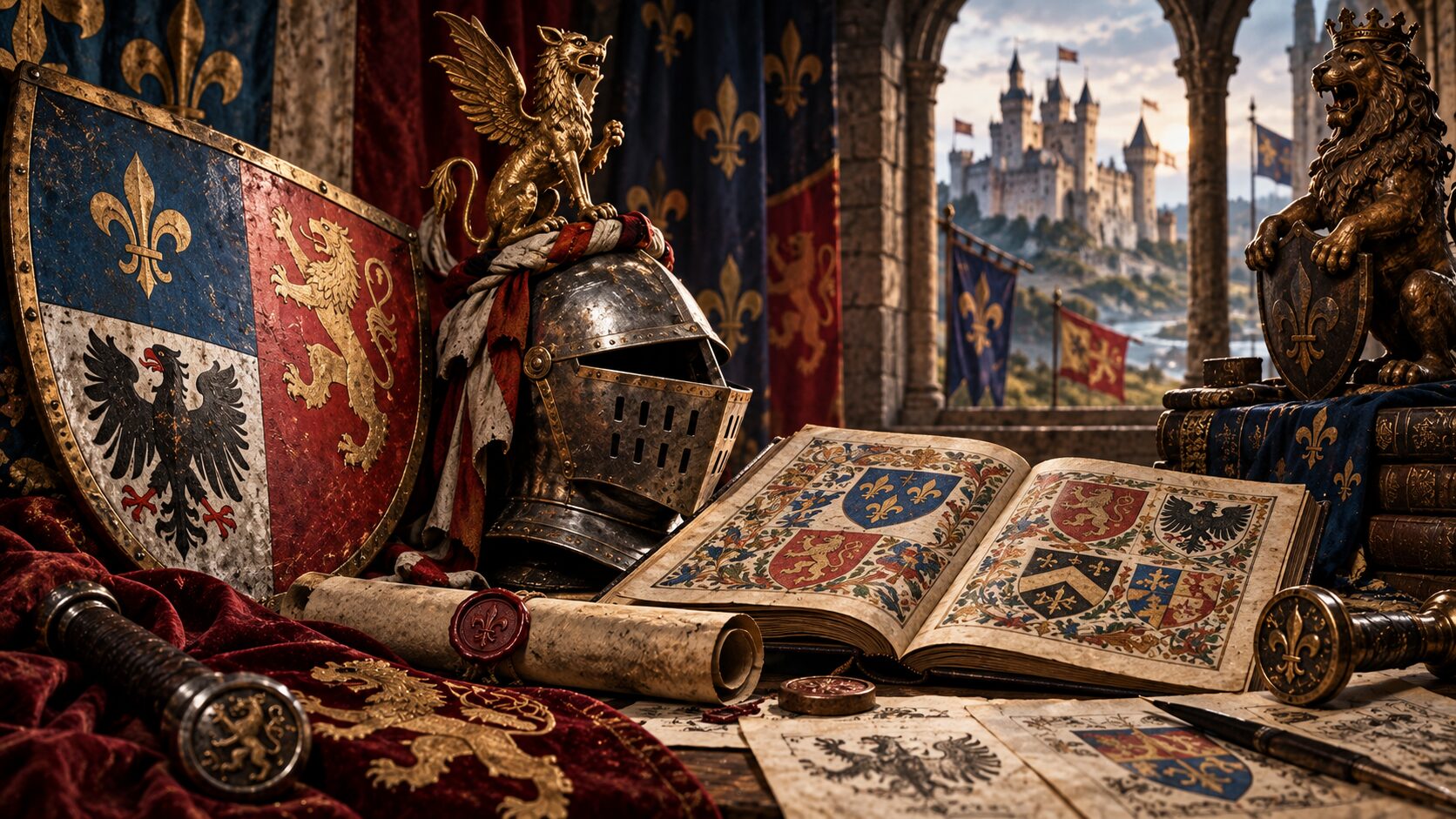
Imagine that an artist is given just one sentence: Azure, a lion rampant Or, armed and langued Gules. No drawing, no reference image, no photograph. Yet anyone familiar with heraldry already knows what must be depicted: on a blue field, a golden lion standing upright on its hind legs, with red claws and tongue. One artist might draw a lean, angular beast in the style of the thirteenth century, another a magnificent Baroque lion, while a third could create a modern minimalist version. And all three images could be perfectly correct. This is one of the most remarkable features of heraldry: a coat of arms is not a particular picture. It is a system of visual information that can be written down in words and then transformed back into an image. The British College of Arms explicitly emphasizes this principle: heraldically and legally, the essential content of a coat of arms is defined primarily by its verbal description—the blazon—rather than by any particular artistic rendering. The same arms may therefore be depicted correctly in many different artistic styles.
Today, coats of arms can seem like relics of the age of knights: lions, eagles, crowns, helmets, unicorns, and strange geometric patterns. In reality, heraldry is one of Europe’s oldest surviving systems of visual identification, still functioning almost nine centuries after it first appeared. More remarkably, it has outlived the very world for which it was created. Knightly shields disappeared from battlefields, tournament armor entered museums, feudal armies gave way to professional forces, absolute monarchies were replaced by modern states—yet coats of arms are still used by countries, cities, universities, organizations, and individuals. To understand why heraldry proved so durable, we need to begin with a surprising fact: ancient peoples certainly had emblems, but they did not yet have heraldry.
Eagles and Lions Existed Long Before Coats of Arms
Roman legions carried eagles, ancient states used a variety of symbols, Germanic warriors decorated their shields with animals, and rulers placed personal signs on coins and seals long before the Middle Ages. This is why one sometimes encounters supposed “coats of arms” of the Roman Empire, Alexander the Great, or even biblical figures. Medieval authors themselves sometimes attributed heraldic devices to historical and legendary heroes, but these were retrospective inventions. Heraldry in the strict sense emerged much later.
For a decorative emblem to become a coat of arms, several conditions had to be met. The symbol needed to become relatively stable, to be associated with a particular individual or family, to pass from one generation to another, and to operate within a system that allowed one bearer to be distinguished from another. Such a system began to develop in Western Europe during the twelfth century. The modern College of Arms likewise traces the origins of European heraldry to this period and emphasizes its early role in identifying individuals and, later, corporate bodies.
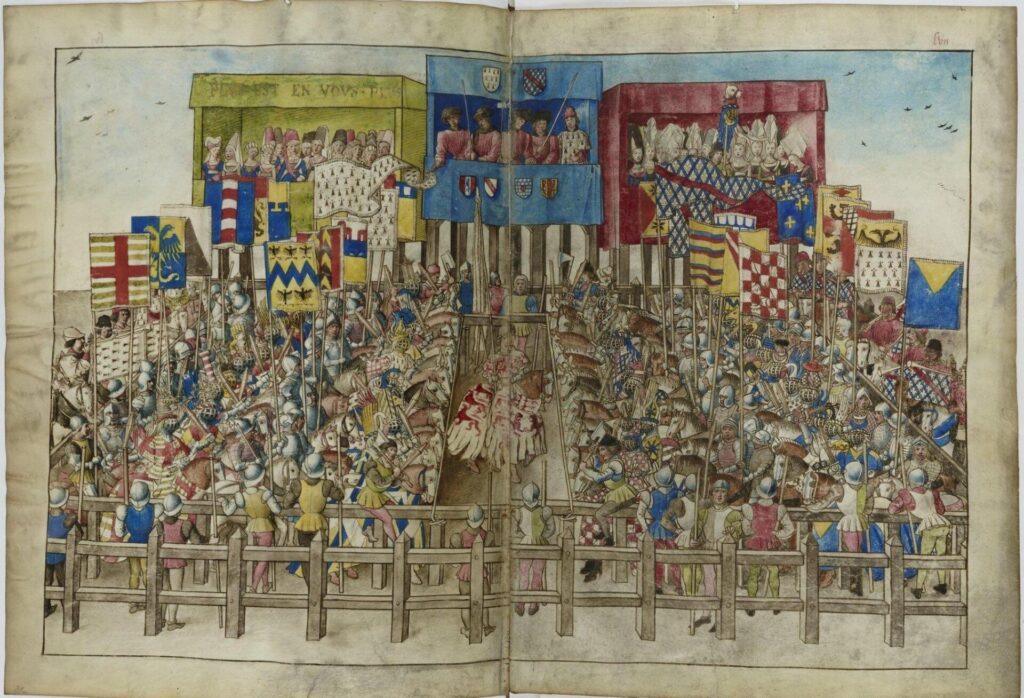
The popular explanation is simple: knights became enclosed in armor, their faces disappeared behind helmets, and so they painted enormous lions on their shields so that friends could distinguish them from enemies. There is some truth in this, but the reality was considerably more interesting. Heraldry developed alongside the growth of the knightly class, tournaments, hereditary aristocracy, seals, and an increasingly sophisticated culture of dynastic identity. Arms appeared on shields, banners, horse trappers, and seals. Gradually, they communicated more than simply “this knight is Geoffrey.” They began to say: “this person belongs to a particular lineage, possesses a particular ancestry, and holds particular rights.”
Inheritance was the decisive step. If a man displayed a lion today, a bird tomorrow, and his son later chose a dragon, these were simply personal emblems. But once the son continued to use his father’s symbol, and other people began to recognize the family through that symbol, something fundamentally different emerged. The coat of arms became a visual name.
The Picture Gradually Became a Language
At first, the system was relatively simple. This makes practical sense: a shield intended to be recognized at a distance cannot function as a miniature painting. It needs large figures, a limited number of contrasting colors, and straightforward compositions. Lions, eagles, crosses, stripes, and simple geometric patterns performed this role extremely well. But as the number of armorial bearers increased, arms were inherited, relatives needed to be distinguished from one another, and noble families intermarried, the visual language inevitably became more complicated.
A particularly important role was played by heralds. Their earliest functions were closely connected with the knightly world: they participated in tournaments, announced competitors, and needed to recognize knights from the devices painted on their shields and displayed on their crests. Heralds gradually became professional experts in coats of arms. They recorded and systematized them and, in some monarchies, eventually acquired an official role in regulating heraldry. The history of the English College of Arms illustrates this evolution particularly well: the tournament specialist who identified knights gradually became the keeper of genealogical and heraldic information.
But how could an image be recorded before photography and inexpensive mass printing? It could, of course, be drawn. Yet drawings took up space, depended on artistic skill, and were difficult to reproduce accurately. A much more efficient solution was to describe the arms according to established rules. This gave rise to blazon—the specialized language capable of turning an image into a short sequence of words.
Consider the simple example: Azure, a lion rampant Or. First comes the field—Azure, blue. Then the principal charge—a lion. Next comes its attitude—rampant, standing upright on its hind legs. Finally comes its tincture—Or, gold. The artist is not told exactly how long the lion’s tail should be, what shape its mane must have, or how many millimeters each paw should occupy. Those details are irrelevant. What has been transmitted is the structure of the arms.
This leads to a principle that seems almost astonishing to a modern observer: the original image may not be necessary at all. If an accurate blazon survives, the coat of arms can be reconstructed. This is why the College of Arms notes that when arms are granted, their essential content is defined by the written blazon rather than by the particular illustration appearing on the patent.
Why Heraldry Cannot Simply Use Any Color
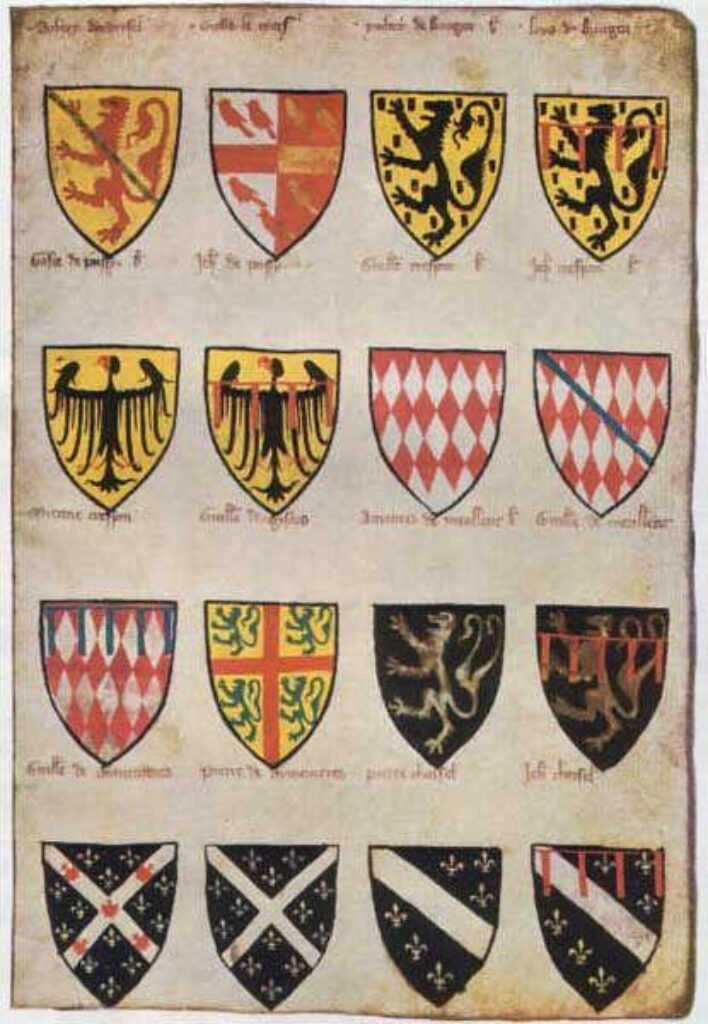
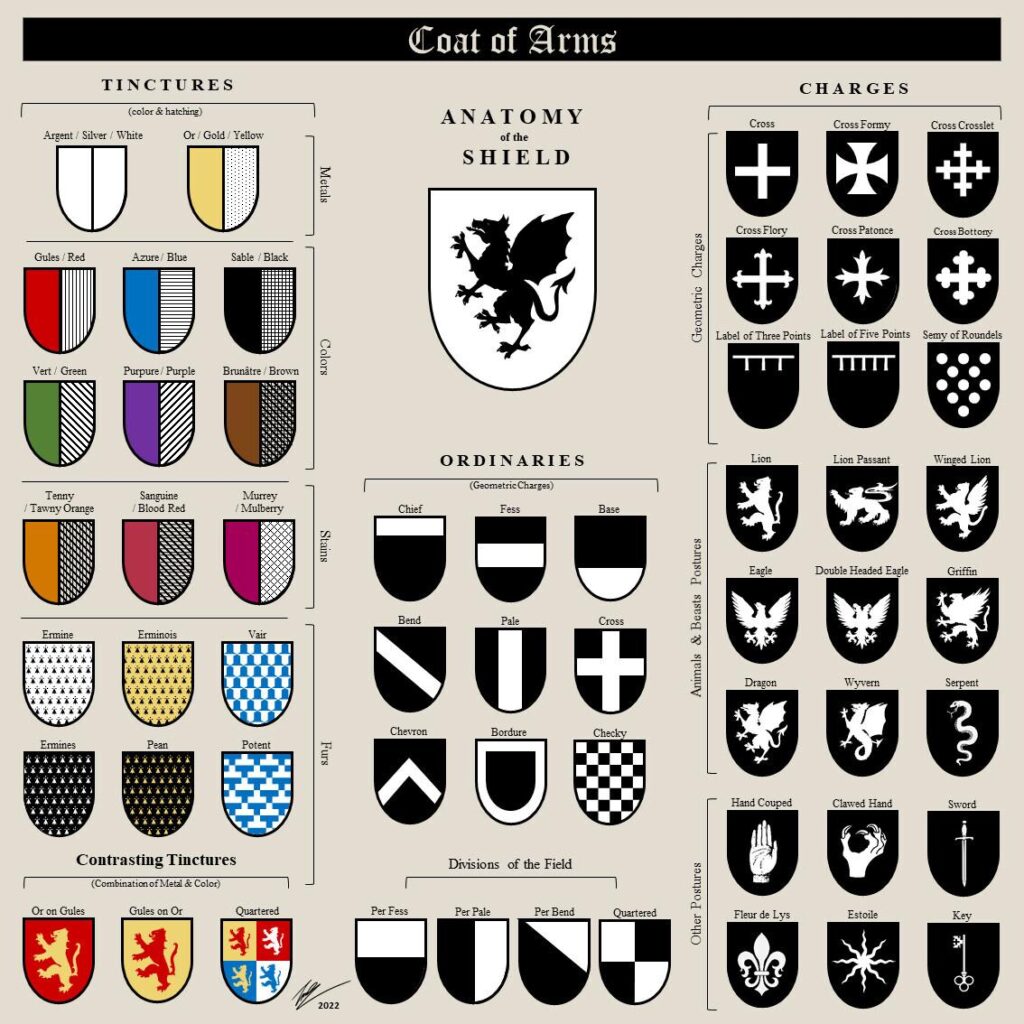
Medieval heraldry developed its own palette of tinctures. Traditionally, these are divided primarily into metals, colors, and furs. The two principal metals are Or, meaning gold or yellow, and Argent, meaning silver or white. Among the most common colors are Gules (red), Azure (blue), Sable (black), Vert (green), and Purpure (purple). A separate category consists of stylized furs, particularly Ermine and Vair.
The exact shade, however, is historically not the most important characteristic. Azure does not have to correspond to a specific RGB value or Pantone number. The modern College of Arms explicitly notes that heraldic colors do not have rigidly prescribed shades; artists have reasonable freedom in choosing them. A medieval blue shield painted dark blue by one artist and considerably lighter blue by another does not thereby become two different coats of arms.
What matters enormously, however, is contrast. This is the origin of the famous rule of tincture, usually simplified as: do not place metal on metal or color on color. A golden lion is clearly visible on a blue field. A blue lion works equally well on gold. A red lion on blue, however, is much harder to distinguish at a distance, as is a silver figure placed on gold.
Yet we should not turn medieval practice into a modern technical regulation. The rule evolved historically, regional customs differed, and exceptions existed. The most famous example is traditionally the arms of the Kingdom of Jerusalem: a golden Jerusalem cross on a silver field—metal on metal. Later heraldic tradition sometimes described such unusual combinations as armes à enquerre, arms that seemingly invite the observer to ask why they depart from the normal rule. Such exceptions do not destroy the system. Instead, they remind us that heraldry was never a code of laws invented in a single afternoon. Its conventions emerged gradually from centuries of practice.
Why a Heraldic Lion Does Not Need to Look Like a Real Lion
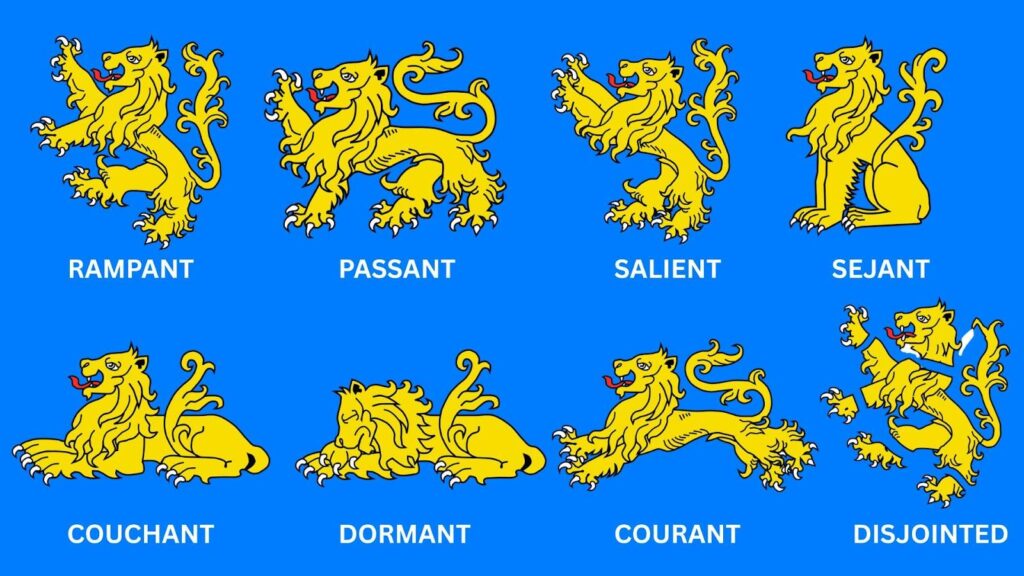
Another feature of heraldry becomes obvious if we once again imagine a shield viewed from a distance. A realistically painted lion with anatomically accurate proportions, natural fur, and subtle shading would be less effective than a huge golden silhouette with exaggerated paws, claws, and tail. Heraldic animals therefore gradually became something close to visual symbols or pictograms.
But the animal itself is not the only important element—its attitude matters as well. Rampant means the beast is upright on its hind legs. Passant means it is walking, usually with one forepaw raised. Statant means standing. Sejant means sitting. Couchant means lying down with its head raised. The position of the head can also change the blazon. The colors of claws, tongue, and other details may be specified separately. Direction is determined from the perspective of the shield bearer, meaning that heraldic dexter—the bearer’s right—appears on the viewer’s left.
The same applies to geometry. A vertical band is a pale, a horizontal one a fess, a diagonal band a bend, while the chevron has its own distinct identity, and crosses exist in a remarkable variety of forms. The field can be divided in halves, quarters, or in far more elaborate ways. Heraldry therefore gradually acquired something resembling a grammar: what matters is not only what is depicted, but also where it is placed, how many examples appear, what color they are, what attitude they assume, and how they relate to one another.
This explains another principle that may seem strange today. A coat of arms does not need to be realistic. Indeed, excessive realism can make it less effective. Good heraldry aims at immediate recognition. It is no accident that the modern College of Arms, continuing a centuries-old tradition, recommends simplicity and visual clarity when designing new arms and warns against attempts to cram too many ideas into a single shield.
The Shape of the Shield Is Usually Not Part of the Arms
This is one of the most common misunderstandings. We tend to perceive a coat of arms as a finished picture and therefore assume that if an old representation uses a particular shield shape, that exact shape must always be reproduced. In most heraldic traditions, however, the form of the shield is much freer than the arms displayed upon it.
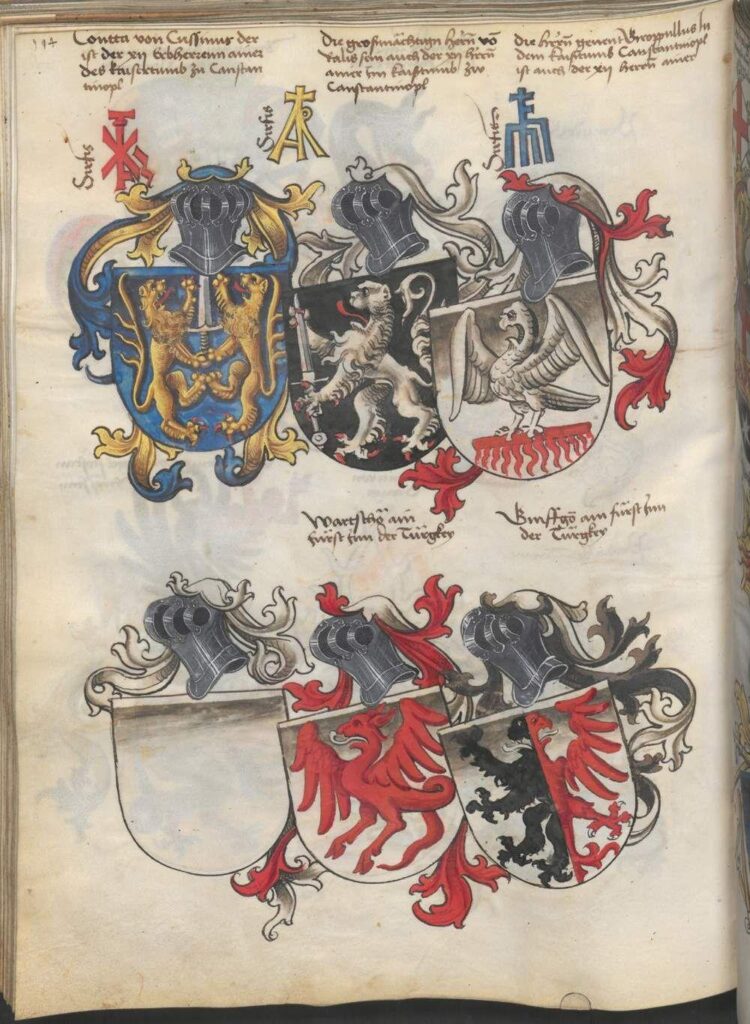
An elongated early medieval shield, a more compact fourteenth-century shield, a late Gothic form, a Renaissance shield, and an elaborate Baroque cartouche can all display the same heraldic information. A seventeenth-century artist could depict the arms of a thirteenth-century nobleman in the artistic style of his own age without believing that he had altered the coat of arms.
This is why dating a coat of arms solely from the shape of its shield is dangerous. Shield form can be extremely useful for dating a particular artistic representation, but it does not necessarily tell us when the heraldic design itself originated. The arms may have existed for centuries before an artist placed them inside a fashionable Baroque cartouche.
Likewise, we must distinguish between the shield and the complete armorial composition. In everyday language, the entire design is often called a coat of arms, while in English the word crest is frequently—and incorrectly—used for the whole achievement. In heraldic terminology, however, the crest is specifically the device placed above the helmet. The College of Arms itself has repeatedly pointed out this extremely common mistake.
How a Simple Shield Acquired Helmets, Crowns, and Unicorns
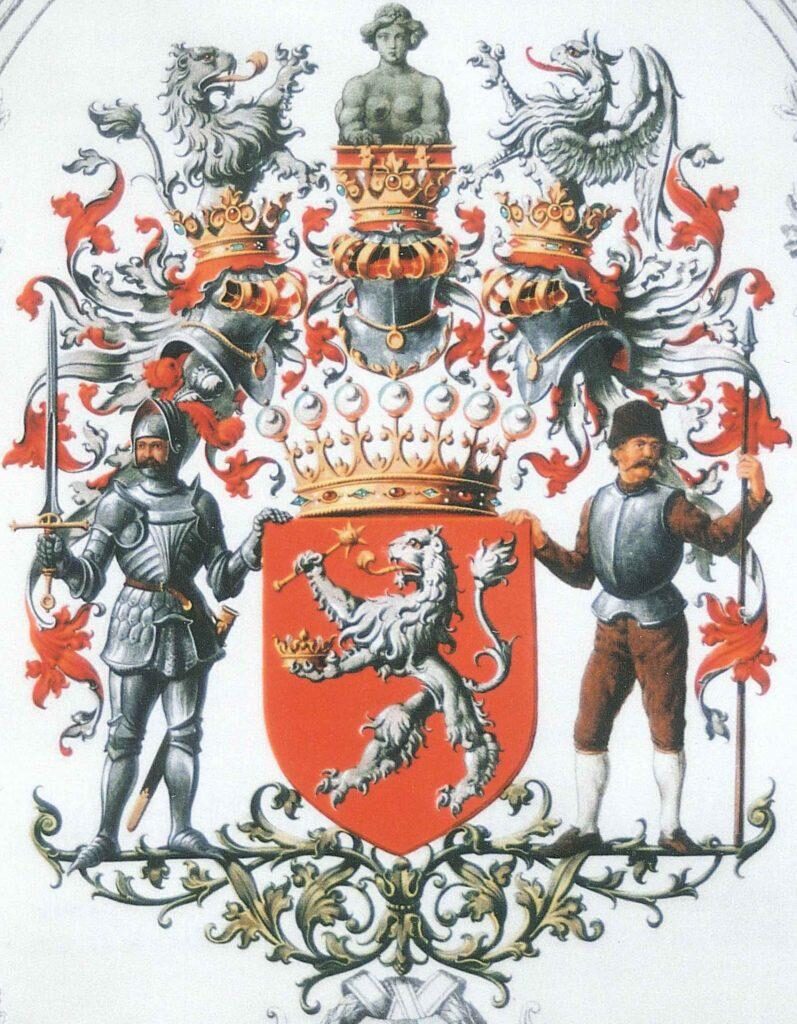
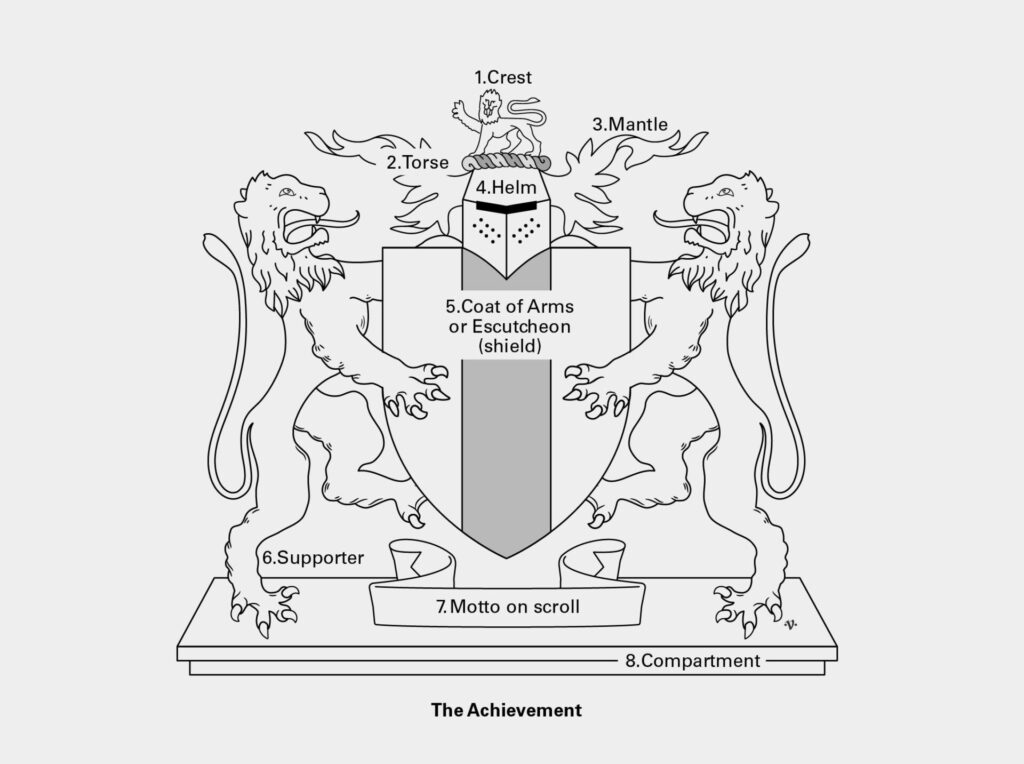
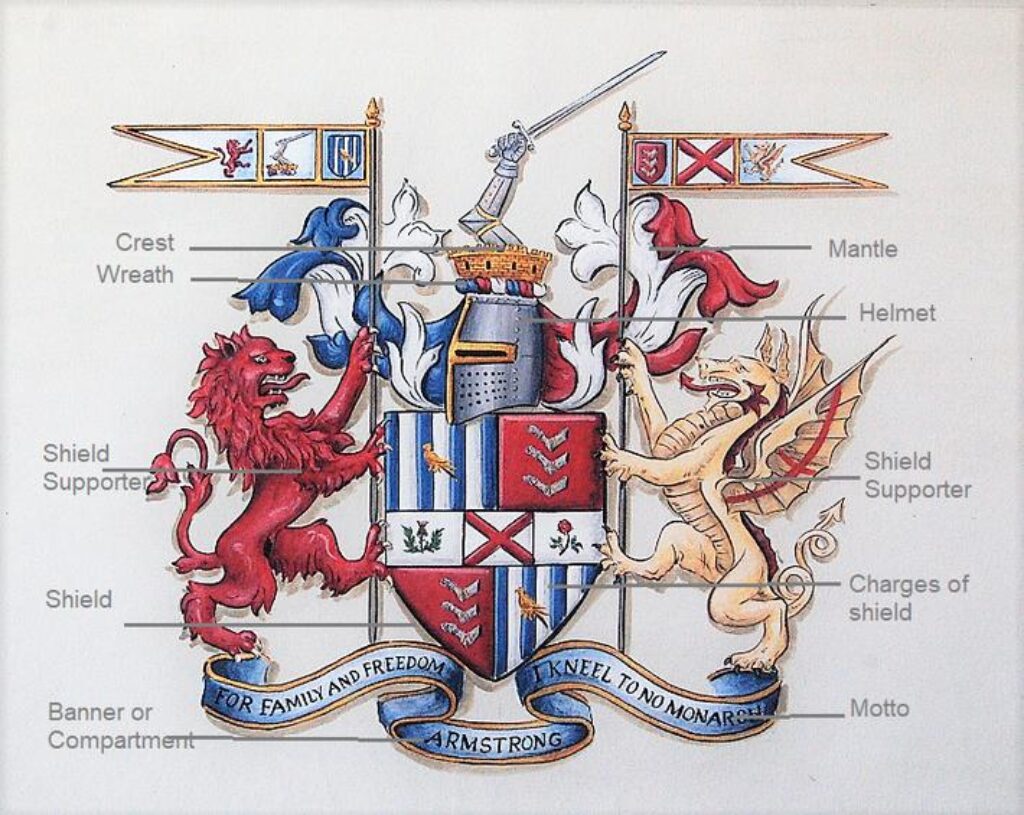
The original logic was relatively practical: the shield identified the person. But knightly culture quickly produced additional elements. Above the shield appeared a helmet, and upon the helmet a crest. Around it developed the decorative mantling, historically associated with the cloth worn from the helmet. Wreaths, coronets, and symbols of rank were added. Later, supporters appeared on either side of the shield—lions, unicorns, human figures, or fantastic creatures. Beneath it might be a motto. Around it could hang the collars and insignia of orders of chivalry. Monarchs and the highest nobility might add mantles and further ceremonial elements.
The result is what English heraldic terminology calls the full achievement of arms. A shield, helmet, crest, mantling, supporters, motto, coronet, and insignia can combine into an elaborate armorial composition. But these elements cannot simply be mixed at will. A crest is not the same thing as a charge on the shield. A crown or coronet may indicate rank, but the rules governing its use depend on the particular heraldic tradition. Supporters are not automatically available to every armiger. A motto may even have a different legal status from the arms themselves.
This is why the typical modern approach—taking a shield, placing a random crown above it, adding two lions, attaching a ribbon with an impressive Latin phrase, and declaring the result an “authentic noble coat of arms”—is almost the exact opposite of historical heraldry.
In genuine heraldry, every element should have a reason for being there.
Then the Coat of Arms Became a Family Tree
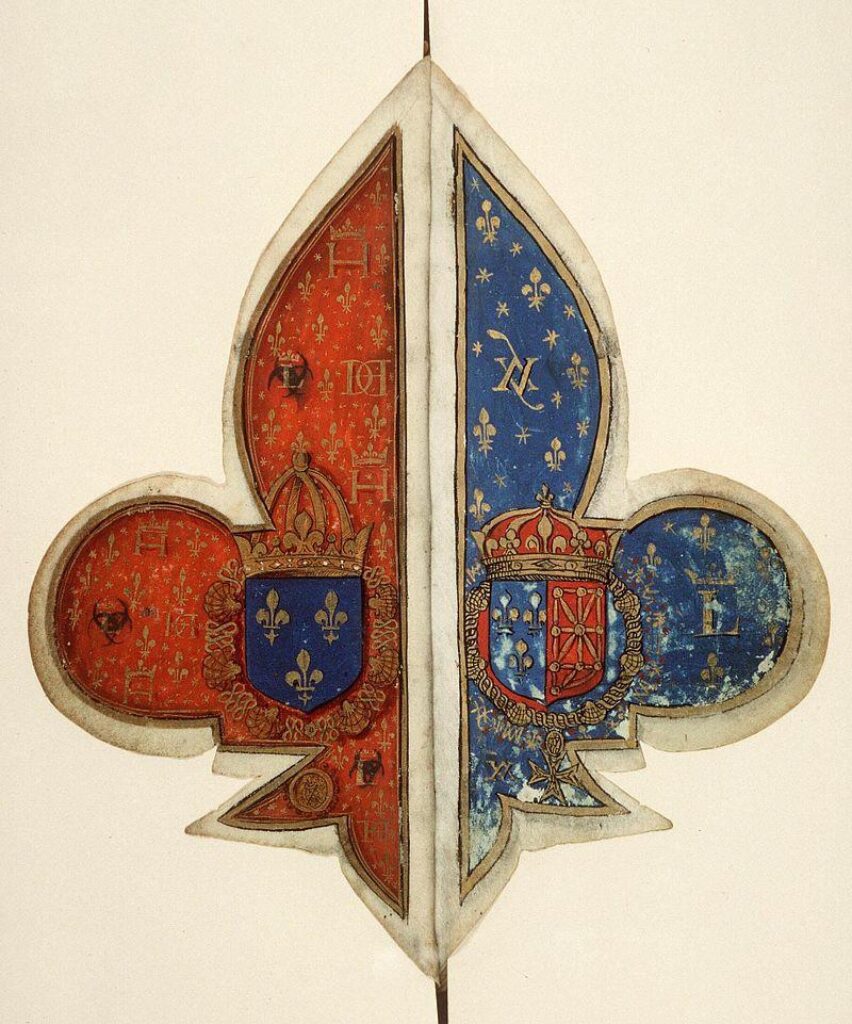
Once coats of arms belonged to individuals and were inherited, an unavoidable problem appeared: how could a father be distinguished from his sons, brothers from one another, and junior branches of a family from the senior line? Different European traditions developed different solutions. Systems of cadency emerged, in which small marks were added or individual elements modified to distinguish related bearers.
In England, a familiar system associates the eldest son with a label, the second son with a crescent, the third with a mullet, or star, followed by other marks for younger sons. Yet this is an excellent example of the difference between textbook rules and living tradition: the College of Arms notes that this system developed around 1500 but is relatively rarely used today.
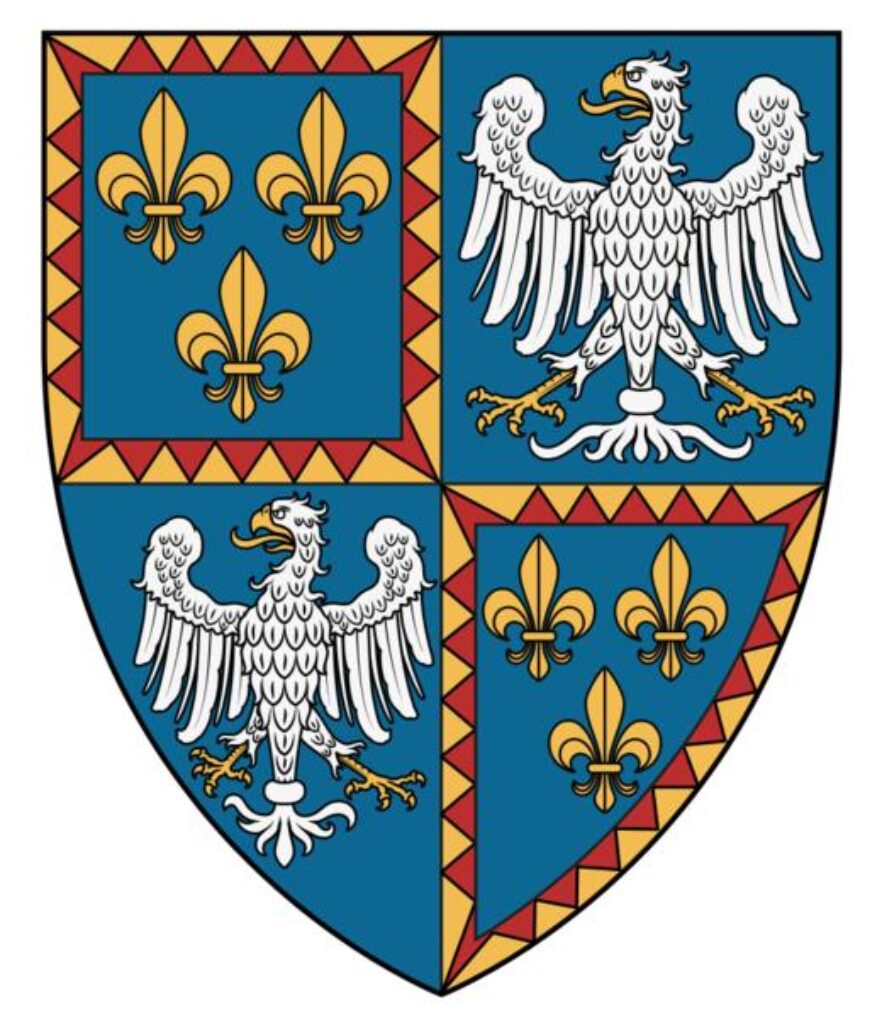
Far more important to the visual evolution of European heraldry were marriage and inheritance. Imagine a man with one coat of arms marrying the heiress of another armigerous family. Their descendants may acquire the right to display descent from both lines. The shield becomes divided into quarters—quartering. Then one of those descendants marries another heraldic heiress. After several generations, a single shield may contain four, eight, sixteen, or even more inherited coats of arms.
The College of Arms explains the development of such complex shields through inheritance from heraldic heiresses: when the male line of an armigerous family dies out, rights to the arms can pass through a daughter, allowing her descendants to incorporate them into their own quarterings.
What looks to a modern viewer like an absurd decorative overload could therefore function as a visual genealogy. Such a shield proclaimed: these were my ancestors, these families were united in my lineage, and these are the rights I inherited through them. The coat of arms ceased to be merely a device for recognizing someone at a distance and became an archive that a person could quite literally carry.
There Was Never a Single Universal European Heraldry
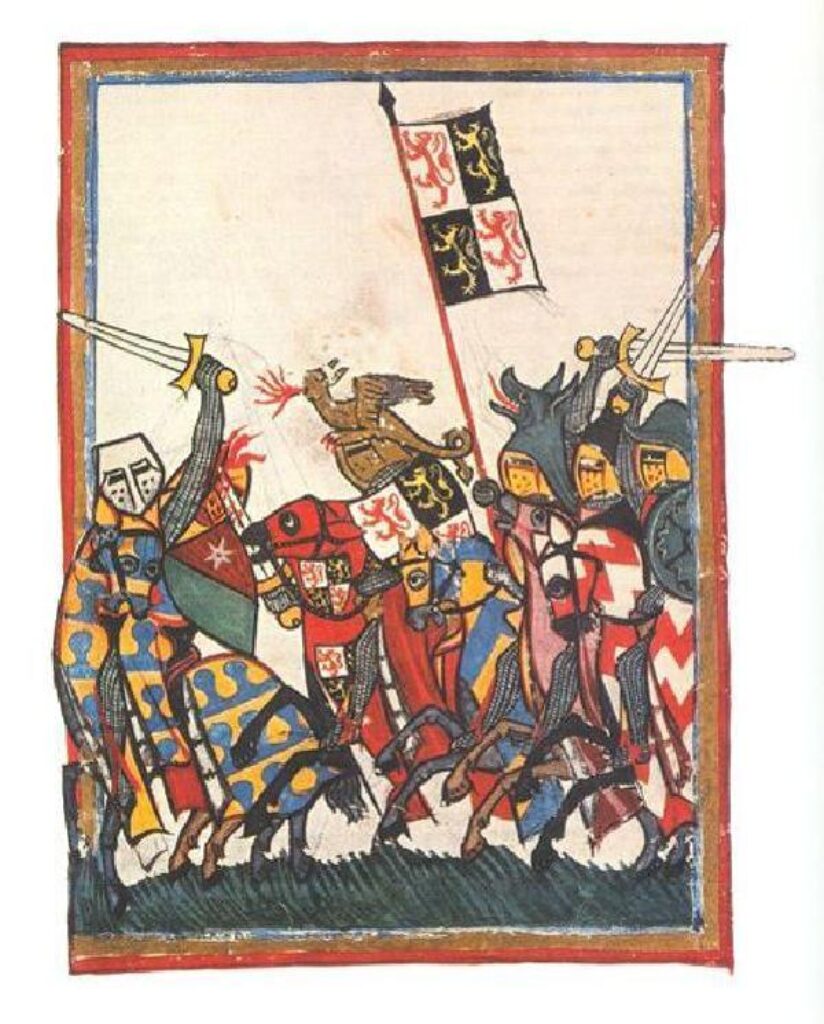
This is where we need to abandon the idea of some medieval “international ministry of coats of arms.” Heraldry certainly possessed a broadly shared Western European visual language, but its rules and social meanings differed from country to country. English, Scottish, French, German, Spanish, Italian, and Polish heraldic traditions are related, but they are far from identical.
England is particularly interesting because of the gradual institutionalization of the system. Royal heralds existed in the Middle Ages, began functioning as an organized body during the fifteenth century, and in 1484 Richard III granted them a charter. The modern College of Arms operates under a later charter of 1555 and remains an official heraldic authority for England, Wales, Northern Ireland, and several Commonwealth countries.
The German-speaking world developed an extraordinarily rich tradition of territorial, municipal, and burgher heraldry. Poland produced the particularly unusual system of heraldic clans, in which one coat of arms could be shared by numerous noble families bearing different surnames. Scottish heraldry followed its own path and developed particularly strict concepts regarding the individuality of arms. Consequently, the phrase “according to the rules of heraldry, it must be done this way” should almost always be followed by another question: which heraldry, in which period, and in which country?
The same applies to the question of who could possess arms at all. The widespread assumption that heraldry was exclusively a privilege of the nobility is too simplistic. Depending on the European tradition, there were burgher arms, municipal arms, ecclesiastical arms, university arms, guild arms, and corporate arms. Heraldry emerged within the world of knightly aristocracy but soon spread far beyond it.
The Biggest Modern Mistake Is Searching for “Your Family Name’s Coat of Arms”
This is where historical heraldry collides directly with modern commerce. The internet is full of websites promising to reveal “the coat of arms of your surname.” Enter Smith, Müller, Ivanov, or almost any other family name, and a colorful shield supposedly belonging to your ancestors appears.
At least within the English heraldic tradition, this approach is fundamentally wrong. The College of Arms emphasizes that there is no such thing as a coat of arms belonging automatically to everyone who shares a surname. Arms belong to a particular person and descend to those who are entitled to inherit them. Sharing the same surname does not create that entitlement.
Two people named Howard may belong to completely unrelated lineages. Conversely, a person with a different surname may legitimately inherit particular heraldic elements through a complex chain of descent. Genuine heraldry is therefore inseparable from genealogy. It is not enough to find someone with your surname in an old armorial and adopt his shield. Descent from the original armiger must be established according to the rules of the relevant heraldic system.
This is precisely why the work of heralds gradually became the work of genealogists as well. Once a coat of arms becomes hereditary, the question “whose arms are these?” inevitably becomes another question: “whose descendant is this person?”
Why Coats of Arms Survived the Knights Who Created Them
By the fifteenth and sixteenth centuries, the military importance of personal heraldry was gradually declining. Battlefields were changing, firearms were becoming increasingly important, the classical knightly army was disappearing, and the shield was losing its place as a central piece of equipment for heavy cavalry. One might expect the system of symbols painted on those shields to disappear with them.
The opposite happened.
By then, heraldry had long since escaped the battlefield. Arms appeared on seals, buildings, tombs, coins, documents, furniture, tableware, books, carriages, and clothing. They represented families, estates, cities, territories, institutions, and states. As the practical need to recognize a knight by his shield declined, these other functions became even more important.
At the same time, heraldry became increasingly elaborate. The simple lion on a twelfth-century shield could evolve into an enormous Baroque achievement containing multiple quarterings, helmets, crowns, supporters, collars of orders, mottos, and mantles. A system originally shaped by the need for simple visual recognition paradoxically produced some of the most complicated images in European culture.
Yet its fundamental principle never changed.
How a Coat of Arms Should Actually Be Drawn
This is where the entire history comes together. If we want to reproduce a historical coat of arms correctly today, we should begin not with a beautiful drawing of a lion, and not even with the shape of the shield. We must first establish what arms are actually being represented and, ideally, determine their blazon.
Then comes the field: its tincture and divisions. Next come the principal charges and ordinaries. Their number, position, and tinctures must be established. Animals require the correct attitude and direction. Secondary details are added afterward. Only when the heraldic structure has been fully determined does the artist decide what the particular representation should look like—Gothic, Renaissance, Baroque, or modern.
And this is where it becomes clear why two visibly different images can still represent the same coat of arms.
Consider again the blazon: Azure, a lion rampant Or, armed and langued Gules. A twelfth- or thirteenth-century artist might depict an extremely elongated golden lion with enormous paws. A fifteenth-century illuminator might make it more decorative. A seventeenth-century Baroque artist could give the beast an extravagant mane and place it on an ornate shield. A modern designer might reduce the lion almost to a geometric symbol. As long as the blue field, golden lion rampant, and specified red details remain, the essential content of the blazon remains unchanged. Modern British heraldic practice explicitly confirms this principle: the same arms may legitimately be rendered in different artistic styles.
A good heraldic artist therefore possesses both more and less freedom than one might expect. The artist cannot arbitrarily turn the golden lion silver, place it on all fours instead of rampant, add a second lion, or change the blue field to red. Any of those alterations would change the arms. But the artist may change the shape of the mane, the proportions of the animal, the character of the lines, the form of the shield, and the overall artistic style, unless a particular heraldic tradition imposes additional restrictions.
And this may be the most elegant feature of the entire system.
A Coat of Arms Is a Medieval Way of Preserving an Image Without Preserving the Image
Strip away the romance of tournaments, crowns, lions, and unicorns, and what remains is a surprisingly modern idea. Europeans created a system that allowed them to separate information from its visual representation. A particular painting could be destroyed, the colors on a shield could fade, a seal could be lost, and artistic fashion could change beyond recognition—but as long as the correct description survived, the coat of arms continued to exist.
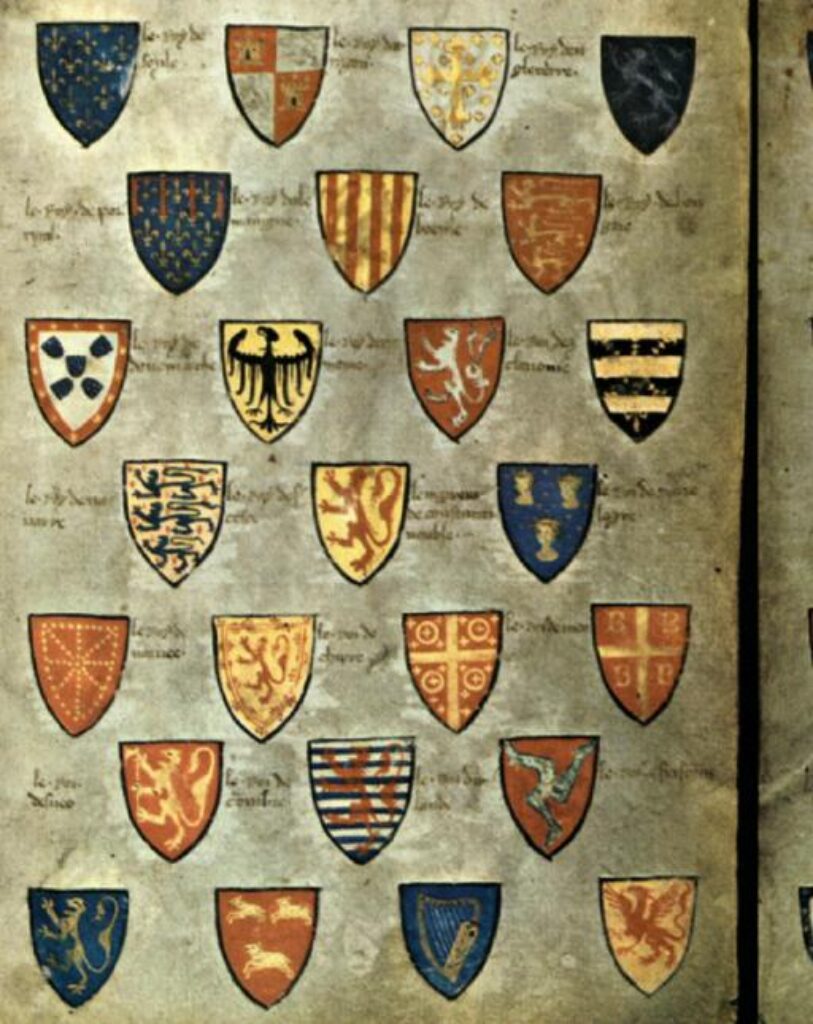
This is why medieval and later heralds compiled not only collections of illustrations but also armorials and ordinaries, organizing enormous numbers of arms so that they could be identified and compared. In a sense, these collections were medieval databases created centuries before anyone could have imagined the concept of a database.
Heraldry survived because it became far more than the world that created it. It began as a means of recognizing a person by the shield he carried at a tournament or on a battlefield. Then it became a symbol of lineage. Later it became a way of displaying inheritance and ancestry. Cities, universities, corporations, and states adopted the same visual language. The herald evolved from a tournament official into a specialist in genealogy, law, and armorial identity. And the picture painted on a piece of wood became a formalized visual language capable of existing independently of any particular artist.
The twelfth-century knight who first painted an enormous lion on his shield could hardly have imagined where this would lead. His armor has long since become obsolete, his castle may have disappeared, the language he spoke has changed, and the state he served may have altered its borders many times. But if an accurate blazon of his arms has survived, a modern artist can still take a blank sheet of paper and reconstruct his symbol.
That is why a coat of arms is not simply a picture. A picture grows old with the age that created it. Heraldry invented something far more durable: the rules that allow the picture to be drawn again.