
The Air-Defense Missile That Does Not Rush: Why Iran Built the Unusual 359 and Why Russia May Be Interested in the Concept

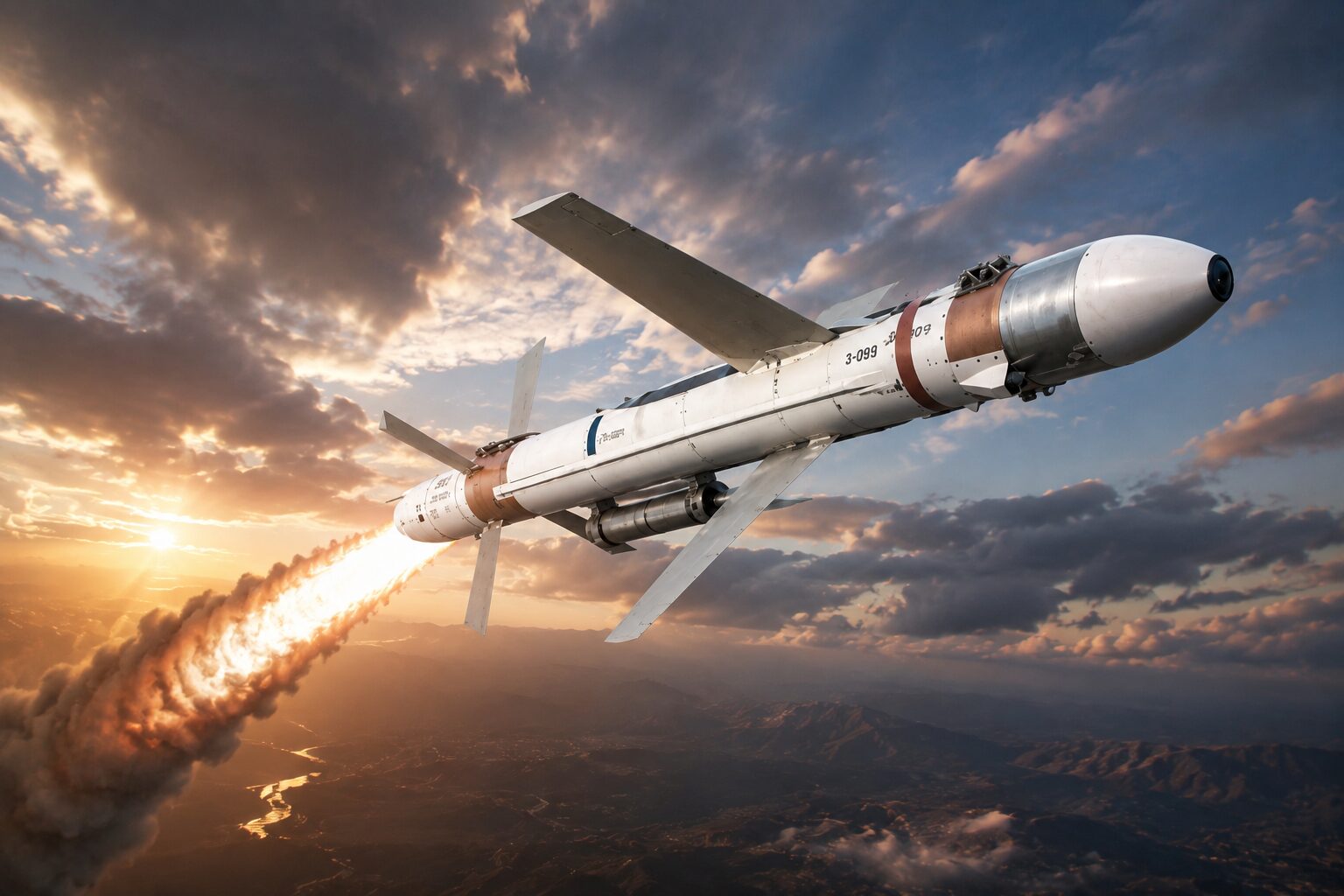
Air-defense missiles are normally built around speed. The faster an interceptor accelerates, the less time the target has to react, the farther away the engagement can take place, and the less opportunity there is for guidance errors to accumulate. For decades, surface-to-air missile development therefore followed broadly the same path: powerful rocket motors, rapid acceleration to supersonic speed, a relatively short flight, and an attempt to destroy the target before the missile runs out of energy. Iran’s 359 breaks much of that logic. Instead of relying on a powerful sustainer rocket motor, it uses a small turbojet; instead of racing toward its target at several times the speed of sound, it flies at speeds comparable to a jet-powered UAV; and instead of making a short dash toward a target selected before launch, it can reportedly remain airborne and wait for a target to enter its engagement area. This is why the 359 is better understood not simply as an unusual SAM, but as a loitering air-defense interceptor.
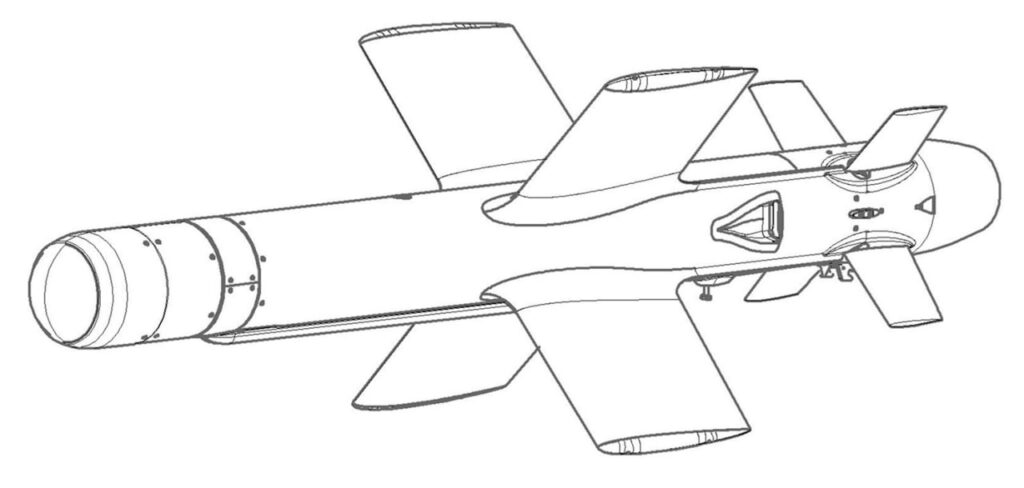
Now the concept may be appearing elsewhere. Russian company Aerokon has patented a new unmanned aircraft whose published images show notable conceptual similarities to the Iranian system, including a small jet engine and an optical system in the nose. Its official designation, specifications, and even intended role have not been disclosed, so describing it as a direct “Russian copy of the 359” would be premature. The possibility itself, however, is more interesting than the patent. If the resemblance is not coincidental, this could be another example of how the proliferation of relatively inexpensive drones is forcing air-defense designers to revisit a question that barely existed in this form a decade ago: how do you destroy airborne targets effectively without making every interception prohibitively expensive?
It Started With the Even Stranger 358
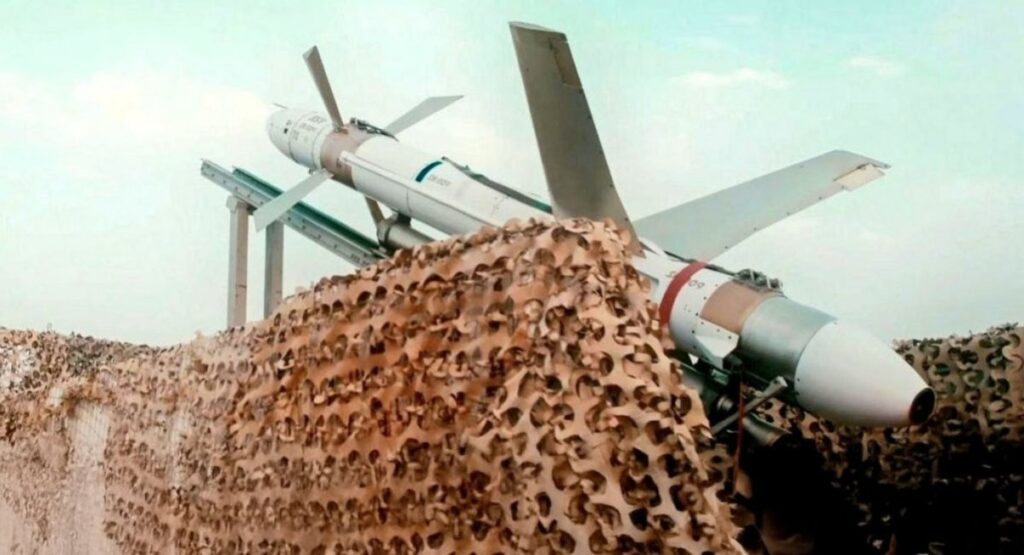
The predecessor of the 359 was the Iranian weapon generally known simply as the 358. For some time, even its purpose was something of a mystery. Components and complete examples were intercepted in shipments associated with Yemen, while Western analysts studied the unusual vehicle and tried to determine exactly what they were looking at. It eventually became clear that this was neither a conventional cruise missile nor a traditional surface-to-air missile. Iran had developed a specialized weapon primarily suited to engaging drones and other relatively slow airborne targets.
The engineering concept was unusual. A solid-fuel booster launches and accelerates the weapon, after which a small turbojet takes over. From that point onward, the 358 behaves more like a compact cruise missile or jet-powered UAV than a traditional SAM. Various analyses have associated the system with inertial and satellite navigation, command guidance, electro-optical sensors, and a fragmentation warhead with a proximity-fuzing system.
The crucial advantage of this architecture was not speed, but time. A conventional SAM burns through its available propulsion quickly and must either intercept its target or lose the ability to continue the engagement. A small turbojet can operate for much longer and allows the weapon to remain in a designated area. Instead of being fired only after an aircraft appears, the interceptor can potentially be placed in an area through which the target is expected to pass.
That is a fundamentally different approach to air defense.
The 359 Takes the Idea Further
The next generation received the numerical designation 359. Exact specifications should be treated cautiously because open sources provide differing figures. Current reporting describes it as a turbojet-powered loitering interceptor capable of remaining airborne while searching for a target, with some estimates placing its speed in the region of 600–800 km/h. Other published assessments suggest a range of up to roughly 150 kilometers and an operating altitude around 9 kilometers, although these figures have not all been independently verified.
The principle matters more than the exact numbers. The 359 retains the small turbojet but appears to incorporate an electro-optical or thermal-imaging system and machine vision. Current reports suggest that an operator can also participate directly in target engagement. The result increasingly blurs the distinction between missile and drone.
It has wings, an aircraft-like engine, optical sensors, and enough endurance to remain airborne rather than immediately racing toward a target. It can potentially be sent into a particular area of airspace, remain there until a suitable target appears, and then transition into an attack.
In essence, it is an anti-aircraft loitering munition.
Why Make an Air-Defense Missile Slow?
Because many of its intended targets are slow as well. Modern air defense has found itself in an increasingly awkward situation. Many existing interceptors were designed to fight combat aircraft, helicopters, cruise missiles, or ballistic threats. That requires high speed, sophisticated guidance, powerful propulsion, and expensive electronics. But airspace is now increasingly populated by drones that may cost dramatically less than the missiles used to shoot them down.
Technically, firing an expensive conventional SAM at such a target can solve the immediate problem. Economically, however, it creates another one — particularly when an attacker can launch dozens or hundreds of relatively inexpensive aircraft.
Iran has considerable experience with this logic from the opposite side. Its defense industry has spent decades developing comparatively inexpensive missiles and UAVs as asymmetric tools against technologically superior opponents. The 358 and 359 effectively apply a similar philosophy to air defense.
If the intended target is an MQ-9-class UAV or another relatively slow unmanned aircraft, there is little reason for the interceptor to reach Mach 3 or Mach 4. A Reaper cannot suddenly accelerate to supersonic speed to escape. Provided the interceptor is fast enough to establish favorable engagement geometry, endurance and cost may become more valuable than extreme performance.
The traditional air-defense equation is therefore inverted.
Speed is traded for persistence.
That Could Solve One of Air Defense’s Most Difficult Problems
Consider a conventional interception. A radar detects a low-flying target. The information has to reach the air-defense system. The launcher must prepare the missile, the weapon must be fired, and then the interceptor has to climb and accelerate toward the engagement point. Against a fast, low-altitude target, all of this takes place within an extremely compressed timeline.
But what happens if the interceptor is already airborne?
In that case, the target does not necessarily have to be engaged from the ground. A loitering interceptor already positioned nearby can receive updated targeting information, turn toward the threat, and attempt to establish an intercept course. This is one of the potential advantages highlighted in reporting on the possible Russian counterpart: keeping the interceptor airborne could remove part of the delay between detection and engagement.
In this sense, the 359 can loosely be compared to an airborne mine. The comparison is imperfect, but it captures the operational idea. Interceptors could be positioned in advance along likely approach routes and remain there until a suitable target enters the area.
That becomes particularly interesting when likely flight corridors can be anticipated.
But It Cannot Replace a Conventional SAM
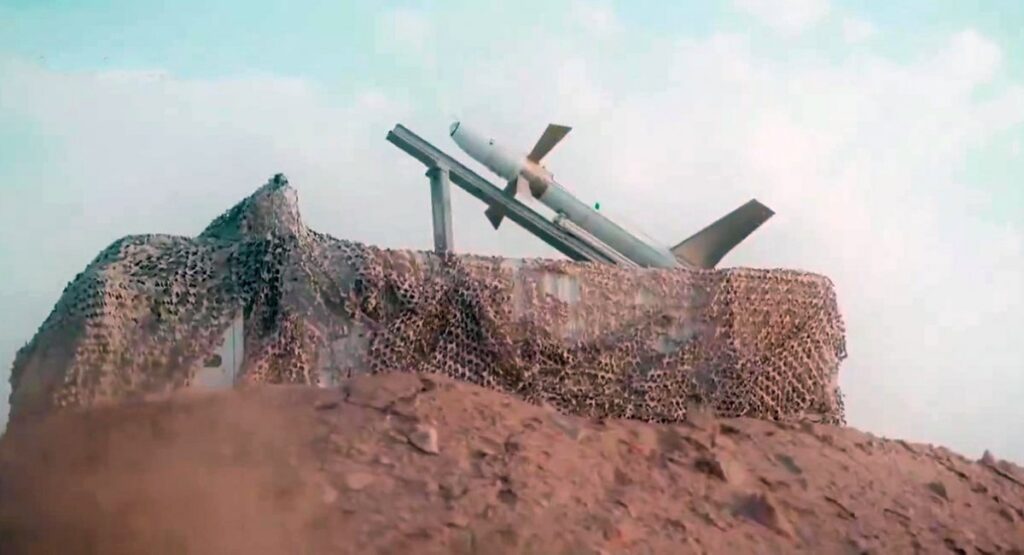
The concept has obvious limitations. The relatively low speed that provides some of the 359’s advantages is also one of its greatest weaknesses. An interceptor traveling at perhaps 600–800 km/h may be dangerous to drones and some subsonic targets, particularly if it starts from a favorable position. Against a high-performance combat aircraft, however, the engagement problem changes dramatically.
Intercept geometry becomes critical. If a subsonic target is approaching the interceptor head-on, the combined closing speed may be more than sufficient. If the target has already passed and the interceptor must chase it from behind, several hundred kilometers per hour may not provide enough speed advantage.
That means a weapon such as the 359 is better understood as an additional layer of air defense rather than a replacement for conventional surface-to-air missiles.
A supersonic fighter, a ballistic missile, and a large reconnaissance UAV are fundamentally different targets and do not necessarily require the same interceptor. The 359 attempts to occupy a niche that traditional air-defense systems rarely considered important enough to justify a dedicated weapon.
And Now There Is a Russian Design
This is what makes the newly revealed Aerokon patent interesting. Published images show a small jet-powered aircraft with an optical system in the nose, and its overall layout has prompted comparisons with the Iranian concept. But at this stage, that remains a hypothesis. There is no public confirmation that the aircraft is intended as an air-defense interceptor, and its speed, range, guidance architecture, payload, and program status remain unknown. The project also appears to be at an early stage.
It is therefore too early to describe it confidently as a literal copy of the Iranian 359.
The broader logic behind such a development, however, is easy to understand. Iran has already demonstrated the 358 family to Russian representatives, and current reporting notes that Tehran reportedly offered the 358 concept to Russia in 2023.
There is also evidence that Russian air-defense designers are independently examining new ways to defeat inexpensive, slow-moving UAVs. A separate patent from Russia’s Fakel design bureau, for example, explicitly describes an anti-aircraft missile intended to intercept low-speed and hovering mini-UAVs, reconnaissance drones, and loitering attack systems.
The more important point, therefore, may not be where a particular technology originated.
The targets themselves have changed.
We May Be Watching a New Class of Air Defense Emerge
For decades, air-defense development was largely a race for performance. Aircraft became faster, so missiles had to become faster still. Aircraft flew higher, so SAM engagement ceilings increased. Electronic warfare became more sophisticated, so seekers and guidance systems became more complex. Inevitably, the interceptor became increasingly capable — and increasingly expensive.
Mass-produced drones have disrupted that relationship.
One of the major aerial threats can now be relatively slow, technically simple, and inexpensive, yet arrive in large numbers. Defeating it requires a different air-defense economy. This is why anti-aircraft FPV drones, inexpensive missiles, automatic cannon, lasers, and various unmanned interceptors are all being developed simultaneously.
The Iranian 359 occupies a particularly unusual position between these categories. From the SAM it inherits the mission: destroying an airborne target. From the cruise missile it takes the turbojet and sustained powered flight. From the loitering munition comes the ability to wait in a designated area. From the FPV drone comes the use of optical sensing and potentially direct operator involvement in the terminal phase.
The next development is easy to imagine: removing the operator from direct control of an individual interceptor.
If machine vision can reliably detect and classify airborne targets, multiple interceptors could eventually be distributed between sectors automatically. At that point, the result would no longer resemble a conventional SAM battery. It would become a persistent airborne layer of unmanned air defense.
The Iranian Idea Is More Important Than the Specific Missile
The 359 may be far from a perfect weapon. Reliable public data on its true performance remain limited, some claims about its combat effectiveness cannot be independently verified, and its capabilities against fast or maneuvering aircraft are inherently constrained. Reports have associated the broader 358/359 family with the destruction of large UAVs, but specific kill claims and the exact interceptor variant responsible for individual losses should be treated cautiously.
None of this makes the underlying concept less interesting.
Iranian designers have effectively challenged one of the traditional assumptions of air defense: an anti-aircraft interceptor does not always need to be as fast as possible. If the target itself is slow, it may be more useful to sacrifice speed for endurance, reduce propulsion requirements, and allow the weapon to wait for its opponent in the air.
That is why the possible Russian counterpart deserves attention even though almost nothing about it has yet been confirmed. The interesting part is not simply the Aerokon patent, nor whether the design proves to be a direct copy of an Iranian weapon. The larger question is whether an idea that once looked like an exotic feature of Iranian missile development is becoming a distinct branch of counter-UAV air defense.
The technological circle is almost complete. Drones made conventional surface-to-air missiles too expensive for many targets. Now, to fight those drones, the surface-to-air missile itself is beginning to turn into a drone.






