
Knyaz Veshchiy Oleg: Why Russia Needs a Reconnaissance Drone Reportedly Worth Around $100,000

Against the backdrop of strike drones, reconnaissance UAVs usually remain in the shadows. They carry no warhead, do not attack targets themselves, and rarely produce spectacular footage. Yet these aircraft provide something without which many modern precision-guided weapon systems become far less effective: they locate objects, observe them, refine coordinates, and transmit intelligence.
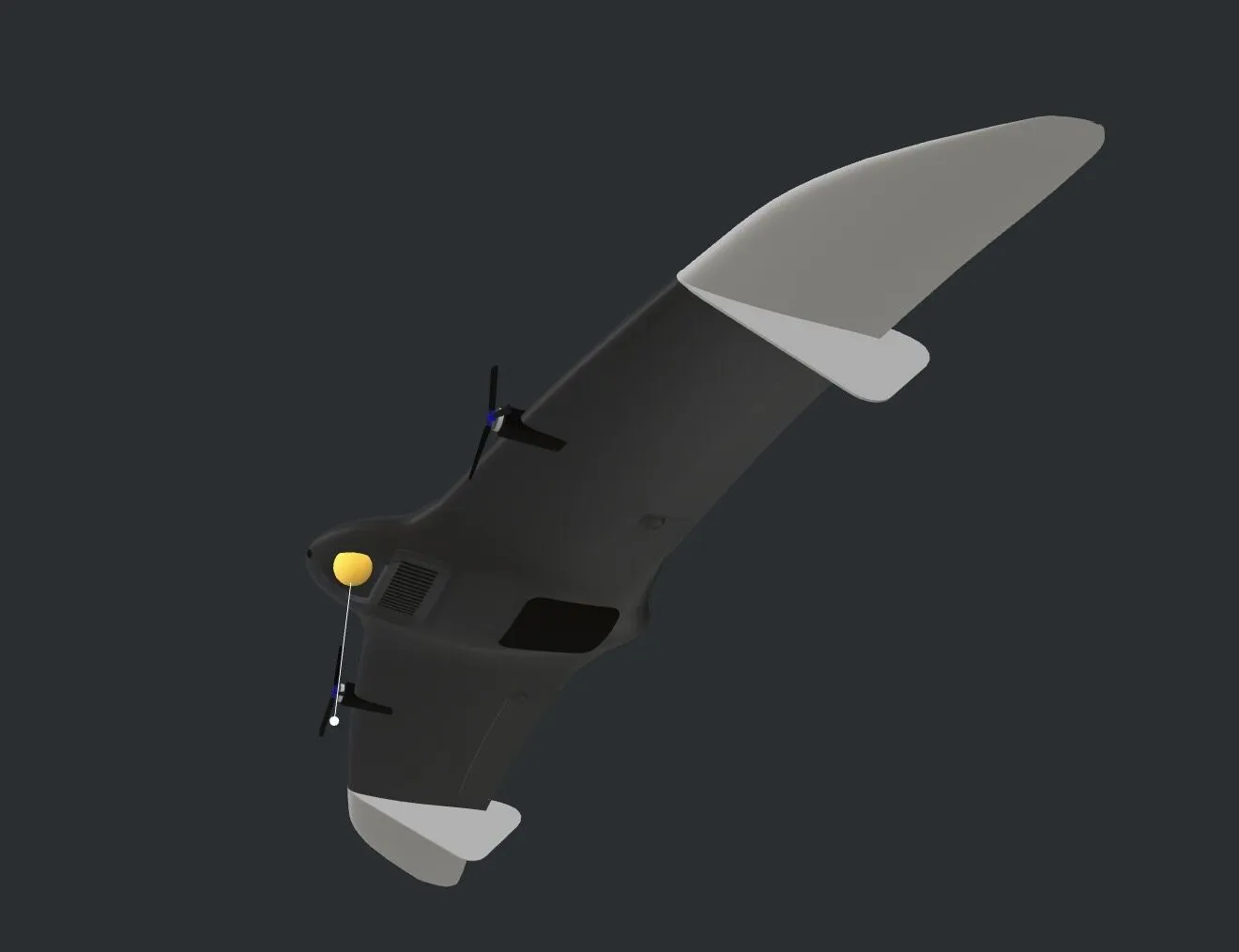
One relatively new Russian system in this category is the unusually named Knyaz Veshchiy Oleg, or KVO. The name can be translated as “Prince Oleg the Prophet” or “Oleg the Seer.” The first public reports about the drone appeared in 2025, and more information later emerged about its design, specifications, and individual components. The developer is identified as the Novgorod-based Ushkuynik research and production center, which is also associated with several other unmanned systems.
At first glance, KVO looks like a fairly conventional modern fixed-wing reconnaissance drone: electric propulsion, commercial components, an electro-optical payload, several hours of endurance, and a communications range measured in tens of kilometers.
But one detail makes the aircraft much more interesting.
Open-source estimates put the cost of the Knyaz Veshchiy Oleg system at around $100,000 or possibly more.
That raises a much more interesting question: what does an 11-kilogram reconnaissance drone have to offer to justify such a price?
Neither an FPV Drone Nor a Large Reconnaissance UAV
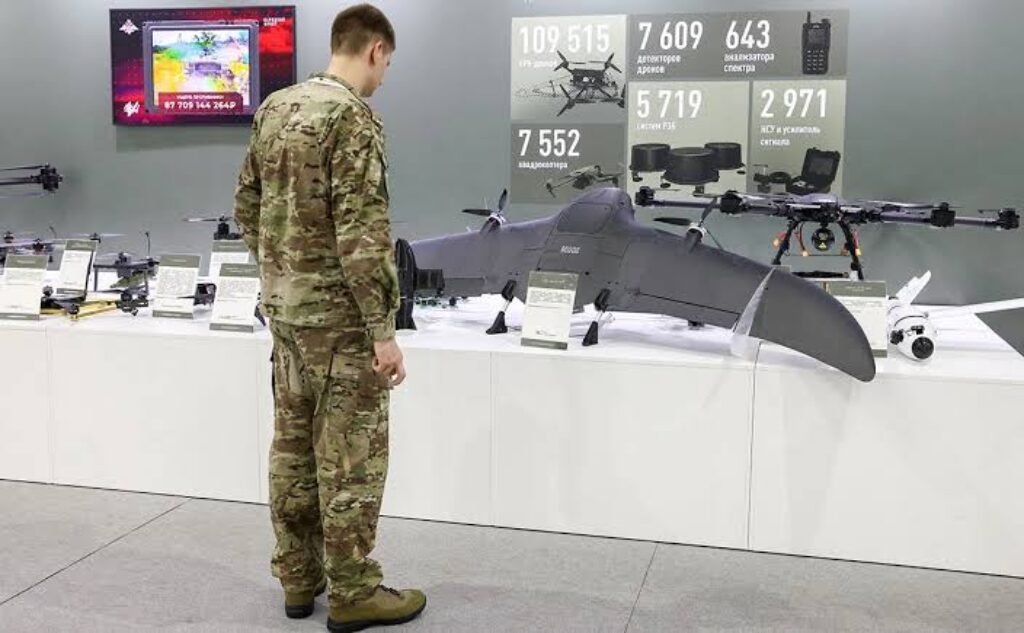
Knyaz Veshchiy Oleg is a twin-engine electric fixed-wing UAV. Its length is approximately 0.82 meters, its wingspan is 2.8 meters, maximum takeoff weight is around 11 kilograms, and payload capacity is estimated at approximately 600 grams.
Its reported specifications are as follows:
| Length | approx. 0.82 m |
| Wingspan | approx. 2.8 m |
| Maximum takeoff weight | approx. 11 kg |
| Payload | up to 0.6 kg |
| Cruise speed | approx. 80 km/h |
| Maximum speed | up to 130 km/h |
| Endurance | up to 3.5 hours |
| Communications range | up to 45 km |
| Maximum altitude | up to 3,000 m |
There is an important caveat. A significant portion of these figures comes from published descriptions and examinations of the aircraft rather than independently verified performance testing. They should therefore be regarded as reported or estimated specifications rather than absolute figures.
Nevertheless, the general nature of the aircraft is clear.
This is no small quadcopter intended to operate immediately above the front line. At the same time, it is not a large internal-combustion-powered reconnaissance UAV capable of operating hundreds of kilometers away.
KVO occupies the space between these categories.
And its main advantage is not speed.
Three and a Half Hours Instead of a Few Dozen Minutes
A reconnaissance drone does not necessarily need to fly fast. What matters far more is how long it can remain airborne.
For a typical small multirotor UAV, endurance is often measured in tens of minutes. A fixed-wing configuration is considerably more aerodynamically efficient. If the reported 3.5-hour endurance of KVO is close to reality, its operator can do much more than simply inspect a particular area and return.
The aircraft can conduct prolonged surveillance.
At a cruise speed of around 80 km/h, its theoretical route length can be considerable. Published information has also mentioned the possibility of flying a 160-kilometer route in two hours.
But this should not be confused with the actual operational radius of a reconnaissance mission. The communications range is reportedly around 45 kilometers, while the aircraft also needs to retain enough energy to return.
This distinction is important.
Flight range tells us how far the aircraft can physically travel.
Operational radius determines how far from its operator it can effectively perform its mission.
For a reconnaissance UAV, the second figure can be much more important than the first.
The Most Valuable Equipment Is Under the Fuselage
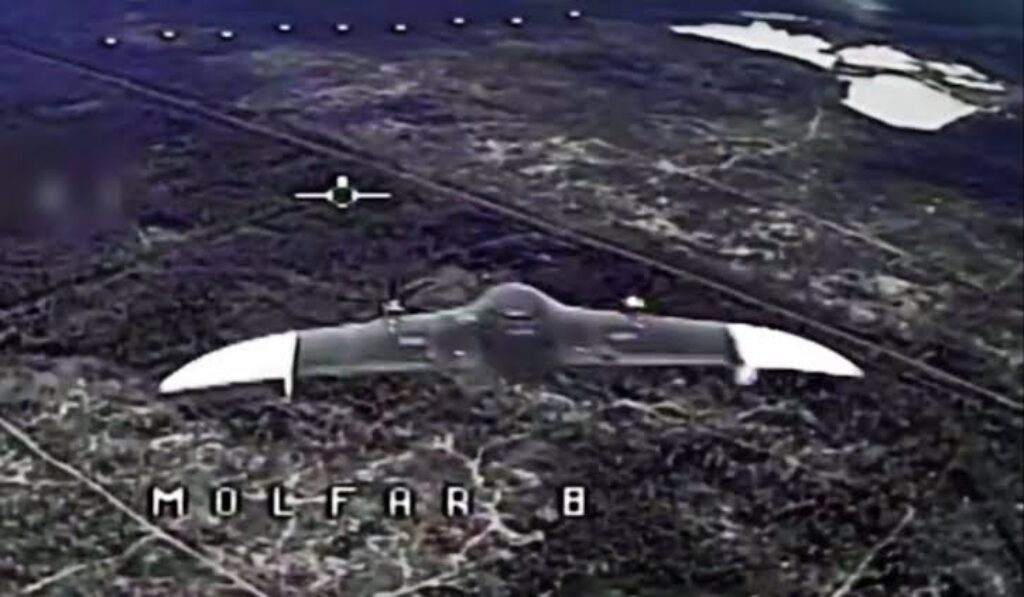
The primary payload of Knyaz Veshchiy Oleg is a stabilized electro-optical system.
According to published information, the aircraft carries a three-axis gimbal incorporating a wide-angle Full HD camera and a second camera with 10x optical zoom.
That second capability is particularly important.
A good reconnaissance drone does not necessarily have to fly directly above the object it is observing. The better the optics, the farther away the aircraft can potentially remain while still detecting and tracking a target.
Three-axis stabilization compensates for aircraft movement and vibration, allowing the operator to obtain a relatively stable image.
The resulting reconnaissance sequence is fairly conventional:
enter the surveillance area → detect an object with the wide-angle camera → switch to optical zoom → track the object → transmit imagery to the operator.
There is nothing revolutionary about this.
But a mass-produced tactical reconnaissance drone does not need revolutionary technology. What matters is integrating existing technologies into a reliable and practical platform.
Satellite Navigation Can No Longer Be the Only Option
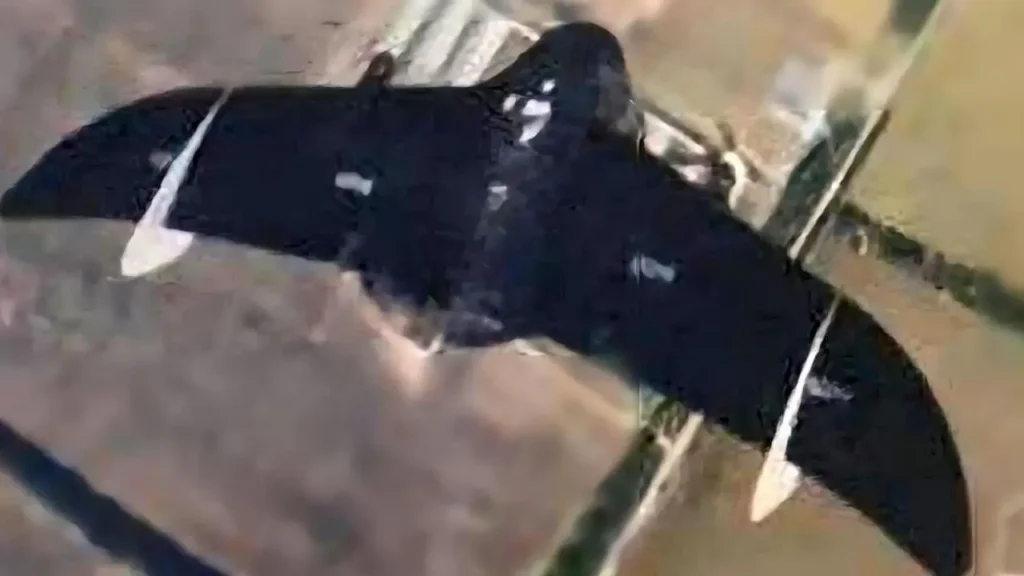
Another reported KVO capability is the ability to continue operating without satellite navigation. Published descriptions have also claimed increased resistance of its communications system to electronic warfare.
For modern military drones, this is becoming increasingly important.
Early commercial UAVs were heavily dependent on GNSS. Once satellite navigation signals were jammed, they could experience serious problems determining their position, maintaining a route, and returning to base.
The ability to continue navigating without continuous access to satellite signals is therefore evolving from a desirable additional feature into an increasingly important requirement for military UAVs.
There is, however, an important distinction.
The phrase “can operate without satellite navigation” does not mean “immune to electronic warfare.”
Navigation and data transmission are separate problems.
A drone may continue to know where it is while losing its communications link with the operator. Alternatively, it may retain communications while experiencing difficulties determining its own position.
There is no such thing as an absolutely EW-proof radio link.
It is therefore more accurate to speak of attempts to increase resistance to electronic warfare, rather than creating a drone that cannot be affected by it.
Two Electric Motors and a Large Battery
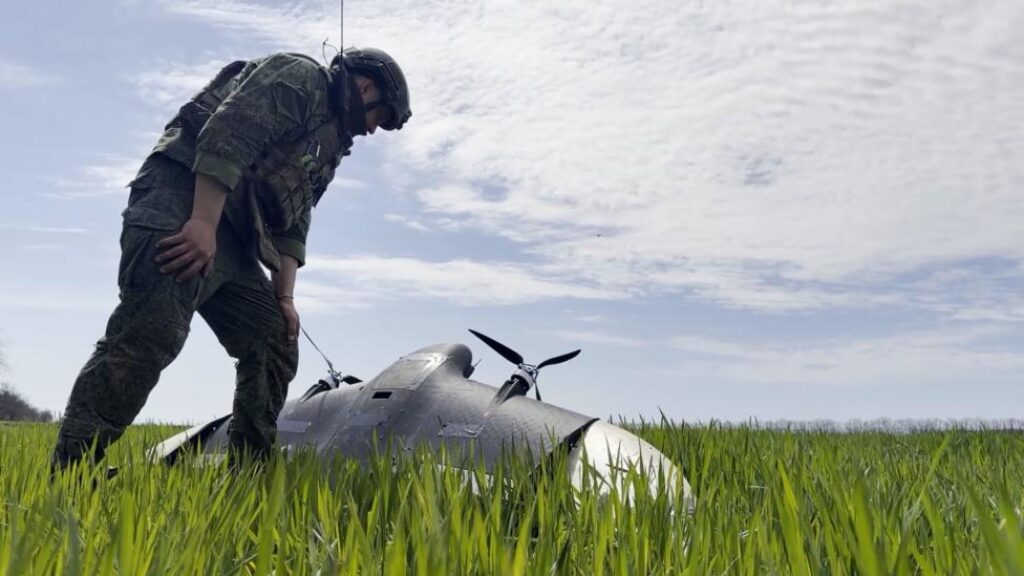
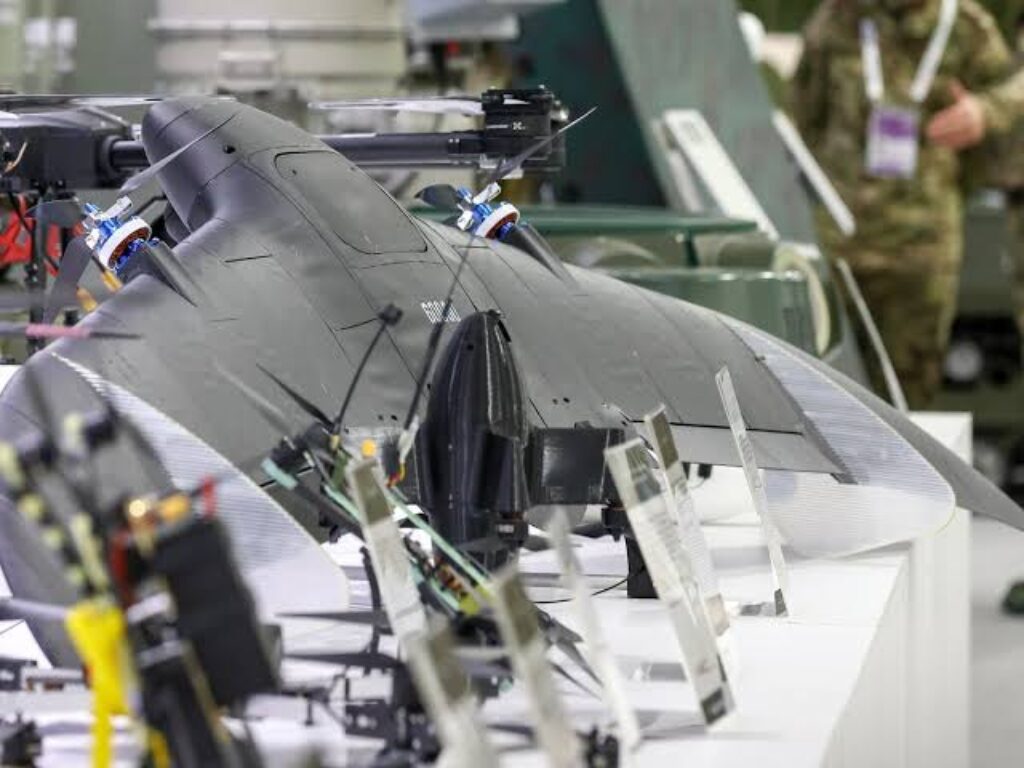
KVO’s propulsion system is also noteworthy. Two Chinese-made SunnySky brushless electric motors have reportedly been identified in the aircraft. Published component lists also mention a large ZXGT02-8S40000 battery.
An electric propulsion system makes considerable sense for this type of reconnaissance platform.
Electric motors are relatively simple, require no complicated fuel system, and generally produce less acoustic and thermal signature than small internal-combustion engines.
But the most important factor is mission profile.
Knyaz Veshchiy Oleg does not need to be fast.
Its job is to remain airborne for a long time, observe, and transmit information.
That makes its reported maximum speed of 130 km/h far less important than its 80 km/h cruise speed and claimed endurance of up to 3.5 hours.
It is closer to a flying observation post than to what most people imagine when they hear the phrase “fast drone.”
How Russian Is Knyaz Veshchiy Oleg?
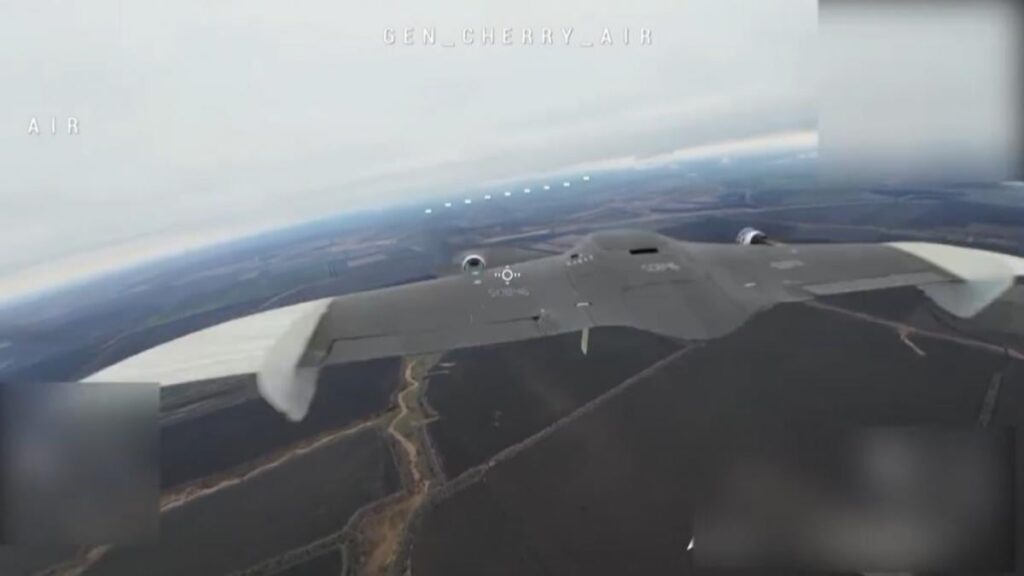
The developer and manufacturer of the aircraft is identified as the Russian Ushkuynik Research and Production Center. The same organization has been associated with other unmanned systems, including FPV projects and interceptor drones.
But examination of KVO’s components reveals something characteristic of the modern UAV industry: a significant portion of the electronics and hardware is of foreign commercial origin.
Published component lists include Chinese SunnySky motors, a D-80AI electro-optical gimbal associated with Nanjing Xianfei Robot Technology, an MS350DH camera module from Shenzhen Zhongxi Security, and other components.
Knyaz Veshchiy Oleg therefore demonstrates one of the most important trends in modern unmanned aviation.
A manufacturer no longer has to develop every motor, battery, camera, and circuit board domestically to create a military reconnaissance UAV.
It can instead use existing commercial components, build an airframe around them, develop the necessary software, integrate communications equipment, and combine everything into a complete system.
This can significantly reduce development time.
But it also raises an obvious question.
If so many of the components are commercially available, where does a price of around $100,000 come from?
But Knyaz Veshchiy Oleg Is Hardly Cheap
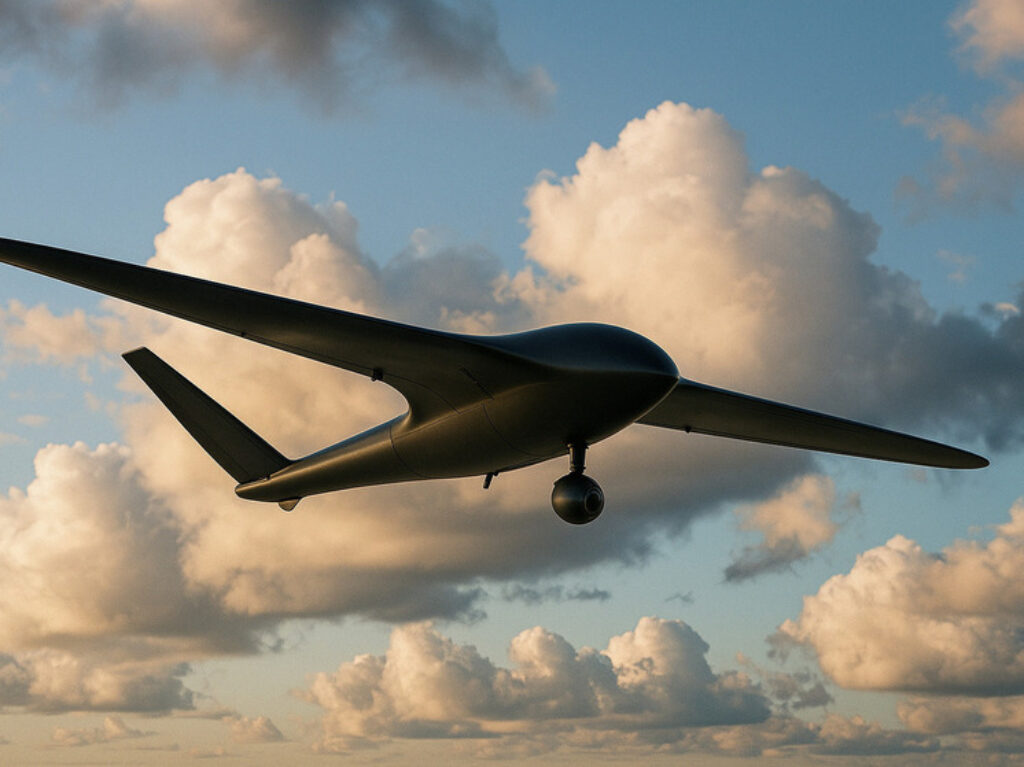
This is perhaps the most interesting economic aspect of the entire story.
Architecturally, KVO looks like a product of the new generation of relatively accessible unmanned aviation: a small electric aircraft using commercial motors, Chinese optics and electronics, and a comparatively simple airframe.
Yet the available cost estimates do not fit neatly with that image.
Several publications have estimated the cost of the Knyaz Veshchiy Oleg system at approximately $100,000 or more. However, there is no publicly available official procurement price for the individual aircraft.
It would therefore be misleading to state that one KVO airframe necessarily costs exactly $100,000.
The more accurate formulation is that the complete system has been estimated at around that figure.
This distinction matters.
A reconnaissance system consists of more than the aircraft itself.
The price may include a ground-control station, communications equipment, antennas, software, optical systems, image-transmission equipment, spare parts, and other components.
Simply adding up the retail prices of the Chinese motors, cameras, battery, and other identified hardware and comparing the result with $100,000 would therefore tell us very little.
Even with that caveat, however, the figure is interesting.
At around 11 kilograms, this is clearly not a disposable FPV drone.
Is $100,000 Expensive for a Reconnaissance Drone?
It depends entirely on what you compare it with.
By the standards of full-scale military aviation, $100,000 is a small amount of money. By the standards of mass drone warfare, it is substantial.
And this creates the central economic contradiction surrounding KVO.
A reconnaissance drone needs to be sophisticated enough to find valuable targets. Good optics, robust communications, long endurance, and navigation in a difficult electronic environment all cost money.
At the same time, such aircraft must be sufficiently numerous because reconnaissance drones are inevitably lost.
The closer they operate to contested areas, the more likely they are to be detected and intercepted.
The manufacturer therefore has to find a balance:
a reconnaissance drone that is too cheap may not be capable enough; one that is too expensive becomes difficult to replace.
If the roughly $100,000 estimate is close to reality, Knyaz Veshchiy Oleg appears to occupy the middle ground between cheap expendable drones and much larger specialized reconnaissance systems.
And There Appear to Be More of Them
This makes reports from 2026 suggesting wider KVO use particularly interesting.
One open NATO monitoring report cited data from a counter-drone manufacturer indicating that, within its particular dataset for March 2026, Knyaz Veshchiy Oleg may have become the second most commonly observed Russian reconnaissance UAV among the aircraft it recorded.
That figure needs to be treated carefully.
It does not mean KVO is necessarily the second most numerous reconnaissance UAV across Russia’s entire unmanned aviation fleet. It reflects a specific sample of detected aircraft.
But the trend itself matters.
If the number of observed KVOs is indeed increasing, the project may be moving from limited deployment toward more significant serial use.
And that makes its price even more interesting.
Producing several dozen reconnaissance drones costing around $100,000 is one thing.
Making such a system genuinely widespread is another.
Why Is Another Reconnaissance Drone Needed at All?
It may seem that there are already more than enough reconnaissance UAV designs.
Modern conditions, however, demonstrate exactly why so many are required.
Aircraft are lost. They suffer technical failures. Communications are disrupted. They are affected by electronic warfare and intercepted by air-defense systems or specialized counter-UAS platforms.
At the same time, surveillance is required across a very large number of areas simultaneously.
Modern unmanned reconnaissance is therefore increasingly built not around a single perfect aircraft, but around the ability to keep the required number of drones in the air continuously.
And this brings us to another important shift.
“Mass-produced” and “cheap” no longer necessarily mean the same thing.
A drone costing around $100,000 can still become a mass-produced system if industry can manufacture hundreds or thousands of them and if the intelligence they provide is considered valuable enough to justify inevitable losses.
It Is Not a Super-Drone — And That Is Exactly Why It Is Interesting
If Knyaz Veshchiy Oleg is judged purely by its specification sheet, there is nothing extraordinary about it.
An 11-kilogram maximum takeoff weight.
A 2.8-meter wingspan.
Around 80 km/h cruise speed.
Up to 45 kilometers of reported communications range.
Up to 3.5 hours of endurance.
A camera with 10x optical zoom.
Two electric motors.
And an estimated system cost of approximately $100,000.
But that final figure makes the entire story particularly interesting.
Knyaz Veshchiy Oleg demonstrates how dramatically the economics of unmanned aviation have changed. A mass-produced reconnaissance UAV does not necessarily have to be a primitive and inexpensive disposable aircraft. It can carry relatively costly equipment, sophisticated communications and navigation systems, and still be treated as something whose losses must be routinely replaced.
This creates a peculiar new category of military equipment: expensive enough for every loss to matter, but numerous enough for losses to be built into the operating model from the beginning.
The most important question surrounding KVO is therefore no longer which specific camera it carries or which Chinese electric motor is installed inside.
The more interesting question is this:
If the roughly $100,000 cost estimate is close to reality and the aircraft is indeed moving toward wider deployment, how many can industry produce — and how quickly can losses be replaced?
Ultimately, the answer to that question may matter far more than any individual figure on the specification sheet.






