How Sweden Lost Its Tank Industry and Switched to the Leopard 2

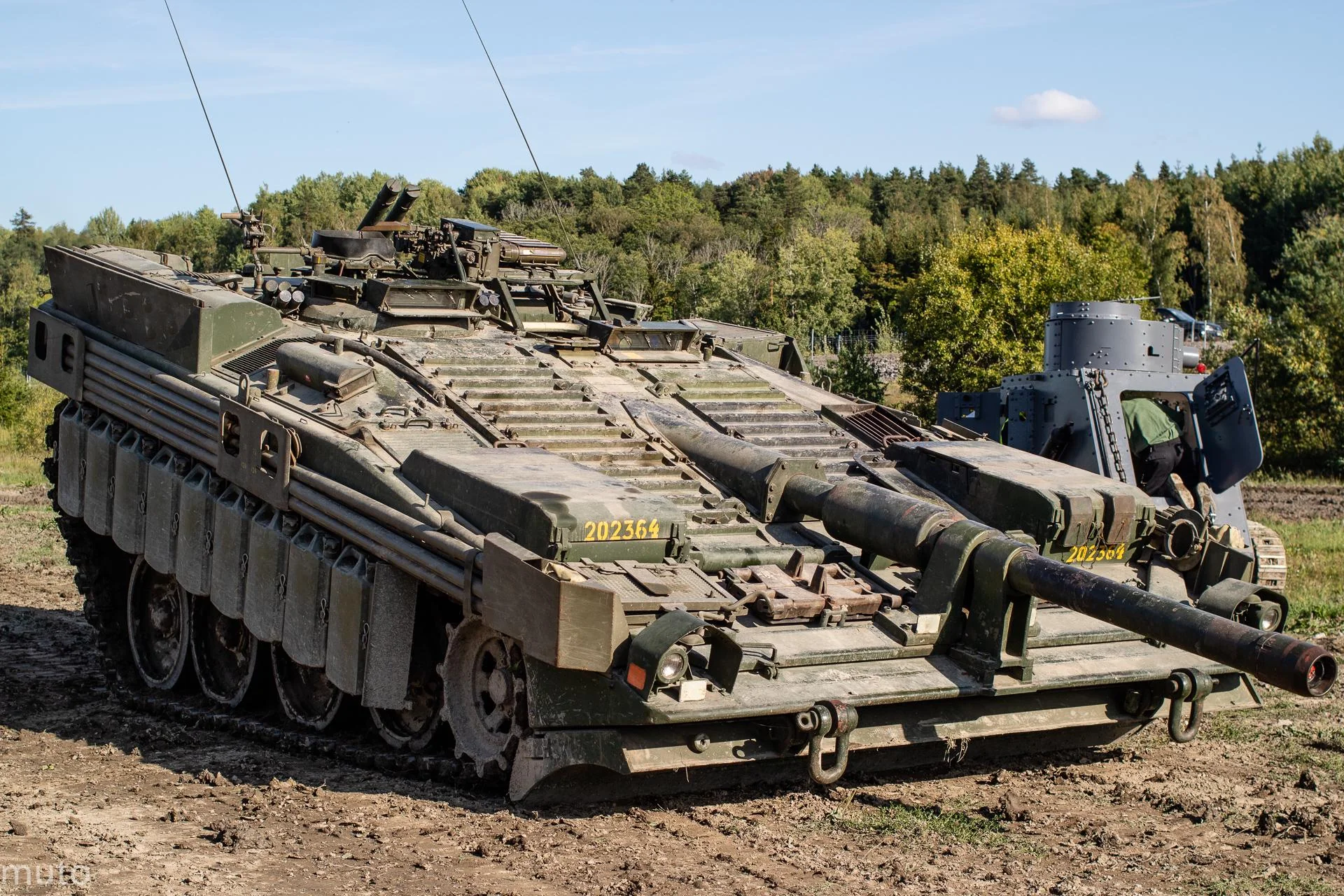
In the late 1960s, Sweden achieved something only a handful of countries could do: it independently designed and mass-produced its own main battle tank. And the Strv 103 was not simply another variation on the Centurion, Leopard, or Soviet approach. The Swedes created a radically original turretless tank with an autoloader, hydropneumatic suspension, and a combined powerplant. A total of 290 were built. Sweden appeared to have a mature engineering school and every reason to continue producing its own tanks for decades. Yet little more than twenty years later, the country selected the German Leopard 2. What happened?
The simplest answer would be that Sweden gradually forgot how to build tanks. But the facts do not support that conclusion. Swedish industry continued to develop armored vehicles, the highly successful CV90 appeared, the experimental UDES program continued for years, and toward the end of the Cold War Sweden seriously considered developing a new indigenous main battle tank under the Strv 2000 program. The engineers did not disappear, nor did companies such as Bofors and Hägglunds.
The real explanation is more interesting. During the second half of the 20th century, Sweden gradually reached a point where it still possessed much of the technical capability required to develop a domestic tank, but the economic case for doing so became increasingly difficult to justify. The transition from Strv 103 to Leopard 2 is therefore less a story about the collapse of Swedish industry than about how radically the economics of tank development had changed.
From Landsverk to a Swedish Heavy Tank
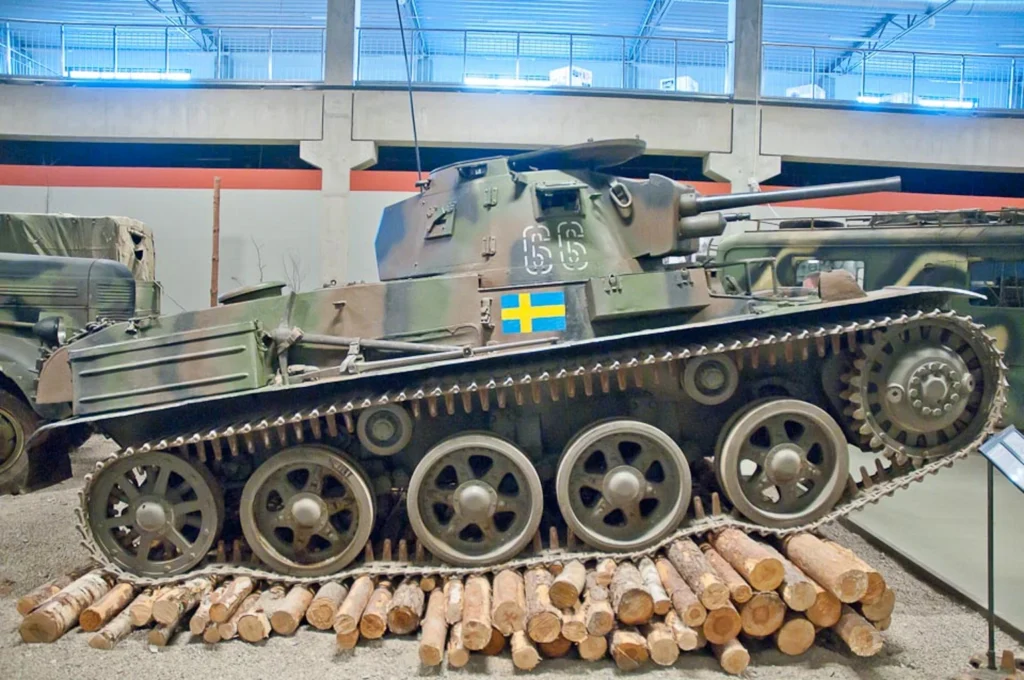
In the early 1930s, Sweden could hardly be described as a major tank-building nation. Armored vehicles were produced in small numbers, while the emergence of a national design school was closely connected with German engineers and capital. One company gradually became particularly important: AB Landsverk of Landskrona. It developed engineering teams capable of designing their own chassis and turning prototypes into production vehicles.
During World War II, neutral Sweden rapidly expanded its armed forces. The Strv m/38, m/39 and m/40 appeared, followed by the heavier Strv m/42. None of these vehicles revolutionized tank design, but something more important was happening: Sweden was learning how to design, test, manufacture, and modernize armored vehicles independently. A functioning industrial ecosystem emerged. Landsverk specialized in vehicles and chassis, Bofors possessed enormous expertise in artillery, while Swedish companies could provide engines, optics, and other equipment.
After 1945, Sweden wanted to take the next step. The appearance of new heavy tanks, particularly the Soviet IS-3, demonstrated how quickly requirements for armor and firepower were changing. In the early 1950s, Sweden launched the secret EMIL program, later associated with the names Kranvagn and Krv. The objective was to combine powerful armament, strong protection, and high mobility in a relatively compact vehicle. Large-caliber guns, an autoloader, and an oscillating turret were considered — an ambitious combination for the early 1950s.
The project never became an operational tank. Two chassis were built, but the program gradually lost its purpose. This was the first hint of the dilemma Sweden would encounter repeatedly in the following decades. Instead of spending several more years and large amounts of money completing a national design, Sweden could purchase an existing modern tank immediately.
That tank was the British Centurion.
Sweden bought it.
But indigenous tank development was far from dead. In fact, its most famous achievement was still ahead.
Strv 103: When Sweden Seemed to Have Found Its Own Path
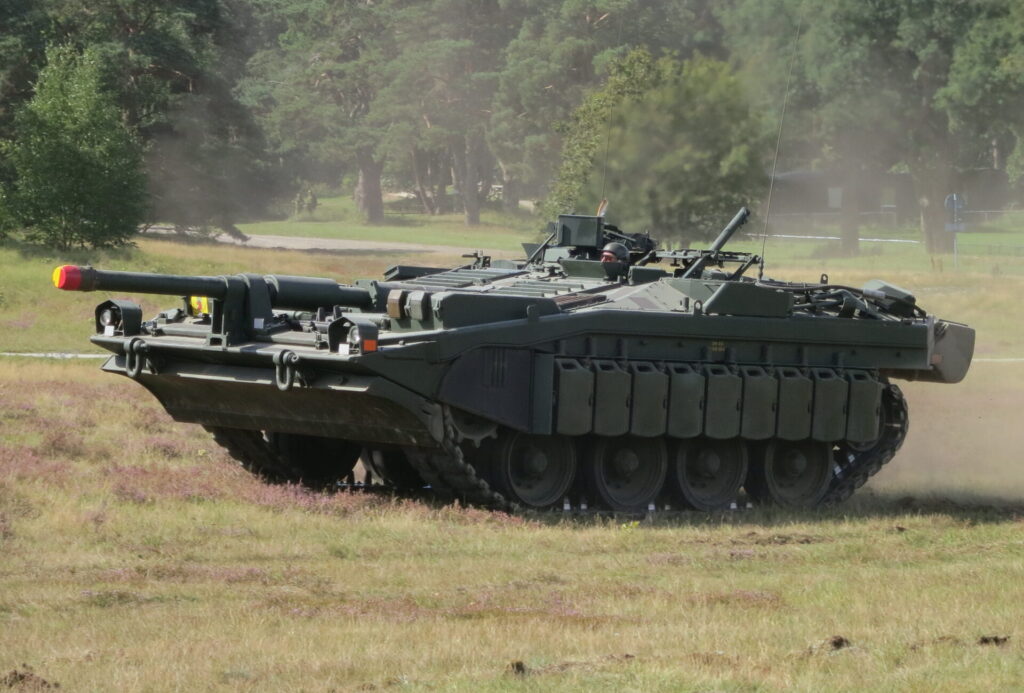
In the mid-1950s, engineer Sven Berge proposed an almost provocative idea. If a tank spent much of its time firing forward, while the turret increased both height and weight, why not eliminate the turret altogether?
That idea eventually produced the Strv 103, better known internationally as the S-Tank.
Its 105 mm gun was rigidly fixed to the hull. Horizontal aiming was performed by turning the entire vehicle, while elevation was controlled by adjusting the hull through the hydropneumatic suspension. Eliminating the turret made the tank extremely low. An autoloader allowed the crew to be reduced to three men, while the powerpack combined a diesel engine with a gas turbine.
The result was a tank almost impossible to confuse with anything else of its era.
More importantly, the Strv 103 was not merely an experimental curiosity. Following prototype trials, Sweden placed the vehicle into production, and between 1967 and 1971 the army received 290 Strv 103A and B tanks. For a relatively small country, that was a substantial production run. Sweden had demonstrated that it could not only imagine a radical tank concept but also turn it into a practical military vehicle.
If the story ended around 1970, there would be little reason to talk about a crisis in Swedish tank development. The country had its own engineering tradition, a significant industrial base, Bofors, Landsverk, experience developing several generations of armored vehicles, and a newly produced indigenous main battle tank.
Yet at almost exactly the same time, one of the foundations of that system was beginning to disappear.
Landsverk gradually withdrew from tank development and eventually ceased to exist as an independent center of armored vehicle design.
The disappearance of one company was not a catastrophe by itself. Bofors continued to develop sophisticated artillery systems, Hägglunds expanded its work on light armored vehicles, and Sweden still possessed a strong industrial base. What was being lost, however, was the continuity of a design school specifically focused on main battle tanks.
And such expertise is much easier to preserve than to recreate twenty years later.
Sweden Kept Designing Stranger Tanks — But Stopped Building Them
By the early 1970s, a new question had emerged: what would eventually replace the Strv 103?
One answer came in the form of the extensive UDES research program.
UDES produced many of the famous images of unusual Swedish armored vehicles: extremely low hulls, externally mounted guns, turretless layouts, unconventional suspension systems, and concepts that sometimes looked more like science fiction than conventional tanks.
It is easy to look at these drawings and conclude that Swedish tank development had disappeared into a world of increasingly unrealistic concepts. But that would be unfair. UDES was, to a considerable degree, an experimental research program. Engineers were deliberately testing different layouts, building mock-ups and experimental vehicles, and studying ways to reduce silhouette, improve mobility, and separate weapons from the crew compartment.
Many UDES concepts were never intended to become production tanks.
The problem was not the number of wooden mock-ups. The problem was the eventual result.
Years passed. Research produced interesting technologies, but no new Swedish main battle tank entered production. A dangerous gap was opening between generations. Swedish engineers could investigate individual technologies, but the country was going increasingly long periods without completing the entire cycle of requirements, prototype construction, testing, redesign, and serial production for a heavy tank.
Yet Swedish armored vehicle engineering clearly had not collapsed.
The best evidence appeared in the 1980s, when Bofors and Hägglunds began developing what eventually became the Stridsfordon 90, better known as the CV90. The vehicle proved so successful that it developed into an international family and became one of the most successful European tracked armored vehicle designs of its generation.
The Swedes clearly had not forgotten how to build fighting vehicles.
Something else had changed.
The main battle tank had become such a complicated and expensive product that independent development was becoming increasingly difficult to justify for a relatively small country.
The Final Attempt: Strv 2000
A tank of the 1980s was an entirely different industrial proposition from the vehicles Landsverk had produced several decades earlier. Modern composite armor was required, along with a powerful engine, sophisticated automatic transmission, stabilized armament, laser rangefinder, ballistic computer, thermal sights, an advanced fire-control system, and increasingly expensive electronics.
Every one of those components required research and development.
And then came the uncomfortable question: how many tanks did Sweden actually need?
Not five thousand.
Not even one thousand.
The Soviet Union, United States, and West Germany could spread development costs over enormous domestic orders and, in some cases, substantial exports. Sweden operated in a completely different category. If the cost of developing an entirely new tank had to be distributed across only a few hundred vehicles, the effective cost of every machine became enormous.
Nevertheless, Sweden made one final serious attempt.
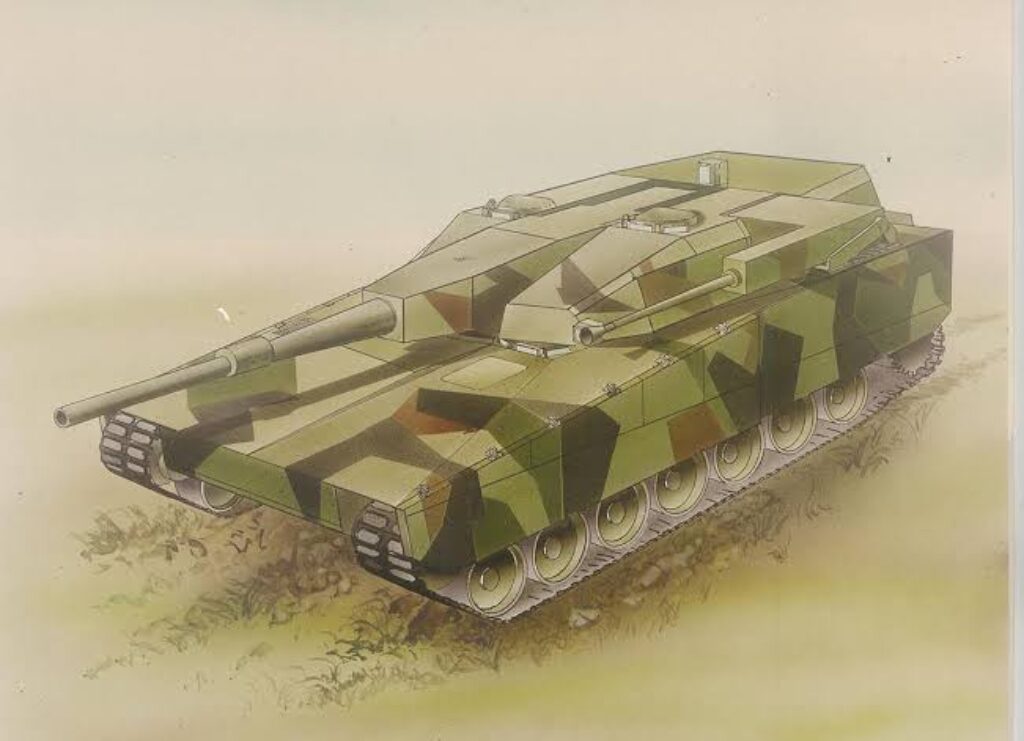
By the late Cold War, the Strv 2000 program had emerged as a possible replacement for both the aging Centurion and Strv 103 fleets. Various concepts were studied, including the remarkable T140/40 configuration with a 140 mm main gun accompanied by a 40 mm automatic cannon. Heavy protection, advanced electronics, and enormous firepower were all considered. Had it been built, Strv 2000 might have become one of the most unusual Western tanks of the next generation.
But the more detailed the concepts became, the more obvious the price became as well. Weight was moving toward the level of contemporary heavy Western MBTs, complexity was increasing, and Sweden still faced the enormous costs of building full prototypes, testing them, correcting problems, and creating a production system.
Then the Cold War ended.
Defense priorities began to change, and the case for an expensive national tank became even weaker.
Because Germany already had the Leopard 2.
Why Build Your Own Leopard When the Real One Already Exists?
This is where the answer to the entire puzzle becomes clear.
By the early 1990s, Sweden could pour enormous resources into continuing its national program, spend years testing a new tank, and eventually obtain a few hundred uniquely Swedish vehicles.
Or it could evaluate the best main battle tanks already available on the international market.
Sweden chose the second option — and it did not simply buy the first available foreign tank. A serious evaluation program was conducted, with foreign vehicles tested under Swedish conditions. The contenders included the American Abrams, the French Leclerc, and the German Leopard 2.
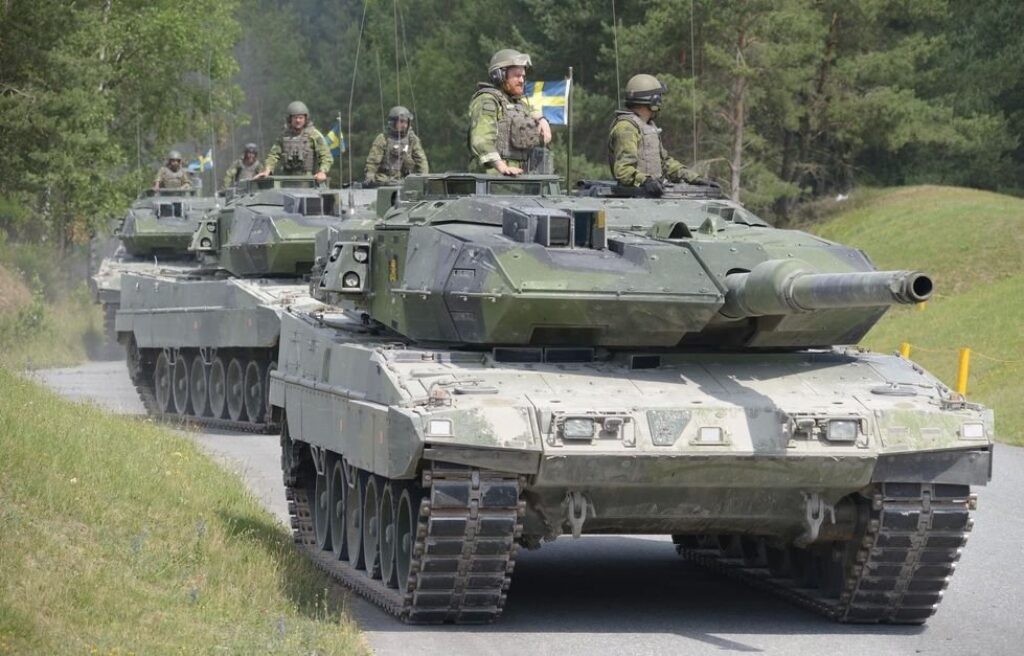
In 1994, the Leopard 2 Improved was selected. It became the basis for the Swedish Strv 122. Sweden also acquired Leopard 2A4s, which received the designation Strv 121.
And now the economic logic became extremely difficult to argue against.
Germany had already paid for much of what Sweden would otherwise have had to develop itself: the engine, transmission, gun, suspension, fire-control architecture, basic armor design, and manufacturing technology. The Leopard 2 had already undergone years of development and operational service, was in serial production, and possessed considerable modernization potential.
Developing a national equivalent for an order of only a few hundred tanks became increasingly difficult to justify.
The Strv 122, however, was not simply a German tank with a Swedish flag painted on it. It was adapted to Swedish requirements, with changes to protection, equipment, and other systems, while Swedish industry participated in the program.
The industrial model had changed.
Instead of:
“We design our own main battle tank.”
Sweden moved toward:
“We take an existing foreign platform, adapt it to our requirements, participate in its production, maintain it, and modernize it.”
The difference may sound small.
For an industrial base, it is enormous.
If a country goes decades without designing a main battle tank from a clean sheet, the specialized engineering teams and supplier networks needed to do so gradually disappear. They can theoretically be rebuilt, but doing so requires enormous amounts of money and time.
And the obvious question remains: why rebuild them?
So What Actually Happened to Swedish Tank Building?
It was not destroyed by one decision.
There was no single meeting at which Swedish generals closed Landsverk, threw away the blueprints, and decided never to develop another tank.
The process lasted almost forty years.
First, indigenous projects became increasingly complex and expensive. Then existing foreign tanks began offering a more attractive alternative. The intervals between national production programs grew longer. Experimental projects generated interesting technologies but did not result in new production MBTs. Old industrial structures disappeared or changed specialization. Finally, the cost of developing a modern main battle tank reached a point where creating an entirely unique vehicle for a relatively small national order became extremely difficult to justify.
The most interesting part is that Sweden’s armored vehicle industry did not actually disappear.
The CV90 is compelling evidence of that. Sweden retained expertise in weapons, electronics, protection systems, and tracked combat vehicles. What disappeared was something much narrower and much more expensive: the ability to independently carry a new main battle tank all the way from a blank sheet of paper to full-scale production.
That is why the transition from Strv 103 to Leopard 2 looks like a defeat only at first glance.
In the late 1960s, Sweden could afford to develop a highly original national tank and manufacture 290 of them. A quarter-century later, MBT requirements had grown so dramatically that repeating the same achievement would require an entirely different level of investment.
Sweden could have continued with Strv 2000. Perhaps the result would have been another extraordinary machine that today appeared in every encyclopedia of armored warfare.
But Sweden would have had to pay the entire development bill for a production run of only a few hundred tanks.
Meanwhile, a mature Leopard 2 was already available.
So the Swedes reached for the calculator.
And that is the real paradox of the story: Sweden stopped developing its own main battle tanks not because it had forgotten how to build good armored vehicles. It stopped because, by the end of the 20th century, having the technical ability to build your own tank and having a good reason to build one had become two very different things.