
The TOW Is 56 Years Old. Why Is the U.S. Still Producing an Anti-Tank Missile From the Vietnam Era?

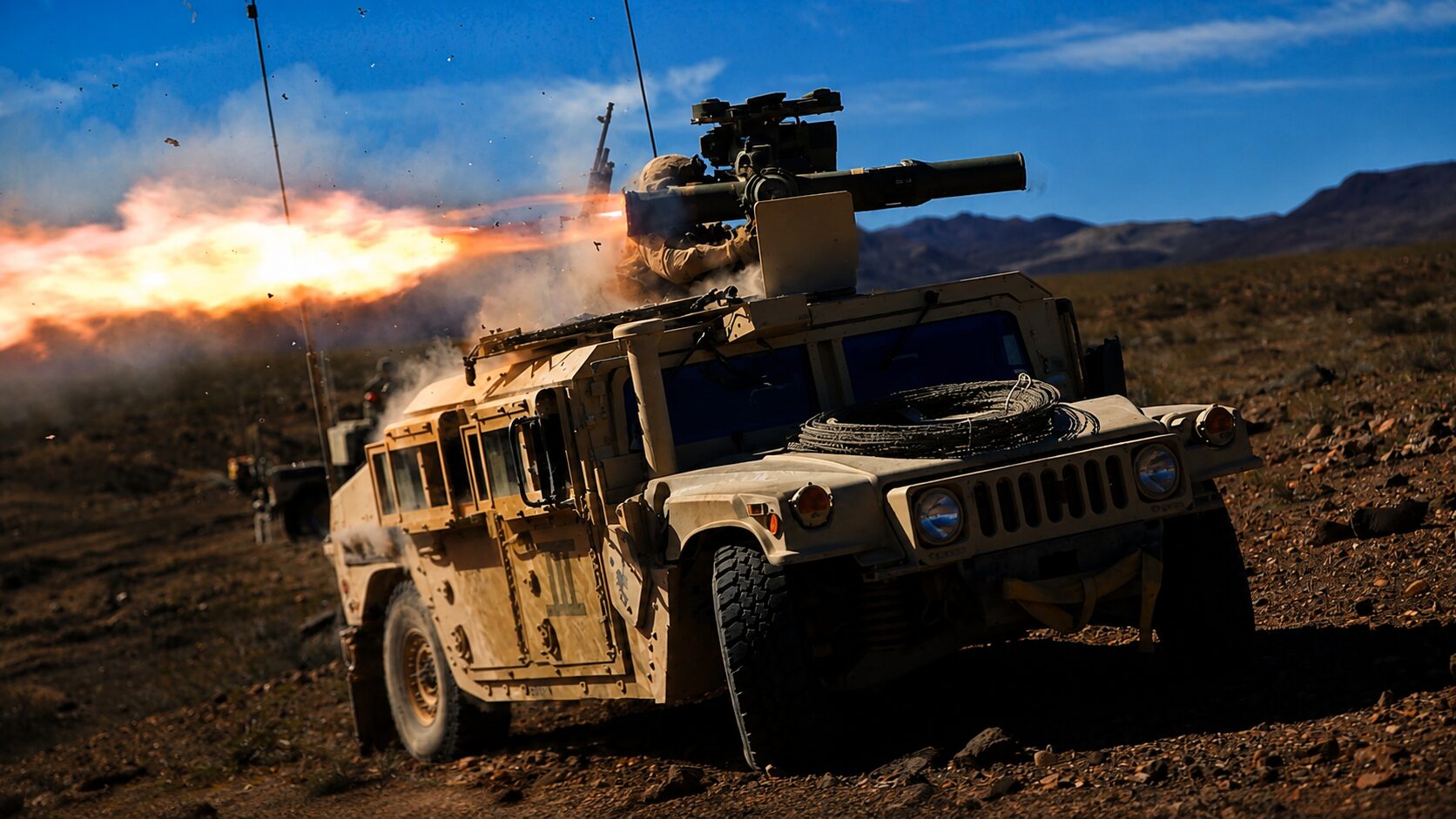
The BGM-71 TOW entered service in 1970. Since then, Javelin, Spike, precision-guided munitions, loitering weapons, and cheap FPV drones have all appeared. A heavy anti-tank missile system that still requires the operator to keep tracking the target should, in theory, have been sent to a museum years ago. Instead, the United States is still spending hundreds of millions of dollars on TOW production in 2026, while Raytheon expects the family to remain in service for decades to come. Why has a weapon designed more than half a century ago refused to become obsolete?
At first glance, the answer seems simple: the system is relatively inexpensive, there are already plenty of launchers in service, and armies are rarely eager to throw away something that still works. But a closer look reveals a much more interesting story. TOW’s age is not really a story about Pentagon inertia. It is a story about a remarkably successful architecture around which an enormous military ecosystem has developed over more than five decades.
A modern TOW has far less in common with the first versions of the 1970s than the familiar name suggests. Over the years, the missile’s range, warheads, guidance, sights, launchers, and host platforms have all changed. What the U.S. Army operates today is not simply an old missile, but an entire family of systems that has been repeatedly rebuilt to meet new threats.
Start With the Most Surprising Number: 1970
Development of the TOW began in the 1960s, and the system entered U.S. Army service in 1970. That was before the F-15 had made its first flight, before the M1 Abrams existed as an operational tank, and before the Soviet T-72 had entered service.
TOW also went to war almost immediately. By 1972, it was being used in Vietnam, including from helicopters. It later appeared in conflicts across the Middle East, the Iran-Iraq War, the Gulf War, Iraq, Syria, and numerous smaller wars.
That kind of service life would normally mean deep obsolescence for an anti-tank system. TOW followed a different path. Every few years, it received new missiles, new sights, and new ways to engage targets.
That is why it is more accurate to think of TOW not as one 56-year-old missile, but as an anti-tank platform that has survived several generations of military technology.
In Modern Versions, the Old TOW Mostly Survives in Name
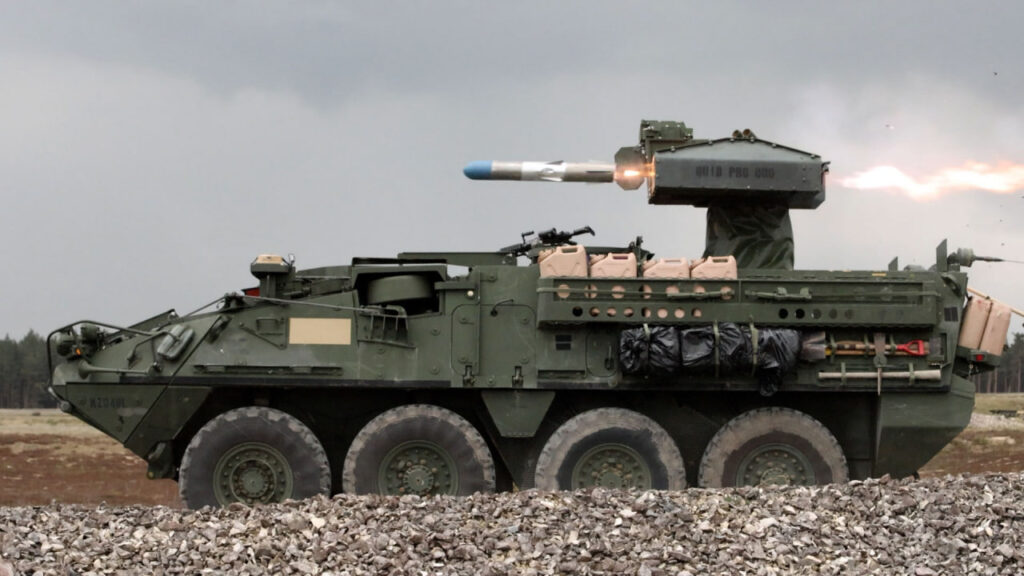
The original acronym TOW — Tube-launched, Optically tracked, Wire-guided — described exactly how the early system worked: the missile was launched from a tube, the target was tracked optically, and commands were transmitted through wires.
Modern versions have moved well beyond that exact formula. Newer missiles use updated command links, more advanced electronics, and improved guidance systems. Depending on the variant, effective range is roughly 3.75 to 4.5 kilometers.
Warheads evolved as well. One of the most interesting examples is the TOW 2B, which does not simply try to punch through the thickest frontal armor. Instead, it attacks from above, targeting the more vulnerable upper surfaces of an armored vehicle.
That point is important. Engineers did not spend five decades trying to defeat increasingly thick armor with exactly the same method. They changed how the target was attacked.
That is the first reason TOW has survived for so long: not because it remained unchanged, but because it kept evolving.
But If Javelin Exists, Why Keep TOW?
This is the obvious question.
If the U.S. already has the FGM-148 Javelin with true fire-and-forget capability, why keep a system that still requires target tracking during missile flight?
Because the two systems do not occupy exactly the same role.
Javelin was designed primarily as a portable anti-tank weapon for infantry. It is well suited to small crews, allows rapid displacement after launch, and attacks armored vehicles from above.
TOW is a heavier anti-tank system that works particularly well when mounted on vehicles. Its launcher is larger and the missile is heavier, but the entire architecture was built around mechanized units.
And this is where the real story begins.
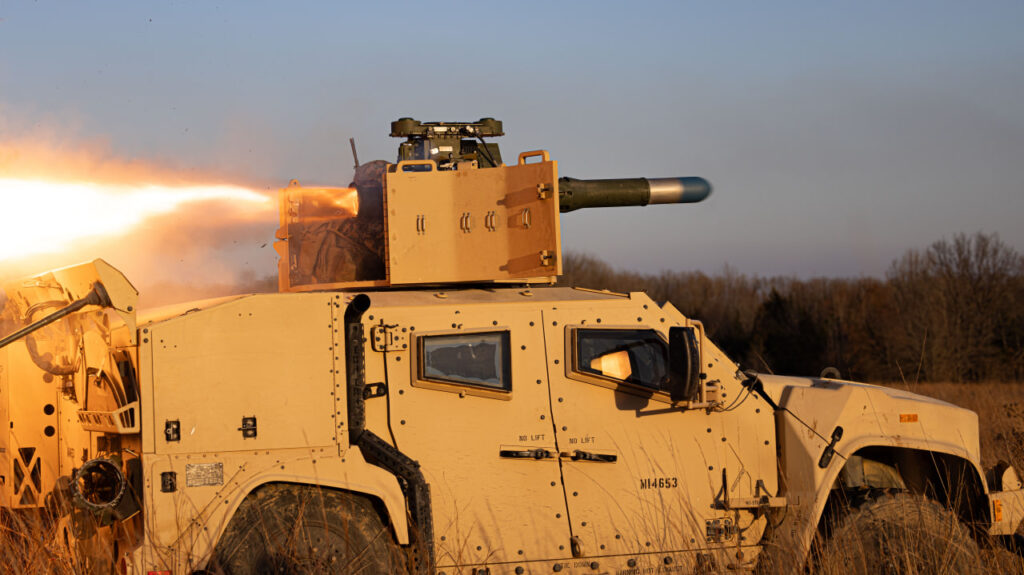
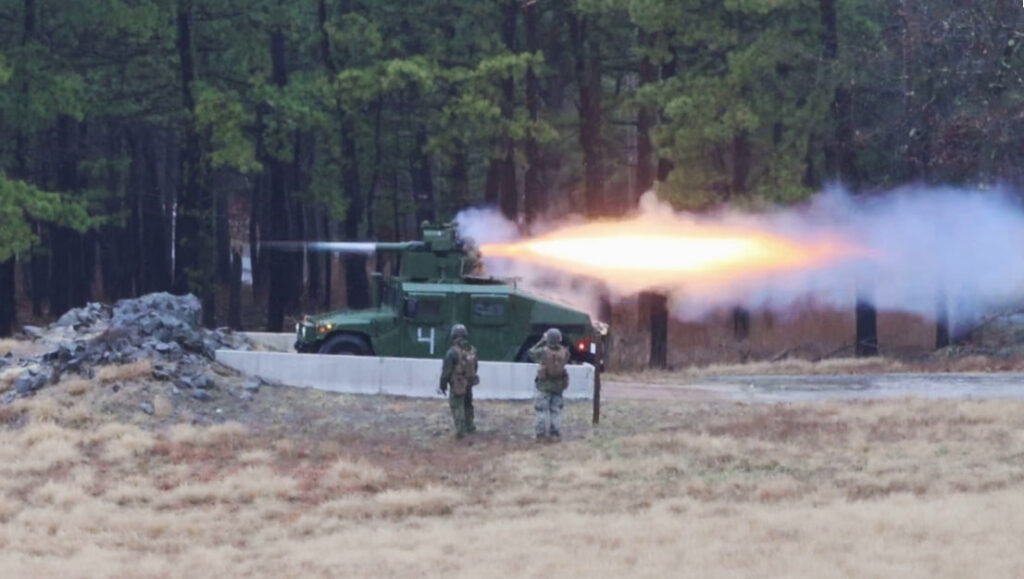
The U.S. Army already has a huge number of platforms integrated with TOW. The system is used on Bradley fighting vehicles, anti-tank Stryker variants, HMMWVs, and other platforms. There are established sights, training pipelines, maintenance procedures, spare parts, storage systems, and production lines.
The Army is therefore not buying just another missile. It is sustaining an existing combat ecosystem.
The Real Secret of TOW’s Longevity Is the Ecosystem Around It
A weapon does not become obsolete simply because something newer exists. It becomes obsolete when the entire system surrounding it is no longer worth maintaining.
That has not happened with TOW.
Replacing it completely would require more than designing a missile with longer range or a more sophisticated seeker. The replacement would have to be integrated into hundreds or thousands of vehicles, supported by new launchers, new training, new logistics, new maintenance procedures, new production lines, and a new spare-parts chain.
That is a completely different scale of expense.
If the existing missile can still destroy most of the targets it is expected to face, then the replacement must offer not just an improvement, but a large enough improvement to justify rebuilding the entire infrastructure around it.
That is a much higher threshold.
Hundreds of Millions of Dollars for a Cold War-Era System
In 2026, that logic received another major confirmation.
Raytheon received an additional $536 million for TOW production and support, bringing the value of the relevant agreement to roughly $750.8 million. The work is expected to continue through the end of August 2027.
And this is not an isolated order. In 2024, Raytheon had already announced U.S. Army TOW contracts worth a combined $676 million.
The production figures are even more revealing.
Raytheon has stated that its production line can manufacture up to 10,000 TOW missiles per year. U.S. Army budget documents suggest an even broader picture: a minimum sustainable production rate of around 3,360 missiles annually, an assessed production capacity of roughly 9,600, and a potential maximum — with expanded supplier participation — of up to 24,000 missiles per year.
That does not mean the United States is actually producing 24,000 TOW missiles every year. That number represents potential surge capacity.
But the scale still matters.
This is not a museum weapon occasionally pulled from storage. It is an active industrial program with the ability to produce thousands of missiles per year.
Why the Army Does Not Want to Shut Down the Production Line
Defense manufacturing has an unpleasant rule: shutting down production is easy, restarting it later is often extremely difficult.
Once a line closes, specialist suppliers disappear, workers move on, rare manufacturing skills are lost, tooling is scrapped, material standards change, and some components simply stop being made. Years later, the drawings may still exist, but rebuilding the actual production network can take enormous time and money.
That is why the minimum sustainable production rate matters. If the Army buys too few missiles, unit cost rises and suppliers begin to leave the program.
With TOW, the U.S. is clearly trying to avoid that problem.
Buying several thousand missiles per year is not only about filling warehouses. It is also a way to keep the industrial base alive and ready to expand if necessary.
In a major war, the ability to increase output rapidly may matter just as much as the missile’s technical specifications.
Drones Were Supposed to Make Systems Like TOW Obsolete
The rise of cheap FPV drones has made the question even more interesting.
A small attack drone can cost a fraction of an anti-tank missile. It can search for a target, approach from unusual angles, and perform some of the missions once reserved for ATGMs.
On paper, the logic seems obvious: if a cheap drone can destroy an armored vehicle, why use an expensive guided missile?
In practice, armies are still buying both.
FPV drones are heavily dependent on communications links, operator skill, radio conditions, and the electronic-warfare environment. Their speed is relatively low, while their warhead size is limited by payload capacity.
A heavy ATGM offers a different set of advantages: high attack speed, a purpose-built warhead, predictable terminal performance, and much less dependence on external communications.
The drone does not eliminate TOW. It simply takes over part of the mission set that once belonged almost exclusively to anti-tank missiles.
This is a common pattern in military history. New weapons rarely erase older ones overnight. More often, they force them into narrower but still valuable roles.
Old Weapons Often Live Much Longer Than We Expect
TOW’s age seems extraordinary only until it is compared with other military systems.
The B-52 first flew in 1952 and remains in service.
The M2 Browning heavy machine gun is even older.
The basic F-15 design dates to the early 1970s, yet modern F-15EX aircraft are still being produced.
The reason is similar in every case.
If a basic architecture can accept new electronics, engines, sights, weapons, and ammunition, an old designation can hide a very modern capability.
TOW belongs in that category.
Its launch architecture proved flexible enough to survive several generations of armored vehicles without abandoning the basic idea of a heavy anti-tank missile.
A Replacement Is Coming — Eventually
The U.S. Army is not planning to modernize TOW forever.
A future replacement is being developed under the Close Combat Missile System – Heavy (CCMS-H) program. Earlier plans pointed to fielding in roughly the 2028–2032 timeframe.
That helps explain the current strategy.
The replacement is not ready yet.
The existing system is mature.
There are many launchers.
The production line is active.
Vehicles are already integrated.
Personnel are trained.
Under those conditions, ending production simply because the system is 56 years old would make little sense.
TOW is still being built not because the U.S. cannot develop something newer, but because the newer system has not yet created a strong enough reason to dismantle an infrastructure that still works.
TOW May Even Outlive the Missile Itself
There is one more interesting twist.
American companies have experimented with using existing TOW launch infrastructure for completely different munitions. One example is the Coyote LE SR unmanned system, which has been demonstrated launching from a TOW tube without requiring a complete redesign of the launcher.
If that concept develops further, the outcome could be rather symbolic.
The TOW missile itself may eventually disappear.
But the infrastructure created for it could continue operating.
The launcher could evolve from a dedicated anti-tank weapon into a more universal platform for guided munitions and unmanned systems.
For a weapon system that first appeared in 1970, that would be a remarkably fitting final chapter.
Why TOW Still Matters
In the end, the story of the 56-year-old TOW is much less paradoxical than it first appears.
A modern TOW is not a Vietnam-era missile that somehow escaped retirement. It is a deeply modernized family of weapons with updated warheads, longer range, and improved guidance.
But the main reason for its longevity is even simpler.
Over half a century, an enormous military ecosystem has grown around TOW: combat vehicles, launchers, sights, training, storage, logistics, maintenance, and an industrial base capable of producing thousands of missiles per year.
The Army already has everything required to use the system effectively.
Replacing it therefore requires a weapon that is not merely somewhat better, but better enough to justify replacing the entire infrastructure at once.
That moment has not arrived yet.
And that is why an anti-tank system that entered service during the Vietnam War is still rolling off the production line in the 21st century.
Not because anti-tank warfare stopped evolving in 1970.
But because truly successful military systems sometimes outlive not only their designers, but several generations of weapons that were supposed to replace them.






