
The U.S. Is Building a New Missile to Defeat Shaheds. But the Real Problem Remains Unsolved

The Pentagon’s next-generation interceptor promises impressive performance, yet the economics of shooting down low-cost drones remain one of modern air defense’s biggest challenges.
Modern warfare is changing not only weapons, but also the economics behind them. Over the past several years, loitering munitions costing tens of thousands of dollars have forced some of the world’s most advanced militaries to expend interceptors worth hundreds of thousands—or even millions—of dollars. That imbalance has become one of the defining problems of contemporary air defense.
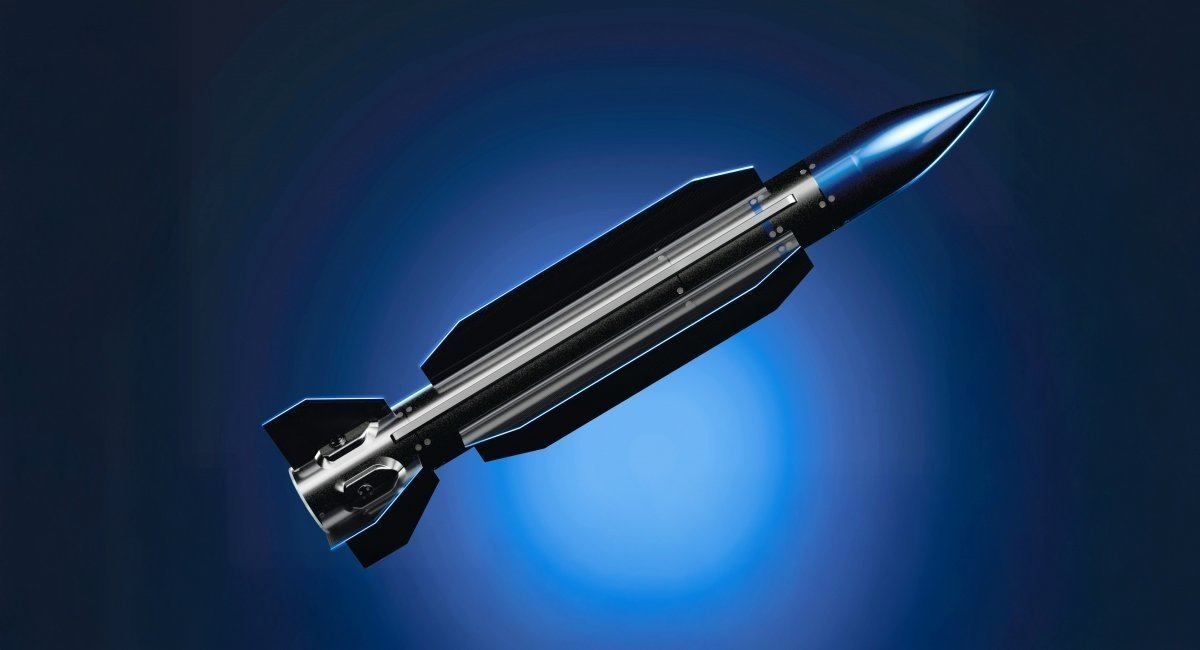
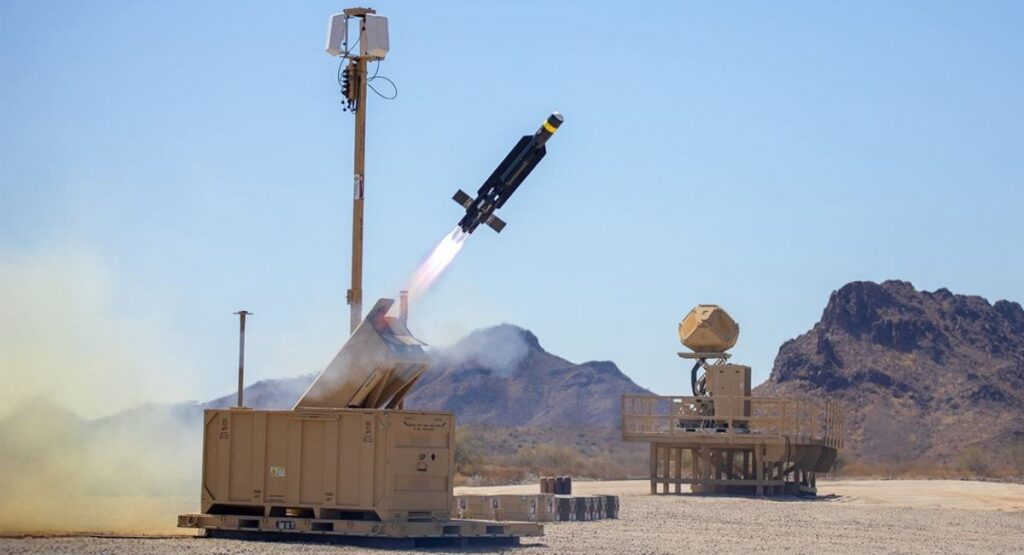
The U.S. Army now hopes to address that challenge. It has launched development of the Next Generation Counter-Uncrewed Aerial System Missile (NGCM), a new interceptor designed to defeat Group 2 and Group 3 unmanned aircraft, including the Shahed/Geran family of loitering munitions.
Yet even before the missile enters production, one question is already emerging: is the Pentagon about to repeat the very mistake it is trying to solve?
A New Missile with Impressive Capabilities
According to the Army’s published requirements, the NGCM is expected to intercept aerial targets at ranges exceeding 16 kilometers, with a long-term objective of more than 25 kilometers. The missile should engage targets flying at altitudes between 6 and 8 kilometers and employ an active radar seeker for terminal guidance.
Those specifications would allow the interceptor to engage not only small reconnaissance drones but also larger unmanned aircraft weighing up to 600 kilograms, including jet-powered systems such as the Shahed-238 and potentially even certain types of cruise missiles.
On paper, the new missile represents a significant leap over many short-range counter-drone systems currently in service.
The Numbers Raise an Important Question
The most interesting aspect of the program is not its performance—but its price.
The U.S. Army intends to procure approximately 5,000 NGCM missiles, while setting a target cost of less than $150,000 per interceptor.
Even if manufacturers succeed in reducing the unit price closer to $100,000, the fundamental question remains unchanged.
Does it make economic sense to destroy drones that may cost between $20,000 and $50,000—or even around $80,000 for more advanced export variants—with an interceptor that costs significantly more?
That imbalance has become one of the central debates surrounding modern air defense.
The Biggest Challenge Is No Longer Range—It’s Cost
This is perhaps the most important lesson emerging from recent conflicts.
Large-scale drone attacks rely not on the sophistication of individual aircraft but on sheer numbers. If defenders are forced to launch expensive interceptors against every relatively inexpensive drone, they may eventually lose not the battle in the air—but the economic war behind it.
This dilemma has already been demonstrated by the use of Patriot interceptors, each costing several million dollars, against low-cost one-way attack drones. While such engagements may be tactically successful, they are extremely difficult to sustain financially over a prolonged conflict.
The economics of air defense are rapidly becoming just as important as its technical performance.
Why the Pentagon Is Still Pursuing This Approach
At first glance, the Army’s decision appears contradictory.
In reality, the NGCM is not being designed solely as a Shahed interceptor.
Thanks to its projected range of more than 25 kilometers and its active radar seeker, the missile is expected to engage a much broader spectrum of aerial threats, including large unmanned aircraft and certain classes of cruise missiles.
From the Pentagon’s perspective, this makes the NGCM a versatile short-range air-defense interceptor rather than simply another counter-drone missile.
Competition is also part of the strategy. Last year, AeroVironment received funding to continue development of its Freedom Eagle-1 concept, but the Army is now inviting additional industry proposals in an effort to increase competition, accelerate innovation, and ultimately reduce procurement costs.
What Could Actually Change the Game

Experience from Ukraine and other recent conflicts suggests that there is no single perfect solution for defeating inexpensive drones.
Instead, many militaries are moving toward layered air defense, where different threats are countered by different weapons.
Electronic warfare systems disrupt navigation links.
Automatic cannons destroy drones at short range.
Interceptor drones pursue low-cost aerial targets.
Laser weapons promise extremely low engagement costs.
Missiles remain available for the most demanding targets, such as cruise missiles, ballistic missiles, and advanced combat aircraft.
Within that architecture, the NGCM would become one element of a much larger defensive network rather than the universal answer to every drone threat.
Conclusion
The NGCM program demonstrates that the U.S. Army fully understands the changing character of modern warfare.
However, the success of the new missile will ultimately depend on more than its range, guidance system, or probability of kill.
The decisive factor will be the cost of every interception.
Modern air defense is increasingly becoming an economic competition as much as a technological one. The winner will not necessarily be the military with the most advanced missile, but the one capable of defeating hundreds of incoming drones without exhausting its defense budget in the process.






