
It Looks Like a Cruise Missile, But It Isn’t: BAE Systems and Lockheed Martin Unveil the Secretive Blizzard Drone

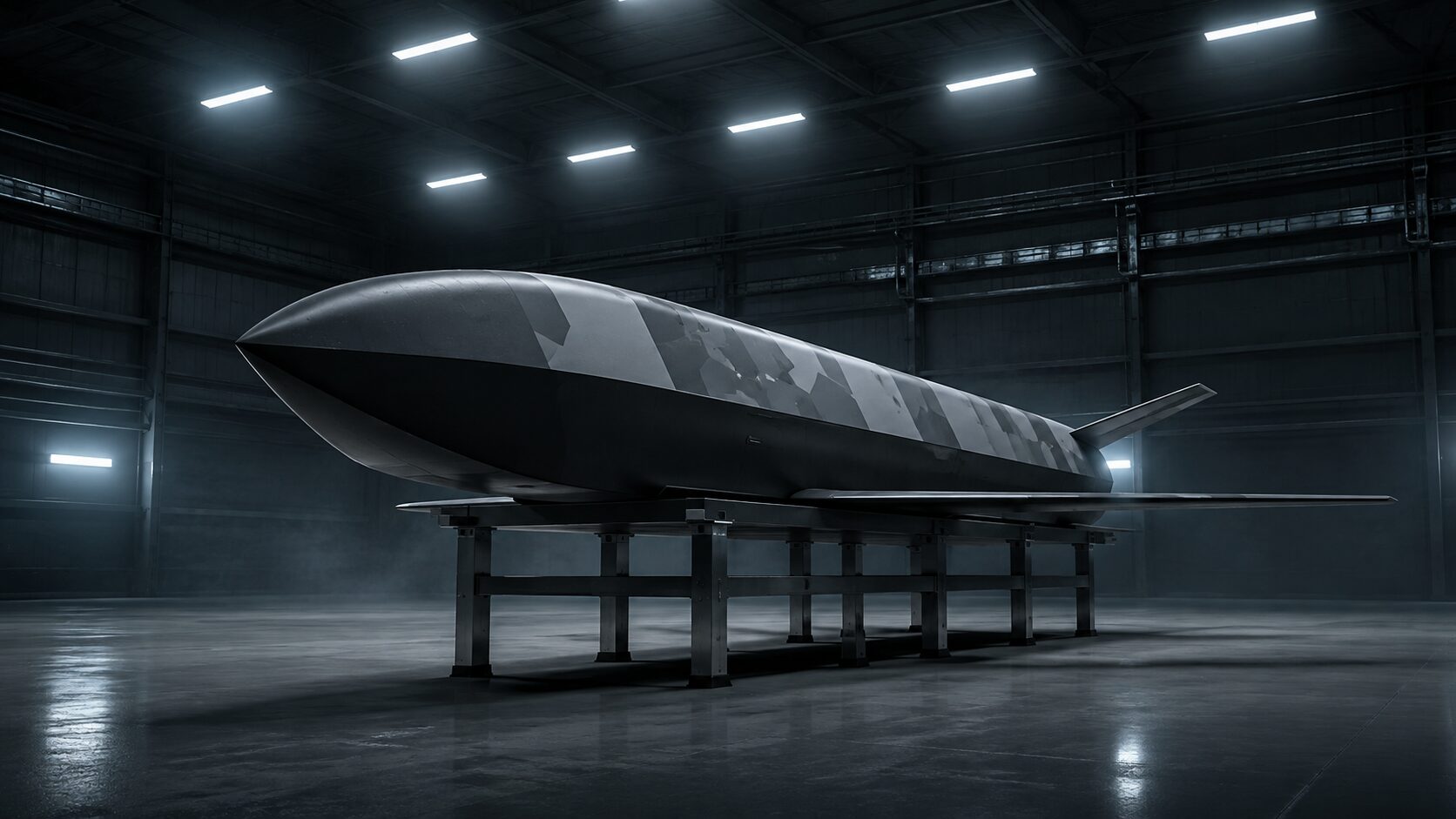
At the Farnborough International Airshow 2026, two of the Western defense industry’s most secretive research divisions—BAE Systems’ FalconWorks and Lockheed Martin’s Skunk Works—publicly revealed their latest joint project, Blizzard. At first glance, the aircraft looks almost identical to a compact cruise missile, yet its developers describe it as something entirely different: a modular multi-mission unmanned air system.
Judging by the information released so far, Blizzard could represent an entirely new class of affordable unmanned systems designed not for a single mission, but for a wide range of battlefield roles.
Why Blizzard Looks Like a Missile
The first thing that stands out is its aerodynamic design.
The aircraft features a cylindrical fuselage, folding wings, and a conventional tail assembly, making it almost indistinguishable from a modern cruise missile.
Its mission, however, is completely different.
Unlike a cruise missile, which is designed to deliver a warhead to a target, Blizzard serves as a reusable modular platform capable of carrying different payloads depending on operational requirements.
One Airframe, Multiple Missions
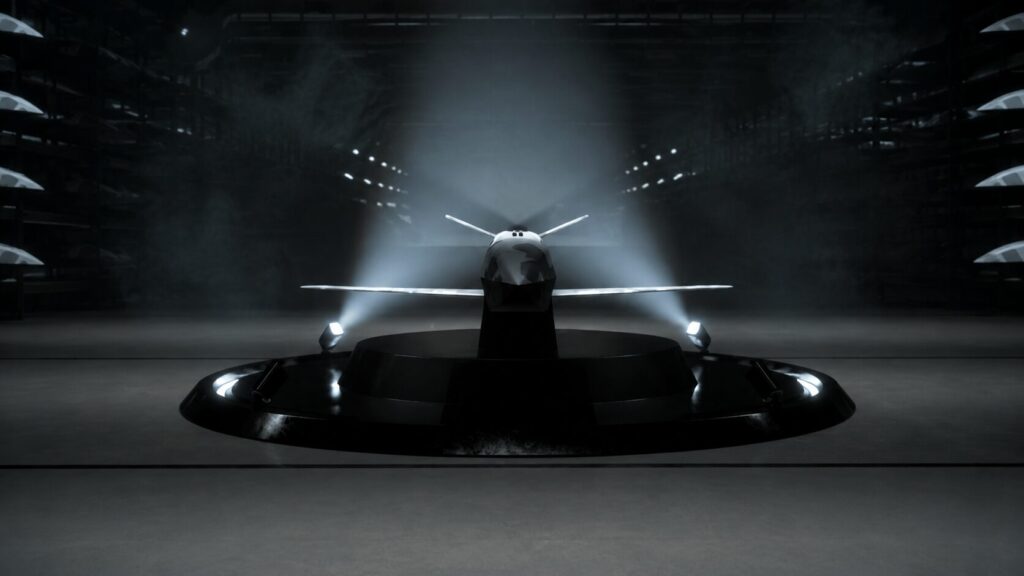
The key feature of Blizzard is its modular architecture.
According to BAE Systems, the same aircraft can be rapidly configured for entirely different combat scenarios simply by changing its payload.
The announced mission set includes:
- Electronic warfare
- Precision strike missions
- Intelligence, surveillance, and reconnaissance (ISR)
- Decoy operations
- Cooperative drone swarms
- Manned-unmanned teaming
Instead of developing several specialized aircraft, operators could potentially use a single platform for multiple missions, significantly reducing procurement and maintenance costs.
Launch It from Almost Anywhere
Another unusual aspect of Blizzard is its flexibility in deployment.
According to BAE Systems, the drone can be launched from:
- Mobile ground launchers
- Combat aircraft
- Cargo aircraft using palletized launch systems
- Naval platforms
This flexibility allows the same system to support army, navy, and air force operations.
The company’s promotional slogan summarizes the concept perfectly:
“Different launch options. One target.”
Built for GPS-Denied Battlefields

Modern conflicts have demonstrated how vulnerable many precision-guided weapons become when satellite navigation is disrupted.
Blizzard has been specifically designed to operate in GPS-denied environments, where electronic warfare systems attempt to jam or spoof satellite navigation signals.
The aircraft is also built around a Weapon Open System Architecture (WOSA), allowing engineers to integrate new sensors, software, mission systems, or payloads without redesigning the entire platform.
This open architecture has become an increasingly important trend in Western defense programs, enabling much faster upgrades throughout a weapon’s service life.
Why This Kind of Drone Matters
Modern combat aircraft have become incredibly capable—but also extraordinarily expensive.
Deploying a fifth-generation fighter for every dangerous mission is no longer economically practical.
That is why many air forces are investing in relatively inexpensive autonomous systems capable of entering contested airspace first.
Blizzard could perform missions such as:
- Saturating enemy air defenses
- Conducting electronic attacks
- Gathering reconnaissance data
- Acting as a decoy
- Delivering the initial strike against critical targets
Only after these drones weaken enemy defenses would high-value crewed aircraft move into the battlespace.
This appears to be the operational philosophy behind Blizzard.
A Rare Partnership Between Two Legendary Design Teams
The aircraft itself is impressive—but the collaboration behind it may be even more significant.
Skunk Works has developed some of the most famous aircraft in aviation history, including the U-2, SR-71 Blackbird, F-117 Nighthawk, and numerous classified programs that remain secret today.
FalconWorks serves a similar role within BAE Systems, focusing on experimental aerospace technologies and rapid prototyping of future combat systems.
Joint projects between these two organizations are extremely uncommon, making Blizzard one of the most closely watched developments unveiled this year.
What We Still Don’t Know
Many of Blizzard’s technical specifications remain classified.
Neither company has disclosed:
- Maximum range
- Flight speed
- Propulsion system
- Payload capacity
- Unit cost
What is known is that the aircraft is still under development, with more advanced testing expected over the coming years.
Its modular architecture should allow new capabilities to be introduced continuously without designing an entirely new air vehicle each time.
Conclusion
Although Blizzard resembles a cruise missile, it represents a much broader concept.
Rather than building another disposable precision weapon, BAE Systems and Lockheed Martin appear to be creating a flexible unmanned platform capable of performing electronic warfare, reconnaissance, strike missions, and decoy operations using the same basic airframe.
If the program reaches full-scale production, Blizzard could become one of the first representatives of a new generation of affordable modular combat drones designed to work alongside crewed aircraft, increasing combat capability while reducing operational costs and risk to pilots.






