

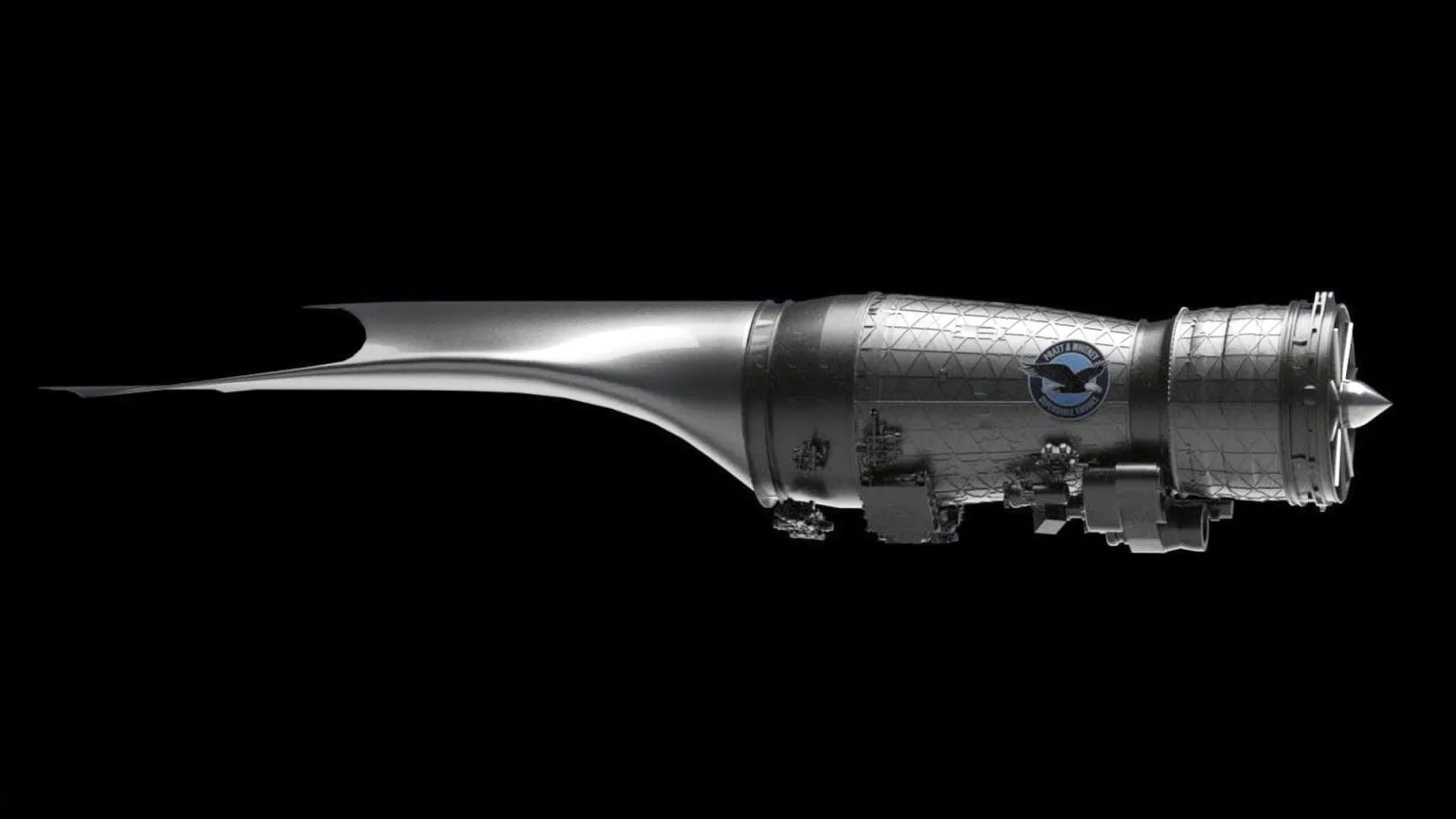
The most ambitious American sixth-generation fighter has not even made its first flight, yet it is already facing an unexpected challenge. Surprisingly, the issue has nothing to do with stealth technology, artificial intelligence, or the enormous cost of the program.
Instead, the biggest uncertainty lies beneath the fuselage.
The next-generation engine that was meant to unlock the full potential of the F-47 may not be ready when the aircraft itself is. As a result, America’s newest fighter could begin its career powered by an interim propulsion system based on older technology—an unusual situation for a program worth tens of billions of dollars.
The Aircraft May Be Ready Before Its Engine

Development of the F-47 is moving forward rapidly.
Boeing has already begun building the first prototype, while the maiden flight remains scheduled for 2028. However, the NGAP (Next Generation Adaptive Propulsion) engine program is progressing at a noticeably slower pace. According to recent U.S. Air Force statements, a fully flight-qualified adaptive engine may not be available until around 2030.
That creates an unusual scenario: the aircraft itself could take to the skies roughly two years before the engine it was originally designed to use.
Why the NGAP Engine Is So Important
For fifth-generation fighters, the engine was simply a powerful propulsion system.
For sixth-generation aircraft, it becomes one of the defining technologies.
The NGAP program is expected to provide several major advantages:
- significantly greater combat range;
- improved fuel efficiency;
- higher thrust;
- adaptive operating modes optimized for different phases of flight;
- increased cooling capacity for advanced avionics, sensors, and future directed-energy weapons.
In many ways, the new engine is what should allow the F-47 to operate across the vast distances of the Pacific without relying as heavily on aerial refueling.
What Happens If the Engine Isn’t Ready?
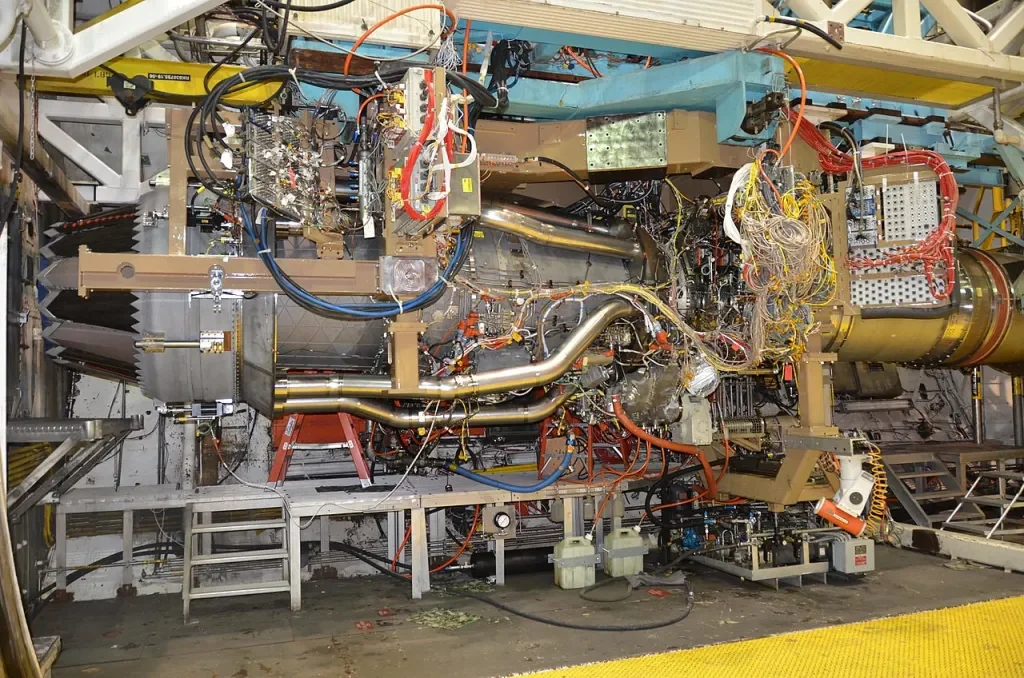
This is where things become particularly interesting.
If the NGAP program slips further behind schedule, Boeing will almost certainly need a temporary solution.
No official decision has been announced, but analysts believe the most likely option would be a heavily upgraded version of an existing turbofan engine. Such a powerplant would allow flight testing to begin, although it would not deliver the performance the aircraft was originally designed to achieve.
In other words, the first F-47 could resemble an exotic supercar temporarily fitted with a less powerful engine simply so it can leave the factory and begin testing.
Aviation History Has Seen This Before
This would hardly be the first time an advanced combat aircraft entered development before its ideal engine was ready.
Several famous fighters experienced similar problems:
- the F-14 Tomcat, which initially suffered from the troublesome Pratt & Whitney TF30 engines;
- the F-35 Lightning II, whose F135 engine required years of refinement alongside the aircraft;
- the Soviet MiG-29, where engine development also continued well after early prototypes had flown.
Modern military jet engines are often just as difficult—if not more difficult—to develop than the aircraft themselves.
After all, the engine determines not only speed, but also range, fuel efficiency, thermal signature, electrical power generation, and the overall capabilities of the platform.
Why the U.S. Air Force Doesn’t Want to Wait
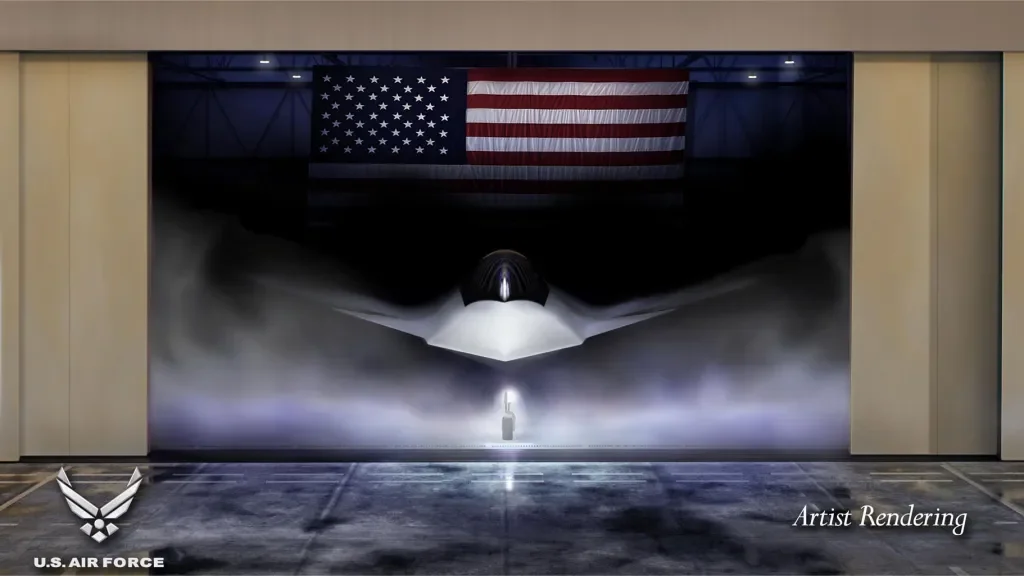
At first glance, delaying the F-47 until the NGAP engine is ready might seem like the logical decision.
However, another factor is driving the schedule.
The Pentagon has repeatedly pointed to China’s rapid progress in military aviation as one of the reasons for accelerating the Next Generation Air Dominance (NGAD) program. Images and reports of China’s own next-generation combat aircraft have increased pressure on the U.S. Air Force to move the F-47 into flight testing as quickly as possible—even if that means initially flying with an interim engine.
What We Know About the F-47
Most of the aircraft’s characteristics remain classified.
However, several details have already been confirmed.
| Generation | Sixth |
| Manufacturer | Boeing |
| Program | NGAD |
| First flight | Planned for 2028 |
| Entry into service | Early 2030s |
| Combat radius | More than 1,000 nautical miles (1,850+ km) |
| Maximum speed | Above Mach 2 |
| Primary mission | Air superiority |
| Loyal wingman integration | Yes, through the CCA ecosystem |
| Planned engine | NGAP adaptive engine |
The Fighter Exists. The Engine Doesn’t—Yet
The F-47 perfectly illustrates how modern combat aircraft programs have evolved.
In previous generations, building the airframe was often the greatest challenge. Today, however, many of the most critical technologies—including adaptive engines, artificial intelligence, software, sensors, networking systems, and advanced materials—are all progressing at different speeds.
That is why it is entirely possible that the world’s newest fighter will make its first flight powered by an interim engine rather than the revolutionary propulsion system it was designed around. It would not necessarily indicate a failure of the program. Instead, it would highlight the reality of modern aerospace engineering: sometimes manufacturers must get the aircraft flying first—and finish building the ideal machine later.






