
The New Typhoon Takes to the Skies: Eurofighter Tranche 4 Gains the Radar That Could Change the Balance in the Air

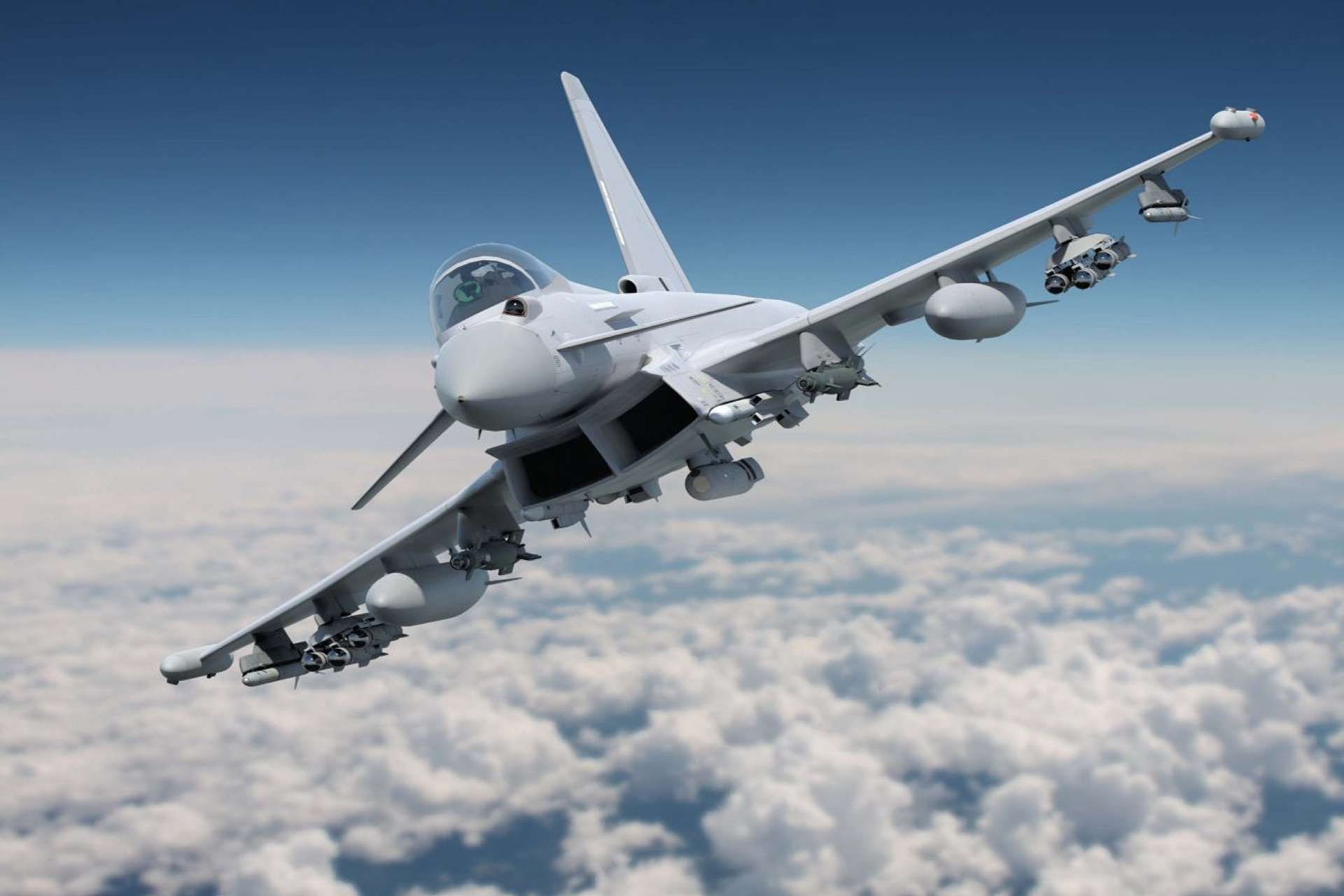
Europe’s aerospace industry has taken an important step in the development of one of the continent’s best-known combat aircraft. Airbus Defence and Space has completed the first flight of the new Eurofighter Typhoon Tranche 4, the most advanced production version of the Typhoon family and the centerpiece of Germany’s Quadriga procurement program.
Externally, the aircraft remains very similar to earlier Eurofighter variants. Internally, however, it represents a major leap forward. A new radar, upgraded avionics, a modernized cockpit, and improved weapons integration are intended to keep the fighter relevant well into the 2030s.
Six Years from Contract to First Flight
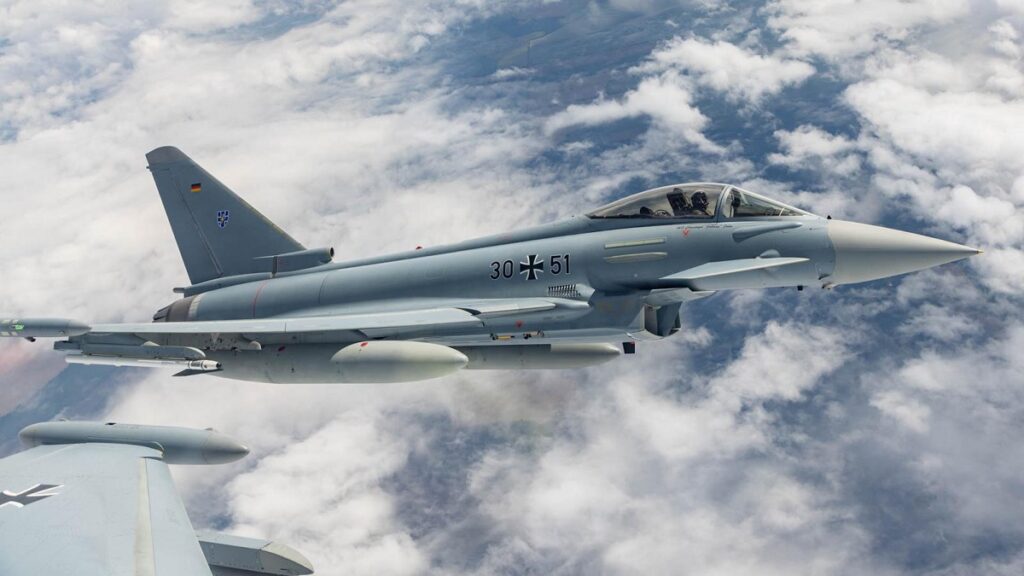
The Quadriga program began in 2020, when Germany ordered 38 new Eurofighter Typhoons to replace the oldest Tranche 1 aircraft in Luftwaffe service. The order was later expanded by another 20 fighters, bringing the total German requirement to 58 aircraft.
The first production Tranche 4 completed its maiden flight in the summer of 2026. Deliveries to the German Air Force are expected to begin before the end of the year, while Airbus plans to complete the current order by 2030.
Once full-rate production is reached, the company expects to manufacture around 14 aircraft per year, a significant output for Europe’s modern combat-aircraft industry.
The Main Upgrade Is the AESA Radar
The most important feature of the new version is the ECRS Mk1 active electronically scanned array radar.
Earlier Eurofighter variants relied on mechanically scanned radar technology. The new AESA system offers a number of major advantages:
- greater target-detection range;
- the ability to track more targets simultaneously;
- improved targeting accuracy;
- greater resistance to electronic countermeasures;
- better performance against low-observable aircraft and cruise missiles.
The upgrade gives the Eurofighter many of the capabilities now considered essential for advanced “4.5-generation” fighters.
More Than Just a New Radar
The modernization program goes far beyond the radar.
The pilot receives an updated cockpit with large-format displays, improved information presentation, and new mission-system software. The aircraft’s electronic architecture has also been revised, allowing future weapons and sensors to be integrated more easily.
The final Tranche 4 configuration will differ between operators.
Germany and Spain have selected the ECRS Mk1, while the United Kingdom is pursuing the more ambitious ECRS Mk2. The British radar is expected to combine advanced air-to-air and air-to-ground functions with expanded electronic-warfare capabilities.
This means that “Tranche 4” should not be viewed as one completely standardized aircraft. Instead, it is a modernized production baseline that can be adapted to national requirements.
How Dangerous Will the New Typhoon Be?
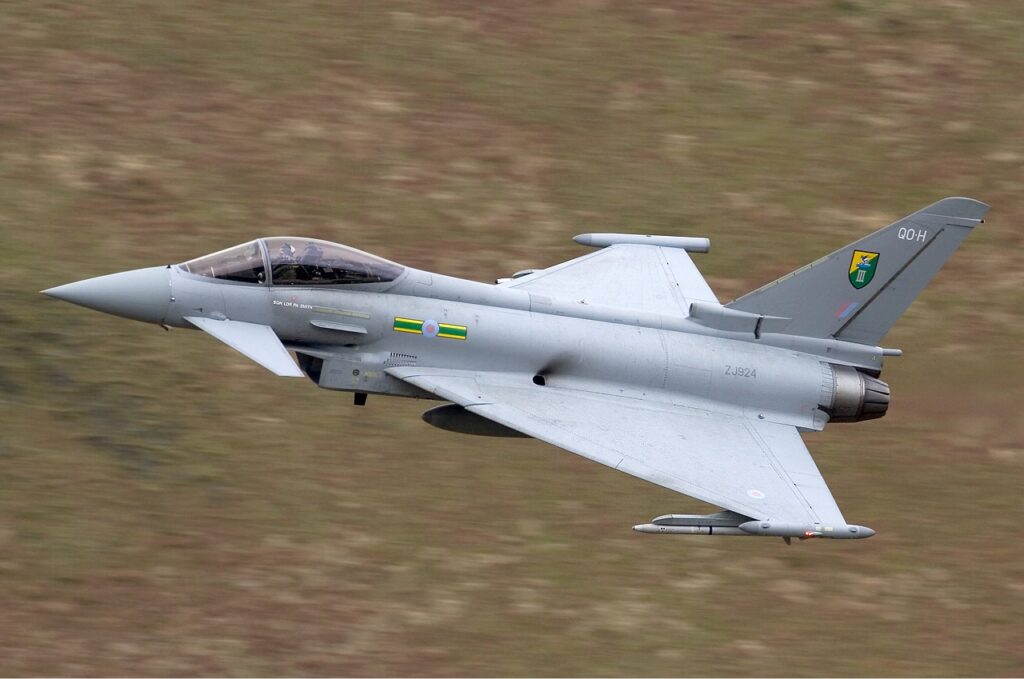
The introduction of an AESA radar significantly improves the Eurofighter’s combat potential.
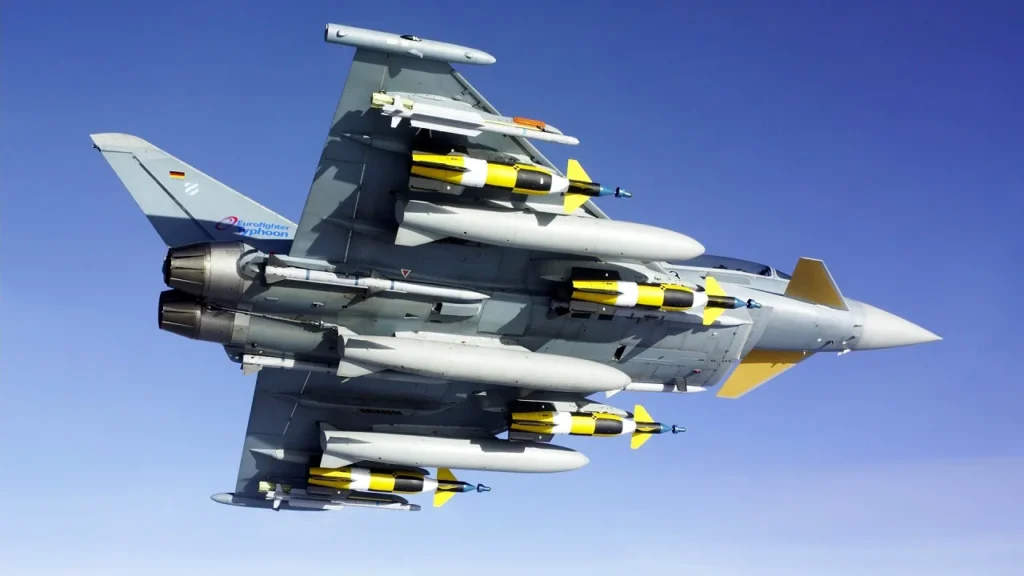
Combined with the long-range Meteor air-to-air missile, the Typhoon becomes one of Europe’s most capable fighters for beyond-visual-range combat. Meteor’s ramjet propulsion allows it to retain high speed and energy during the final stage of flight, making it particularly dangerous against maneuvering targets at long distance.
This is why the new Tranche 4 is increasingly described as a serious rival to modern Russian aircraft such as the Su-35, and even as a potential counter to the Su-57 in certain operational scenarios.
Such comparisons should still be treated with caution. Real combat effectiveness depends not only on the aircraft itself, but also on pilot training, airborne early warning support, networking, electronic warfare, weapons load, and the tactical situation.
A fighter does not operate in isolation. Its real strength comes from the wider combat system around it.
Tranche 4 Is Not the Final Stage
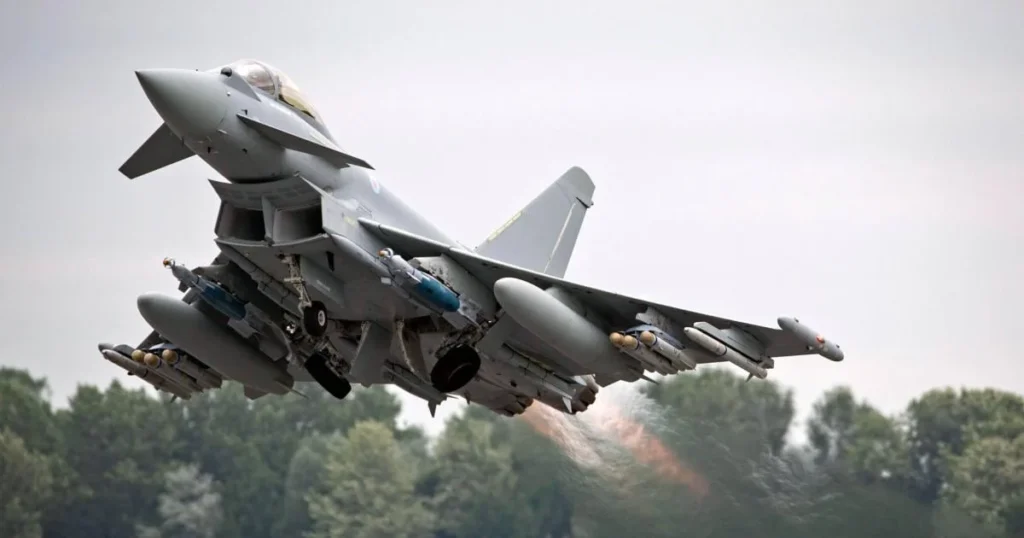
The development of the Eurofighter is not ending with Tranche 4.
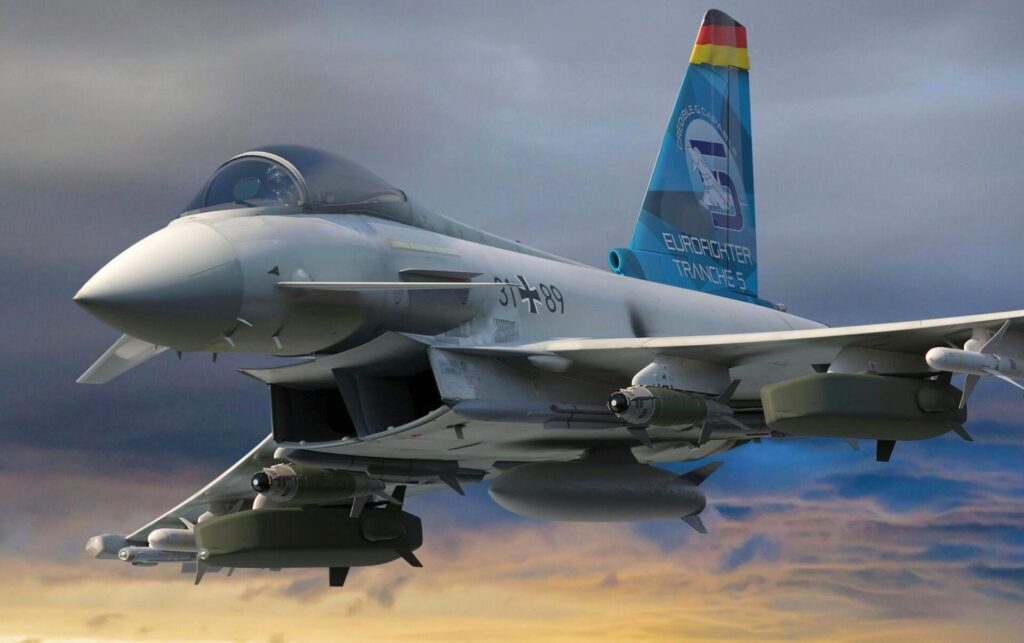
Germany has also ordered 20 Tranche 5 aircraft, which are expected to enter service during the next decade. These fighters should receive further upgrades, including improved avionics, new weapons, and expanded cooperation with unmanned systems.
Future Eurofighters may operate as part of a network that includes drones, airborne command platforms, ground-based sensors, and other combat aircraft. In that role, the Typhoon would no longer be merely an individual fighter, but one element of a much larger digital combat system.
Europe’s Fighter Has Found a Second Life
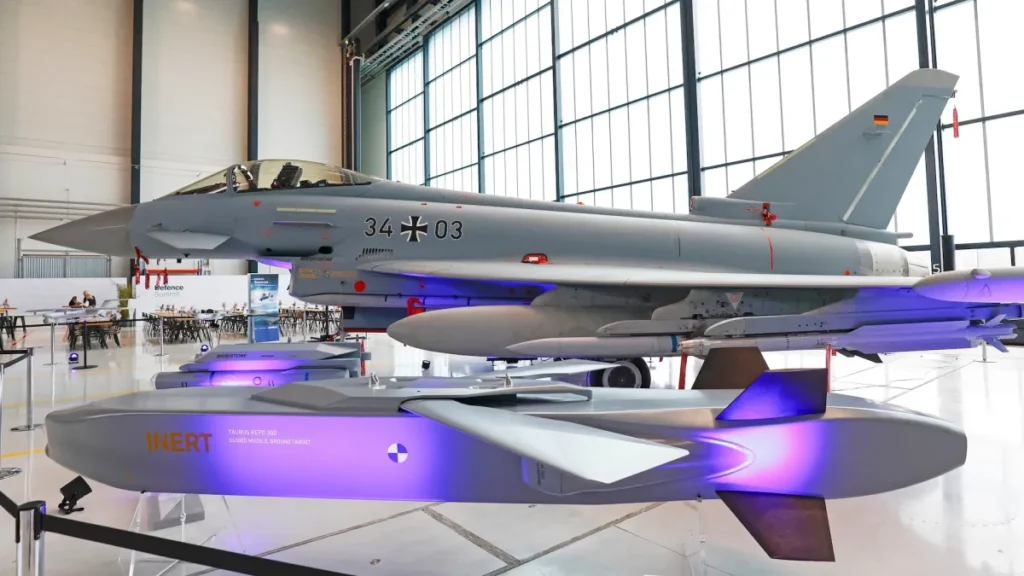
Only a few years ago, some observers believed the Eurofighter would gradually be pushed aside by fifth-generation aircraft.
Tranche 4 suggests otherwise.
Instead of replacing the platform immediately, European manufacturers are continuing to modernize a proven airframe. The combination of a new radar, updated electronics, advanced missiles, and improved networking allows the Typhoon to remain highly relevant even as newer aircraft enter service.
Against the background of delays affecting several future European fighter programs, the modernized Eurofighter is becoming one of the continent’s most important combat aircraft.
It may not be stealthy in the same way as the F-35 or Su-57, but with modern sensors, Meteor missiles, powerful engines, and advanced electronic systems, the Tranche 4 remains a formidable air-superiority platform—and one that Europe can already build today.






