Why Were Chinese Soldiers Wearing Wehrmacht Helmets? The Untold Story That Rewrites World War II History

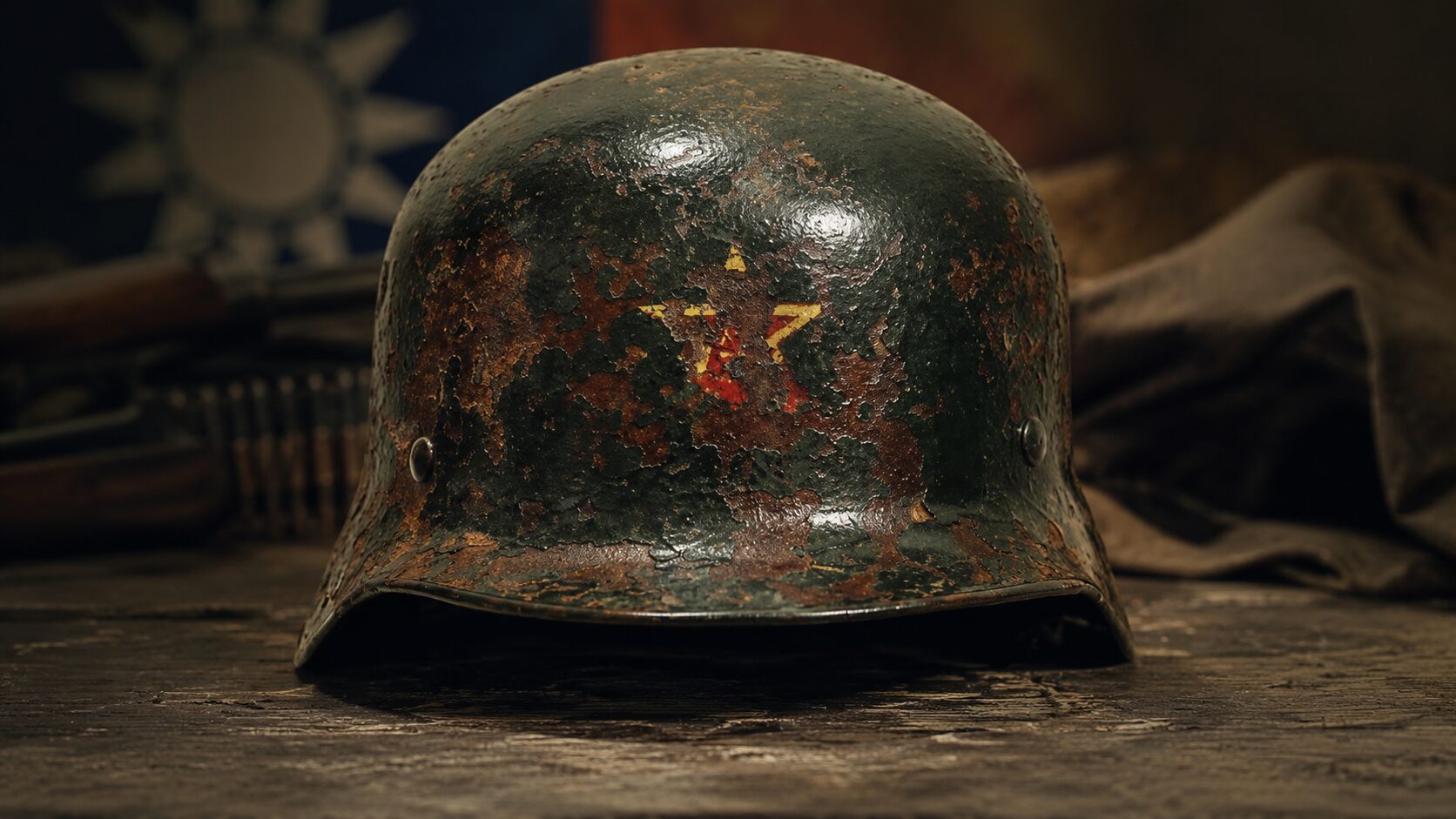
Old photographs of the Chinese Army often leave even history enthusiasts scratching their heads. Images of soldiers defending Shanghai or Nanjing show men in unmistakably Chinese uniforms—but on their heads are the iconic German Stahlhelm M35 helmets, nearly identical to those later worn by Wehrmacht troops across Europe.
At first glance, it seems impossible.
After all, Nazi Germany became one of Japan’s closest allies, while China fought desperately against the Japanese invasion.
So why were Chinese soldiers wearing German helmets?
The answer lies in one of the least-known chapters of pre-World War II history—a time when Berlin had not yet chosen its allies and was actively helping Chiang Kai-shek build the most modern army in Asia.
Before Joining Japan, Germany Chose China
During the mid-1930s, Germany and China were far closer than most people realize today.
After Adolf Hitler came to power, Germany rapidly expanded its military industry. That required enormous quantities of strategic raw materials, especially tungsten, which was essential for producing hardened steel and armor-piercing ammunition.
China possessed some of the world’s largest tungsten reserves.
But the relationship extended well beyond economics.
Chinese leader Chiang Kai-shek understood that his military was hopelessly outdated compared to Europe’s modern armies. Millions of troops lacked proper training, infantry units used rifles from dozens of different manufacturers, and military logistics were chaotic.
To modernize his armed forces, Chiang turned to Germany.
Among his most influential advisers was General Hans von Seeckt, the former commander of Germany’s Reichswehr. Instead of maintaining an enormous but ineffective army, von Seeckt proposed creating a smaller force of highly trained, European-style divisions equipped with modern weapons and organized under a unified command.
Germany Helped Build China’s Modern Army
German military advisers became deeply involved in China’s military reforms.
They helped redesign officer training, reorganize command structures, modernize military academies, and develop entirely new operational doctrines.
Chinese officers traveled to Germany for advanced instruction, while German instructors trained elite Chinese formations inside China.
Alongside the advisers came modern military equipment.
China imported:
- Mauser rifles
- German machine guns
- Krupp artillery
- Military radios
- Engineering equipment
- Field gear
- Modern steel combat helmets
In many ways, Germany was attempting to create an Asian army modeled after its own.
These Were Genuine German Helmets
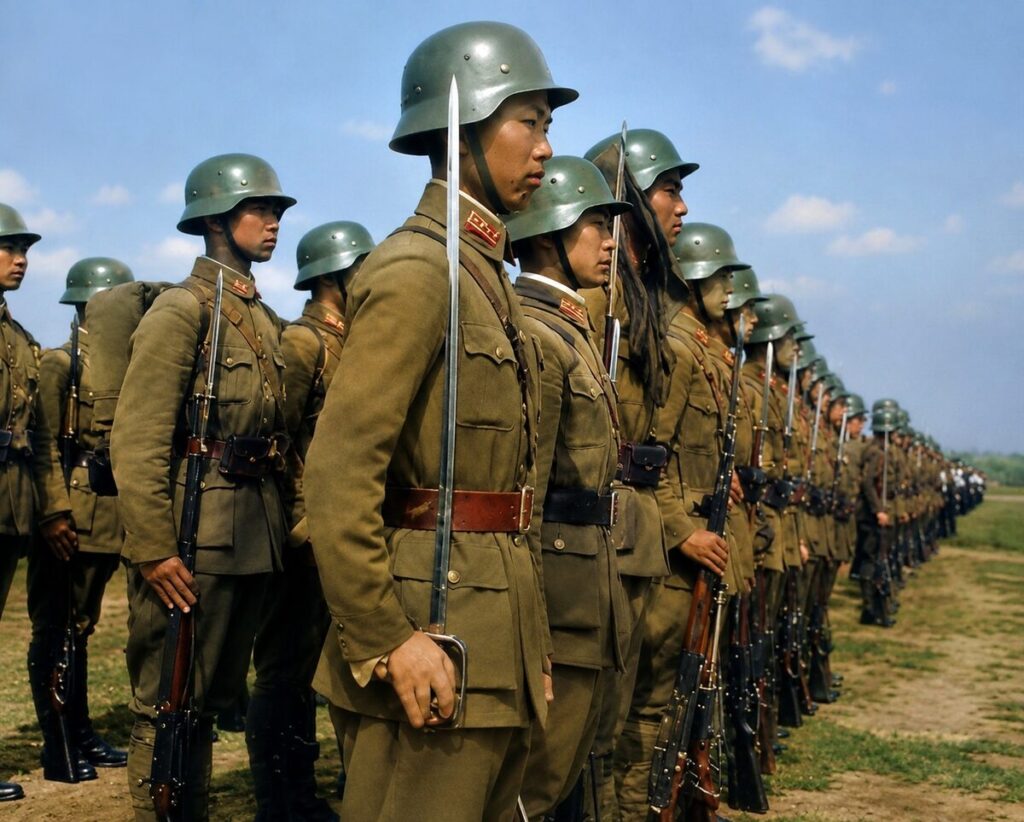
The most surprising part of the story is that these were not copies.
Chinese soldiers were wearing authentic German Stahlhelm M35 helmets.
Introduced by Germany in 1935, the M35 represented a major improvement over the famous First World War Stahlhelm. Engineers reduced its weight, improved ventilation, refined the liner system, and produced one of the finest combat helmets of its era.
Almost immediately after production began, China placed a massive order.
Historians continue to debate the exact number delivered, with estimates ranging from 220,000 to more than 300,000 helmets.
One remarkable irony emerges from these numbers.
When the first shipments arrived in China, the German Army itself had not yet fully completed its own transition to the M35.
China therefore became one of the very first nations outside Germany to field the new helmet on a massive scale.
Only One Small Detail Was Different
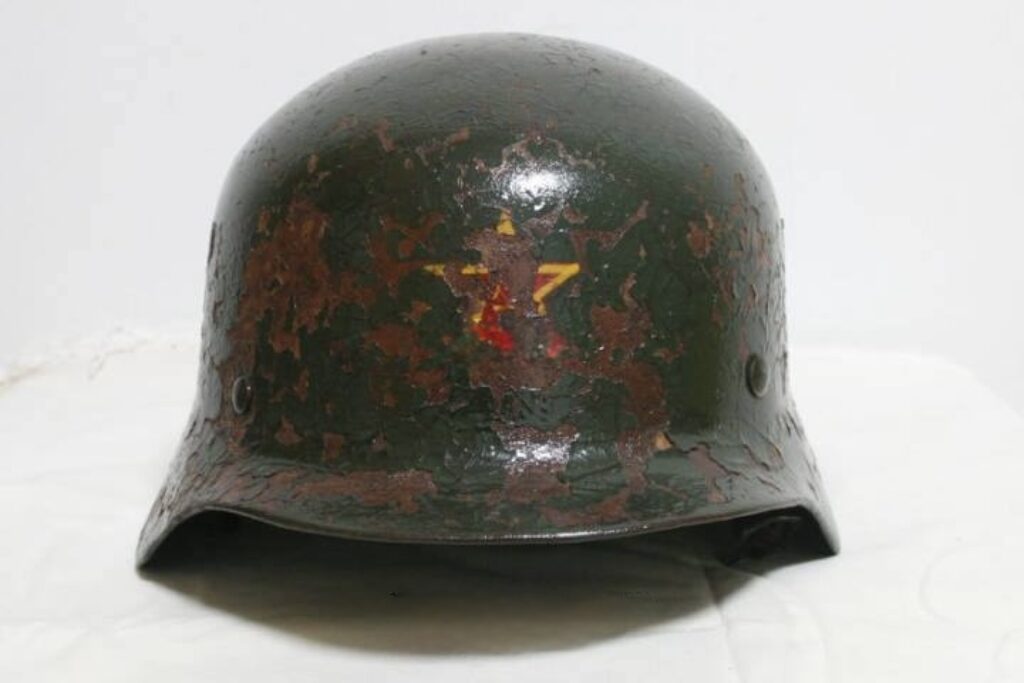
Structurally, the helmets were virtually identical to those worn by German soldiers.
The only obvious difference was the insignia.
Instead of the German eagle or national shield, Chinese helmets displayed the emblem of the Republic of China and the Kuomintang—the famous White Sun on a Blue Sky.
Cover that insignia with your hand, and distinguishing a Chinese soldier from an early Wehrmacht infantryman becomes surprisingly difficult.
Who Actually Wore These Helmets?
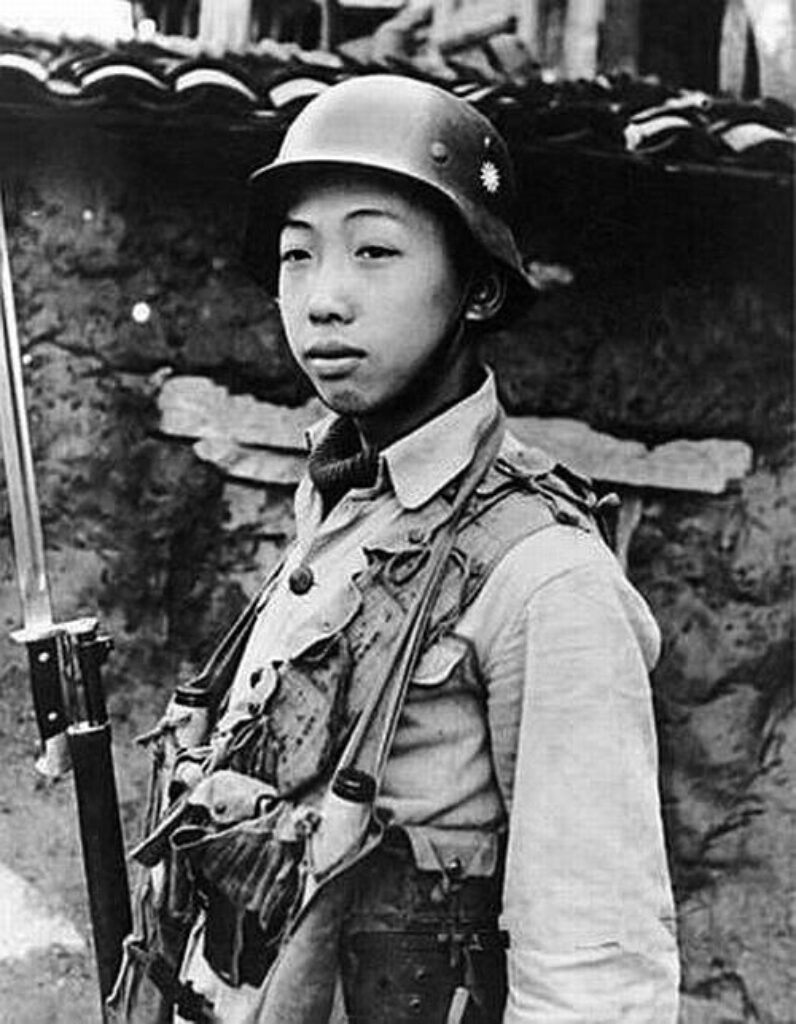
Contrary to popular belief, not every Chinese soldier received German equipment.
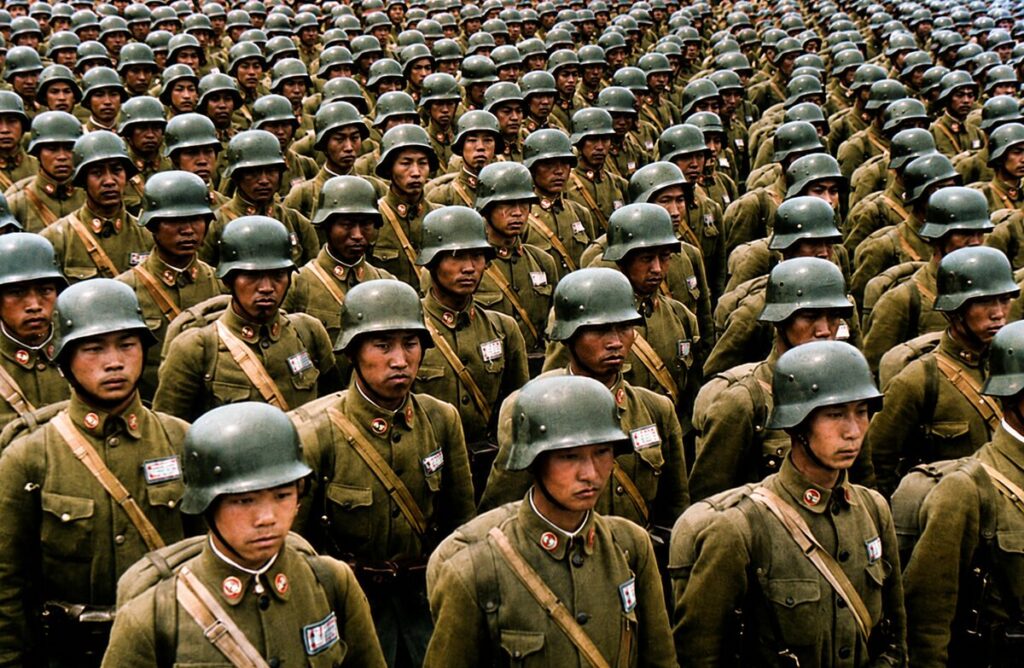
The Stahlhelm M35 was primarily issued to elite formations trained under German supervision.
Among the best-known units were:
- The 87th Division
- The 88th Division
- The Training Division
- Several elite Central Army formations
These divisions represented the best-equipped troops available to Chiang Kai-shek.
They wore standardized uniforms, followed modern military doctrine, and possessed significantly better weapons than the average Chinese infantry unit.
During the Battle of Shanghai in 1937, these elite divisions formed the backbone of China’s defense against Japan.
Many of the famous wartime photographs taken by foreign correspondents showing Chinese soldiers in German helmets were captured during this brutal campaign.
Why Did Germany Suddenly Abandon China?
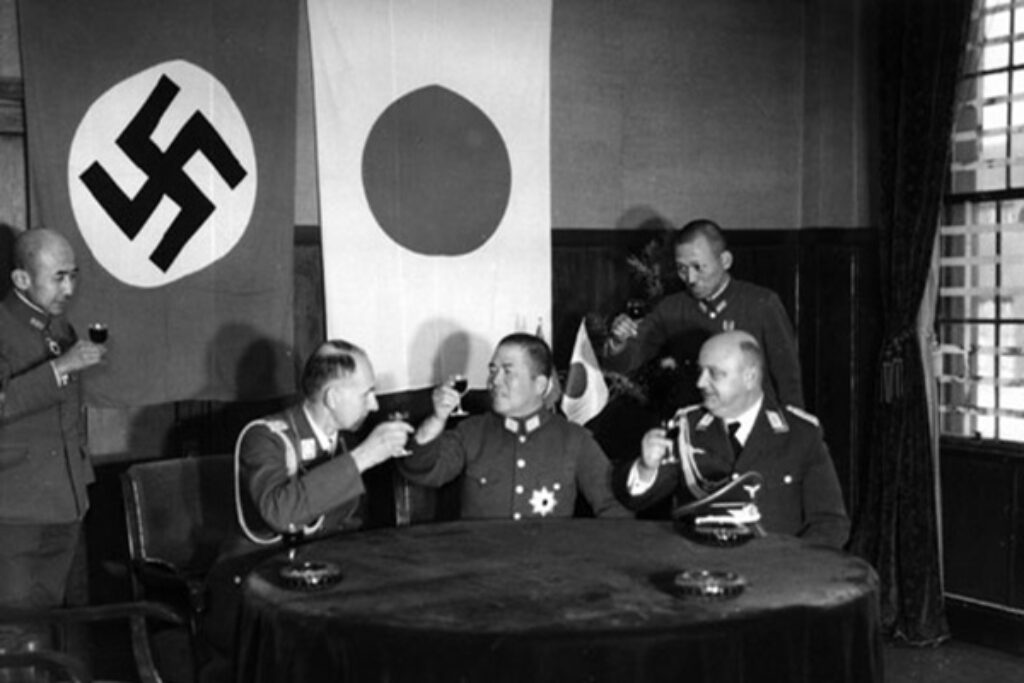
The obvious question follows naturally.
If Germany invested so heavily in China’s military, why did it later become Japan’s ally?
The answer lies in shifting geopolitical priorities.
During the early 1930s, Berlin had not yet committed itself to Tokyo.
China offered Germany valuable raw materials, an enormous export market, and promising strategic opportunities.
Everything changed after Germany and Japan signed the Anti-Comintern Pact in 1936.
When full-scale war between China and Japan erupted in 1937, Berlin found itself forced to choose.
Japan possessed a powerful navy, a modern industrial base, and growing strategic importance.
China could no longer compete for Germany’s attention.
By 1938, German military advisers had been withdrawn, and arms shipments gradually came to an end.
But the Helmets Stayed on the Battlefield
Politics could not erase what had already been delivered.
German rifles continued firing.
German artillery continued shelling Japanese positions.
And German Stahlhelm helmets continued protecting Chinese soldiers.
Many remained in service throughout the entire Second Sino-Japanese War.
After Japan’s surrender in 1945, some of these helmets continued to see combat during the renewed Chinese Civil War between the Nationalists and the Communists.
Others were captured by the People’s Liberation Army and remained in use for years afterward.
A Story That Challenges Everything We Think We Know
Today, the Stahlhelm M35 is universally associated with the German Wehrmacht.
History, however, is rarely that simple.
Before Nazi Germany fully aligned itself with Imperial Japan, it played a major role in building China’s modern military. German advisers trained Chinese officers, German factories supplied weapons, and hundreds of thousands of authentic Stahlhelm helmets traveled halfway around the world—not to Europe, but to China.
So the next time you see an old photograph of a Chinese soldier wearing what looks like a Wehrmacht helmet, don’t assume you’re looking at one of Germany’s allies.
More likely, you’re looking at a man fighting against the Japanese invasion—using equipment supplied by the very nation that, only a few years later, would stand on the opposite side of one of history’s greatest conflicts.