
A Satellite Mechanic or an Orbital Assassin? Northrop Grumman’s New Spacecraft Raises Questions About the Future of Space Warfare

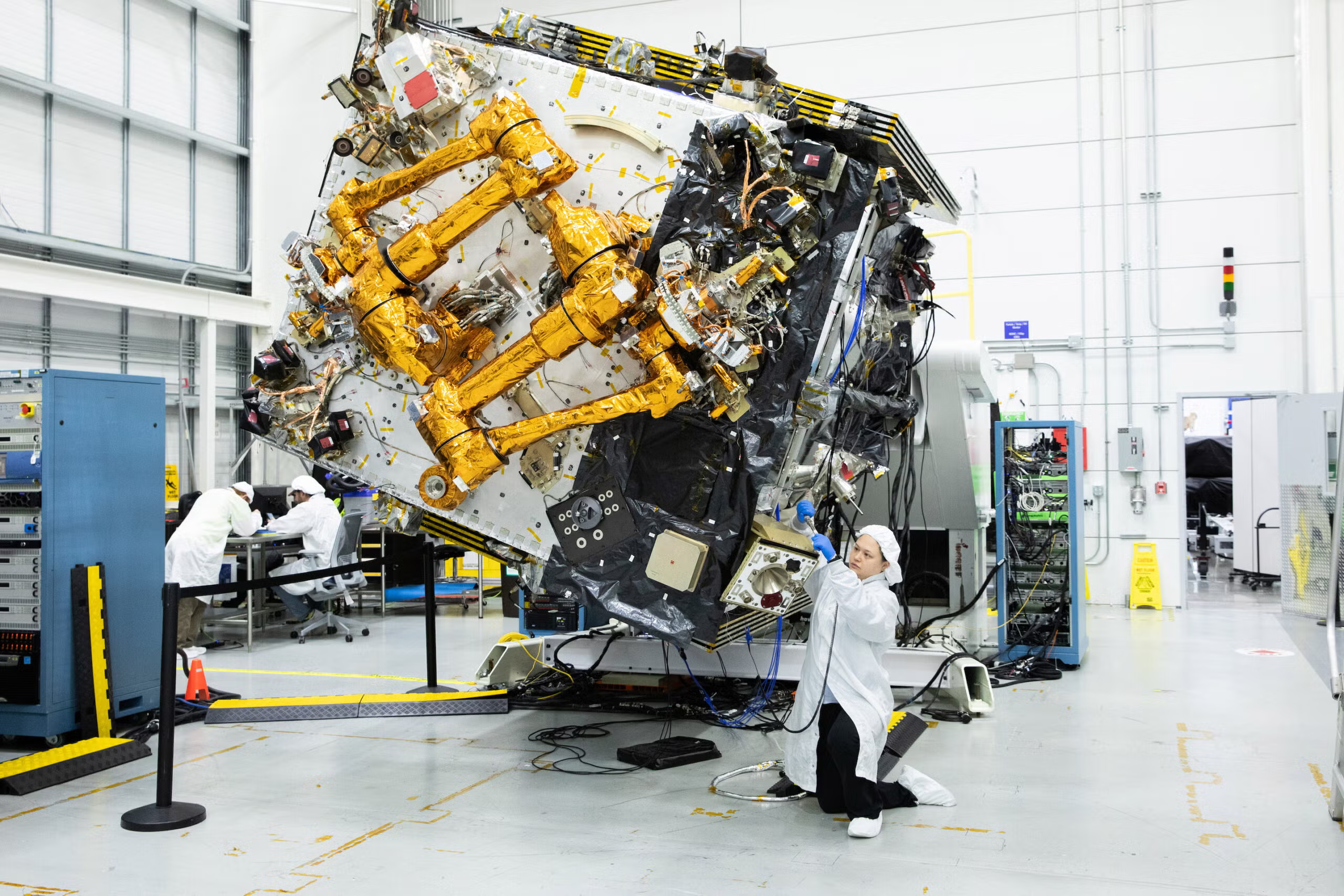
Until recently, satellites were generally considered untouchable. They could be destroyed by anti-satellite missiles, blinded by lasers, or disrupted through electronic warfare. But a new spacecraft is changing the conversation—one that can literally approach another satellite, grab it with two robotic arms, and potentially do almost anything to it.
That is the debate surrounding Northrop Grumman’s Mission Robotic Vehicle (MRV). Officially, the spacecraft is designed to service satellites by repairing them, refueling them, and extending their operational lives. However, its unique design has prompted defense analysts to ask a difficult question: could a spacecraft built for maintenance also become a weapon? Perhaps most notably, Northrop Grumman’s leadership has not categorically ruled out that possibility.
A Space Tow Truck…
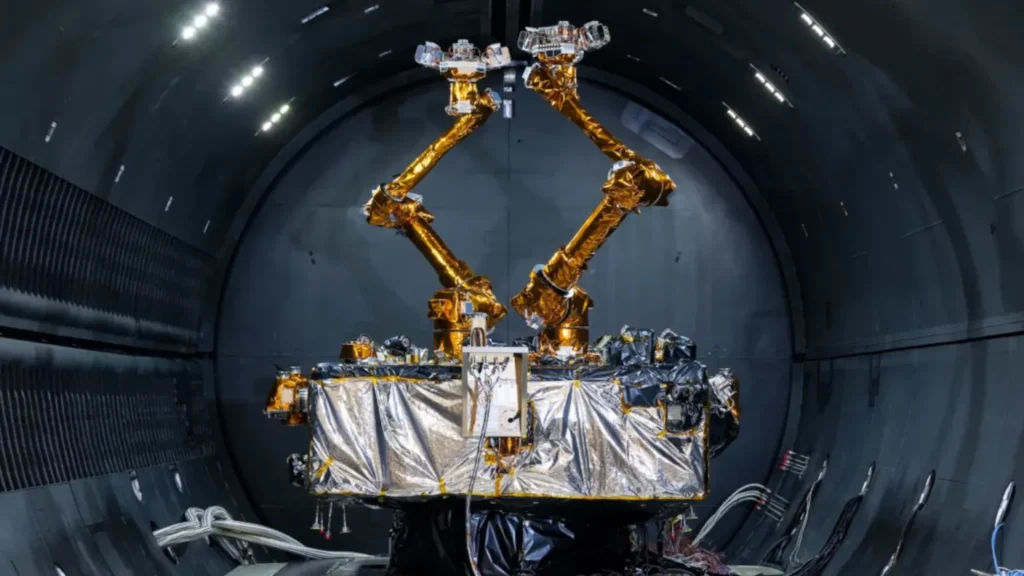
The Mission Robotic Vehicle (MRV) was developed as a next-generation commercial servicing platform.
Its primary mission is to support valuable satellites operating in geostationary orbit (GEO), where a large portion of the world’s military, intelligence, and communications infrastructure resides.
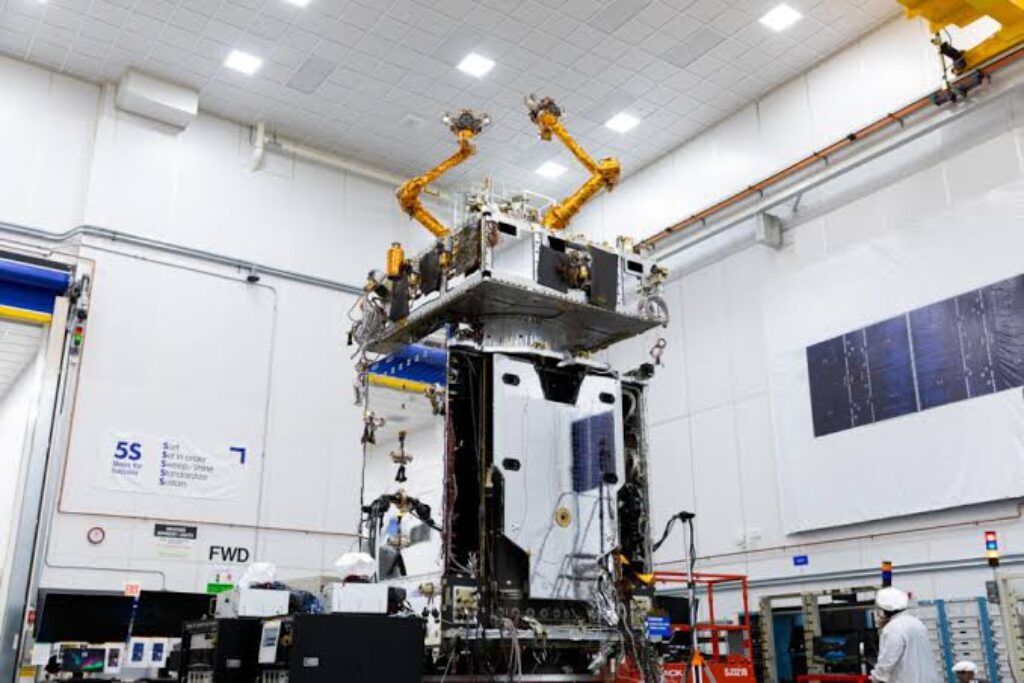
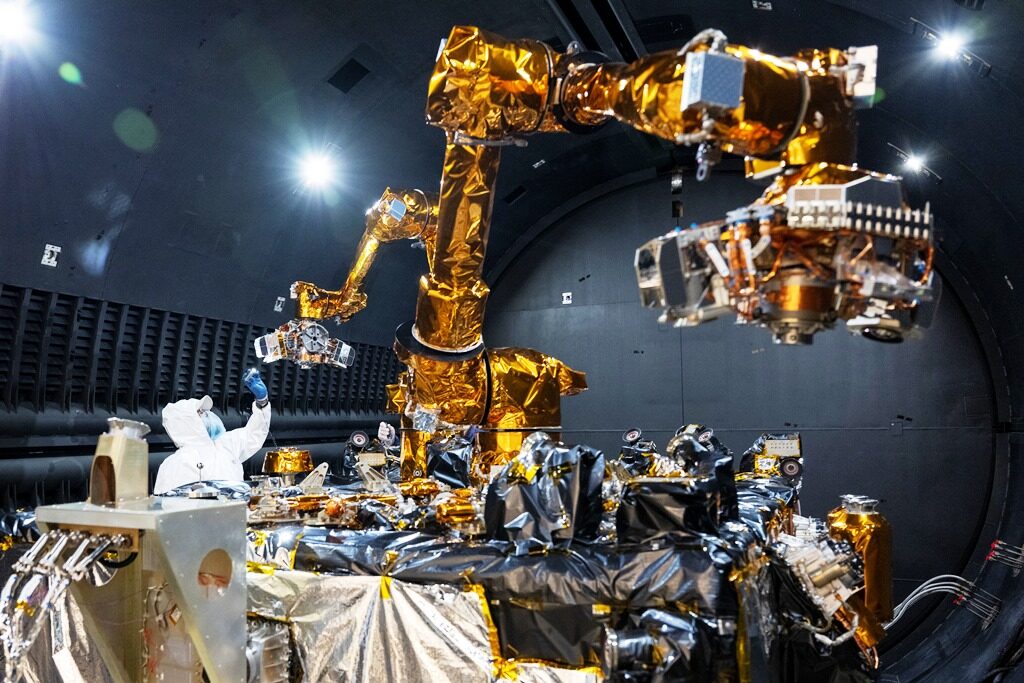
The spacecraft carries two advanced robotic arms developed under the Robotic Servicing of Geosynchronous Satellites (RSGS) program, a joint initiative involving DARPA and the U.S. Naval Research Laboratory.
These robotic manipulators are capable of:
- Capturing satellites
- Performing mechanical repairs
- Installing new hardware
- Attaching propulsion modules
- Extending satellite service life by approximately eight years
In essence, MRV represents the first commercial “space service center” capable of conducting complex mechanical operations directly in orbit.
…Or an Orbital Saboteur?
Like many dual-use technologies, satellite servicing inevitably raises difficult security questions.
If a spacecraft can carefully capture and repair a friendly satellite, what prevents it from approaching a satellite belonging to a potential adversary?
During an investor conference call, analysts directly asked Northrop Grumman CEO Kathy Warden whether the company envisioned developing an offensive version of the MRV capable of disabling enemy satellites.
Her response attracted significant attention.
Rather than dismissing the idea, Warden explained that decisions regarding offensive space capabilities belong to the U.S. government. She added that Northrop Grumman would be prepared to provide the necessary technological capabilities if requested by its customer.
That carefully worded response immediately fueled discussion among experts in space security.
How to Disable a Satellite Without Firing a Missile
RSGS Final
When people think about anti-satellite weapons, they usually imagine missiles destroying targets through direct impact.
But there are other ways.
A robotic spacecraft could potentially:
- Alter a satellite’s orientation
- Block its solar panels
- Damage antennas
- Disable onboard payloads
- Tow it into an unusable orbit
- Prevent it from completing its mission
Such actions might even appear to be mechanical failures rather than deliberate attacks.
This is precisely why satellite servicing technologies are viewed simultaneously as one of the most promising and one of the most sensitive areas of modern space development.
Why This Matters Now
Growing interest in these systems is no coincidence.
The number of military satellites continues to expand rapidly, particularly as the United States pursues future architectures such as Golden Dome, which envision large orbital networks of sensors, communications platforms, and potentially even space-based interceptors.
As more satellites are deployed, the ability to repair, refuel, inspect, and upgrade them without launching replacements becomes increasingly valuable.
At the same time, these capabilities introduce new strategic risks.
Once one nation demonstrates the ability to manipulate satellites safely in orbit, other countries are almost certain to view the same technology as a potential anti-satellite capability.
This could mark the beginning of a new phase in the arms race—not on Earth, but in space itself.
What We Know About the Mission Robotic Vehicle
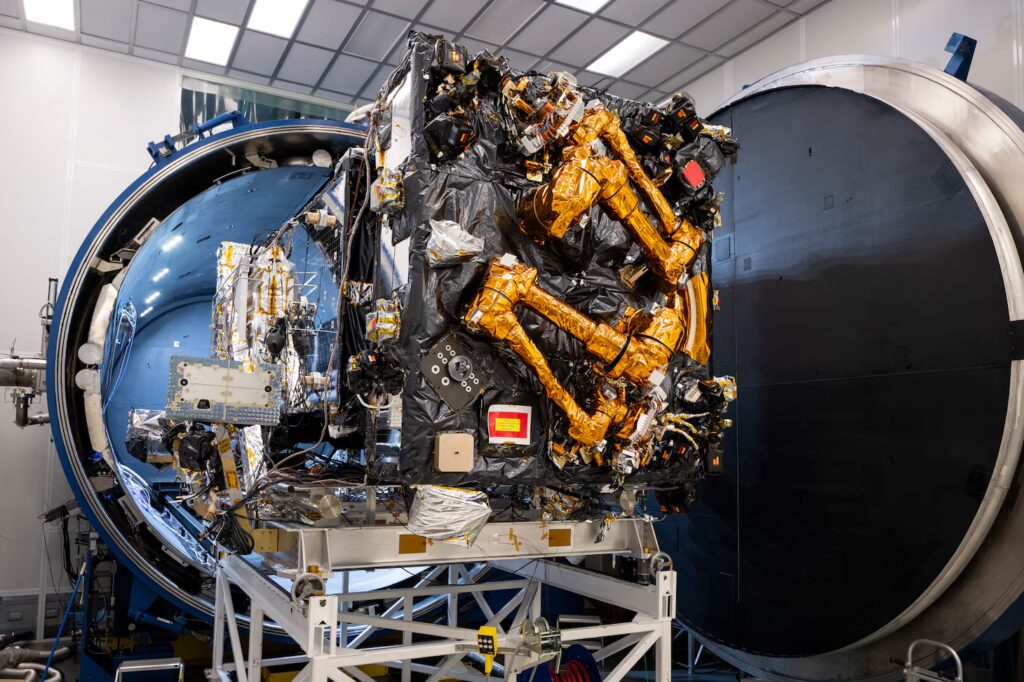
Currently available information includes:
Developer: Northrop Grumman
Platform: Mission Robotic Vehicle (MRV)
Operational Orbit: Geostationary Orbit (GEO)
Key Feature: Two robotic manipulator arms
Primary Missions:
- Satellite servicing
- On-orbit repair
- Satellite refueling
- Installation of Mission Extension Pods (MEPs)
- Satellite relocation
- Spacecraft inspection
Conclusion
The MRV perfectly illustrates how rapidly the boundary between civilian and military space technology is disappearing.
Officially, the spacecraft exists to extend the operational life of expensive satellites—a capability that could fundamentally reshape the economics of space operations. Yet the very same robotic arms capable of installing a propulsion module today could theoretically disable another nation’s satellite tomorrow.
For now, the Mission Robotic Vehicle remains a servicing platform rather than a weapon. However, the fact that its manufacturer openly acknowledges that similar capabilities could be adapted for government requirements reflects a new reality in orbital competition.
In the years ahead, control of space may depend not only on missiles and lasers, but also on robotic spacecraft capable of quietly approaching their targets and changing the course of a conflict with mechanical precision.






