The Military on Testosterone? Why the Pentagon Wants to Screen Every Service Member Over 30

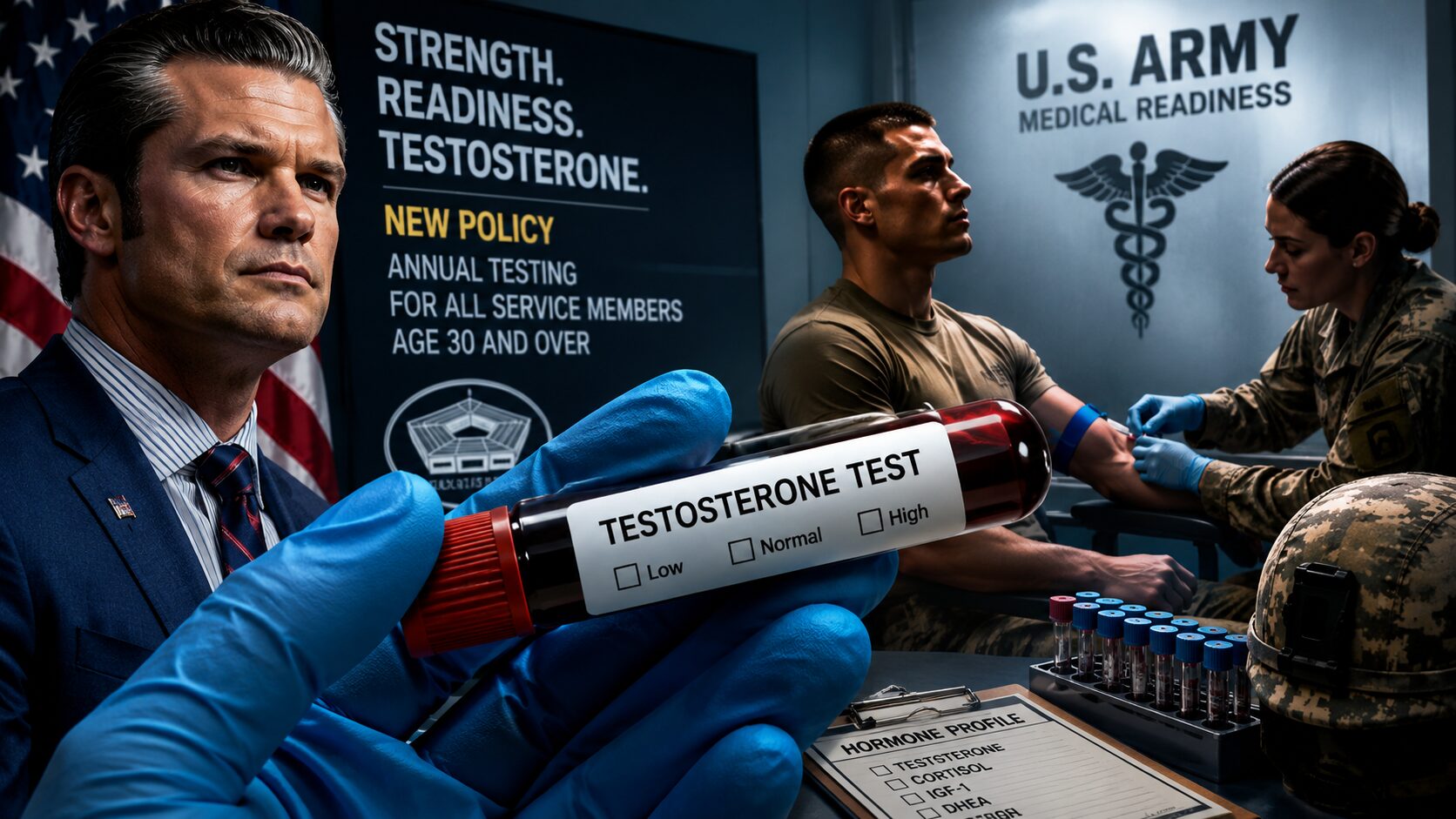
When U.S. Secretary of Defense Pete Hegseth announced that all active-duty service members over the age of 30 would undergo annual testosterone deficiency screening, the proposal immediately sparked heated debate. To some, it looked like another political headline. To others, it marked the beginning of a new era in military medicine.
For the first time, one of the world’s largest armed forces is openly acknowledging that hormonal health may be just as important to combat readiness as cardiovascular fitness, eyesight, or physical endurance. Supporters call the initiative a long-overdue modernization of military healthcare, while critics warn that it could blur the line between legitimate medical treatment and performance enhancement.
Why Start at Age 30?
From a medical standpoint, the age threshold is not arbitrary.
Research shows that testosterone levels in men generally begin to decline after the age of 30, often by around 1% per year, although the rate varies significantly between individuals. Lifestyle factors—including obesity, chronic stress, poor sleep, traumatic injuries, prolonged deployments, and certain medical conditions—can accelerate that decline.
Importantly, turning 30 does not automatically mean a soldier becomes less capable. Many military personnel maintain excellent hormone levels well into middle age through proper fitness, nutrition, and recovery.
Why Does the Military Care About Testosterone?
The discussion goes far beyond muscle growth.
Testosterone influences numerous physiological systems that are directly connected to military performance, including:
- Muscle strength and recovery
- Bone density
- Physical endurance
- Energy levels
- Sleep quality
- Cognitive performance
- Mood and motivation
- Overall resilience under stress
For soldiers operating under extreme physical and psychological conditions, deficiencies in these areas can translate into reduced operational effectiveness. A service member suffering from clinically low testosterone may recover more slowly from training, experience chronic fatigue, or struggle with concentration during prolonged deployments.
From the Pentagon’s perspective, maintaining optimal health means maintaining combat readiness.
What Exactly Has Hegseth Proposed?
Under the new initiative:
- Annual testosterone screening would become standard for service members aged 30 and older.
- Personnel under 30 could still request voluntary testing if medically appropriate.
- Soldiers diagnosed with clinically confirmed testosterone deficiency could be offered Testosterone Replacement Therapy (TRT) under physician supervision.
- Participation in hormone therapy would remain voluntary, with treatment decisions based on medical evaluation rather than military requirements.
In other words, the Pentagon is not proposing to place the entire U.S. military on testosterone therapy. Instead, the focus is on identifying genuine medical deficiencies that might otherwise go unnoticed.
Why Has the Proposal Become So Controversial?
Many endocrinologists caution that testosterone is not a general wellness supplement.
Improper or unnecessary hormone therapy can lead to significant side effects, including:
- Suppression of the body’s natural testosterone production
- Reduced fertility
- Elevated hematocrit levels
- Increased cardiovascular risks in certain patients
- Long-term dependence on medical monitoring
Current medical guidelines generally recommend testosterone therapy only when both laboratory testing confirms low hormone levels and the patient experiences consistent clinical symptoms.
Critics therefore argue that widespread screening could increase pressure to prescribe hormone therapy in cases where it may not be medically necessary.
Special Operations Have Been Discussing This for Years
The Pentagon’s announcement did not emerge in a vacuum.
Over the past decade, numerous investigative reports have suggested that Testosterone Replacement Therapy has already been used within certain U.S. Special Operations units. Elite operators often endure years of intense deployments, sleep deprivation, chronic stress, and repeated physical trauma—all factors known to affect hormonal balance.
The new policy can therefore be viewed as an attempt to bring an issue that has long existed in the shadows into a regulated medical framework.
Could This Change the Future of Military Medicine?
Perhaps the most significant aspect of the initiative is not testosterone itself.
If the screening program proves successful, it may encourage the Pentagon to expand routine monitoring of additional biological indicators, including:
- Hormone profiles
- Sleep quality
- Chronic stress markers
- Inflammatory biomarkers
- Recovery metrics
- Cognitive performance assessments
Such an approach would represent a broader transformation in military healthcare—from treating illness after it occurs to continuously optimizing the health and performance of service members.
In many ways, future military modernization may focus not only on new tanks, aircraft, and warships, but also on maximizing the biological potential of the individual soldier.
Conclusion
Pete Hegseth’s proposal to introduce annual testosterone screening for service members over 30 has quickly become one of the Pentagon’s most closely watched healthcare initiatives.
Supporters argue that it represents a proactive effort to protect the health and operational readiness of experienced military personnel. Critics counter that widespread hormone screening risks expanding the use of testosterone therapy without sufficient long-term evidence for population-wide benefits.
Regardless of where the debate ultimately lands, the proposal reflects a broader shift in modern defense thinking. Today’s militaries are investing not only in advanced weapons and cutting-edge technology, but increasingly in the biological performance of the people who operate them. The soldier himself is becoming part of the next generation of military modernization.