KBS “Strelok”: Has Russia Really Created a New Generation Combat Equipment System?

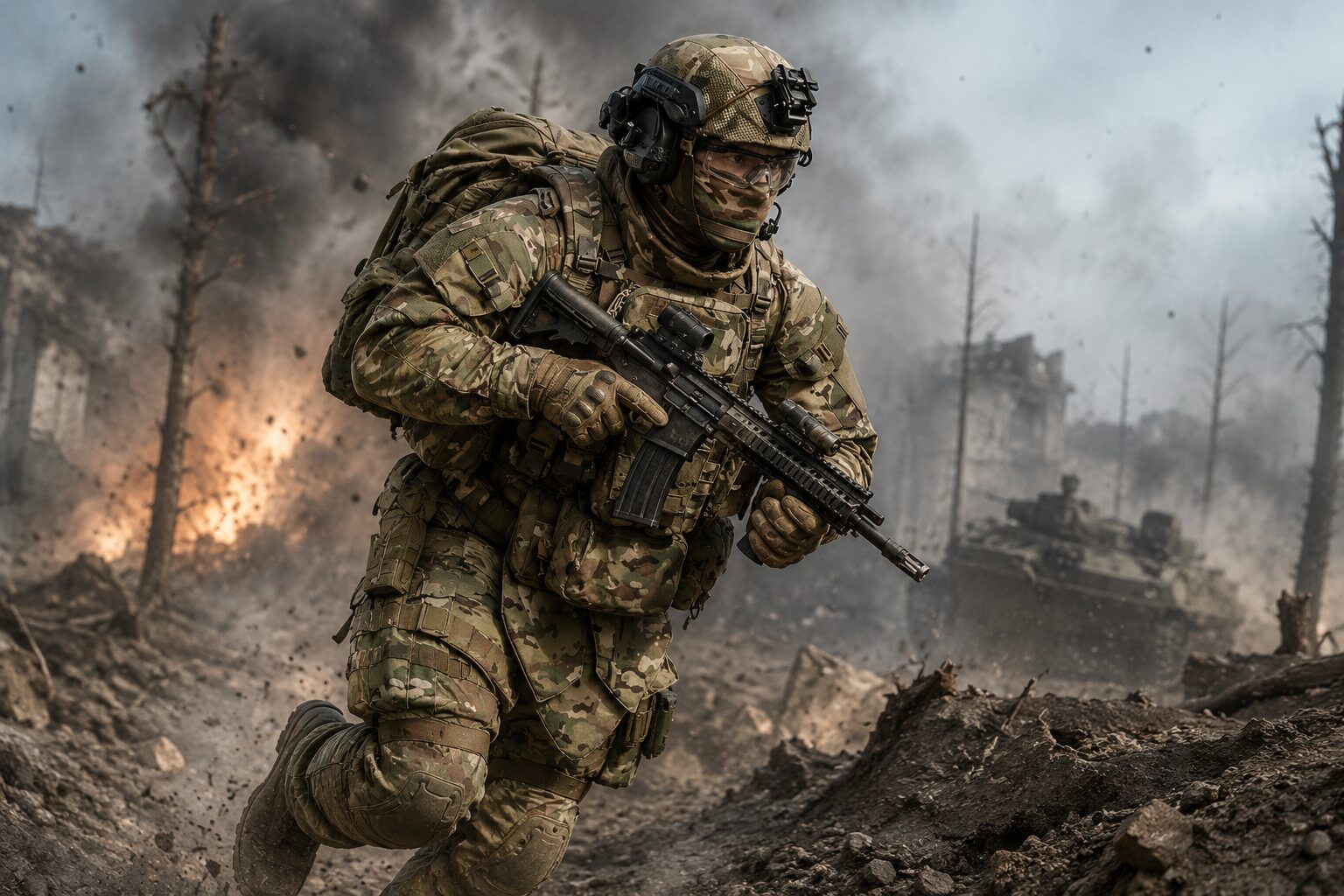
Just a decade ago, discussions about modern infantry equipment usually revolved around body armor and load-bearing vests. The primary objective was simple—stop a bullet. Comfort, mobility, and ergonomics often came second.
Modern warfare has completely changed that philosophy.
Today’s infantryman carries far more than a rifle and spare magazines. A fully equipped soldier may wear body armor, a ballistic helmet, communications equipment, night vision devices, medical kits, water, additional fragmentation protection, drones, batteries, or even anti-drone weapons. The total combat load can easily exceed 30 kilograms, making weight distribution almost as important as ballistic protection.
This is precisely the problem that Russia’s Kalashnikov Concern, through its subsidiary Triada-TKO, sought to address with the KBS “Strelok” combat equipment system. Rather than introducing another body armor vest, the developers present “Strelok” as a fully integrated combat load-bearing platform combining ballistic protection, modular load carriage, and an ergonomic weight distribution system.
But is it truly a next-generation combat system, or simply another evolution of existing body armor?
Let’s take a closer look.
Why Traditional Body Armor Is No Longer Enough
Nearly every modern conflict demonstrates the same trend.
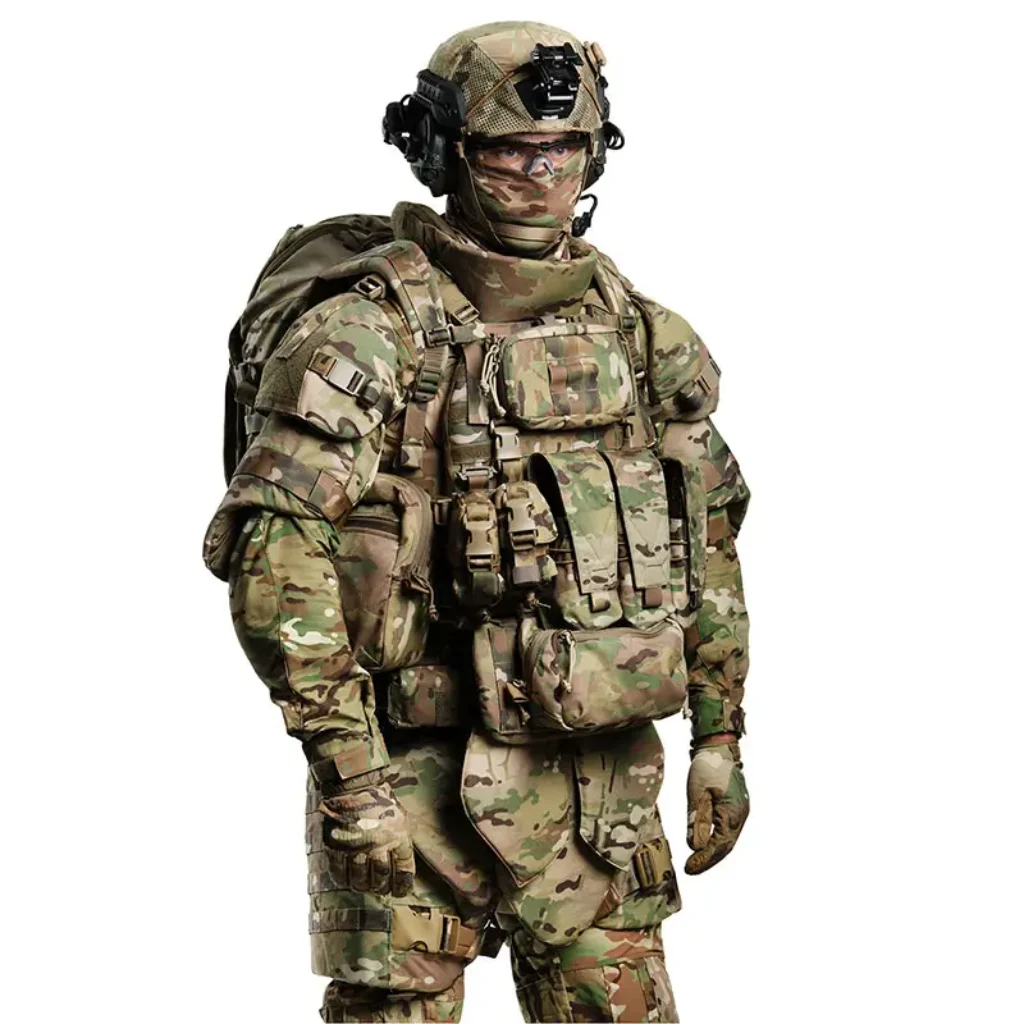
While rifle bullets were once considered the primary threat to infantry, today’s battlefield is dominated by artillery fragments, mortar shrapnel, loitering munitions, FPV drones, and cluster munitions.
Military studies consistently indicate that fragmentation injuries account for a significant share of battlefield casualties. As a result, armor manufacturers worldwide have shifted their design philosophy.
Instead of protecting only the chest and back, modern systems increasingly shield the neck, shoulders, sides, groin, and thighs.
The KBS “Strelok” was developed around this very concept.
According to the manufacturer, the system provides more than 135 dm² of fragmentation protection, covering approximately 70 percent of a soldier’s body when fully configured. The front and rear ballistic plates are rated to Russian Br5 standards for protection against rifle ammunition.
What Does the System Include?
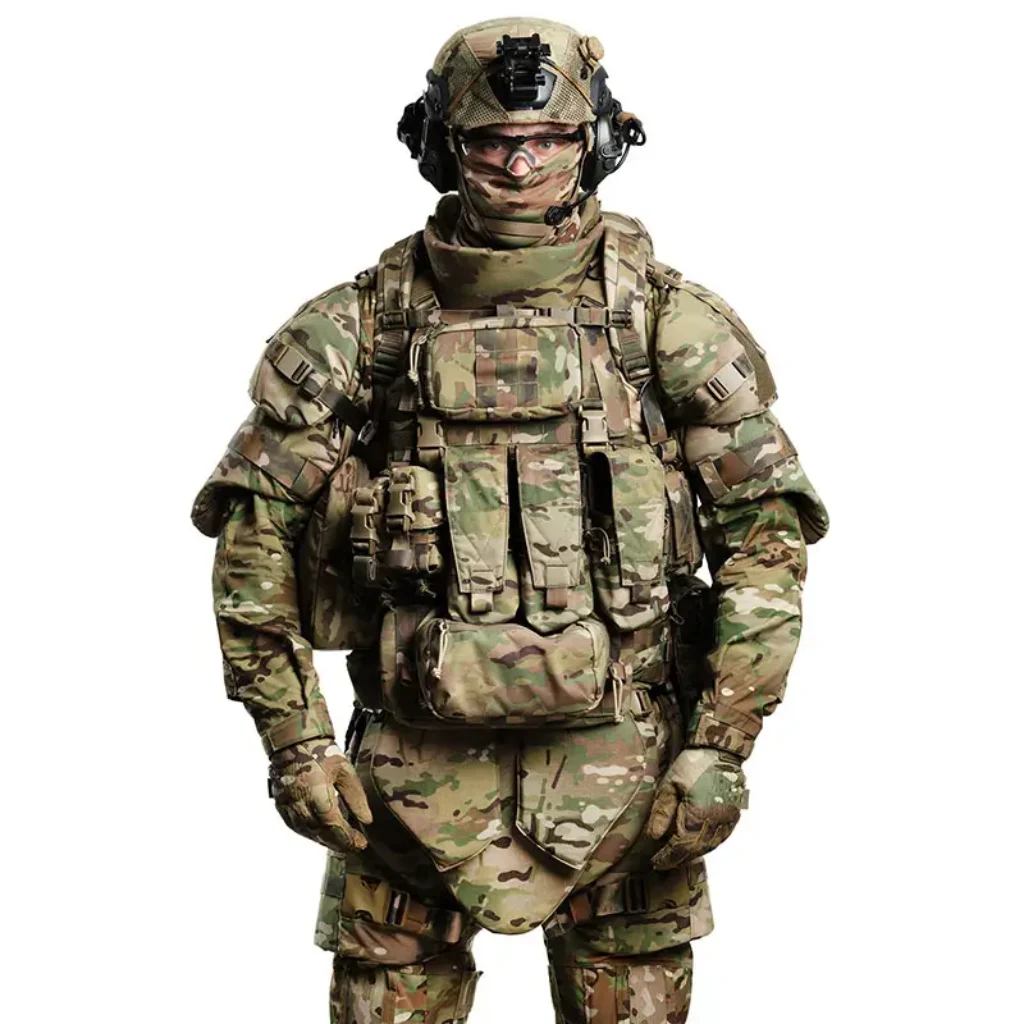
Although often referred to simply as body armor, “Strelok” is actually an integrated combat equipment system.
The package includes:
- Korset Plus body armor;
- weight distribution harness;
- ballistic plates;
- neck protection;
- shoulder protection;
- groin protection;
- thigh protection;
- soft fragmentation armor;
- modular load-bearing platform;
- magazine pouches;
- medical pouch;
- radio pouch;
- utility pouches;
- 30-liter assault backpack;
- transport bag.
Essentially, soldiers receive a complete modular platform that can be configured according to mission requirements rather than a single fixed body armor vest.
The Real Innovation: Weight Distribution
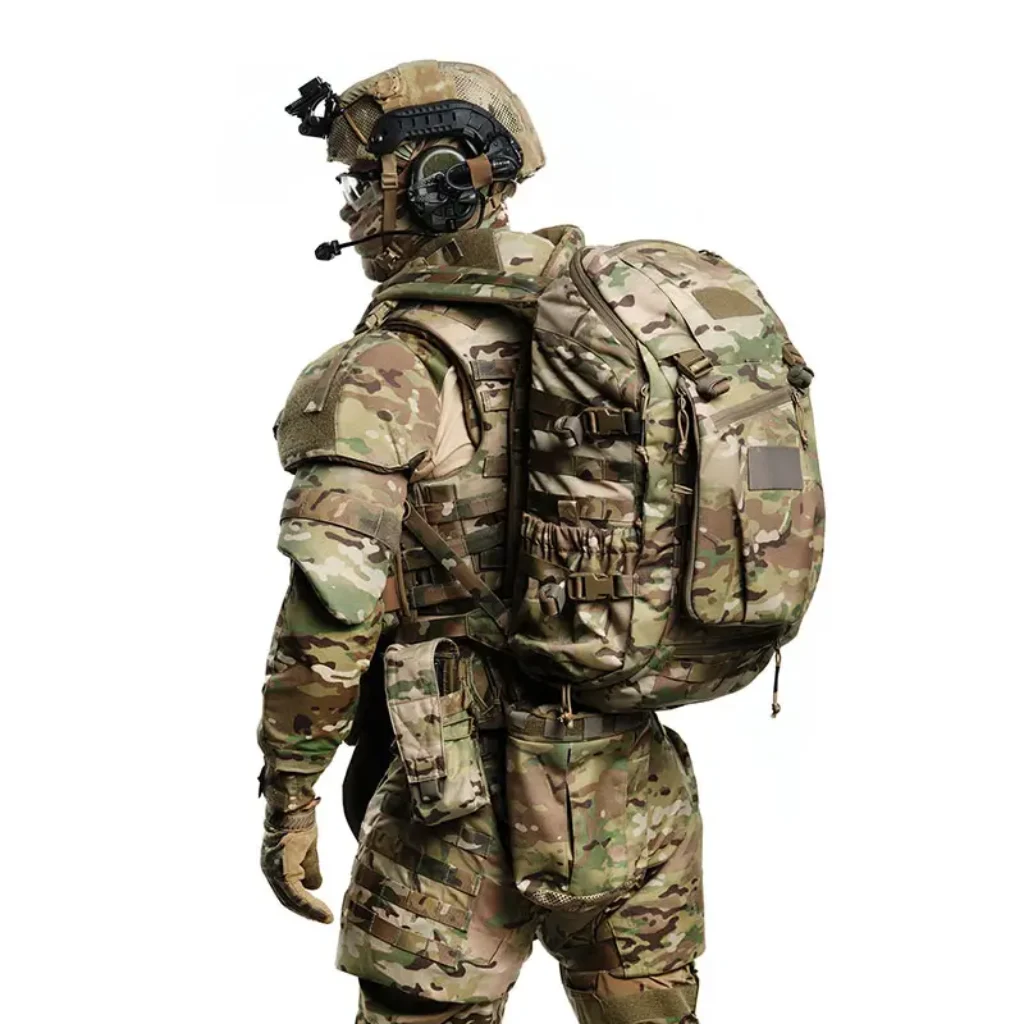
This is arguably the most interesting engineering feature of the entire system.
Traditional body armor concentrates nearly all of its weight on the shoulders.
The consequences are well known:
- shoulder fatigue;
- lower back pain;
- restricted mobility;
- numbness during prolonged wear.
The developers of “Strelok” addressed this problem using a concept already employed by several leading Western manufacturers.
The armor is mechanically connected to a rigid padded waist belt, transferring part of the system’s weight from the shoulders to the pelvis.
Although this may sound like a minor improvement, it fundamentally changes how the load is carried.
The human pelvis is capable of supporting significantly greater weight than the shoulder girdle. By shifting part of the load downward, muscle fatigue can be reduced during extended operations.
According to Kalashnikov, this allows soldiers to remain combat effective for longer periods while carrying heavy equipment.
Interestingly, this design philosophy closely resembles systems developed by companies such as Crye Precision (AVS), First Spear, and NFM Group.
Modularity Is the New Standard
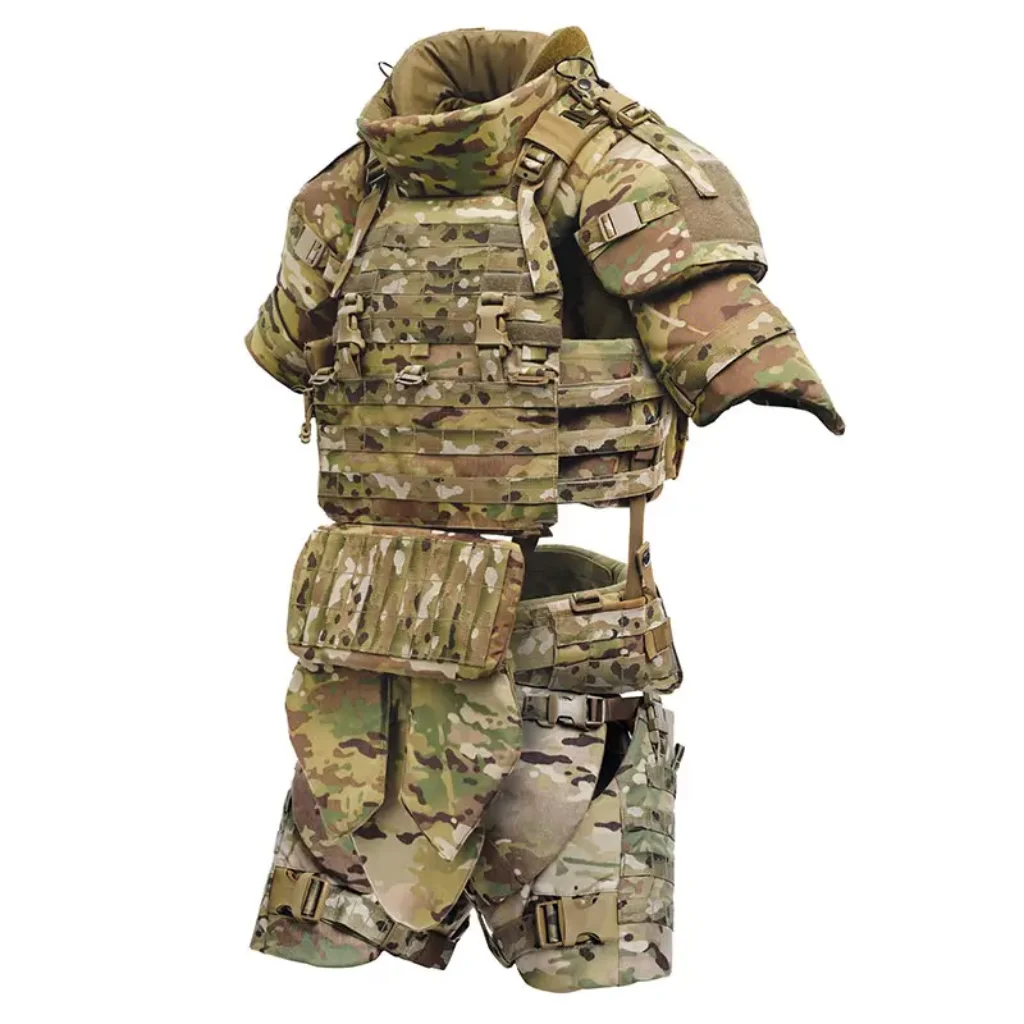
Another defining feature of the KBS “Strelok” is its modular construction.
Instead of forcing soldiers to wear maximum protection at all times, the system allows individual armor components to be added or removed depending on the mission.
During long patrols or reconnaissance missions, operators can reduce weight by removing optional armor elements.
During urban assault operations, additional protection for the:
- neck;
- shoulders;
- groin;
- thighs;
- side torso
can be installed within minutes.
This balance between mobility and protection has become standard practice among modern military equipment manufacturers worldwide.
How Heavy Is It?
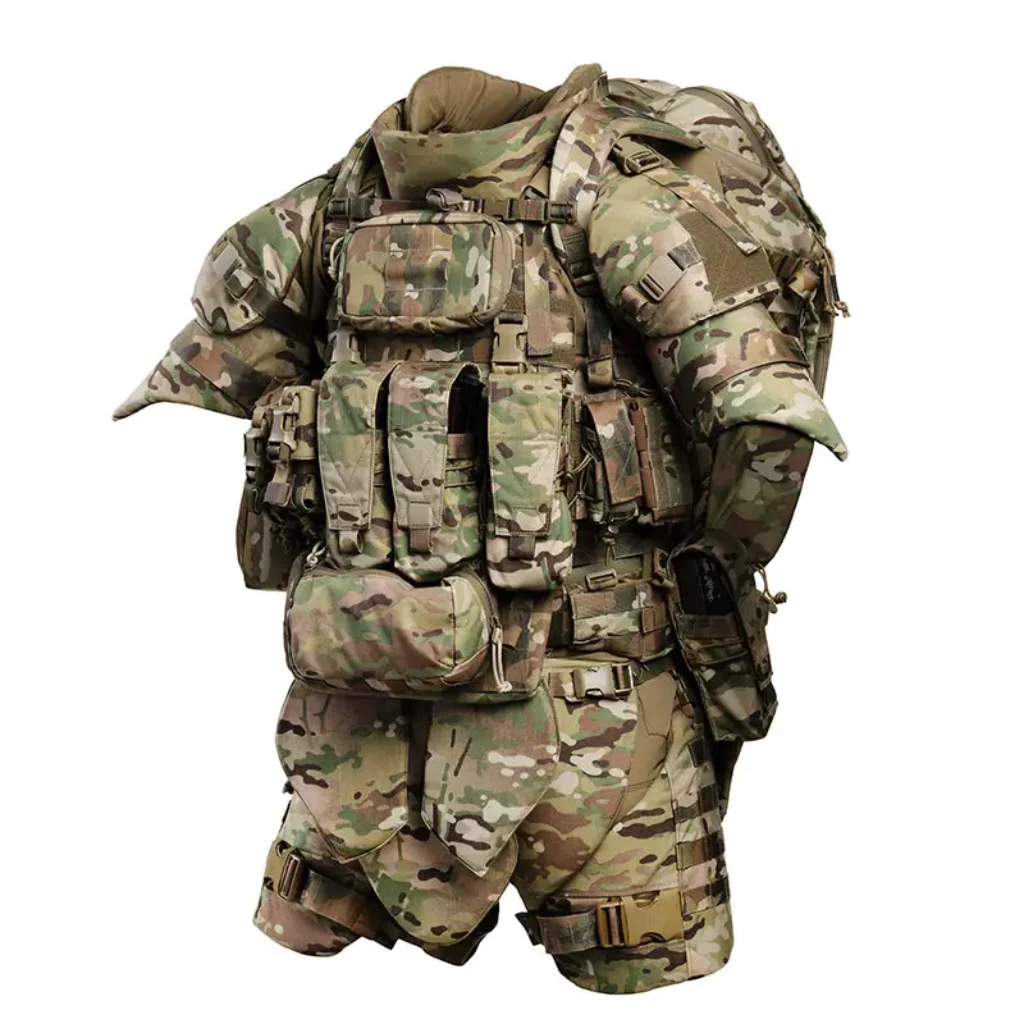
Weight remains one of the most frequently discussed aspects of the system.
The Korset Plus armor with ballistic plates weighs approximately 12.2 kilograms, excluding weapons, ammunition, communications equipment, water, and mission-specific gear.
Once magazines, medical supplies, radios, night vision devices, and additional equipment are added, the total combat load can easily exceed 25–30 kilograms.
However, this is not unique to Russian forces.
Modern American, British, French, and German infantry often carry similar combat loads.
Consequently, the challenge is no longer simply reducing weight—it is distributing it efficiently.
What the Manufacturer Claims
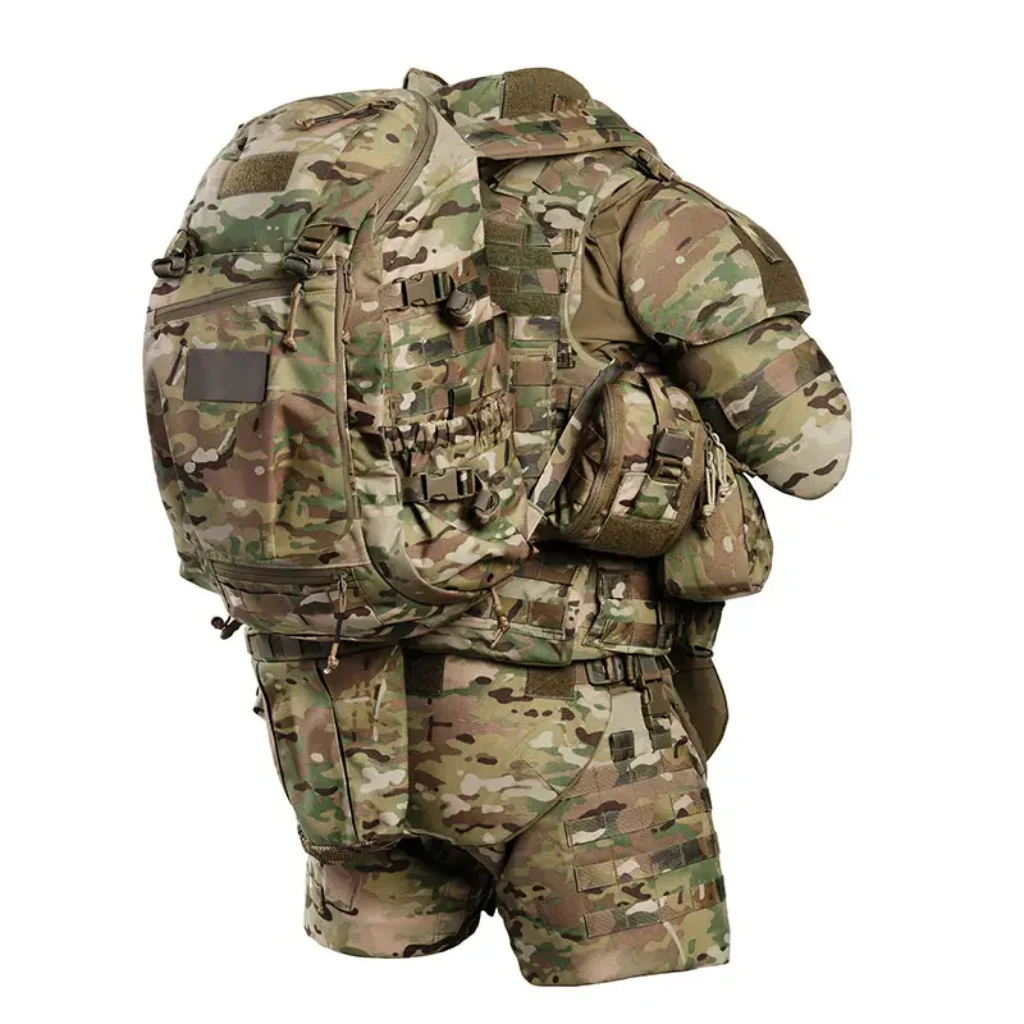
Kalashnikov and Rosoboronexport emphasize several key advantages of the KBS “Strelok”:
- protection for up to 70% of the body;
- modular architecture;
- weight transfer to the waist and hips;
- adjustment for both summer and winter uniforms;
- extensive fragmentation protection;
- mission-specific customization.
The company also announced the delivery of 25,000 systems under a government contract, followed by additional production batches, suggesting that the equipment has entered large-scale serial production.
What Do Independent Reviews Say?
This is where the discussion becomes more nuanced.
Most publicly available articles about “Strelok” are based on manufacturer information.
Independent field evaluations comparing the system with competing equipment remain relatively limited.
Nevertheless, reviews from tactical gear specialists and experienced users consistently highlight several strengths.
Among the most frequently praised features are:
- effective load distribution;
- highly modular design;
- well-organized pouch layout;
- good equipment integration;
- extensive fragmentation coverage.
At the same time, reviewers commonly point to several drawbacks:
- relatively high weight in the fully equipped configuration;
- reduced mobility when all armor modules are installed;
- the need for careful adjustment and fitting to achieve the intended ergonomic benefits.
Importantly, these criticisms are not unique to “Strelok.”
Nearly every heavy armor system offering maximum protection faces the same compromise between mobility and survivability.
How Does It Compare with Western Equipment?
From a conceptual standpoint, the KBS “Strelok” closely follows trends seen across modern Western combat equipment.
Common design principles include:
- modular construction;
- integrated load-bearing capability;
- weight transfer to the hips;
- scalable ballistic protection;
- compatibility with extended missions.
The primary differences lie in specific engineering solutions, materials, protection standards, and accessory compatibility.
Rather than representing a revolutionary breakthrough, “Strelok” appears to be Russia’s implementation of design concepts that have gradually become standard throughout the global tactical equipment industry.
Why Systems Like This Will Continue to Evolve
The modern battlefield is becoming increasingly saturated with drones.
Every FPV strike, artillery shell, or loitering munition increases the importance of fragmentation protection.
At the same time, soldiers continue carrying more electronic devices, batteries, communications equipment, and mission-specific tools.
Manufacturers worldwide are therefore pursuing two parallel goals.
The first is developing lighter ballistic materials.
The second is creating more efficient methods of distributing heavy combat loads.
Ironically, the second area may currently be advancing faster than the first.
Final Assessment
The KBS “Strelok” should not be judged solely by the thickness of its armor plates or the number of pouches attached to its vest.
Its real innovation lies elsewhere.
Rather than treating body armor as an isolated protective item, the system attempts to integrate armor, load carriage, and ergonomics into a single combat platform.
Based on publicly available information, the developers have successfully incorporated many concepts that define modern military equipment: scalable modularity, expanded fragmentation protection, and a load-transfer system that shifts weight from the shoulders to the hips.
At the same time, many claims regarding the system’s superiority still rely primarily on manufacturer data. Comprehensive independent testing covering long-term durability, ergonomics, and battlefield performance remains relatively limited in the public domain.
For that reason, it is still too early to declare “Strelok” either a revolutionary breakthrough or a definitive benchmark for future combat equipment.
One conclusion, however, is difficult to dispute.
Modern infantry equipment is no longer just body armor.
It has become an integrated combat system where protection, endurance, mobility, and ergonomics are equally important. In that respect, the KBS “Strelok” reflects the same direction of development currently shaping military equipment around the world.