The Last Line of Defense: How Combat Net Launchers Are Becoming a New Weapon Against FPV Drones

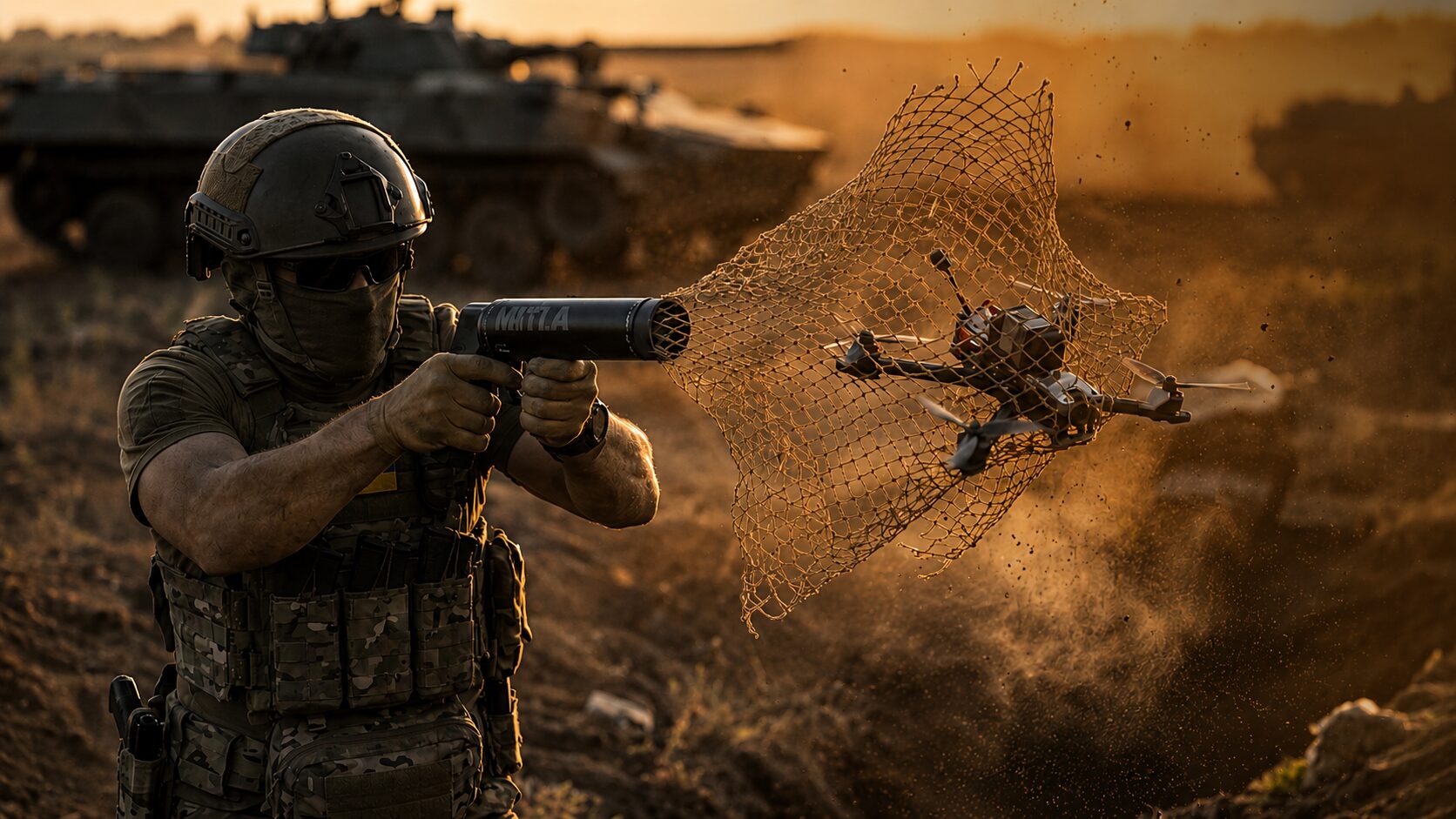
Until recently, net launchers seemed like equipment with no place on the modern battlefield. They were associated with police tactical units, rescue teams, airport security, and wildlife control. In an age of hypersonic missiles, artificial intelligence, and autonomous drone swarms, it seemed almost absurd that militaries would revisit a technology whose basic principle has existed for thousands of years.
Then came the age of FPV drones.
Today, a small first-person-view quadcopter costing only a few hundred dollars can destroy a main battle tank, an armored personnel carrier, or an infantry position. These drones appear with little warning, attack at high speed, and often leave defenders with only seconds to react. In those critical moments, one of the most unexpected weapons on the battlefield enters the fight—the combat net launcher.
For a soldier watching an FPV drone close the final meters, a simple net may become far more than a piece of equipment. It may become the last line of defense.
Why Electronic Warfare Is No Longer Enough

The first generation of mass-produced FPV drones relied primarily on analog radio links, making them vulnerable to electronic warfare. At the time, many believed increasingly powerful jammers would solve the problem.
Reality proved far more complicated.
Drone manufacturers began adopting digital communication systems that offered greater resistance to interference. This was followed by autonomous flight modes that allowed drones to continue their attack even after losing contact with the operator. The biggest challenge, however, came with the emergence of fiber-optic FPV drones. Instead of transmitting commands over radio frequencies, these aircraft deploy an ultra-thin fiber-optic cable stretching for dozens of kilometers, making conventional jamming virtually useless.
As a result, engineers were forced to revisit the most straightforward method of stopping a drone: physically preventing it from flying.
If a drone cannot be disconnected, it must be brought down.
A Surprisingly Effective Concept
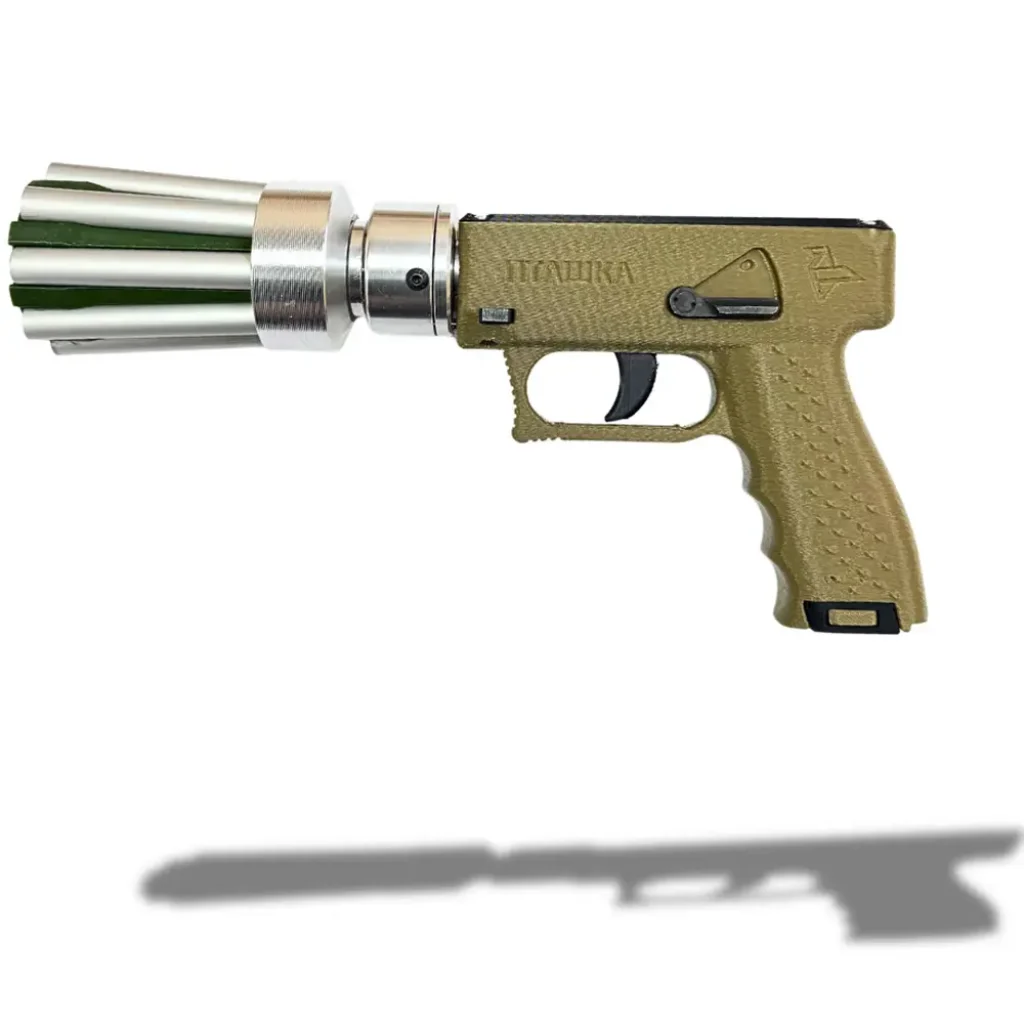
Although they appear simple, modern combat net launchers are sophisticated engineering systems.
When fired, a specialized projectile leaves the launcher and rapidly deploys a synthetic net. Weighted corners stretch the mesh into a broad capture area designed to intercept an incoming drone.
Once the net envelops a quadcopter, its propellers immediately become entangled. Even a small section of netting can disable the rotors, causing the aircraft to lose lift and stability before crashing to the ground.
Unlike shotguns or conventional firearms, a net launcher does not destroy the target. Instead, it removes the drone’s ability to fly.
This makes such systems particularly effective against small commercial and improvised quadcopters that are often difficult to hit with traditional small arms.
SkyWall: One of the World’s Best-Known Drone Interceptors
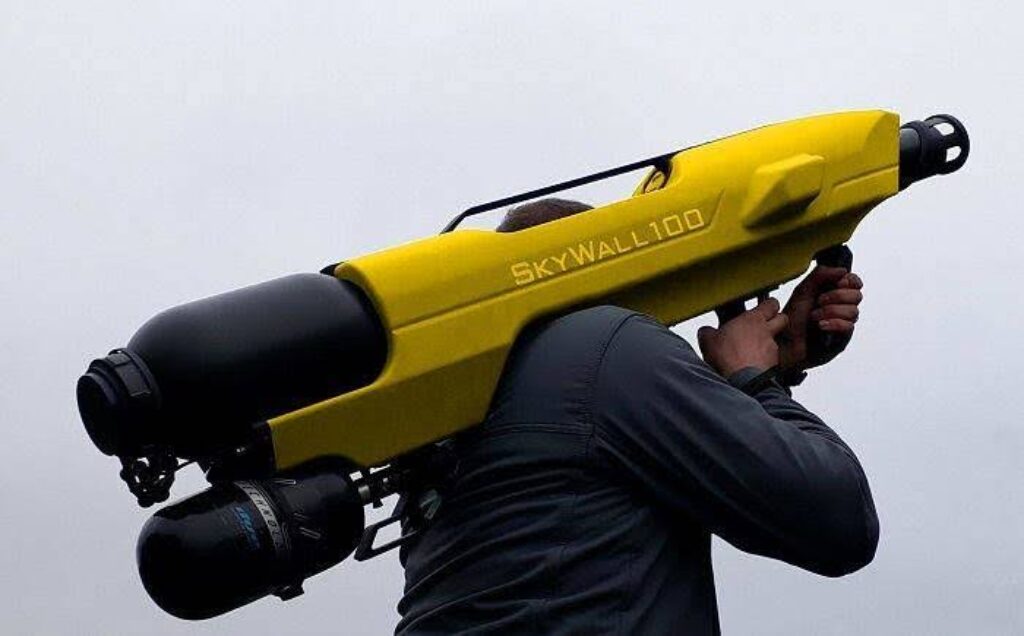
Perhaps the best-known modern net launcher is the British SkyWall system developed by OpenWorks Engineering.
At first glance, the launcher resembles a large shoulder-fired grenade launcher. Internally, however, it incorporates a sophisticated targeting system.
Before firing, an onboard computer calculates the drone’s speed, direction, and trajectory before programming the precise moment at which the net should deploy. Rather than manually estimating lead, the operator relies on the system’s ballistic computer to calculate the interception point.
Depending on the variant, SkyWall can engage targets at distances of approximately 100 meters, making it suitable for protecting airports, government facilities, critical infrastructure, and major public events.
A lighter version, known as SkyWall Patrol, was later introduced for single-operator use while retaining the same fundamental interception concept. It became one of the first commercially successful portable counter-drone net systems.
Ukraine, China, and the Search for New Solutions
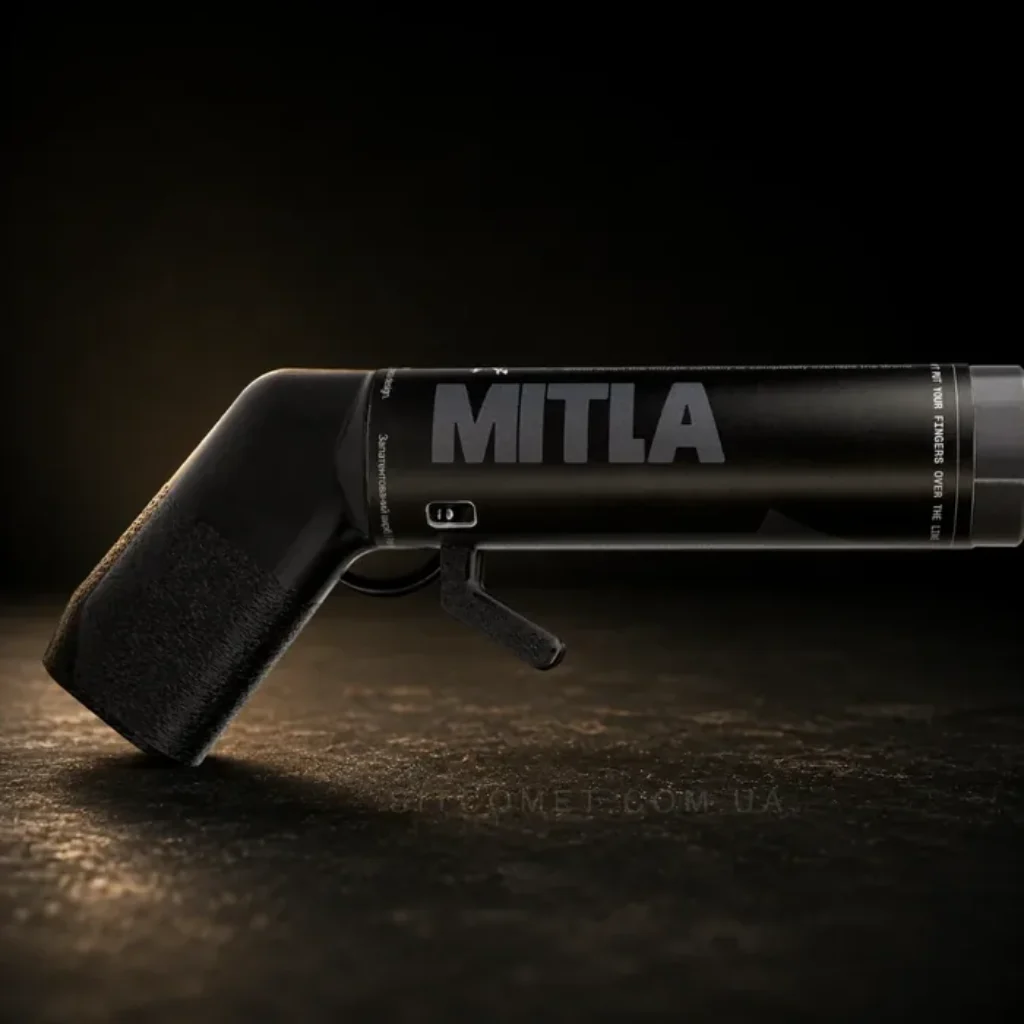
As drone warfare has intensified, interest in combat net launchers has expanded rapidly.
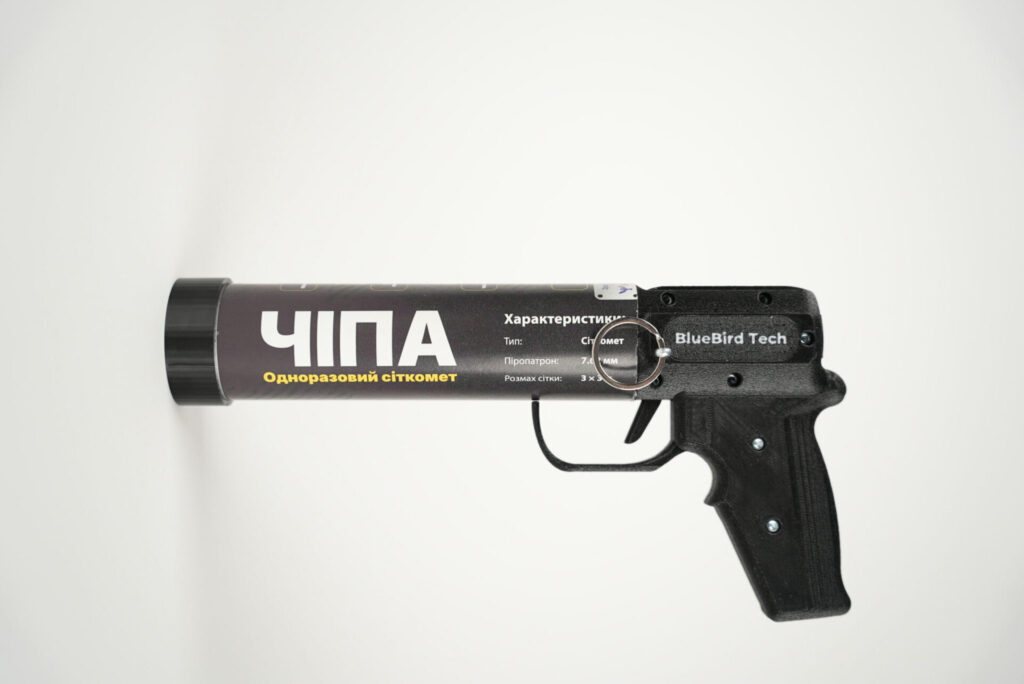
Ukrainian developers have introduced several experimental and limited-production systems designed specifically to counter FPV drones. Some are developed by private companies, while others are produced directly for frontline military units. Since many remain in active testing or operational evaluation, detailed technical specifications have not been publicly disclosed. Nevertheless, they all pursue the same objective: giving soldiers one final opportunity to stop an incoming drone during the last seconds before impact.
China has also become one of the world’s largest producers of anti-drone net launchers. Chinese manufacturers now offer dozens of portable and vehicle-mounted systems intended for military, law enforcement, and critical infrastructure protection. Many feature interchangeable net cartridges, while others are designed for integration into automated counter-drone platforms.
Similar research is underway in numerous other countries, with virtually every major counter-UAS manufacturer evaluating net-based interception as part of a layered short-range air defense strategy.
A Technology Older Than Gunpowder
Ironically, the underlying concept is anything but new.
More than two thousand years ago, Roman retiarius gladiators entered the arena armed with a net and trident. Their objective was not simply to wound an opponent but to immobilize them before delivering the decisive strike.
Throughout history, hunters used nets to capture birds and wild animals, sailors relied on them for fishing, and police forces later adopted specialized net launchers to subdue suspects without lethal force. Eventually, similar systems found civilian applications for safely capturing rogue drones around airports and sensitive facilities.
Military engineers have simply adapted one of humanity’s oldest tools to confront one of its newest threats.
The materials have changed. The deployment mechanisms have become far more sophisticated. The physics has been refined.
But the fundamental principle remains remarkably familiar.
The Last Line of Defense
Modern counter-drone defense relies on multiple layers.
Early-warning sensors, electronic warfare systems, automated weapon stations, air-defense systems, and interceptor drones are all intended to neutralize threats long before they reach friendly positions.
Yet no defensive network is perfect.
Sometimes a drone penetrates every layer. Sometimes electronic warfare is ineffective against fiber-optic guidance. Sometimes there are only seconds left before impact.
In those moments, a portable net launcher ceases to be an unusual gadget and becomes the final defensive barrier.
One shot.
One expanding net.
One opportunity to prevent a drone from completing its attack.
Looking Ahead
The evolution of this technology is only beginning.
Engineers are already developing automated turrets capable of detecting and intercepting drones with net-based ammunition. Interceptor drones carrying deployable nets are undergoing testing, while specialized grenade launcher rounds and even artillery projectiles designed to release nets in flight are under development.
These advances suggest that the net launcher is gradually evolving from a niche device into a recognized component of modern counter-drone defense.
History has once again delivered an unexpected lesson. Not long ago, many believed the future of anti-drone warfare belonged exclusively to lasers, microwave weapons, and advanced artificial intelligence. Yet recent conflicts have demonstrated something surprising: sometimes the most effective way to stop a sophisticated FPV drone is with a technology whose origins stretch back thousands of years.
The future of warfare may be increasingly high-tech—but sometimes survival still depends on something as simple as a well-thrown net.