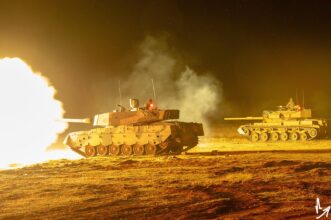
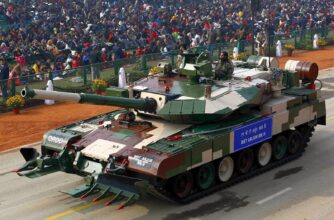
T-72B3A with Arena-M: Can Active Protection Save a Tank in the Age of FPV Drones?

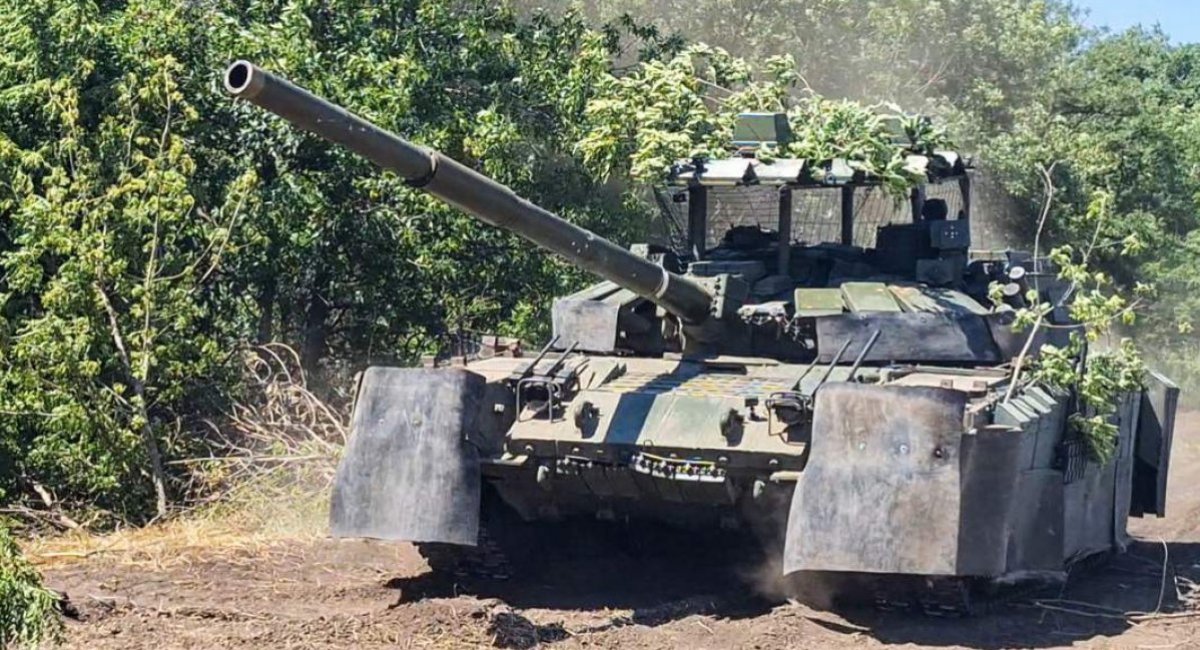
Over the past two years, the appearance of modern tanks has changed more dramatically than at any time in the previous several decades. Turrets are now covered with anti-drone cages, steel frames, slat armor, chain screens, rubber skirts, and even full protective canopies. These modifications are a direct response to one of the defining threats of modern warfare—the widespread use of FPV drones.
Against this backdrop, reports about the T-72B3A equipped with the Arena-M Active Protection System (APS) are particularly noteworthy. For the first time, Russia is presenting not merely another armor upgrade, but an attempt to create a layered protection system designed to counter drones as well as traditional anti-tank weapons. At present, however, there is no independently verified evidence that these upgraded tanks have entered large-scale combat service.
FPV Drones Have Changed Tank Protection Requirements
For decades, the primary threats to tanks were:
- Anti-tank guided missiles (ATGMs);
- Rocket-propelled grenades (RPGs);
- Shaped-charge warheads;
- Armor-piercing tank ammunition.
Reactive armor and active protection systems were specifically developed to defeat these weapons.
The emergence of FPV drones has fundamentally changed that equation.
A relatively inexpensive drone costing only a few hundred dollars can attack a tank from above, select its weakest points, and approach from almost any angle.
As a result, many existing protection systems are now facing threats they were never originally designed to counter.
What Is Arena-M?
Arena-M is the latest evolution of Russia’s Arena family of active protection systems, whose development began during the late Soviet era.
Its operating principle is relatively straightforward.
A radar mounted on the turret continuously scans the surrounding airspace.
When an incoming threat is detected, the onboard computer calculates its trajectory.
If the object is determined to pose a danger, one of the defensive interceptor charges is fired, destroying the threat at a safe distance from the tank.
The system was originally designed to intercept:
- Anti-tank guided missiles;
- RPG rounds;
- Certain types of shaped-charge munitions;
- Some top-attack weapons.
The Biggest Claim: Protection Against FPV Drones
This is where the discussion becomes particularly interesting.
According to Russian sources, the upgraded Arena-M has been modified to engage not only conventional anti-tank weapons but also FPV drones.
At present, however, those claims have not been independently verified under combat conditions.
From a technical perspective, engaging FPV drones is significantly more difficult.
Compared with anti-tank missiles, FPV drones are:
- Much smaller;
- Capable of abrupt changes in direction;
- Able to attack from steep vertical angles;
- Often slower and presenting a much smaller radar signature.
All of these characteristics make reliable detection and interception considerably more challenging.
Active Protection Alone Is No Longer Enough
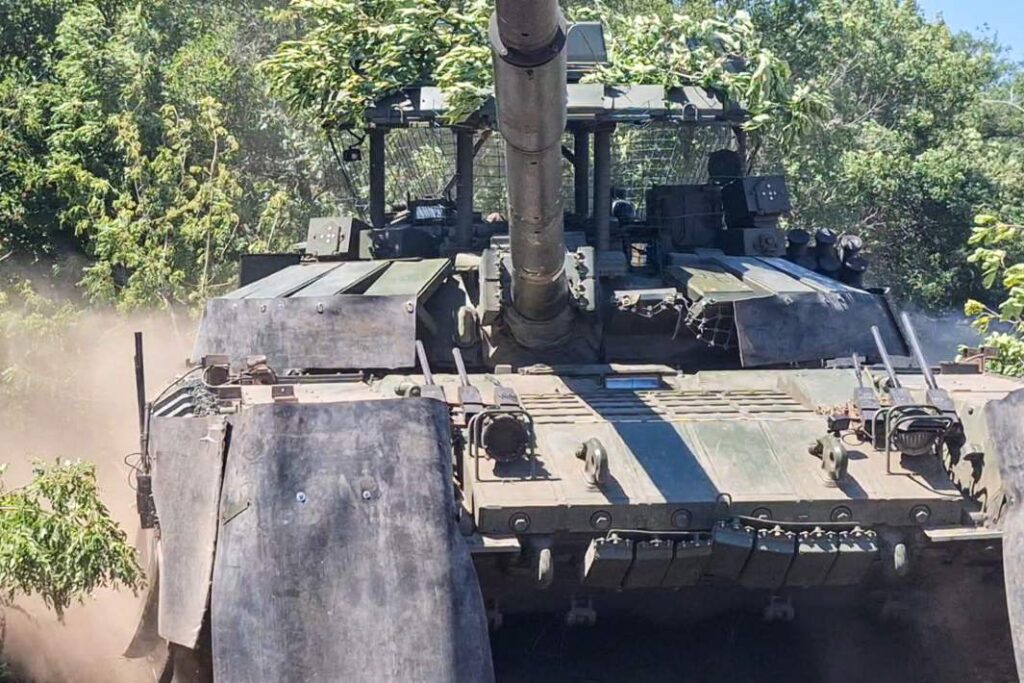
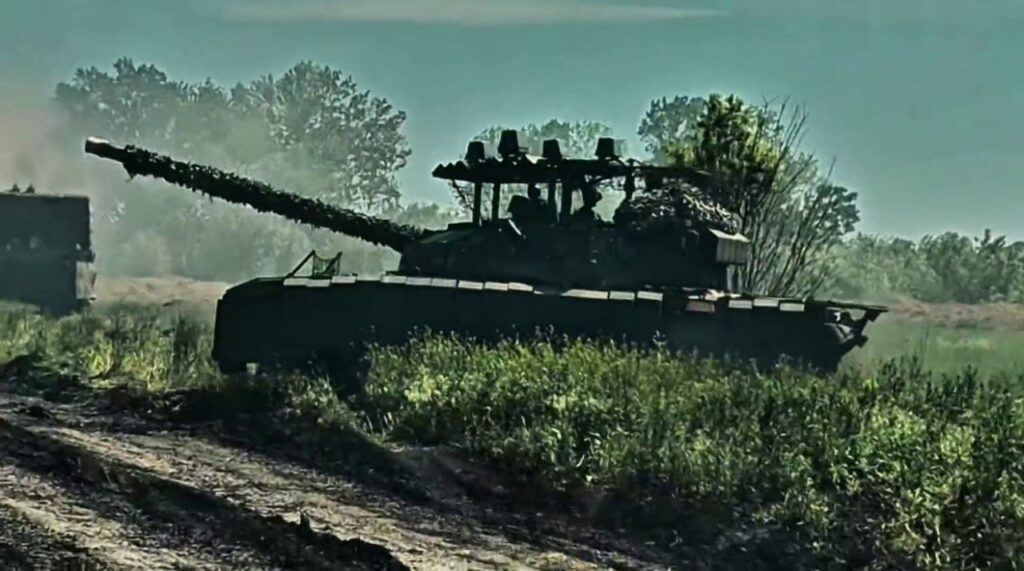
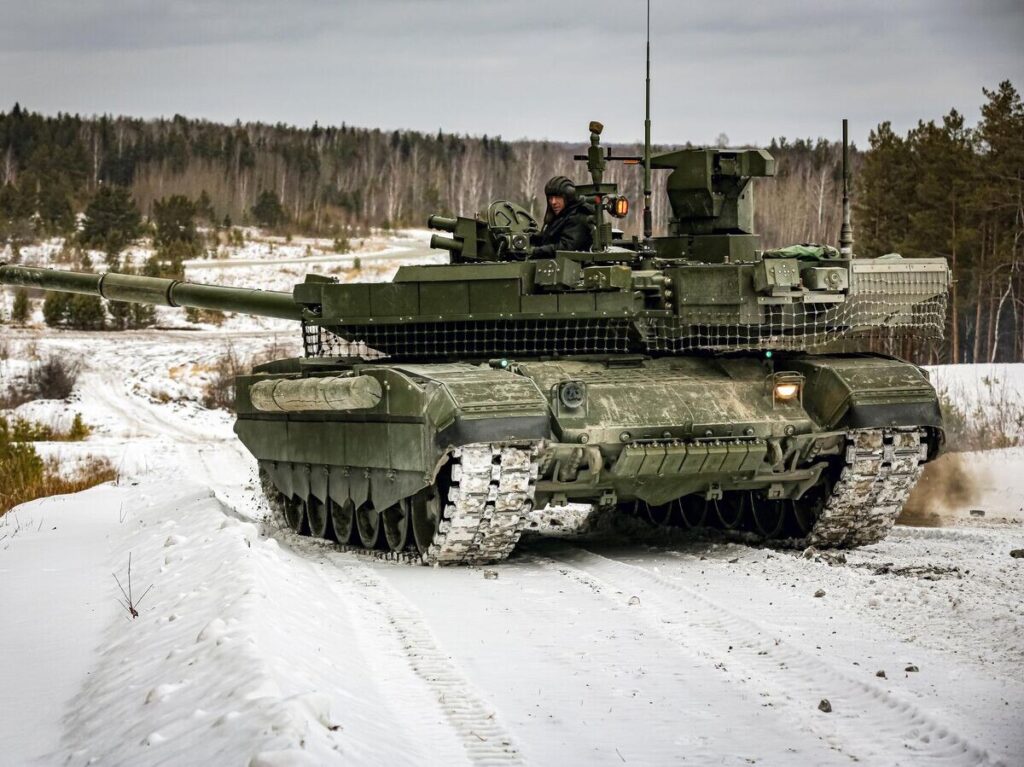
Photographs of the upgraded T-72B3A show that Arena-M is only one element of a broader defensive package.
The vehicle also incorporates:
- Arena-M Active Protection System;
- Factory-installed anti-drone roof armor (“cope cage”);
- Electronic warfare equipment;
- Additional rubber side protection;
- Reinforced armor upgrades for the hull and turret.
This reflects a growing trend toward layered protection.
Modern armored vehicles are no longer expected to survive using a single defensive system alone.
There Is No Perfect Solution
Even if Arena-M performs exactly as claimed, it still has unavoidable limitations.
An active protection system carries only a limited number of interceptor charges.
After several interceptions, the system must be reloaded.
In addition, coordinated attacks by multiple drones approaching simultaneously from different directions could overwhelm almost any current-generation active protection system.
For this reason, military planners increasingly speak not about making tanks invulnerable but about improving their overall survivability.
A New Philosophy of Tank Protection
Today’s main battle tank has evolved into a combination of multiple complementary defensive systems.
Its survivability now depends on the integration of:
- Composite armor;
- Explosive reactive armor;
- Active protection systems;
- Electronic warfare equipment;
- Anti-drone cages and roof armor;
- Camouflage systems;
- Support from air-defense and counter-UAV units.
Each component addresses only part of the threat.
Together, they create a significantly more resilient defensive architecture.
Only Combat Will Provide the Answer
Although Russia has announced that T-72B3A tanks equipped with Arena-M are being prepared for deployment, there is still no independent confirmation of their widespread combat use.
As a result, it remains too early to draw firm conclusions regarding the system’s actual effectiveness against FPV drones.
Military history has repeatedly shown that performance during testing does not always translate directly to real battlefield conditions.
A New Stage in Tank Evolution
The appearance of the T-72B3A equipped with Arena-M represents more than another modernization package.
For the first time, an active protection system is being presented not only as a defense against anti-tank missiles but also as part of a broader strategy for countering mass-produced drones.
Perhaps even more importantly, the vehicle illustrates how the philosophy of armored warfare is changing.
The era when thick steel armor alone determined a tank’s survivability is over.
Today, survival depends on the combined effectiveness of armor, explosive reactive protection, active protection, electronic warfare, and passive anti-drone defenses working together.
T-72B3A Technical Specifications
Base Platform: T-72B3M
Country: Russia
Type: Main Battle Tank (MBT)
Combat Weight: Approximately 46–47 tons
Crew: 3
Armament:
- 125 mm 2A46M-5 smoothbore gun;
- 7.62 mm PKTM coaxial machine gun;
- 12.7 mm Kord heavy machine gun.
Engine: V-92S2F diesel, 1,130 hp
Maximum Road Speed: Up to 60–70 km/h
Protection Systems:
- Composite armor;
- Relikt explosive reactive armor;
- Arena-M Active Protection System;
- Anti-drone roof cage;
- Electronic warfare equipment;
- Additional side protection.
Claimed Arena-M Capabilities:
- Interception of anti-tank guided missiles;
- Protection against RPG rounds;
- Defense against certain top-attack threats;
- Claimed capability to engage FPV drones (not yet independently verified under combat conditions).