
Skyguard: The Swiss Air Defense System That Has Protected the Skies for Nearly Half a Century

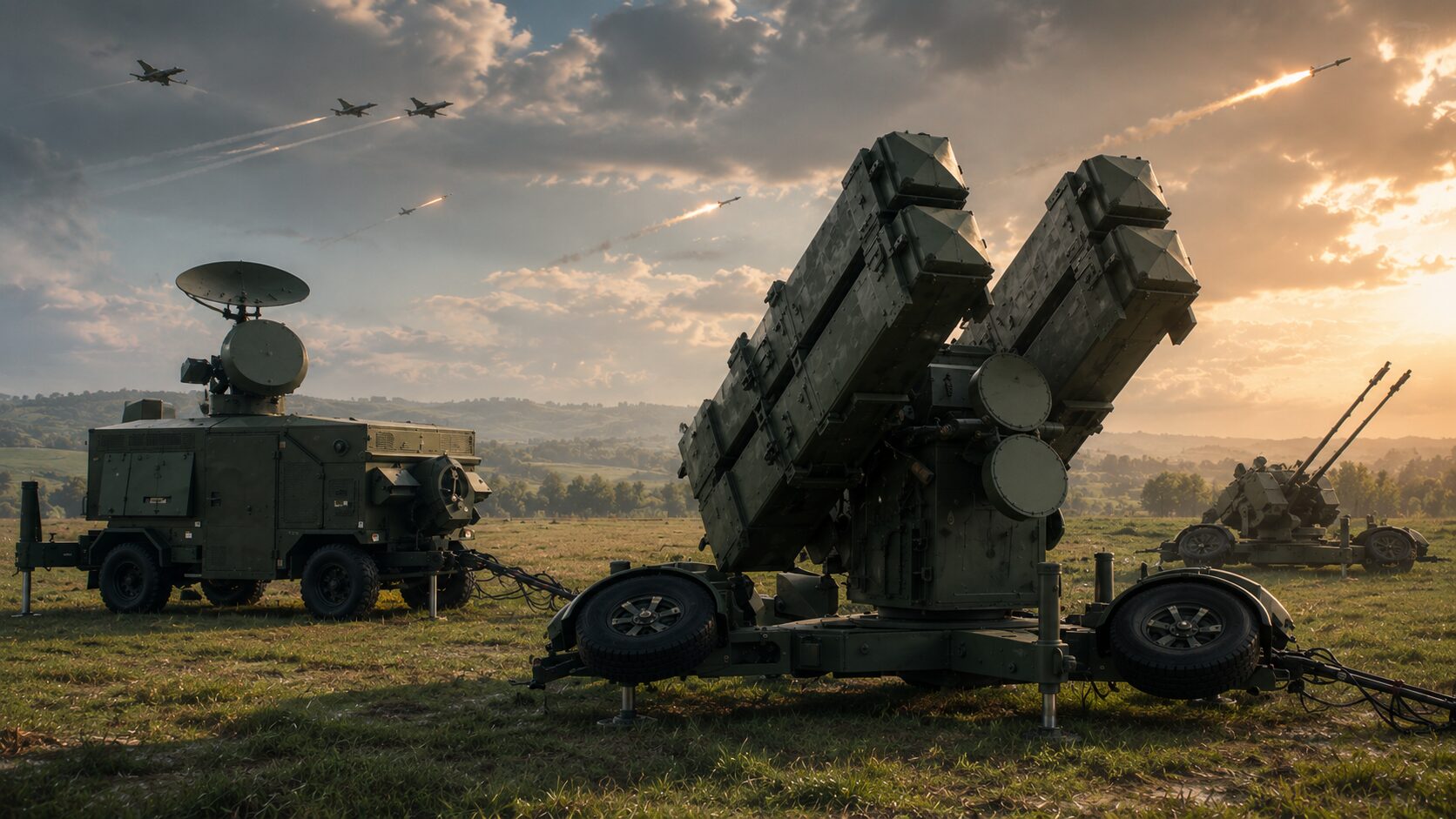
Recent reports that Taiwan has begun installing protective anti-drone nets over its Skyguard air defense systems reveal an important fact. Even after decades of service, the system remains so valuable that operators prefer to modernize and protect it rather than retire it.
That is hardly surprising.
Developed during the Cold War, the Swiss Skyguard became one of the world’s most successful short-range air defense systems. By integrating radar, computerized fire control, and the famous 35 mm Oerlikon anti-aircraft guns into a single networked system, Skyguard proved so effective that it remains in service more than forty years after its introduction.
When Computers Started Shooting More Accurately Than Humans
Before Skyguard appeared, most towed anti-aircraft guns suffered from one major limitation.
Even with radar support, effective fire largely depended on the skill of the gun crews.
As military aircraft became faster, calculating the proper lead angle became increasingly difficult for human operators.
Engineers at Contraves—later incorporated into Rheinmetall Air Defence—decided to change the concept completely.
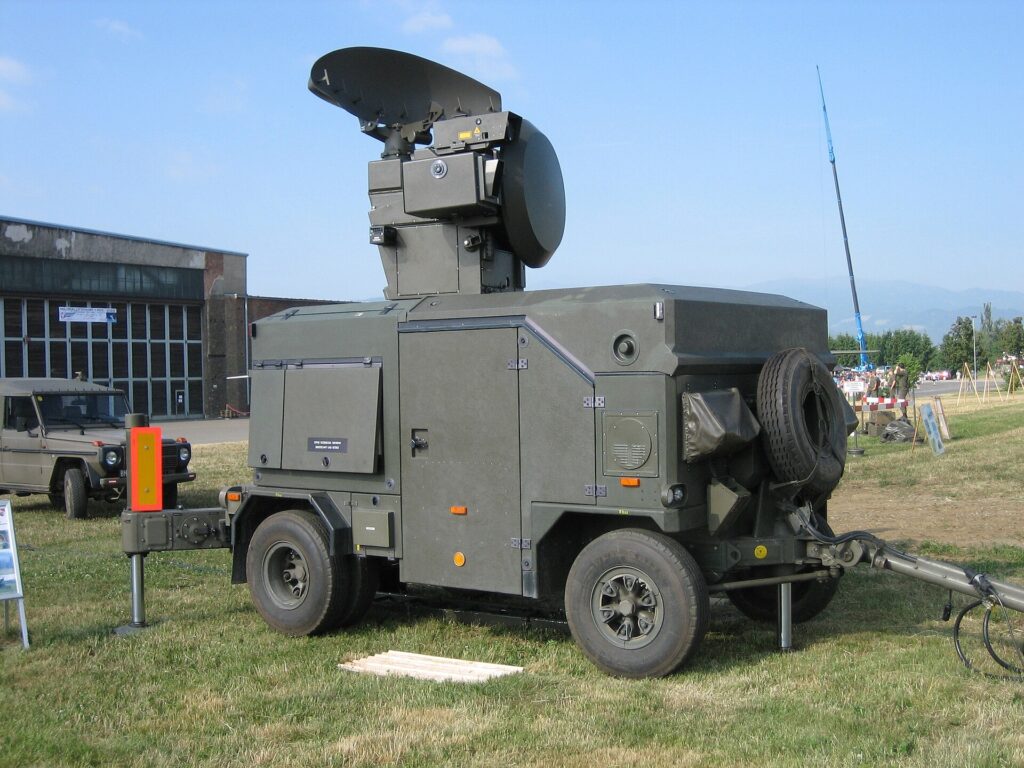
Instead of treating the radar and gun as separate systems, they developed an automated fire-control center capable of detecting targets, calculating firing solutions, and transmitting firing data directly to multiple gun mounts.
For the late 1970s, this level of automation was remarkably advanced.
The Fire-Control System Is the Real Weapon
Many people mistakenly believe that Skyguard refers to the guns themselves.
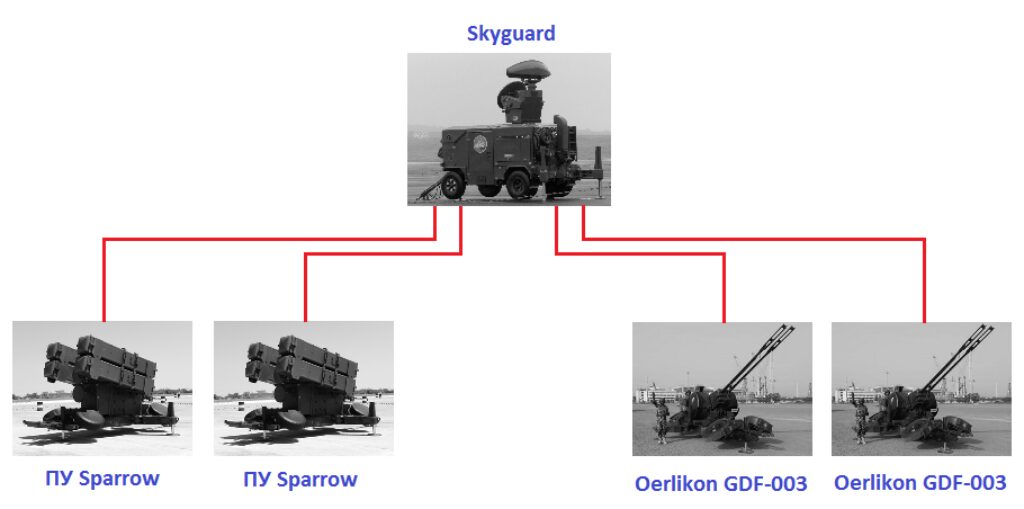
In reality, the heart of the system is the mobile fire-control unit.
Mounted on the trailer are:
- A pulse-Doppler search radar;
- A target-tracking radar;
- A television camera;
- Later upgrades added thermal imaging systems and laser rangefinders.
Once a target is detected, the onboard computer automatically calculates the interception point and sends firing commands to two or four connected gun systems.
For its era, this dramatically increased the probability of hitting fast-moving aircraft and helicopters.
The Famous Oerlikon Guns
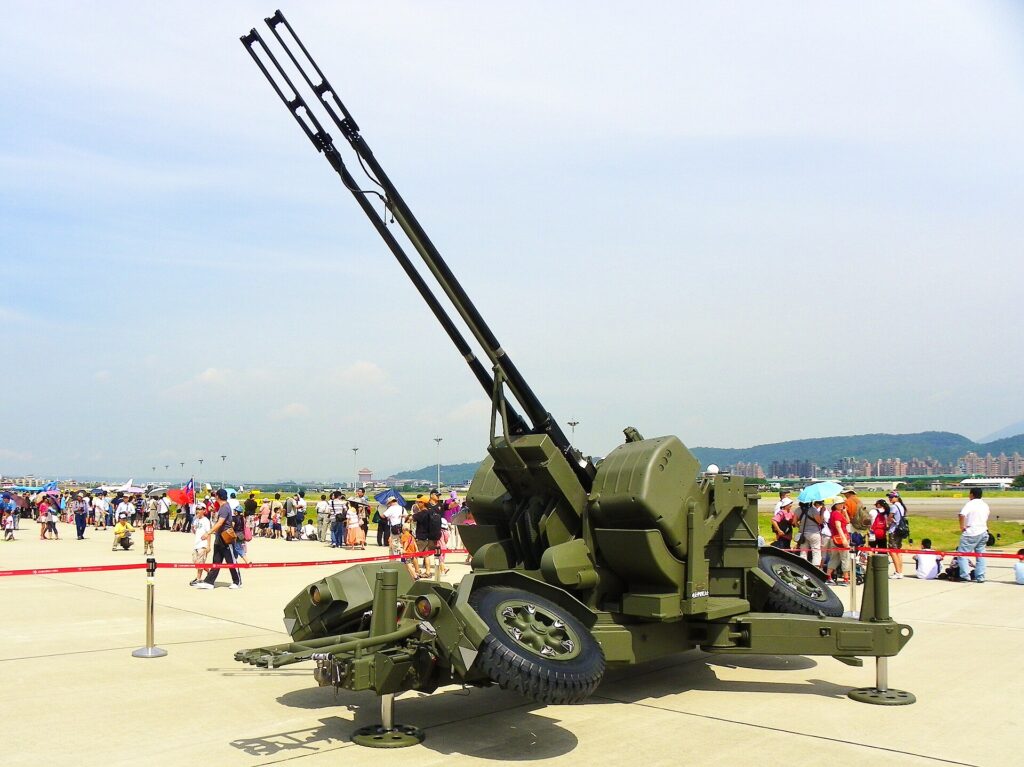
Skyguard is typically paired with twin 35 mm Oerlikon GDF anti-aircraft guns.
Each mount carries two high-rate-of-fire automatic cannons.
Originally, they were designed to engage low-flying aircraft.
Over time, however, the system’s capabilities expanded considerably.
The introduction of AHEAD programmable ammunition transformed the guns into effective weapons against:
- Cruise missiles;
- Unmanned aerial vehicles;
- Helicopters;
- Fast jets;
- Certain types of precision-guided munitions.
These programmable rounds have given Skyguard an entirely new role in twenty-first-century air defense.
From Aircraft to Drones

During the Cold War, Skyguard was primarily intended to counter Soviet tactical aviation.
Today’s threat environment looks very different.
Small drones, loitering munitions, and low-cost aerial weapons have become the primary concern.
Interestingly, Skyguard’s original architecture proved flexible enough to adapt.
The high rate of fire of the 35 mm guns, combined with AHEAD ammunition, creates a cloud of tungsten sub-projectiles directly in front of the target.
This makes the system particularly effective against small UAVs, allowing operators to engage them without expending expensive surface-to-air missiles.
Why Skyguard Remains in Service
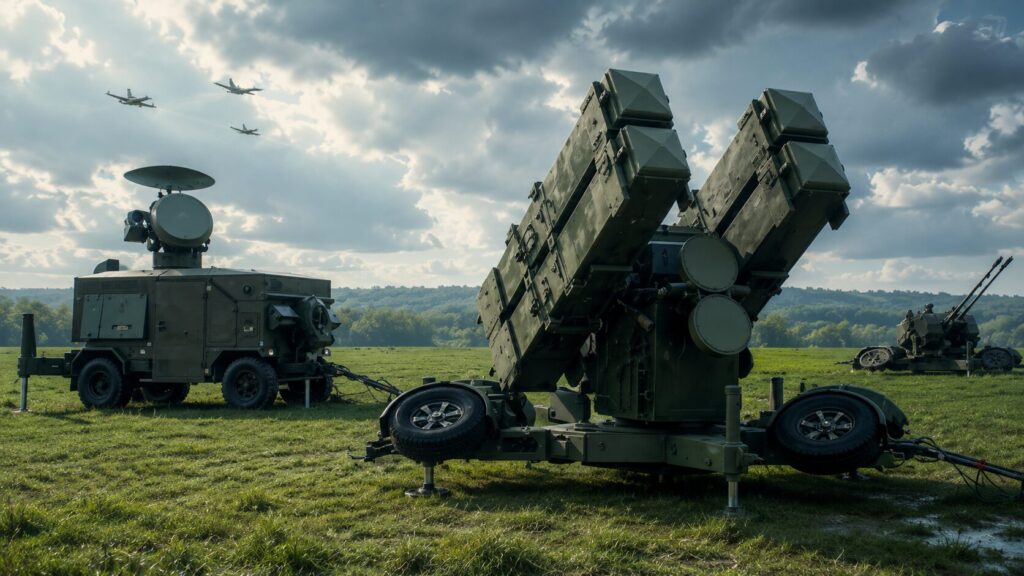
Despite its age, Skyguard continues to serve in numerous countries.
There are several reasons.
First, upgrading existing systems is considerably less expensive than purchasing entirely new air defense systems.
Second, 35 mm automatic cannons remain highly effective against a broad spectrum of aerial threats.
Finally, Skyguard integrates well into modern layered air defense networks.
The latest versions can work not only with gun systems but also with short-range missile launchers, creating a more flexible defensive architecture.
Taiwan Illustrates the Next Stage of Evolution
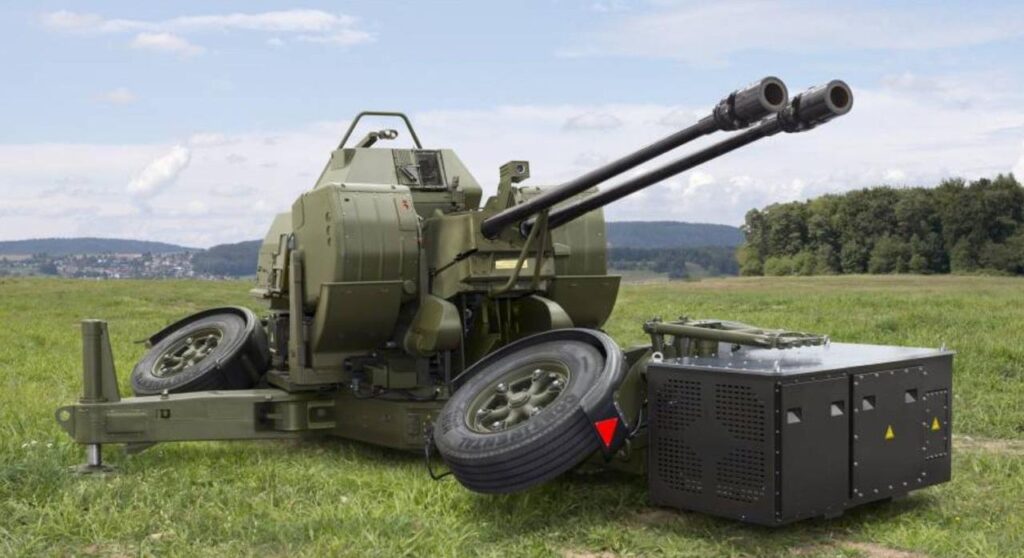
Taiwan’s recent modifications perfectly illustrate how air defense is evolving.
Rather than replacing the Skyguard system, Taiwanese forces have adapted it to survive on today’s battlefield.
Protective cages and anti-drone nets have been installed above radar vehicles and gun systems to reduce their vulnerability to FPV drones and loitering munitions.
The modification highlights a striking reality.
Even advanced air defense systems must now be protected from drones.
A Legacy That Continues
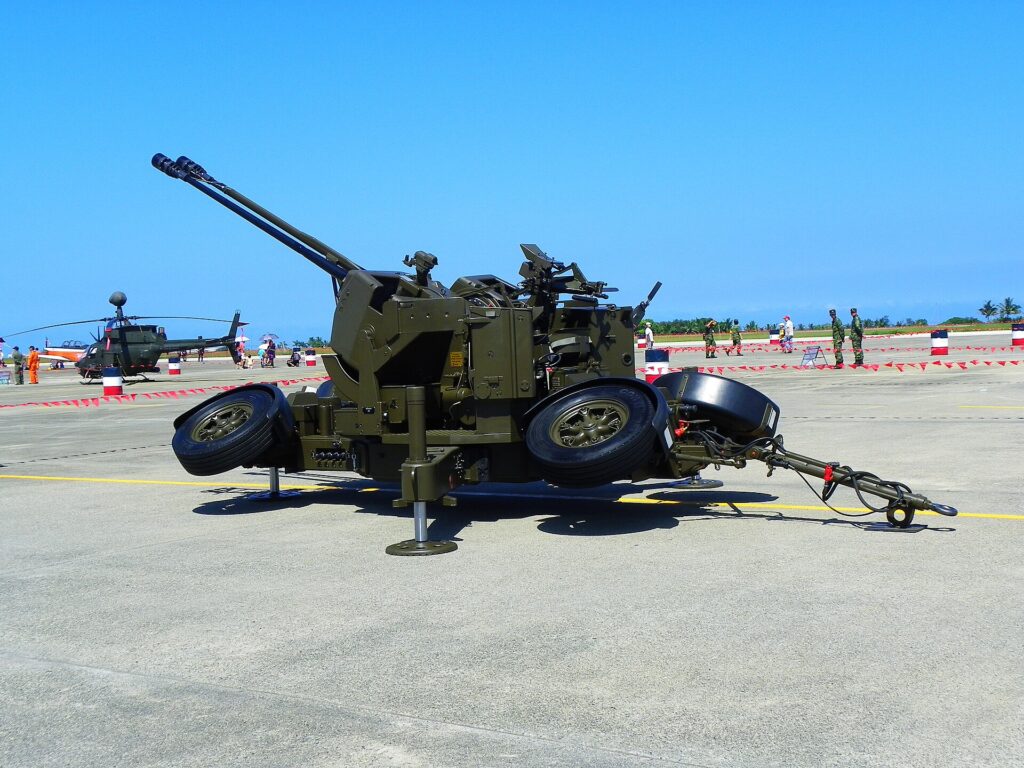
Skyguard proved so successful that it became the technological foundation for an entire family of Rheinmetall air defense systems.
Its direct descendants include:
- Skyshield;
- Skyguard 3;
- Skynex;
- Modern C-RAM and Counter-UAS systems.
Many of Europe’s most advanced gun-based air defense systems can trace their origins directly back to the engineering concepts introduced by Skyguard in the late 1970s.
Skyguard Technical Specifications
Developer: Contraves / Oerlikon (now Rheinmetall Air Defence)
Country: Switzerland
Type: Mobile fire-control system for anti-aircraft artillery
Entered Service: 1977
Primary Armament: Two to four twin 35 mm Oerlikon GDF gun systems
Caliber: 35×228 mm NATO
Effective Engagement Range: Up to 4 km
Maximum Engagement Altitude: Approximately 3–4 km
Sensors:
- Search radar;
- Tracking radar;
- Television camera;
- Modern variants also include thermal imagers and laser rangefinders.
Compatible Weapons:
- Oerlikon GDF gun systems;
- Short-range surface-to-air missiles (selected configurations);
- AHEAD programmable ammunition.
Primary Targets:
- Aircraft;
- Helicopters;
- Cruise missiles;
- Drones;
- Loitering munitions.
Legacy
Skyguard’s greatest strength has never been its guns alone.
Its true innovation lies in its fire-control architecture.
Designed nearly fifty years ago, its integrated radar and computerized targeting concept proved so effective that it remains relevant today. Thanks to continuous upgrades in sensors, electronics, and the introduction of AHEAD programmable ammunition, Skyguard continues to serve as an effective short-range air defense system while also forming the technological foundation for an entire generation of modern European air defense systems.






