Fightertown Alaska: Why the United States Is Turning Alaska into Its Main Airpower Stronghold Against China and Russia

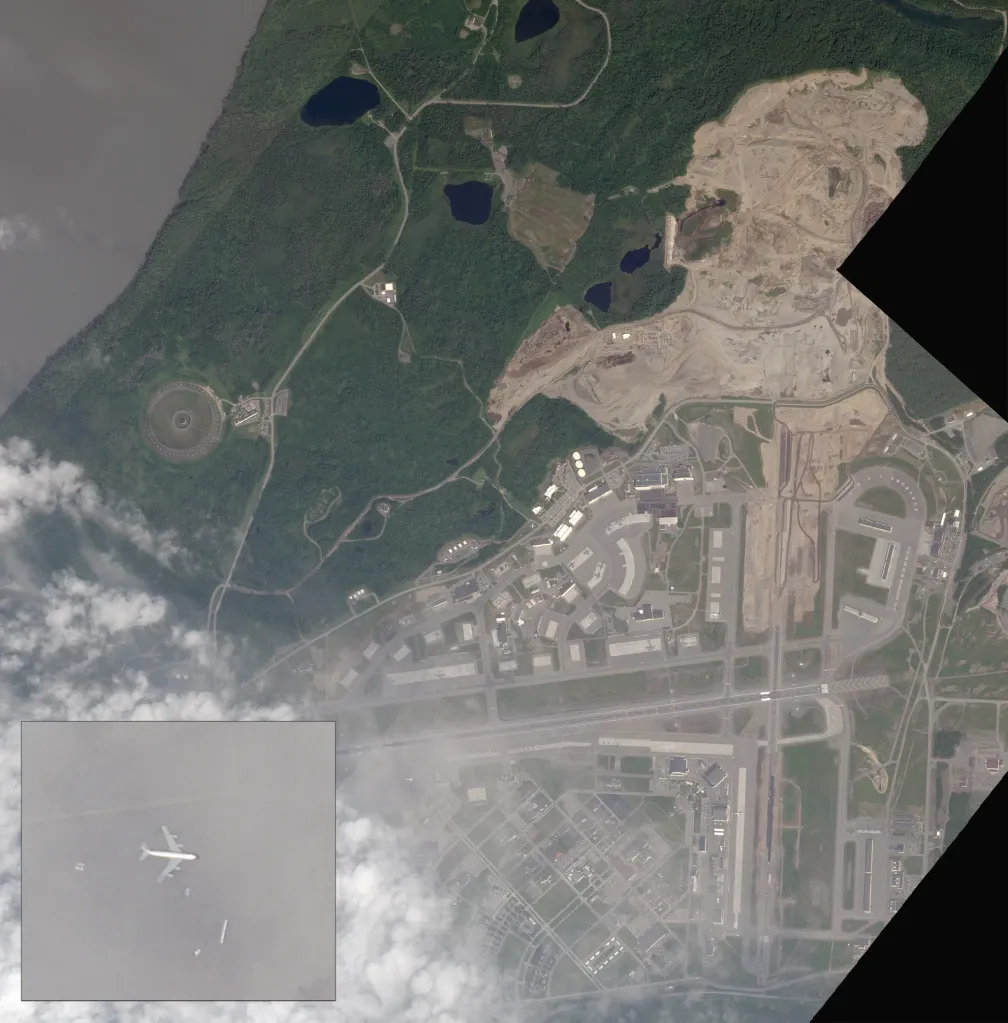
On a map, Alaska appears to be a distant outpost of the United States. Vast stretches of tundra, mountain ranges, glaciers, and sparsely populated wilderness create the impression of a remote frontier far removed from global affairs. For the U.S. military, however, Alaska has long held a very different significance.
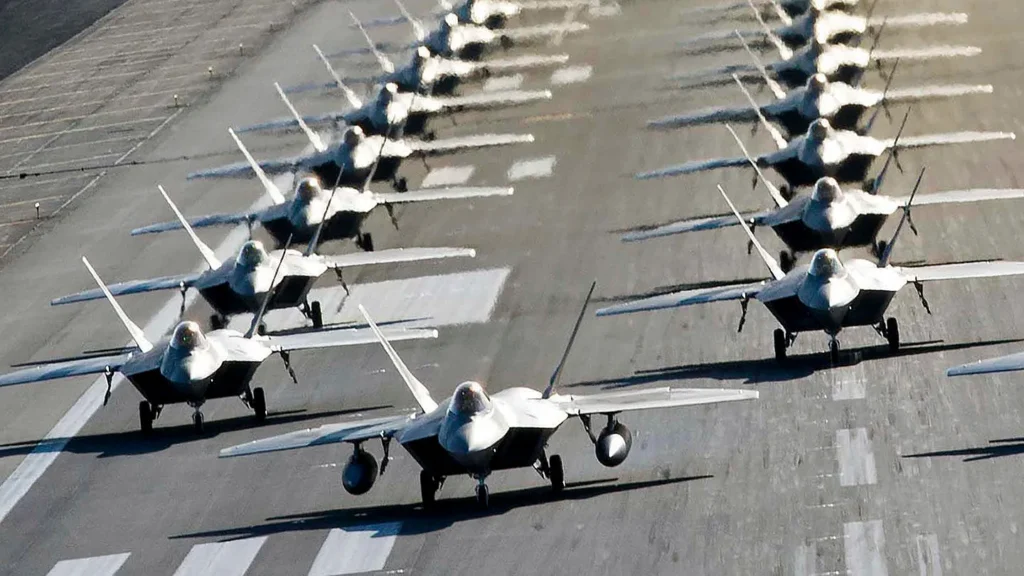
Today, the Pentagon is implementing one of the largest military aviation infrastructure projects of recent decades. Across Alaska, what American planners increasingly refer to as “Fightertown Alaska” is beginning to take shape. This is not simply a matter of upgrading a few air bases. In reality, the United States is building a massive aviation hub at the crossroads of the Arctic and the Pacific, capable of supporting hundreds of combat aircraft and sustaining operations across multiple strategic theaters.
Why Alaska?
From a geographical perspective, Alaska occupies a unique position.
Only a narrow stretch of the Bering Strait separates it from Russian territory. At the same time, the shortest air routes between North America and much of Eurasia pass through the Arctic. During the Cold War, this made Alaska one of the most important elements of America’s air defense network.
Today, the region’s importance has only increased.
Washington now views Alaska as a key platform for operations not only in the Arctic but also across the broader Indo-Pacific region. While American strategic attention was once focused primarily on Russia, it is now increasingly influenced by the rapid expansion of Chinese military power.
As a result, America’s northernmost state has once again become a central component of long-term defense planning.
What Is Fightertown Alaska?
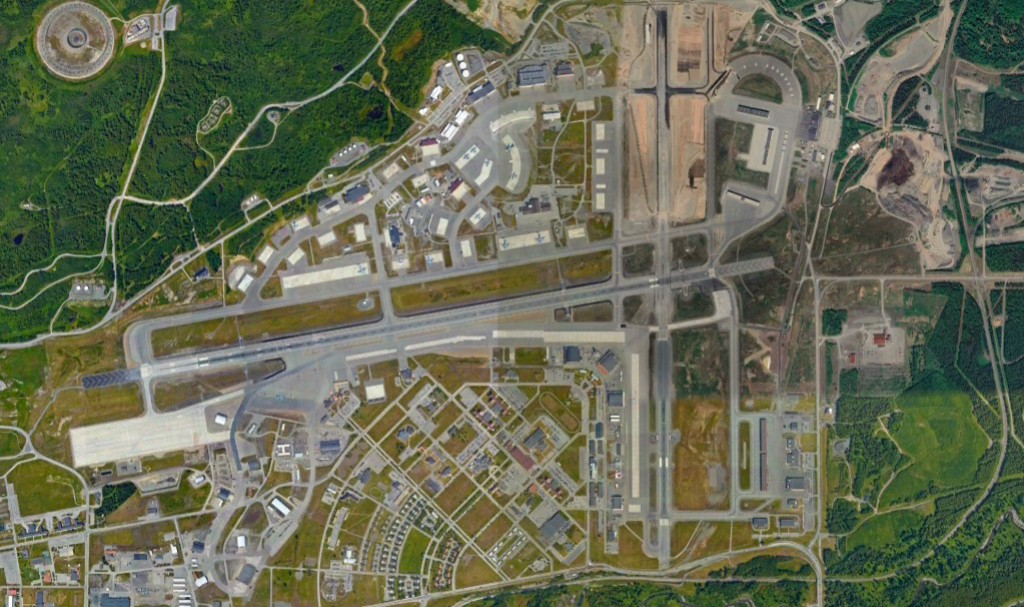
The project revolves around two of the state’s most important military installations: Eielson Air Force Base and Joint Base Elmendorf-Richardson.
Eielson is already home to dozens of F-35A Lightning II fifth-generation fighters. The base also hosts the renowned RED FLAG-Alaska exercises, among the largest multinational air combat training events in the world. Supporting these exercises is the Joint Pacific Alaska Range Complex, an immense training area covering approximately 120,000 square miles, making it one of the largest military aviation ranges on Earth.
American planners now intend to expand the existing infrastructure significantly.
The plans include new aircraft shelters, maintenance facilities, weapons storage areas, support buildings, and additional housing for military personnel. Once completed, these improvements will allow Alaska to host substantially larger numbers of combat aircraft than it can today.
In effect, the project is creating an entire city built around military aviation.
America’s Main Arctic Air Base
A decade ago, many policymakers viewed the Arctic as a remote region of limited military relevance.
That perception has changed dramatically. Melting sea ice, emerging shipping routes, and growing competition for Arctic resources have transformed the region into an area of increasing geopolitical importance.
Russia continues to expand its network of Arctic airfields and military facilities. China, despite lacking direct access to the Arctic Ocean, has also declared significant interests in the region.
The United States is responding by strengthening its military presence in Alaska.
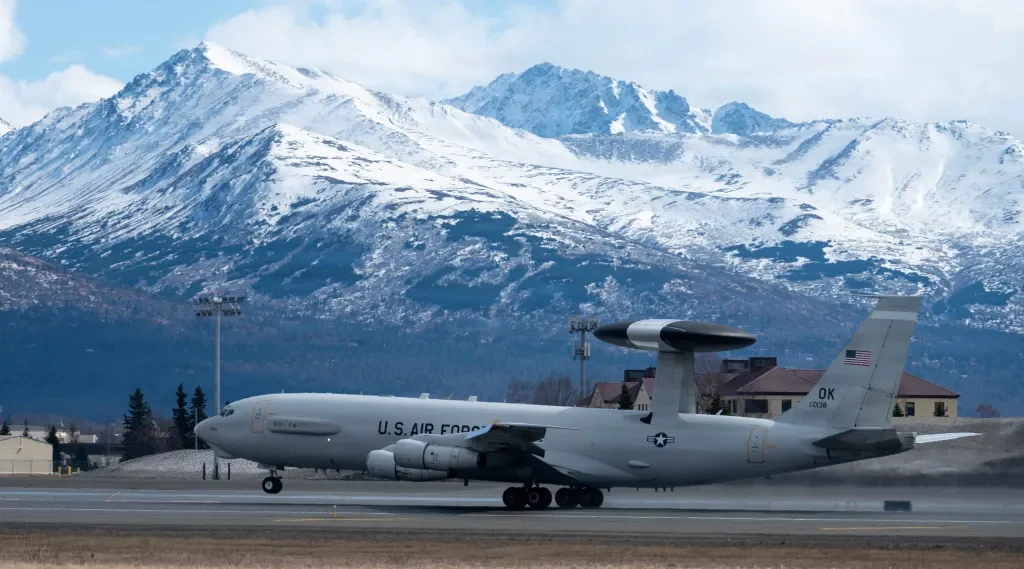
From these bases, fighters, airborne early warning aircraft, aerial refueling tankers, and support assets can rapidly deploy to monitor and control Arctic airspace. As the strategic importance of the far north continues to grow, Alaska is becoming the centerpiece of America’s Arctic military posture.
A Training Ground for Future Wars
Equally important is Alaska’s role as a training center.
RED FLAG-Alaska has evolved into one of the premier venues for preparing American and allied aircrews for high-intensity combat operations. Recent exercises have involved more than 2,100 personnel and over 70 aircraft from countries including the United Kingdom, Canada, New Zealand, and Singapore.
What makes Alaska unique is its combination of vast unrestricted airspace, extreme weather conditions, and the ability to simulate large-scale combat scenarios.
Many of the operational challenges that modern air forces may face in future conflicts are difficult—or impossible—to replicate elsewhere in the United States. Alaska provides a rare environment where pilots and commanders can train under conditions approaching real-world combat.
For that reason, investments in Fightertown Alaska are not only about basing aircraft. They are also about creating one of the most advanced aviation training ecosystems in the world.
The Return of the Northern Front
During the Cold War, Alaska was often described as America’s northern gateway.
After the collapse of the Soviet Union, the strategic importance of the region declined somewhat. Recent developments, however, have brought it back to the forefront of military planning.
Growing competition in the Arctic, the expansion of Chinese military capabilities, and the need to maintain a strong presence across both the Pacific and the High North are driving billions of dollars in investment into Alaska’s military infrastructure.
The Fightertown Alaska project demonstrates that Washington no longer sees Alaska as a remote periphery. Instead, it is increasingly viewed as one of the most important military regions in the United States.
If current plans are fully realized, Alaska could soon host one of the largest concentrations of advanced combat aircraft anywhere along the northern approaches to North America—a vast aerial shield positioned between the Arctic and the Pacific, ready to support American power projection for decades to come.