The Predecessor of the PPSh and MP 40: How the MP 18 Opened the Age of Submachine Guns

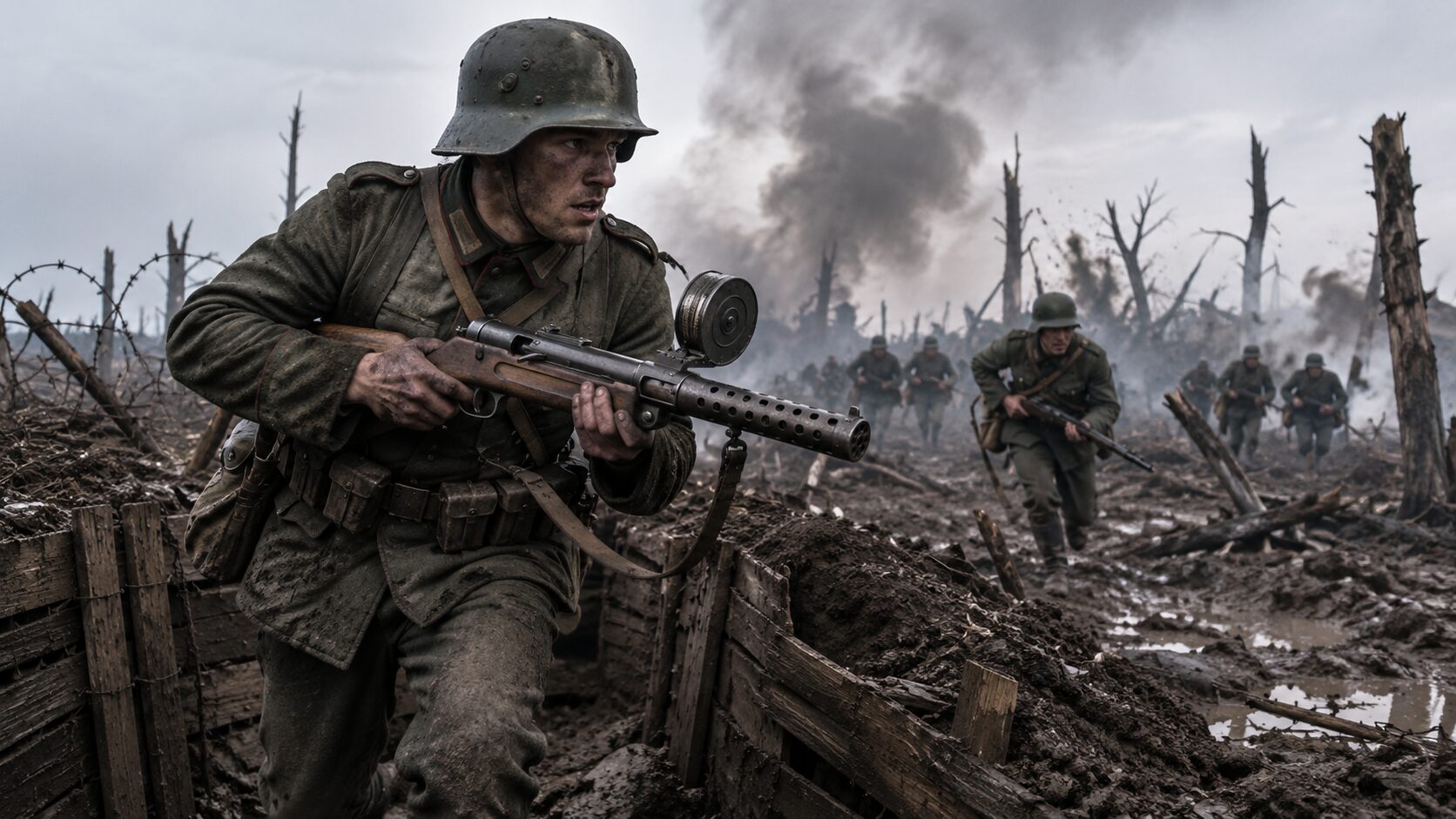
When people think of submachine guns, the first weapons that usually come to mind are the Soviet PPSh-41, the German MP 40, or the American Thompson. These iconic firearms became symbols of the Second World War and secured their place in military history.
Yet long before any of them appeared, there was a weapon without which neither the PPSh nor the MP 40—and dozens of other famous designs—would ever have existed. It was created during the final months of the First World War, when military leaders and engineers were desperately searching for a way to break the deadly stalemate of trench warfare.
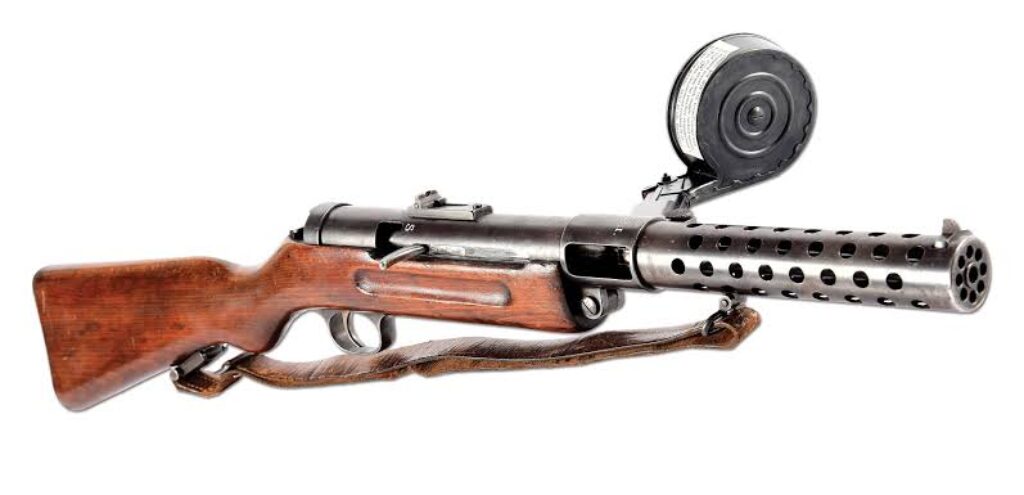
That weapon was the German Maschinenpistole 18, better known as the MP 18—the world’s first production submachine gun.
It was the firearm that launched an entirely new era of infantry weapons.
The Birth of a New Class of Weapon
The First World War quickly shattered traditional ideas about modern combat.
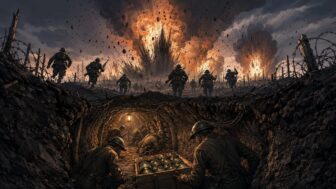
Instead of rapid maneuvers, armies became trapped in thousands of kilometers of trenches. Soldiers spent weeks under artillery bombardment, while almost every offensive operation turned into a bloodbath.
Standard infantry rifles were excellent at engaging targets hundreds of meters away, but inside the maze of trenches their advantages largely disappeared.
A different kind of weapon was needed.
Light.
Compact.
Capable of firing dozens of rounds in a matter of seconds.
The German Army was among the first to recognize this problem. It became especially apparent with the creation of the famous stormtrooper units, the Stosstruppen, whose mission was to break through enemy trench systems.
These assault troops required a new weapon for close-quarters combat.
Hugo Schmeisser and a Weapon for Stormtroopers
The creator of the MP 18 was German firearms designer Hugo Schmeisser, a man whose name would later become closely associated with the development of automatic weapons.
Work on the new firearm began in 1917 at the facilities of Theodor Bergmann.
The designers chose the widely used 9×19 mm Parabellum cartridge, which was already in service with the German military.
The decision proved revolutionary.
Until then, most automatic weapons relied on rifle cartridges. While these offered greater range and power, they required heavier mechanisms and generated substantial recoil.
The pistol cartridge made it possible to build a compact weapon with a high rate of fire and manageable weight.
In many ways, this was the moment when the concept of the submachine gun was truly born.
The Simplicity That Changed Warfare
From a technical standpoint, the MP 18 was remarkably simple.
Its operation was based on simple blowback action.
It fired from an open bolt.
The number of components was relatively small, and the design was both reliable and practical for production.
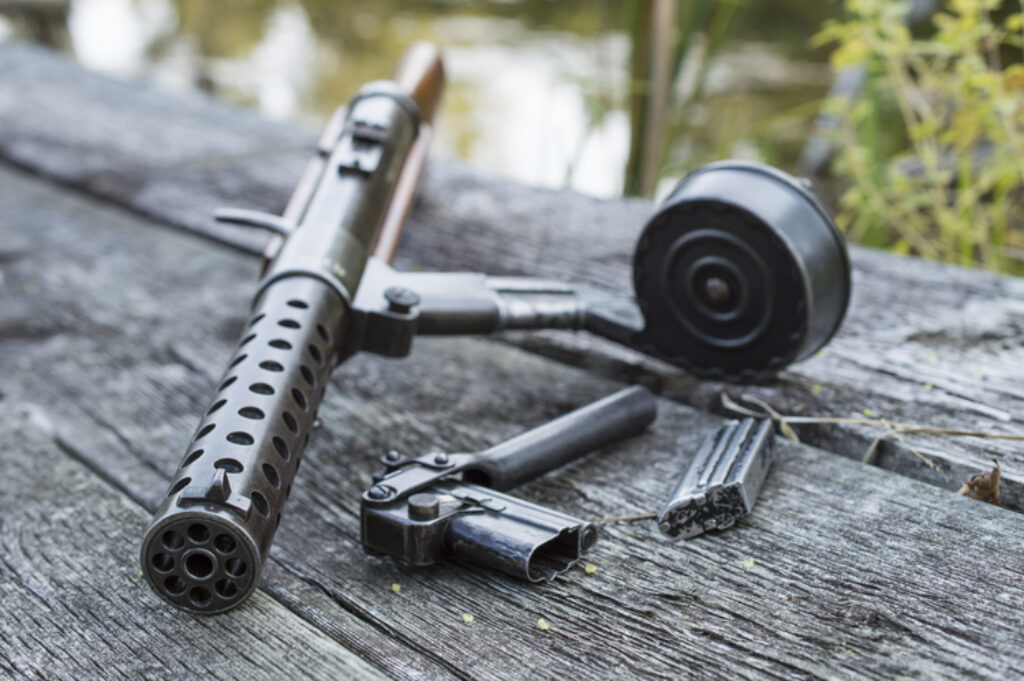
The first version used the famous 32-round Trommelmagazin 08 drum magazine, originally developed for the artillery version of the Luger pistol.
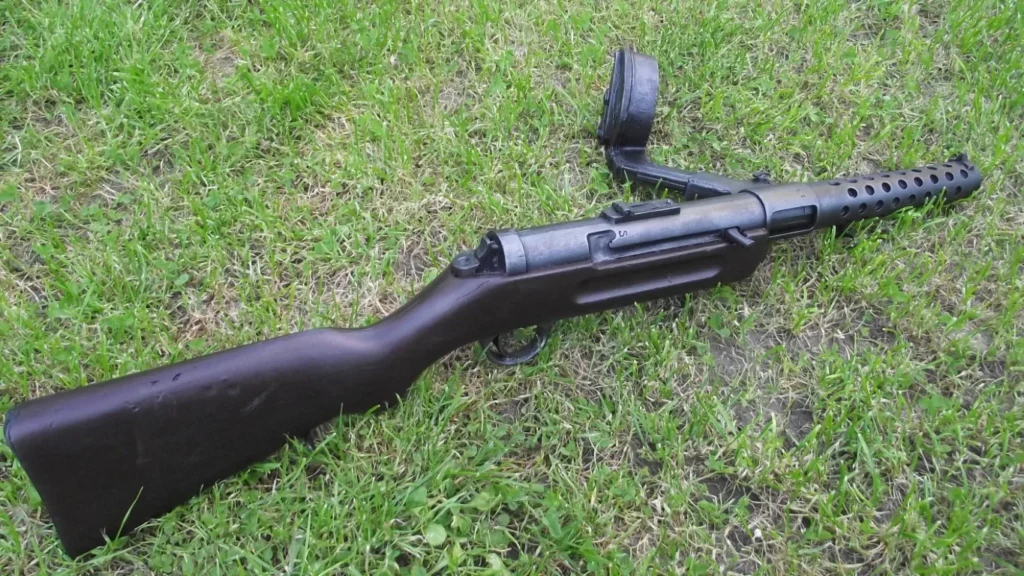
Visually, the MP 18 looked unusual.
It resembled a hybrid between a rifle and a machine gun, featuring a wooden stock, a long barrel, and a side-mounted magazine.
Behind that appearance, however, was an entirely new philosophy of combat.
At ranges of up to 100–150 meters, the MP 18 could deliver a volume of fire previously achievable only with a machine gun.
But now that firepower was carried by a single soldier.
The Kaiser’s Army Strikes Back
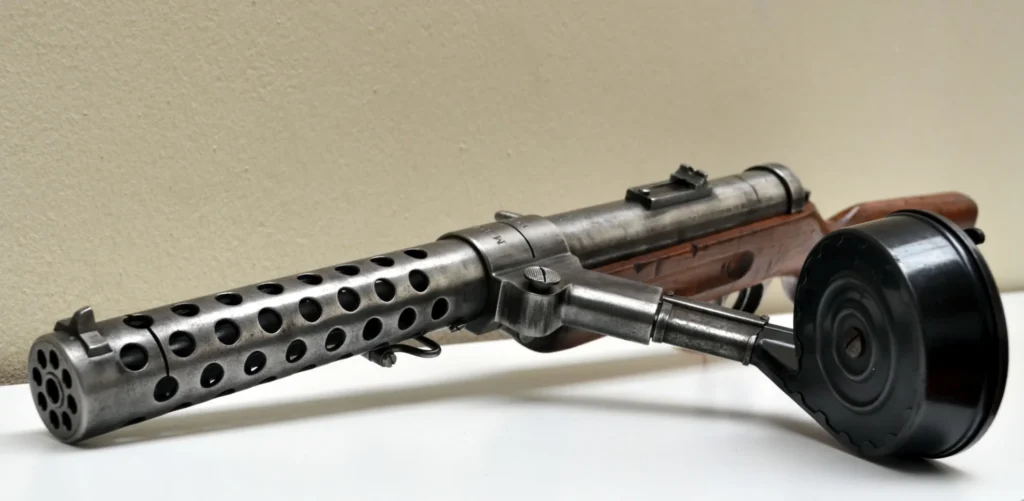
The first MP 18s reached frontline units in the spring of 1918.
They were issued primarily to assault troops participating in Germany’s final major offensives on the Western Front.
During attacks on British and French positions, the new weapon proved highly effective.
In the confined spaces of trenches and bunkers, stormtroopers could overwhelm defenders with bursts of automatic fire.
For Allied soldiers, encounters with these assault units often came as a very unpleasant surprise.
Yet the MP 18 could not change the outcome of the war.
By the time it entered service in significant numbers, Germany had already exhausted much of its military and economic strength.
In November 1918, the First World War came to an end.
The story of the new weapon, however, was only just beginning.
Why the MP 18 Became the Ancestor of the PPSh and MP 40
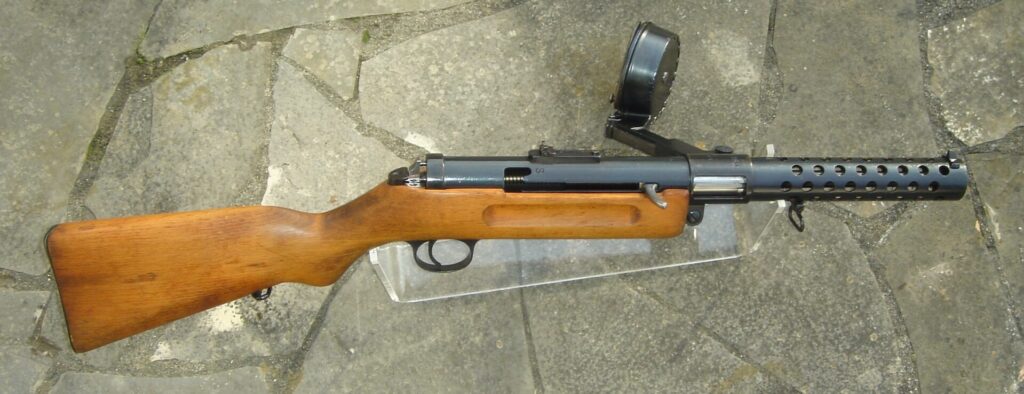
After the war, Germany found itself restricted by the Treaty of Versailles.
The production of many types of military equipment was either prohibited or heavily limited.
Nevertheless, the concept of the submachine gun was simply too effective to disappear.
Designers around the world studied the German innovation closely.
Throughout the 1920s and 1930s, new submachine guns began appearing across Europe and North America: the Finnish Suomi KP/-31, the American Thompson, the Italian Beretta M1918, and many others.
Each of these weapons incorporated ideas first successfully implemented in the MP 18.
The influence of the German pioneer was especially visible in later German developments.
Within two decades, the concept would evolve into the MP 38 and eventually the famous MP 40.
At the same time, the idea of a compact automatic weapon chambered for a pistol cartridge inspired Soviet designers and contributed to the development of the PPD, PPS, and ultimately the legendary PPSh-41.
In many respects, every submachine gun of the Second World War can trace its lineage back to the MP 18.
From the Trenches of World War I to the Streets of World War II
What makes the story particularly fascinating is that the creators of the MP 18 never realized how profoundly their weapon would shape the future.
It was designed as a specialized tool for trench assaults.
Yet within twenty years, submachine guns had become one of the defining infantry weapons of modern warfare.
They proved ideal for fighting in cities, forests, buildings, and other close-combat environments.
During the Second World War, millions of soldiers around the globe fought with weapons that were directly or indirectly descended from the MP 18.
Few firearms in history have had such a lasting impact on military technology.
The Legacy of the First Submachine Gun
Today, the MP 18 appears somewhat archaic.
Its wooden stock, long barrel, and heavy drum magazine stand in stark contrast to modern firearms.
But judging it by contemporary standards would be unfair.
For its time, it was revolutionary.
The MP 18 created an entirely new category of weapon that would shape infantry combat for nearly half a century. From the trenches of the First World War to the ruins of Stalingrad, the streets of Berlin, and the jungles of Southeast Asia, traces of the idea born in Hugo Schmeisser’s workshop in 1917 can still be seen.
That is why the MP 18 remains more than just an interesting historical firearm.
It is the true ancestor of an entire era of military weapons.
The PPSh, the MP 40, the Thompson, the Suomi, and the PPS all came later.
The MP 18 was first.