
The New Air Force One Is Getting Closer: The VC-25B Bridge Has Joined the Presidential Airlift Group

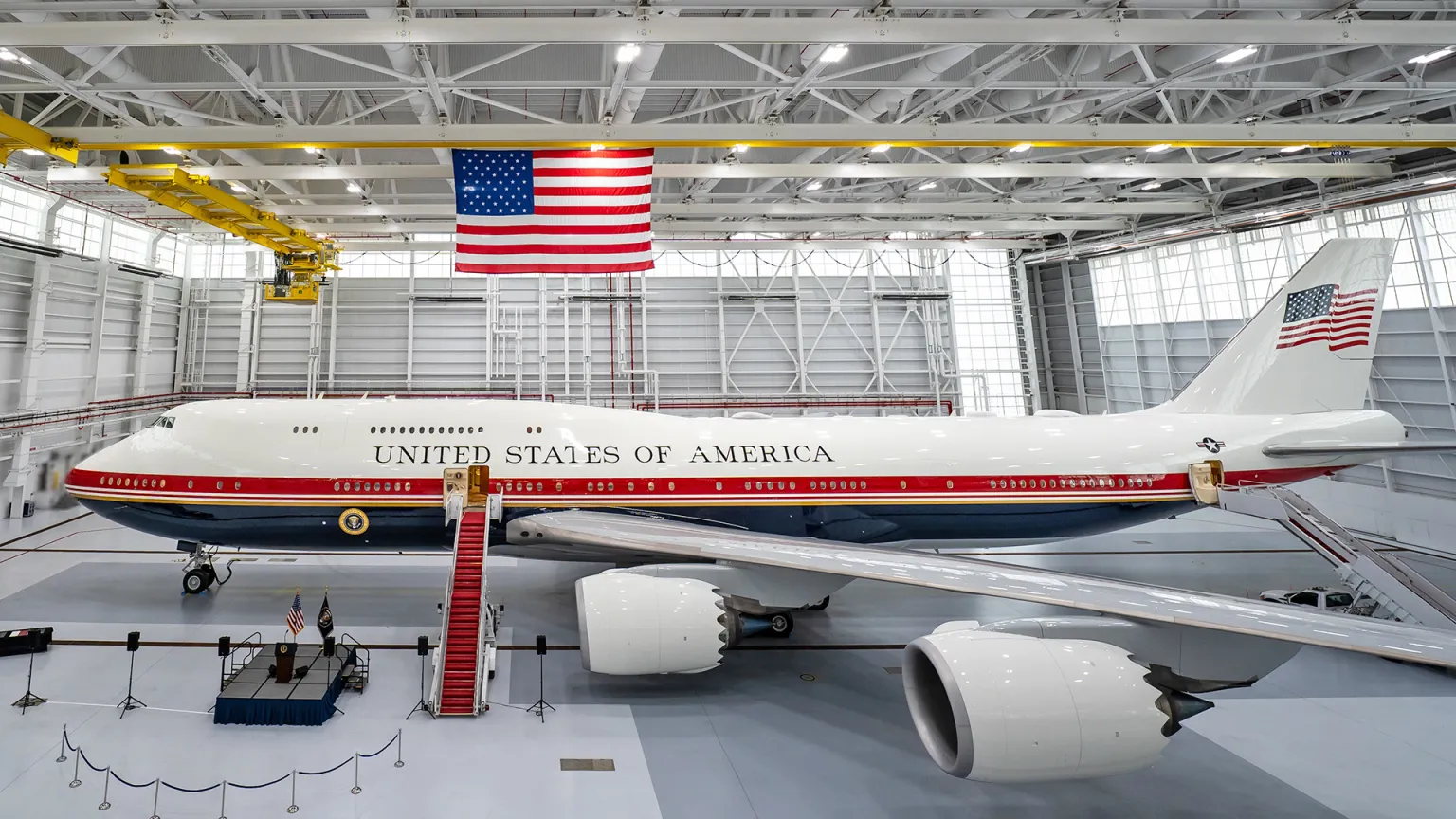
For more than three decades, the symbol of American presidential power in the skies has been a pair of VC-25A aircraft—heavily modified Boeing 747-200Bs known worldwide as Air Force One whenever the President is on board. However, these aircraft are now over thirty years old, maintenance is becoming increasingly complex, and the program to replace them has faced repeated delays.
Now, the U.S. Air Force has taken another step toward modernizing its presidential fleet. A new aircraft known as the VC-25B Bridge has officially joined the Presidential Airlift Group at Joint Base Andrews. The aircraft is intended to serve as a transitional platform between the current presidential airliners and the future VC-25B fleet that is still under development.
Why a “Bridge” Air Force One Was Needed
The effort to replace America’s presidential aircraft has evolved into one of the most complex aviation programs in recent memory.
Back in the late 2010s, plans were approved to replace the existing VC-25A fleet with new aircraft based on the Boeing 747-8. However, the immense complexity of integrating secure communications systems, electromagnetic shielding, defensive countermeasures, and numerous specialized presidential requirements led to repeated schedule slips.
The next-generation VC-25B aircraft are now expected to enter service no earlier than 2028.
Meanwhile, the current fleet continues to age. The aircraft, originally delivered in 1990, require increasing amounts of maintenance and their operating costs continue to rise.
As a result, the Air Force sought an interim solution capable of bridging the gap until the new presidential aircraft are fully operational.
That solution is the VC-25B Bridge.
A Former Qatari Royal Aircraft
The new aircraft is based on a Boeing 747-8 that previously served in the government fleet of Qatar.
Built in 2012 as a Boeing Business Jet, the aircraft was originally used to transport members of Qatar’s ruling family. It was later transferred to the United States and underwent an extensive modification program.
The conversion included the installation of secure communications equipment, command-and-control systems, defensive technologies, and other specialized components required for presidential transport.
Although the VC-25B Bridge does not incorporate every capability planned for the future VC-25B fleet, it is far more sophisticated than a conventional government transport aircraft.
In essence, it functions as a fully equipped airborne command center—a flying White House capable of supporting presidential operations anywhere in the world.
The Largest Presidential Aircraft in U.S. History
The VC-25B Bridge is based on the Boeing 747-8, the final and most advanced version of the legendary Jumbo Jet.
Compared with the current VC-25A aircraft, the new platform is noticeably larger.
It offers increased range, more efficient engines, and significantly improved fuel economy. The aircraft can perform long-distance intercontinental missions with fewer refueling stops while carrying a substantial payload.
These improvements make it one of the most capable presidential transport aircraft ever operated by the United States.
While the VC-25A remains an icon of American aviation, the Boeing 747-8 platform represents the next step in the evolution of airborne executive transport.
A New Paint Scheme Breaks with Tradition
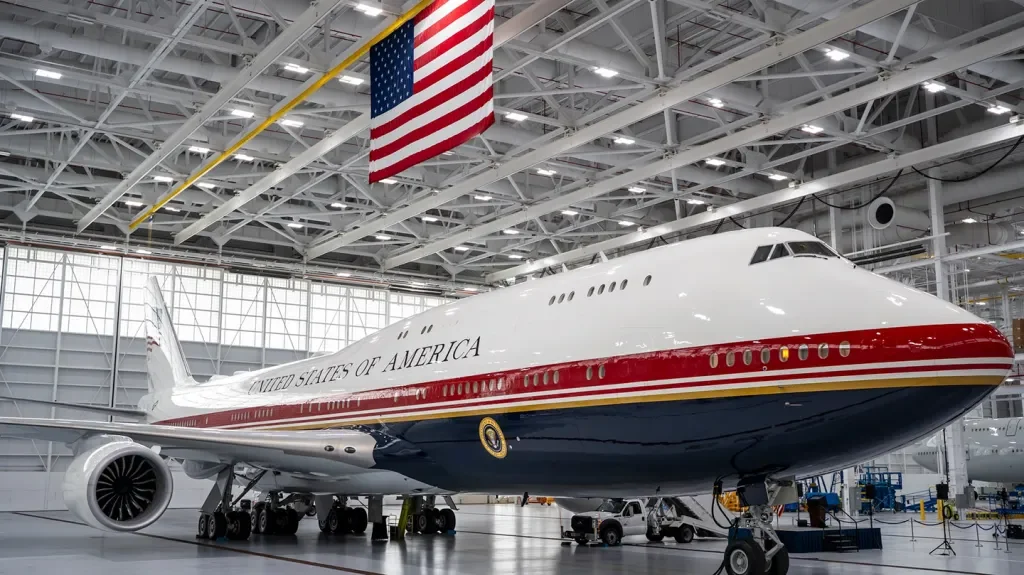
One of the most visible changes is the aircraft’s appearance.
Since the early 1960s, presidential aircraft have carried the iconic light-blue and white livery created by industrial designer Raymond Loewy for President John F. Kennedy’s administration. That design became one of the most recognizable aircraft liveries in the world.
The VC-25B Bridge adopts a dramatically different look.
Its paint scheme combines red, white, dark blue, and gold elements, creating a far more modern and distinctive appearance. The departure from the traditional design has already become one of the most discussed aspects of the aircraft among aviation enthusiasts and observers.
Whether the new color scheme will become the long-term face of Air Force One remains a subject of debate, but it undeniably marks a significant break from decades of tradition.
What Happens Next?
Although the aircraft has now joined the Presidential Airlift Group, it is not yet fully operational.
The VC-25B Bridge must undergo a series of acceptance tests, operational evaluations, and certification procedures before it can begin carrying the President of the United States and other senior government officials.
Once these evaluations are complete, the aircraft will provide additional flexibility to the presidential transport fleet while the dedicated VC-25B aircraft continue to progress through development and modification.
Importantly, the VC-25B Bridge is not intended to replace the future VC-25B fleet. Instead, it serves as a temporary but highly capable solution designed to ensure uninterrupted presidential airlift capability during the transition period.
More Than Just an Airplane
For most people, Air Force One is simply the President’s airplane.
In reality, it is far more than that.
Every presidential aircraft serves as a mobile command center capable of maintaining secure communications with military and government leaders worldwide. It allows the President to direct national operations during crises, respond to emergencies, and remain connected to the U.S. military command structure even during major conflicts.
That is why the arrival of the VC-25B Bridge represents more than a simple fleet update.
It marks another milestone in the long-running effort to provide the United States with a new generation of airborne command posts capable of serving future presidents for decades to come.
While the fully developed VC-25B aircraft are still several years away, their transitional predecessor has already taken its place alongside the legendary Air Force One fleet, opening a new chapter in the history of American presidential aviation.
source https://www.twz.com/air/new-air-force-vc-25b-bridge-jet-has-joined-the-presidential-airlift-group






