The War That Destroyed the Knightly Dream: How Burgundy Tried to Become Europe’s Next Superpower

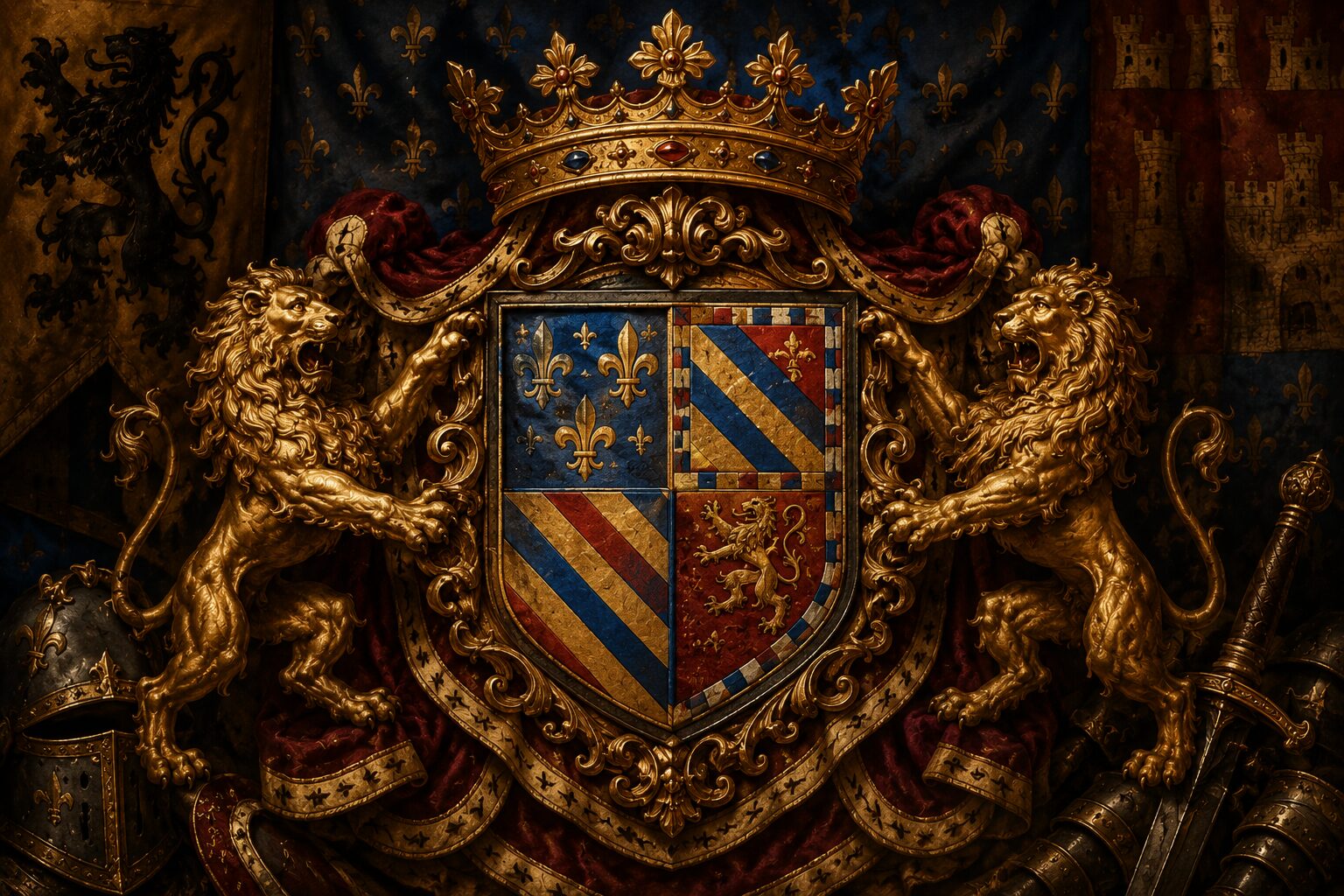
In the second half of the fifteenth century, there existed a state that many contemporaries believed would become the future center of Europe. It was wealthier than most kingdoms, its cities overflowed with luxury, its armies looked terrifying, and its court dazzled visitors with almost unimaginable splendor. Burgundy appeared to be a state of the future — too rich, too ambitious, and too confident in its own strength.
And then everything collapsed.
The series of conflicts later known as the Burgundian Wars did not simply destroy one of the most powerful states of its age. They effectively buried an entire era of European military history — the age of knightly armies, feudal arrogance, and the belief that heavily armored cavalry could still decide the fate of the continent.
And perhaps most remarkable of all: Burgundy was not crushed by some enormous empire.
It was broken by the Swiss.
The State That Wanted to Become Europe’s New Kingdom
By the fifteenth century, the Duchy of Burgundy had become an economic giant. Formally, the Dukes of Burgundy remained vassals of the French crown, but in reality their territories formed an almost independent power stretching from Burgundy itself to the enormously wealthy cities of Flanders and the Low Countries.
Ghent, Bruges, Brussels, Lille — these were not merely large cities. They were financial and commercial centers of Europe. Cloth was manufactured here, fortunes were made, major trade deals were signed, and bankers financed half the continent.
Against this backdrop, the Burgundian court evolved into something extraordinary. The dukes deliberately cultivated the image of a new center of European civilization. Tournaments, magnificent processions, golden fabrics, luxurious armor, elaborate court rituals — everything was designed to send a message: Burgundy was no longer merely a duchy.
It aspired to something greater.
And the chief architect of that dream was the man history remembers as Charles the Bold.
Charles the Bold — The Last Great Knight of Europe
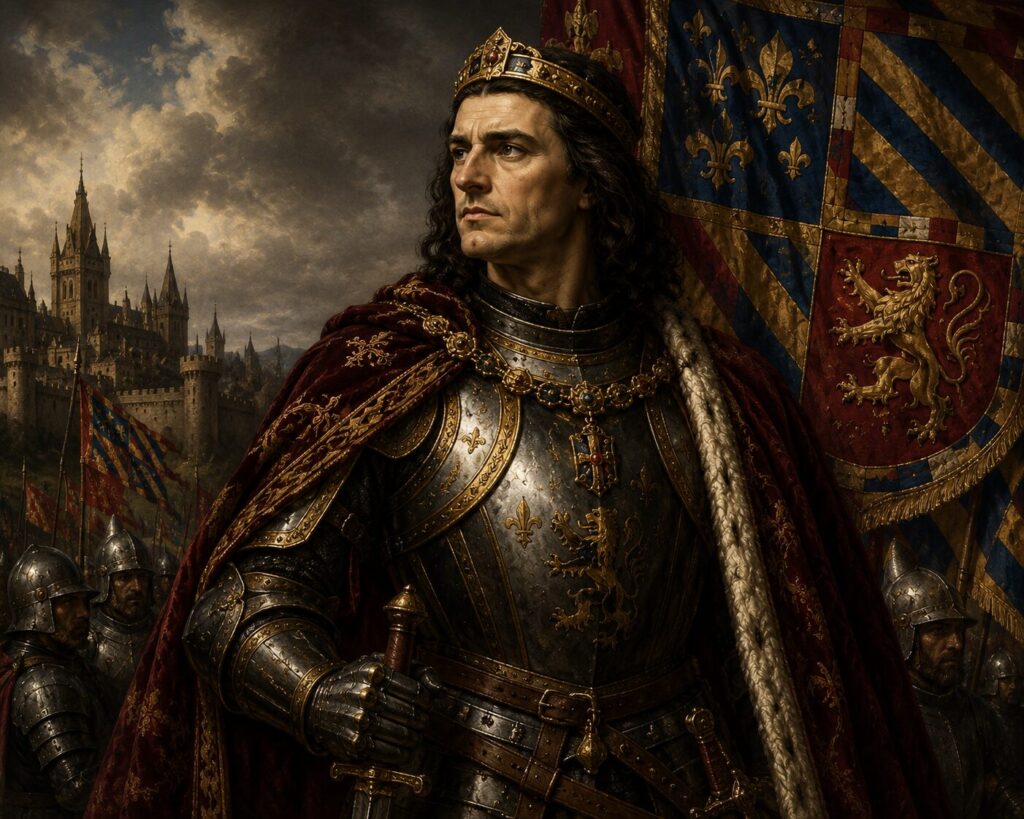
Charles the Bold seemed like a figure pulled directly from a medieval romance. Tall, brave, immensely ambitious, and absolutely convinced of his own destiny, he dreamed of transforming Burgundy into a true kingdom capable of rivaling both France and the Holy Roman Empire.
The problem was that Europe was already changing faster than Charles himself understood.
He still believed in knightly warfare — in the crushing charge of heavy cavalry, in aristocratic valor, in the spectacle of armored horsemen deciding battles through sheer force. Burgundy certainly used artillery and possessed one of the most modern military systems of its time, but psychologically Charles remained a man of the old world.
And it was precisely here that Burgundy collided with a new reality.
The Swiss Who Learned How to Break Knights
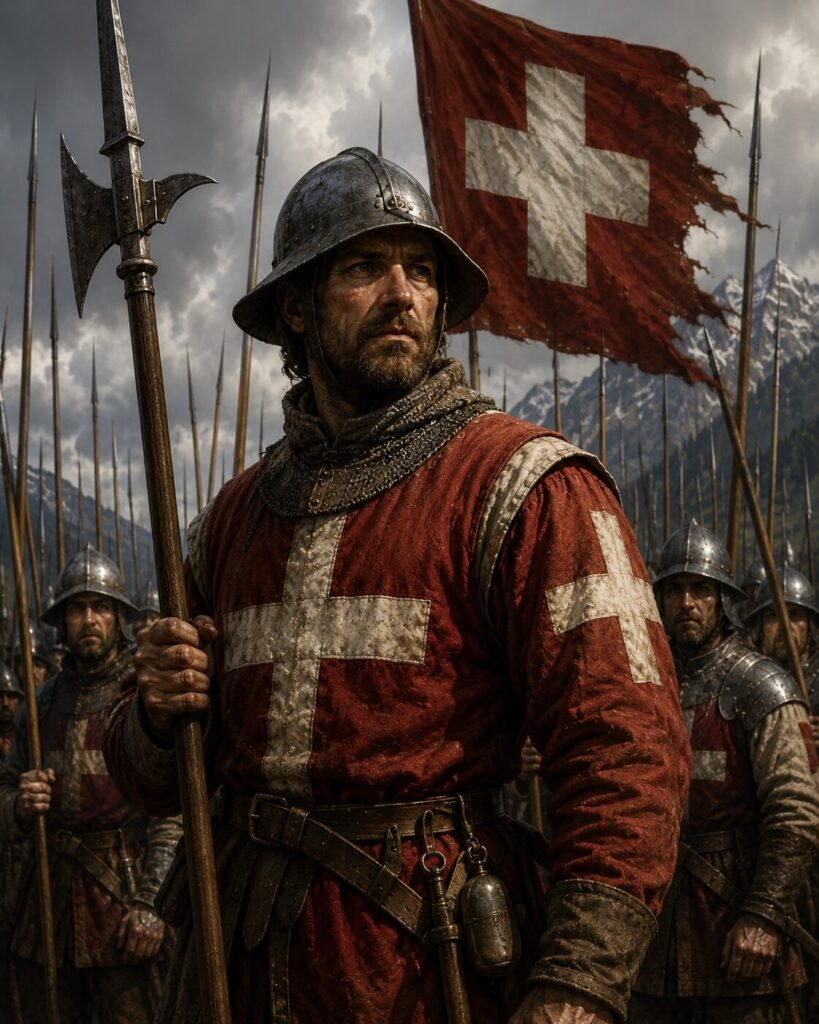
In the fifteenth century, the Old Swiss Confederacy appeared to be a rather strange political entity. Small mountain cantons without the luxurious aristocratic culture of Europe’s great courts suddenly began producing one of the most effective infantry forces on the continent.
The Swiss relied primarily on dense formations of pikemen.
At first glance, it looked almost primitive. No shining armored knights. No romantic image of chivalry. Just thousands of disciplined infantrymen carrying extremely long pikes and capable of moving as a single organism.
Yet this system proved devastating against traditional knightly armies.
For centuries, heavy cavalry had been built around the idea of the powerful frontal charge. But tightly packed pikemen transformed such attacks into near-suicide. Horses refused to crash into forests of spear points, and if cavalry did force their way forward, riders were often impaled directly on the pikes.
For Europe, this was a genuine shock.
Suddenly it became clear that disciplined infantry could destroy the elite of the knightly world.
Grandson — The Disaster Nobody Believed Possible
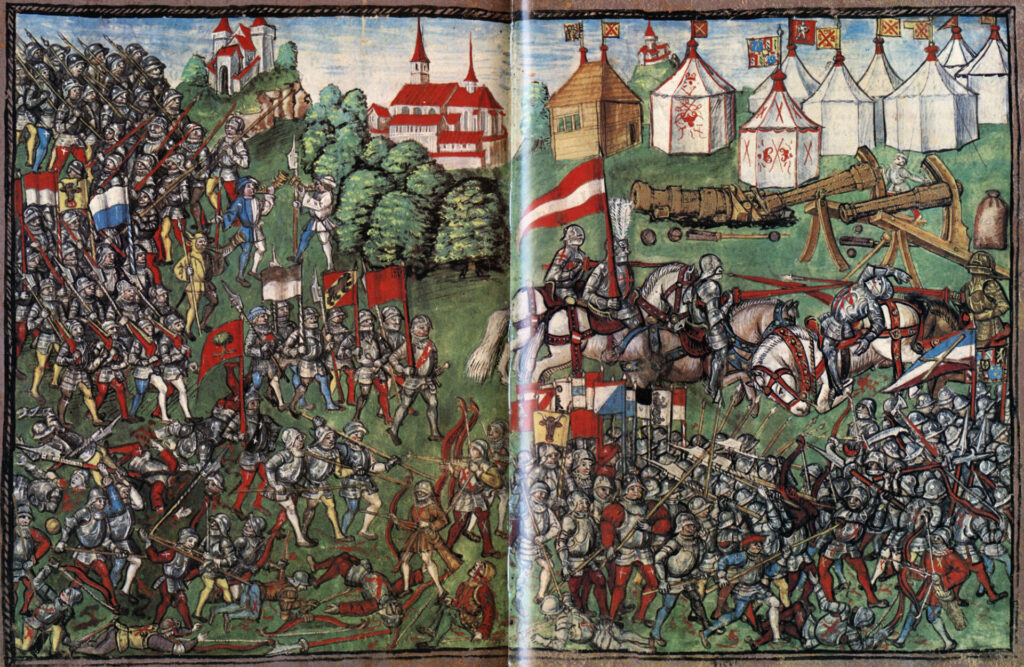
The first truly catastrophic defeat came in 1476 at the Battle of Grandson.
Charles the Bold was fully confident of victory. His army was considered one of the strongest in Europe, while the Burgundian camp resembled a moving royal court. Massive artillery trains, luxurious tents, gold, jewels — contemporaries were stunned by the sheer wealth surrounding the duke’s army.
But during the battle, something happened that the Burgundians were psychologically unprepared for.
The Swiss infantry launched a rapid assault, and panic suddenly spread through the Burgundian ranks. The defeat was so unexpected that Charles’s army abandoned its enormous camp almost intact.
When the Swiss entered the camp, they were astonished by what they found. Treasures, fine silverware, silk fabrics, weapons, money — the camp looked like the wealth of an entire kingdom.
For Europe, it became a symbolic humiliation. All the luxury and knightly confidence of Burgundy had collapsed in a matter of hours.
Morat — The Slaughter That Changed Europe
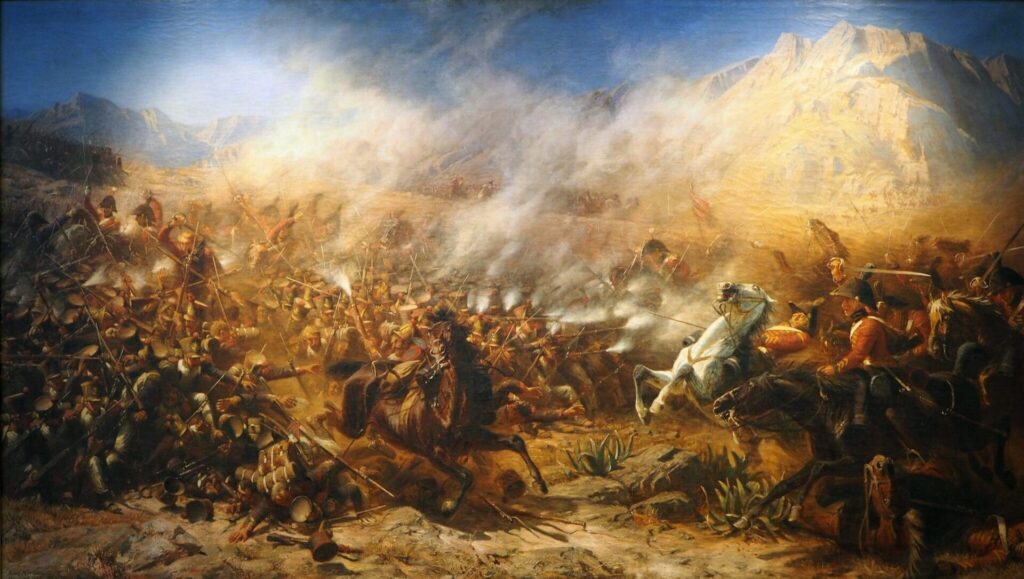
But the true horror came several months later at the Battle of Morat.
Charles attempted once again to destroy the Swiss, but this time the Confederates fought even more aggressively. Their massive pike columns simply smashed through the Burgundian army.
A panic-stricken retreat began.
Then came the slaughter.
Thousands of Burgundian soldiers were killed during the pursuit. Many drowned in the nearby lake. The battlefield became a graveyard for the old style of knightly warfare.
To contemporaries, it felt almost like the end of a familiar world.
The Death of Charles the Bold and the Fall of Burgundy
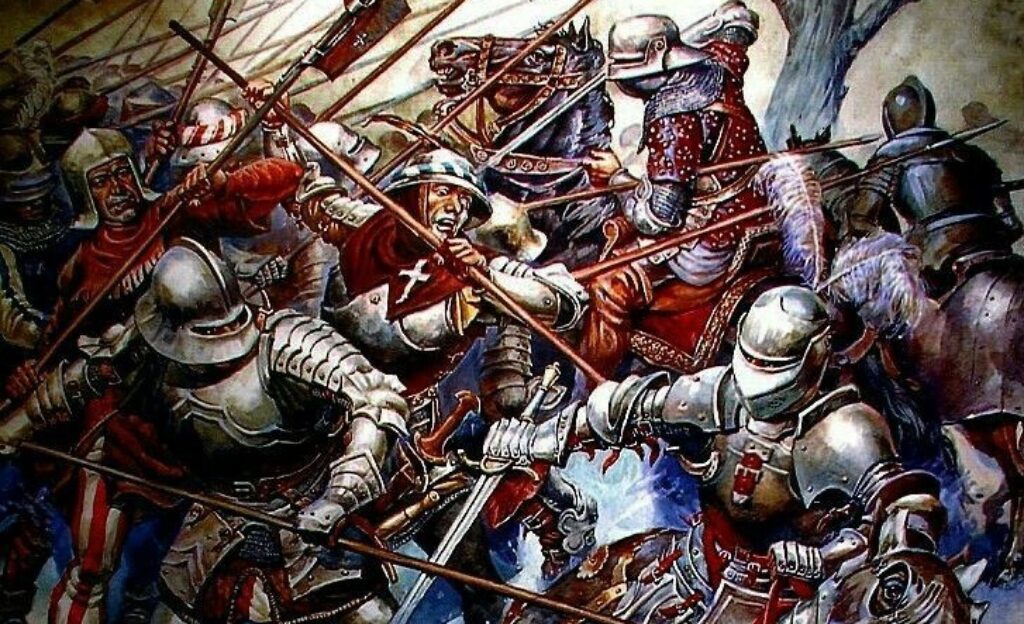
The final chapter came in the winter of 1477 at the Battle of Nancy.
Charles the Bold refused to accept defeat and continued the war even as his state began collapsing around him. Near Nancy, his army once again faced Swiss and allied forces.
The defeat was absolute.
Charles himself died in battle. His body was discovered several days later in the snow, so badly mutilated that he was not immediately recognizable.
With his death, the history of an independent Burgundy effectively ended.
France quickly moved to absorb Burgundian territories, while Europe finally understood that the age of feudal knightly armies was drawing to a close.
The War After Which Europe Was Never the Same
The Burgundian Wars were far more important than they may first appear.
They were not simply a struggle over territory.
They marked the moment when Europe’s old military system collided with a new reality. Disciplined infantry, mass armies, firearms, and new forms of military organization were gradually replacing the feudal knightly model of the Middle Ages.
The Swiss demonstrated that wars would no longer be decided solely by noble birth and armored cavalry.
And Charles the Bold became an almost symbolic figure — the last great ruler in Europe who believed until the very end that the knightly dream could still triumph.
But the world was already changing.
And Burgundy proved too beautiful, too wealthy, and too medieval to survive the new age.