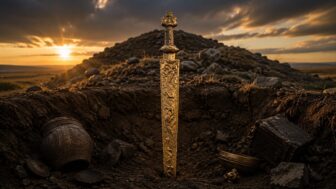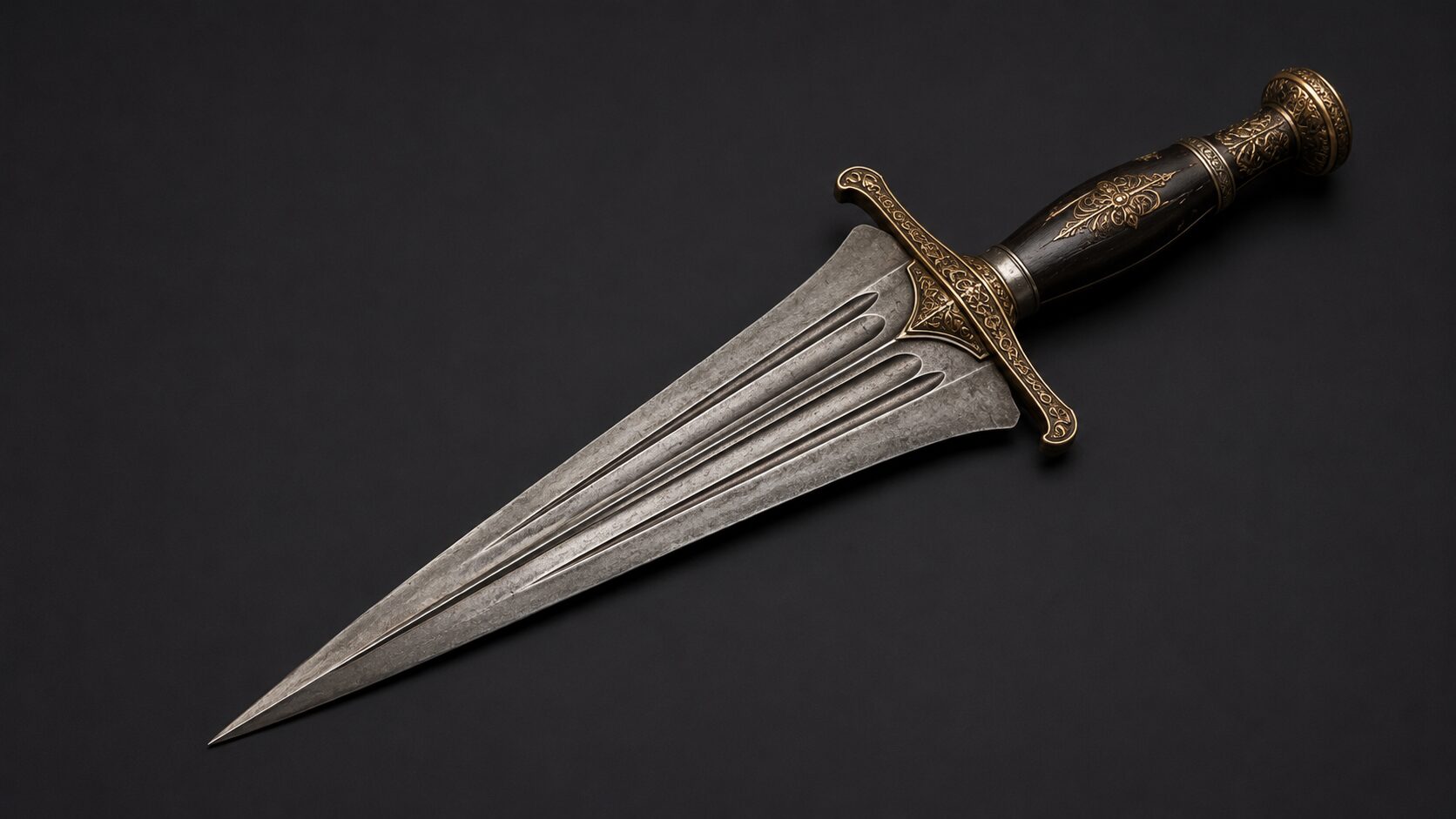
The cinquedea emerged in northern Italy during the late 15th century, especially around Venice and Ferrara.
This was not accidental.
Renaissance Italy was one of the wealthiest and most culturally competitive regions in Europe. City-states such as Venice, Florence, and Milan were filled with nobles, merchants, mercenaries, and political intrigue. Weapons were not merely tools of war — they were symbols of prestige and personal identity.
And the cinquedea fit perfectly into this world.
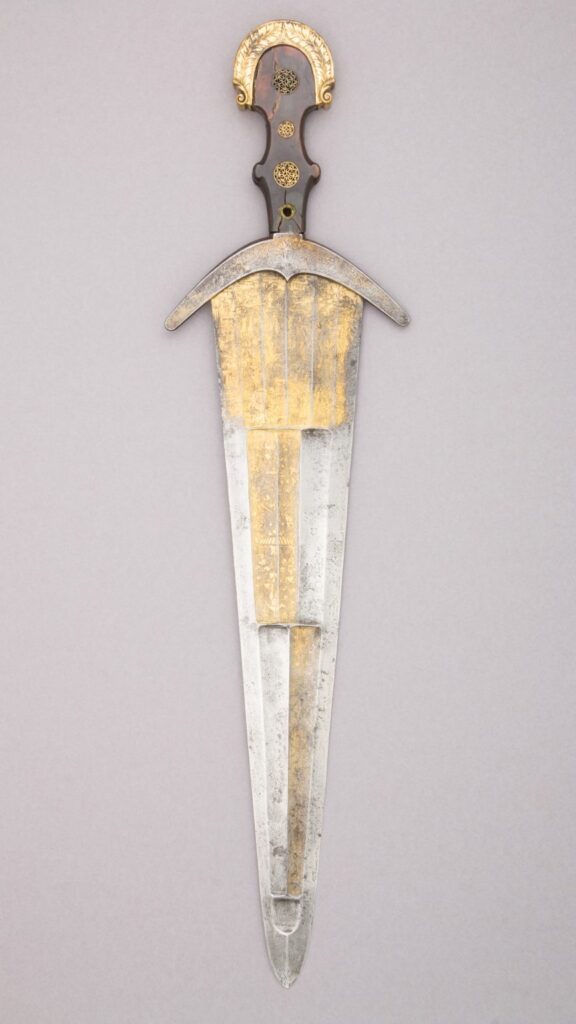
Many surviving examples are lavishly decorated with etching, gilding, ivory grips, and elaborate Renaissance ornamentation. The wide blade offered enormous space for artistic engraving, transforming the weapon into something halfway between sidearm and artwork.
Some were so richly decorated that they were clearly intended as status symbols as much as weapons.
Not Quite a Dagger — Not Quite a Sword
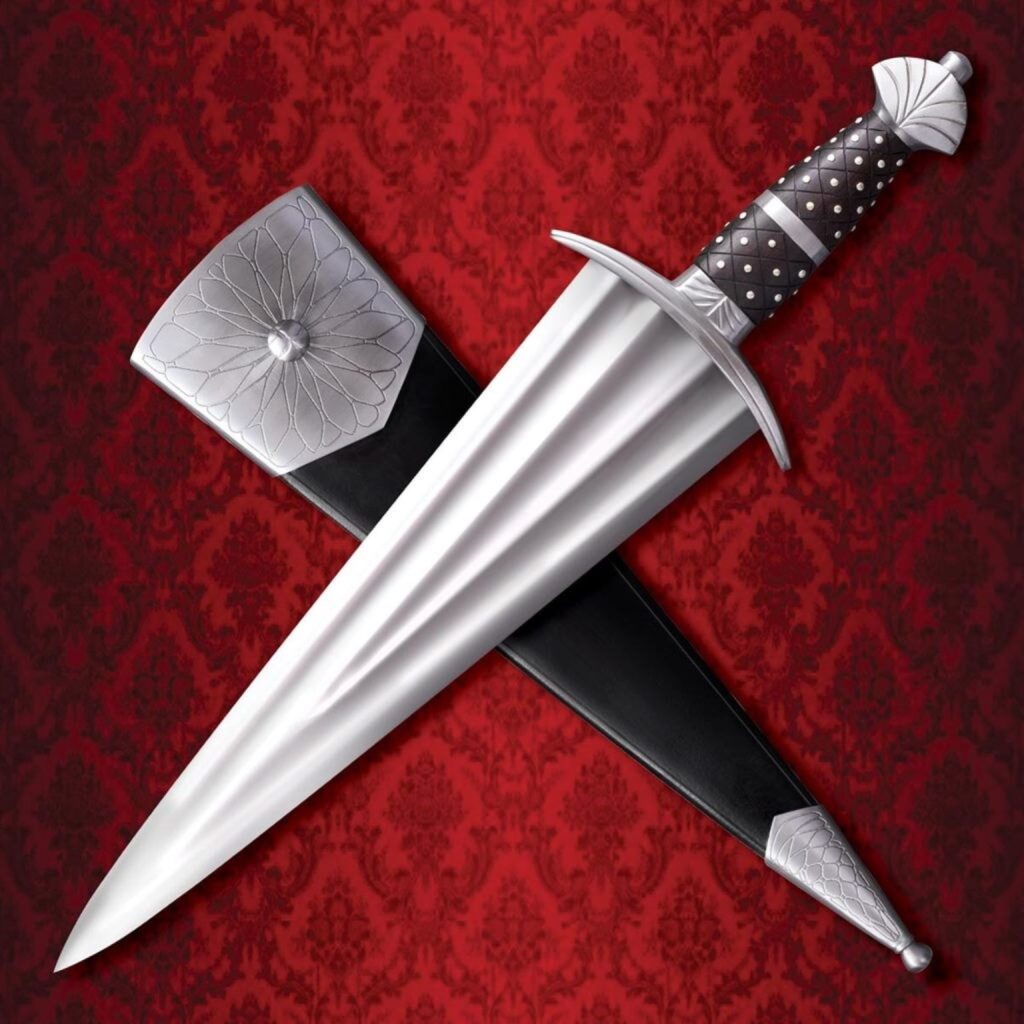
One of the strangest things about the cinquedea is how difficult it is to classify.
Smaller examples functioned much like large daggers. Larger versions approached short swords in both size and handling. Blade lengths varied enormously, from around 25 centimeters to nearly 70 centimeters in some cases.
This flexibility reflected the blurred line between civilian self-defense weapon and aristocratic fashion accessory.
The cinquedea was often carried horizontally behind the back or at the belt, allowing for a fast lateral draw. In crowded Renaissance cities — where duels, ambushes, and street violence were common — such a weapon offered serious stopping power while remaining more convenient than a full sword.
It was, in many ways, the Renaissance equivalent of an oversized concealed weapon.
The Weapon of Noble Violence
The Renaissance is often imagined as an age of art and humanism.
But it was also an age of assassinations, vendettas, mercenary warfare, and political murder. Italian city-states existed in a near-constant state of intrigue and violence.
The cinquedea belonged perfectly to this atmosphere.
It was a civilian weapon, but not a peaceful one. Its broad blade could deliver devastating cuts, while the reinforced point remained dangerous in thrusting attacks.
This was not a battlefield weapon designed for armored combat.
It was a weapon for streets, courts, escorts, bodyguards, and sudden confrontations.
Cesare Borgia and the Prestige of the Cinquedea
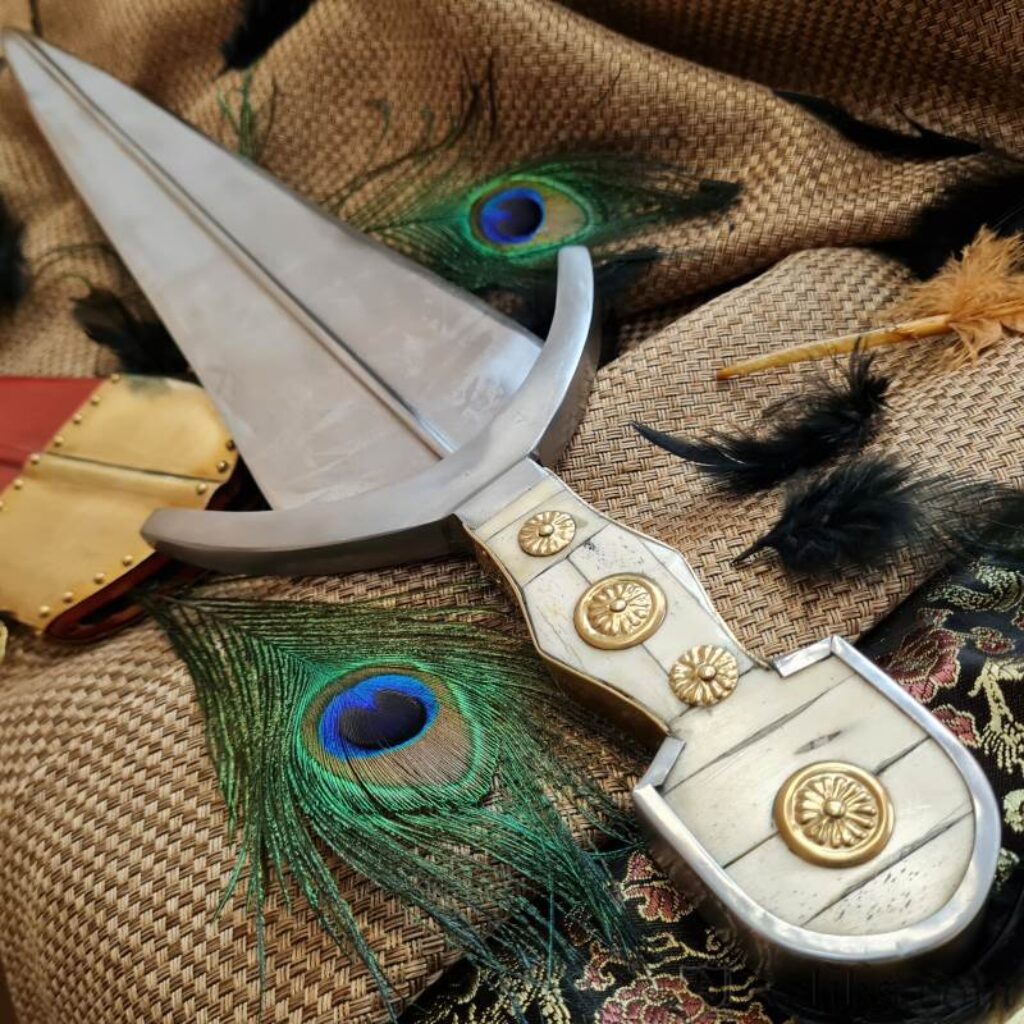
One of the most famous surviving cinquedeas is associated with Cesare Borgia himself.
This weapon, decorated by the renowned Renaissance engraver Ercole dei Fedeli, became one of the masterpieces of Italian arms craftsmanship.
And that connection feels appropriate.
The cinquedea seems almost designed for the world of the Borgias — beautiful, theatrical, elegant, and quietly lethal.
It reflects the darker side of the Renaissance far better than marble statues or paintings ever could.
Why the Cinquedea Disappeared
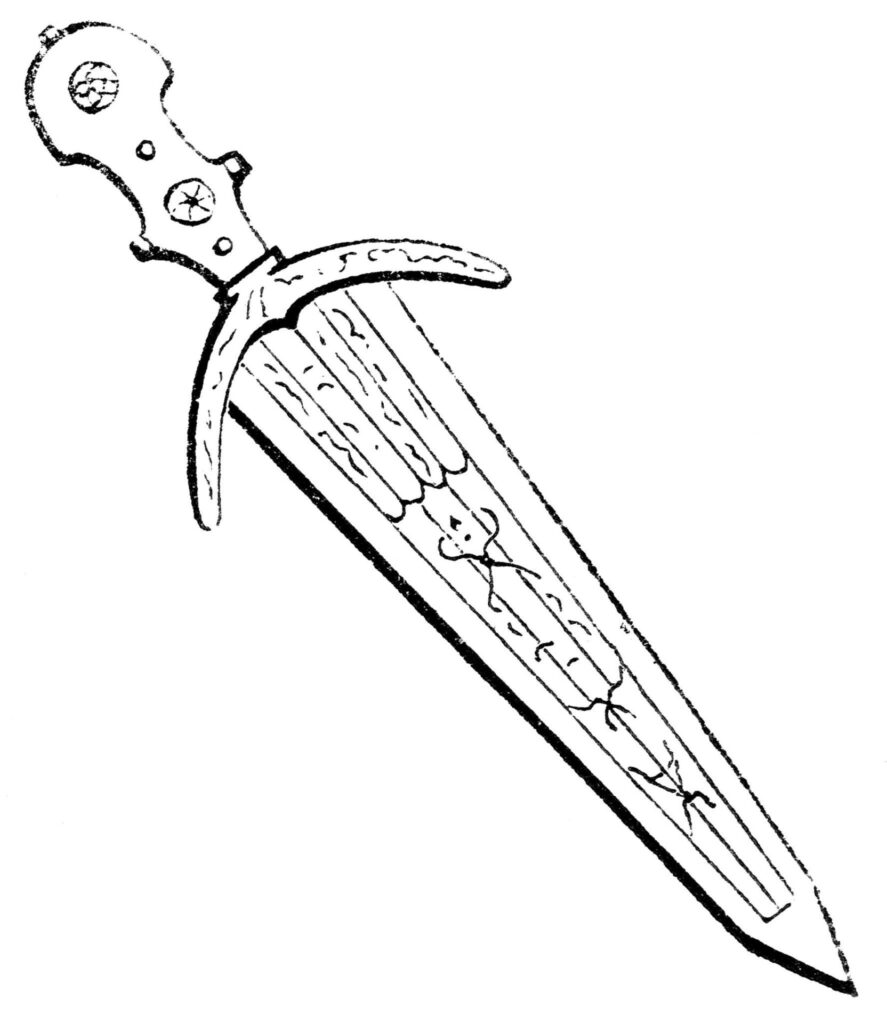
By the early 16th century, the cinquedea began fading from popularity.
Fashion changed. Civilian sword culture evolved toward slimmer side swords and eventually rapiers. Firearms also gradually transformed the logic of personal combat.
Compared to the elegant thrust-oriented weapons of the later Renaissance, the cinquedea began to look archaic — almost brutish.
And yet, that strange design is exactly what makes it memorable today.
The Most Unusual Blade of the Renaissance
The cinquedea occupies a unique place in weapons history.
It was not the most practical dagger. Nor the most effective sword. But it perfectly captured the spirit of Renaissance Italy — a world obsessed with appearance, prestige, artistry, and violence all at once.
A blade wide as a hand.
Half weapon, half status symbol.
And perhaps the strangest dagger the Renaissance ever produced.