In European history, there are certain names that have long ceased to be merely surnames. They became symbols. The Medici came to represent wealth and influence. The Habsburgs symbolized imperial greatness. But the name Borgia eventually became almost synonymous with poison, intrigue, murder, and ruthless political ambition.
Even five centuries later, legends still surround the Borgia family. They were accused of poisonings, incest, assassinations, betrayals, and transforming the papacy into a tool of personal power. To some, the Borgias were monsters of the Renaissance. To others, they were simply the first truly modern politicians — people far ahead of their own time.
What makes their story even more remarkable is that many of these legends were born not only from real crimes, but also from the extraordinary atmosphere of fifteenth-century Italy, where power shifted faster than the seasons and the murder of a political rival was considered a perfectly ordinary method of diplomacy.
An Italy Where Every City Wanted to Destroy Its Neighbor
To understand the phenomenon of the Borgias, one must first imagine Italy during the Renaissance. It was not a unified country, but a collection of wealthy and fiercely aggressive states. Venice, Milan, Florence, Naples, the Papal States — all constantly plotted against one another, hired mercenary armies, and formed alliances that often collapsed within months.
Rome at that time was not merely the spiritual center of the Catholic world. It was also one of the greatest political prizes in Europe. The pope ruled territories, collected taxes, waged wars, and influenced politics across the continent. And it was here that the man who truly created the Borgia legend stepped onto the stage.
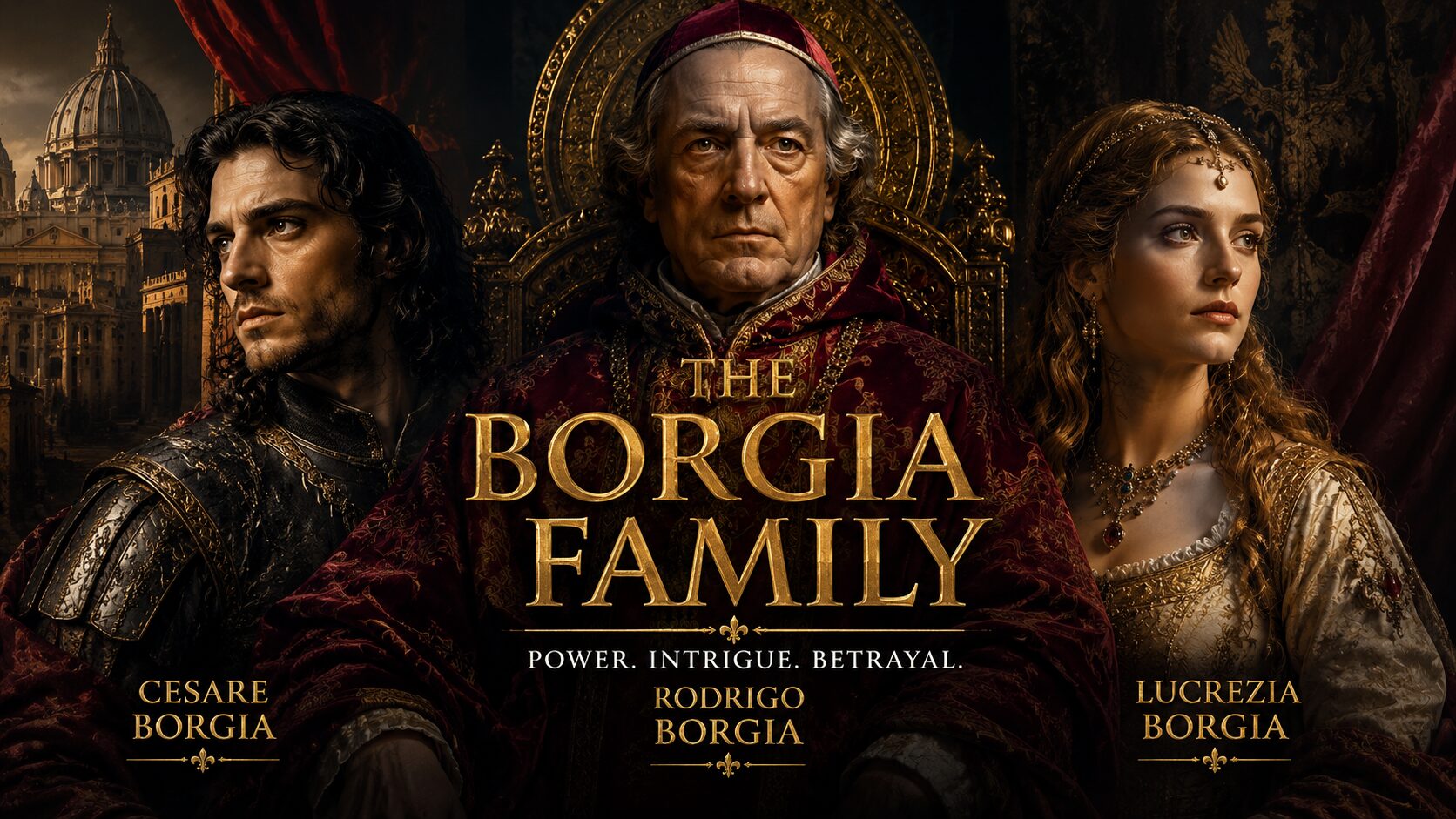
His name was Rodrigo Borgia.
Spanish by origin, a brilliant diplomat, extraordinarily ambitious, and feared even by his contemporaries. In 1492, he became pope under the name Alexander VI.
From that moment began one of the darkest and most fascinating stories of the Renaissance.
The Pope Who Turned the Church Into a Family Business
Today, the pope is associated primarily with religion. But Alexander VI saw the papacy very differently. To him, it was an instrument of power.
He openly promoted his own children, distributed offices to relatives, arranged political marriages, and transformed the Church into a mechanism for strengthening the Borgia dynasty. In fifteenth-century Italy this was not entirely unusual — nepotism flourished everywhere — but Alexander VI pushed it almost to its absolute limit.
Two of his children stood out above all others: Cesare and Lucrezia Borgia.
It was around them that nearly the entire dark mythology of the family would later grow.
Cesare Borgia — The Man Who Inspired Machiavelli
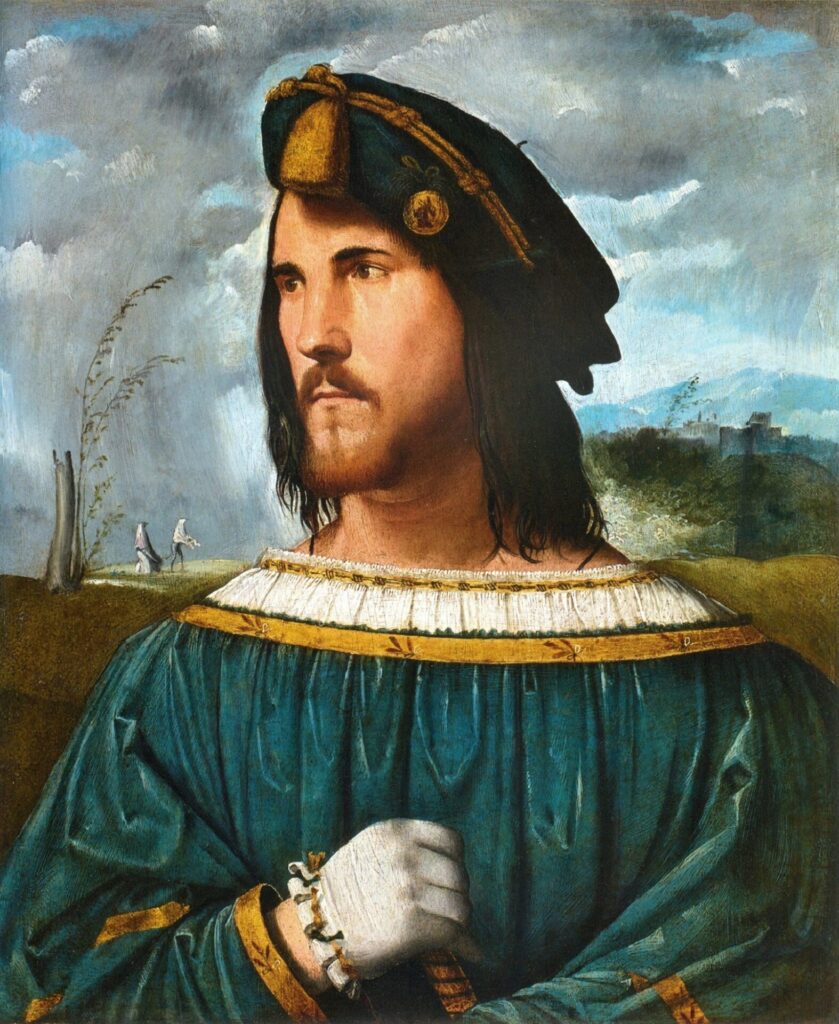
If Rodrigo Borgia was a master intriguer, then his son Cesare Borgia became the embodiment of ruthless political efficiency.
Originally destined for a career in the Church, Cesare’s life changed after the mysterious death of his brother Juan Borgia. Rumors immediately spread across Italy that Cesare himself may have ordered the murder.
Whether that was true remains unknown to this day. But Cesare quickly proved that he was willing to pursue power by any means necessary.
He abandoned his cardinalship, became a military commander, and began constructing his own state in central Italy. Cities fell one after another. Allies suddenly disappeared. Enemies died under suspicious circumstances. Some rulers invited to negotiations later turned up strangled.
Yet Cesare was not merely another brutal Renaissance nobleman. He was astonishingly modern in his understanding of power. He understood the importance of fear, propaganda, spectacle, and carefully managed terror.
It was Cesare Borgia who would later become one of the greatest inspirations for Niccolò Machiavelli while writing The Prince. Machiavelli personally observed Cesare’s actions and concluded that he understood the nature of power better than almost any ruler in Europe.
Lucrezia Borgia — Victim or Monster?
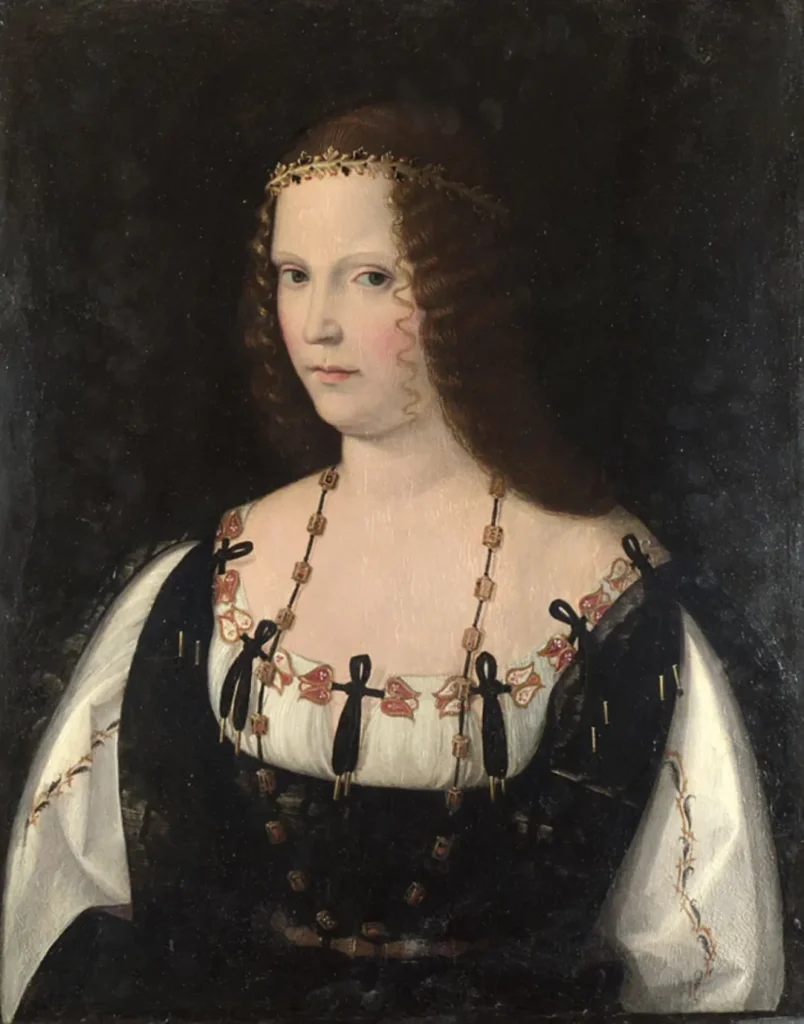
If Cesare entered history as the perfect Renaissance tyrant, then Lucrezia Borgia became the center of an almost gothic legend.
She was accused of poisonings, the murder of lovers, and even incestuous relationships with her father and brother. Later literature and theater transformed Lucrezia into the ultimate femme fatale of the Renaissance — a beautiful noblewoman supposedly carrying poison hidden inside a jeweled ring.
The problem is that most of these stories were almost certainly political propaganda.
Lucrezia was indeed used by her family as a diplomatic instrument. Her marriages were arranged to secure alliances. Her husbands became part of the Borgias’ political games. Some of them died. But historians have never found direct evidence that Lucrezia herself was a serial poisoner.
In fact, many modern scholars argue that she was far more complex than the legend suggests — an educated Renaissance woman, a patron of the arts, and a capable administrator.
But by then, the reputation of the Borgias had already become toxic. The name itself had begun to develop a life of its own.
Poison, Fear, and the Black Legend
The greatest challenge in studying the Borgias lies in separating real crimes from myth.
Yes, the family was deeply involved in wars, conspiracies, and the elimination of enemies. Yes, the Renaissance was far more brutal than modern romanticized images often suggest. But many of the most famous stories about the Borgias only appeared after their downfall.
Their enemies played a particularly large role in spreading the so-called “black legend.” To many Italian nobles, the Borgias were outsiders — Spaniards who had seized the papacy and risen far too quickly. After the death of Alexander VI, their rivals finally had the opportunity to rewrite history.
The pope’s death in 1503 only deepened the sinister aura surrounding the family. Rumors immediately spread through Rome claiming that Alexander VI and Cesare had accidentally poisoned themselves with wine intended for others. Historians still debate what truly happened — malaria, poisoning, or ordinary illness.
But by then, the legend had already become more powerful than the facts.
Why the Borgias Still Fascinate the World
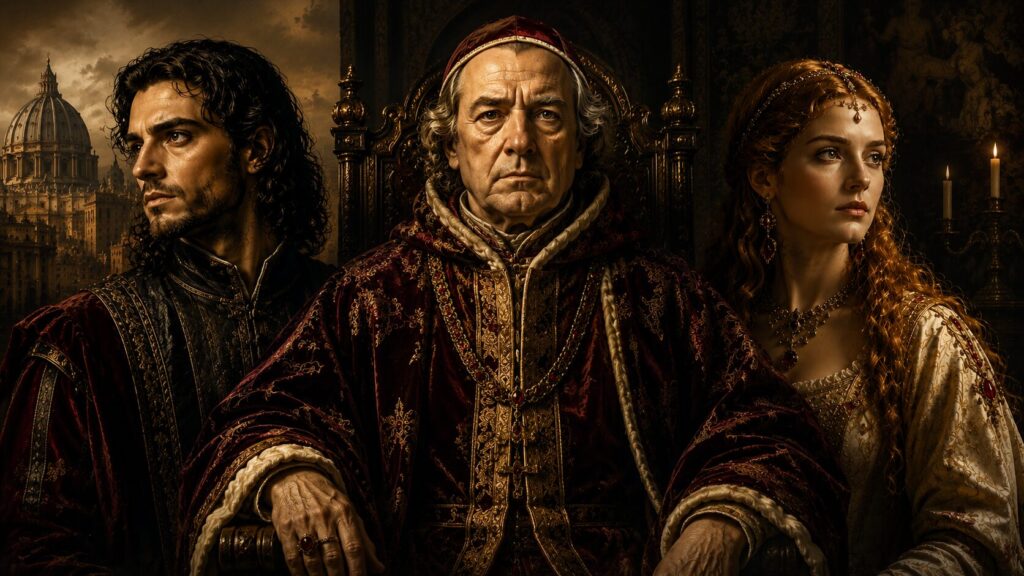
The story of the Borgias survived their own era for one simple reason: it combined real politics with almost Shakespearean drama.
Popes, murders, mercenaries, poisonings, Renaissance palaces, political marriages, conspiracies, sudden deaths, and wars for power — everything about them felt so theatrical that the family quickly became perfect material for novels, plays, films, and television series.
But perhaps the most interesting thing is this:
The Borgias are often portrayed as symbols of the moral corruption of the Renaissance. In reality, however, they were more likely products of their time — an Italy where states were born and destroyed in endless struggles for power.
The difference was simply that the Borgias were more honest than most of their contemporaries.
They barely tried to hide the fact that the world was ruled by money, fear, armies, and political calculation.
And perhaps that is why, five hundred years later, their name still sounds so dangerous.