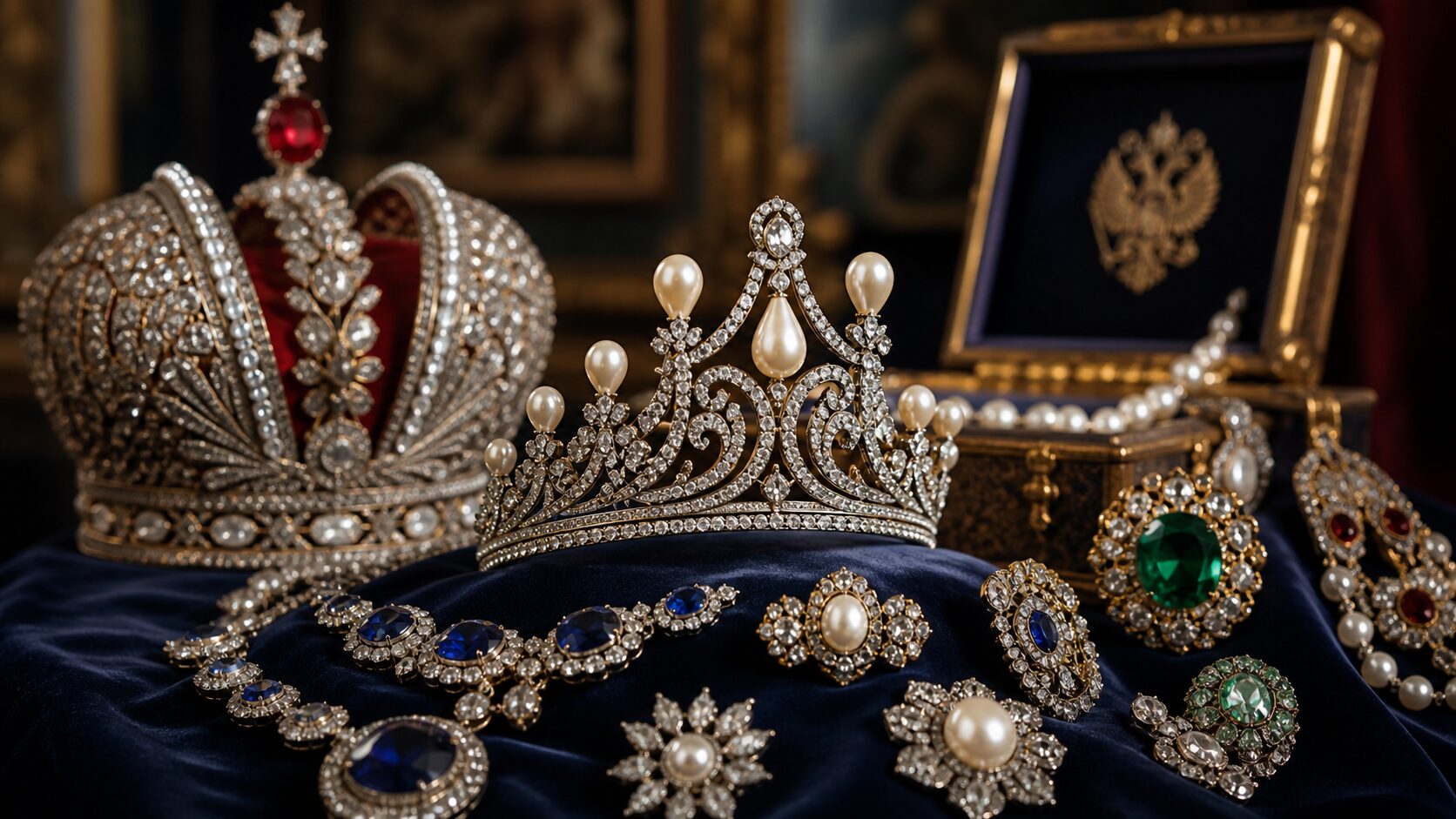
The Language of Power — Through Precious Stones
The history of the House of Romanov is not only about wars, reforms, and politics. It is also a language of luxury — expressed not in words, but in diamonds, sapphires, and pearls. Imperial jewelry in Russia was never merely decoration. It was a symbol of status, continuity, and power, woven into court ritual and dynastic identity.
Each piece carried meaning. Each stone was part of a greater narrative.
At court, jewelry was not simply worn — it was demonstrated.
The Age of Diamonds and Court Splendor
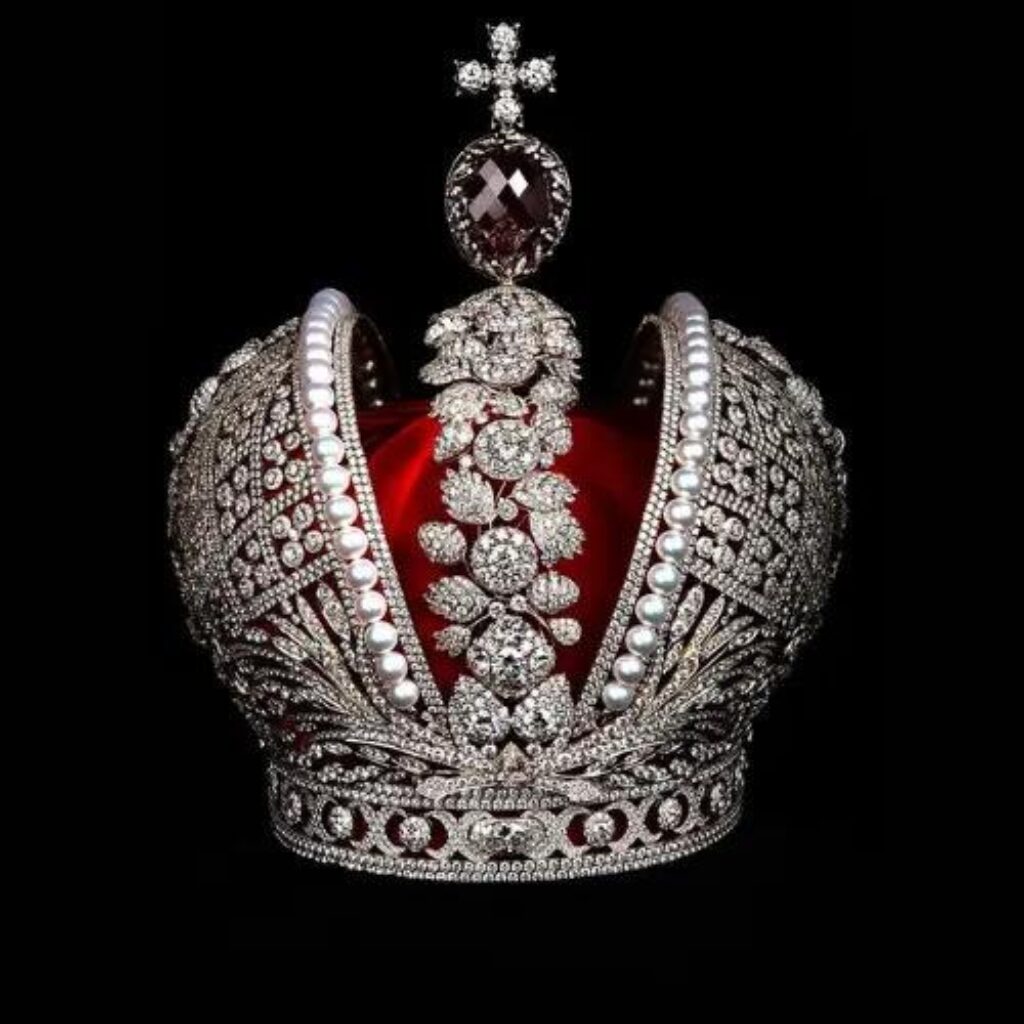
The true flourishing of imperial jewelry came in the 19th century. It was during this period that the Romanovs formed the image that we now associate with imperial brilliance: tiaras shaped like kokoshniks, cascades of diamonds, complex compositions combining Western European fashion with Russian tradition.
Court jewelers — among them the houses of Bolin, Duval, and Fabergé — created pieces not just for personal adornment, but for ceremonial presence. Jewelry became part of the official dress code, especially after the introduction of the “Russian court dress” under Nicholas I, which required ladies to wear kokoshnik-style headpieces or their jeweled equivalents.
This fusion of national form and imperial luxury gave birth to a unique visual language — one that Europe would later call the “Russian tiara.”
Tiaras That Became Legends
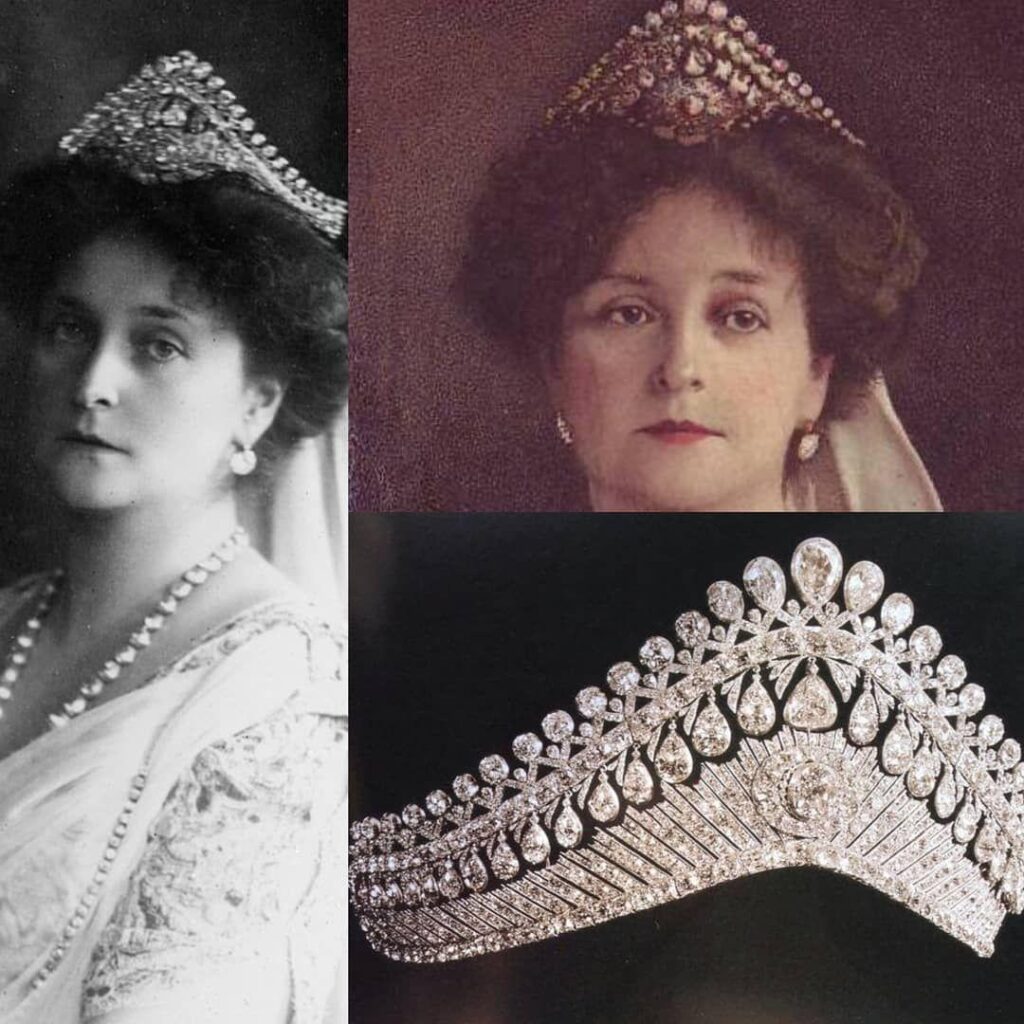
Among the many jewels of the Romanovs, tiaras occupied a special place.
They were not simply ornaments — they were symbols of rank and belonging. Many of them were created for specific events: coronations, weddings, or diplomatic ceremonies. Some could be transformed, disassembled, or worn in different ways — a reflection of both technical sophistication and practical court life.
The Vladimir Tiara, for example, with its distinctive suspended drops, later became part of the British royal collection and was worn well into the 21st century. The kokoshnik-style tiaras, with their radiant diamond “rays,” became one of the most recognizable visual symbols of Russian imperial culture.
And yet, behind their brilliance lay fragility.
Jewelry as a System
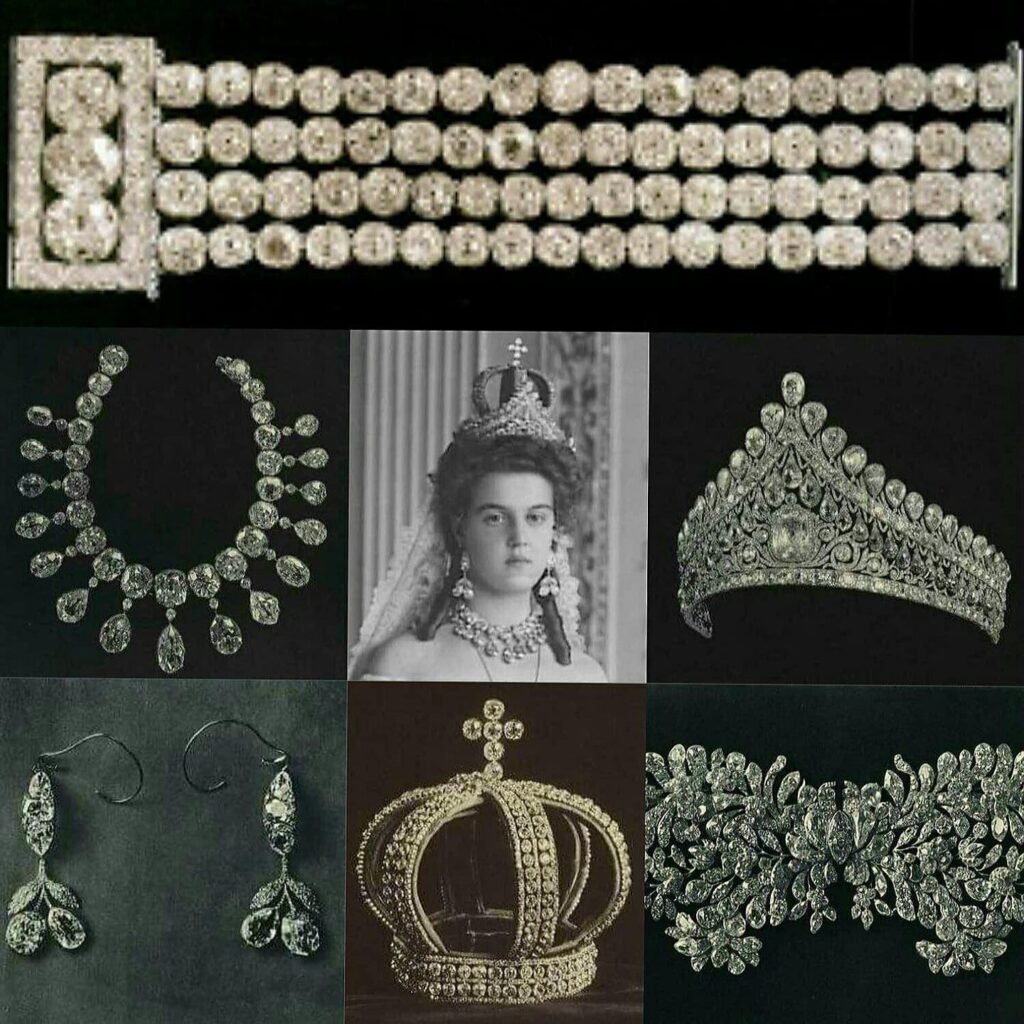
Imperial jewels rarely existed as isolated pieces. They were part of parures — complete sets that included necklaces, earrings, brooches, and tiaras, designed to be worn together.
These sets could be modified: elements replaced, stones rearranged, entire compositions transformed. This flexibility allowed the same jewels to serve different purposes — from court ceremonies to private appearances.
But it also had an unintended consequence.
Over time, many of these pieces were dismantled, altered, or lost.
1917: The End of the Imperial Treasury
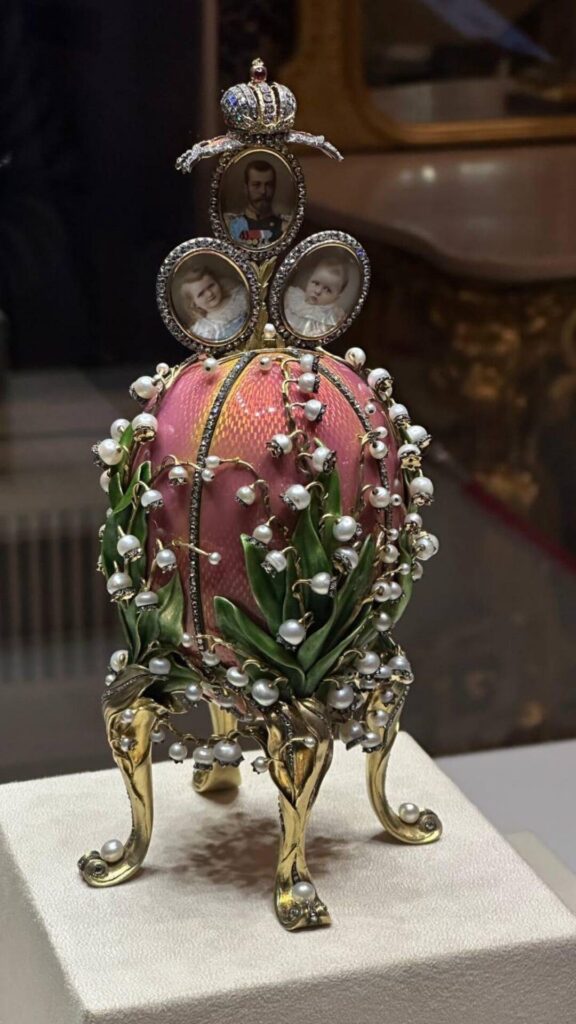
The revolution of 1917 became a turning point not only for the Romanov dynasty, but also for its treasures.
The imperial collection was dispersed. Many jewels were sold abroad, often at auctions, sometimes broken apart into individual stones. Others ended up in European royal families or private collections. Only a small portion remained in Russia, preserved in institutions such as the Diamond Fund.
What had once been a unified system of symbols became scattered fragments of a lost world.
Jewels as Memory
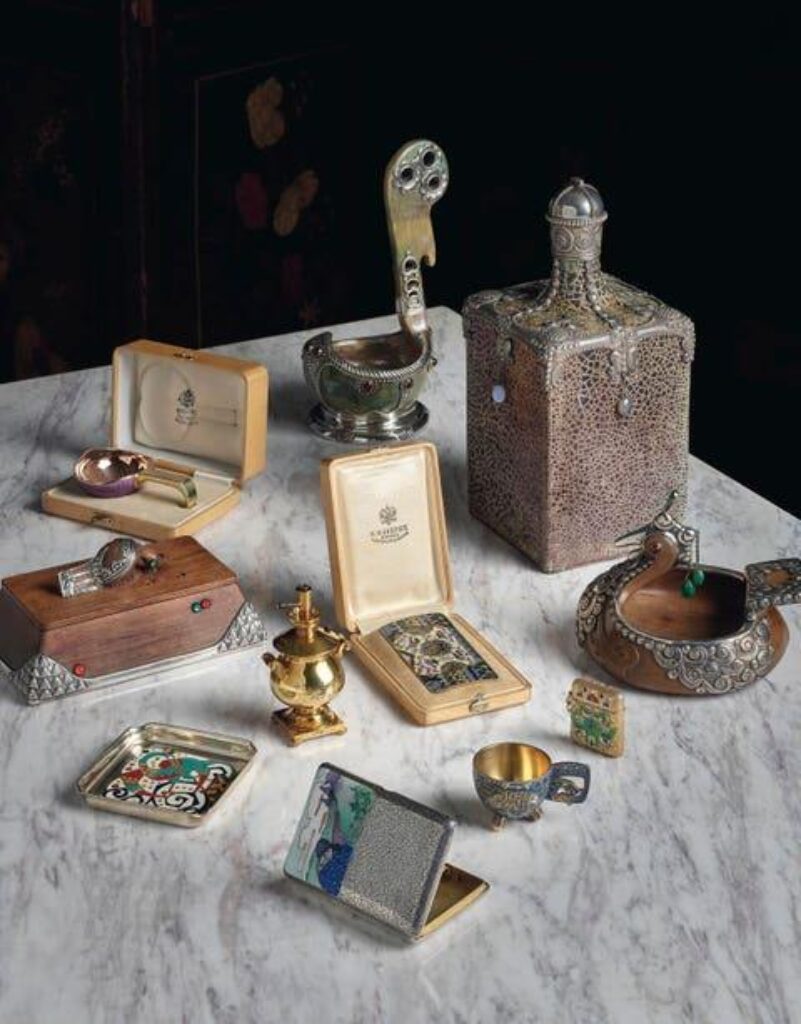
Today, the legendary jewels of the Romanovs exist in a strange duality.
Some survive in museums. Some appear at royal ceremonies in other countries. Others are known only from portraits and archival descriptions.
But all of them remain part of a larger story — the story of an empire that expressed itself not only through power and politics, but through beauty.
Through light.
Through the cold fire of diamonds.