
Germany to Produce Ukraine’s Bars Missile-Drone: How a New Weapon Is Entering Europe’s Defense Industry

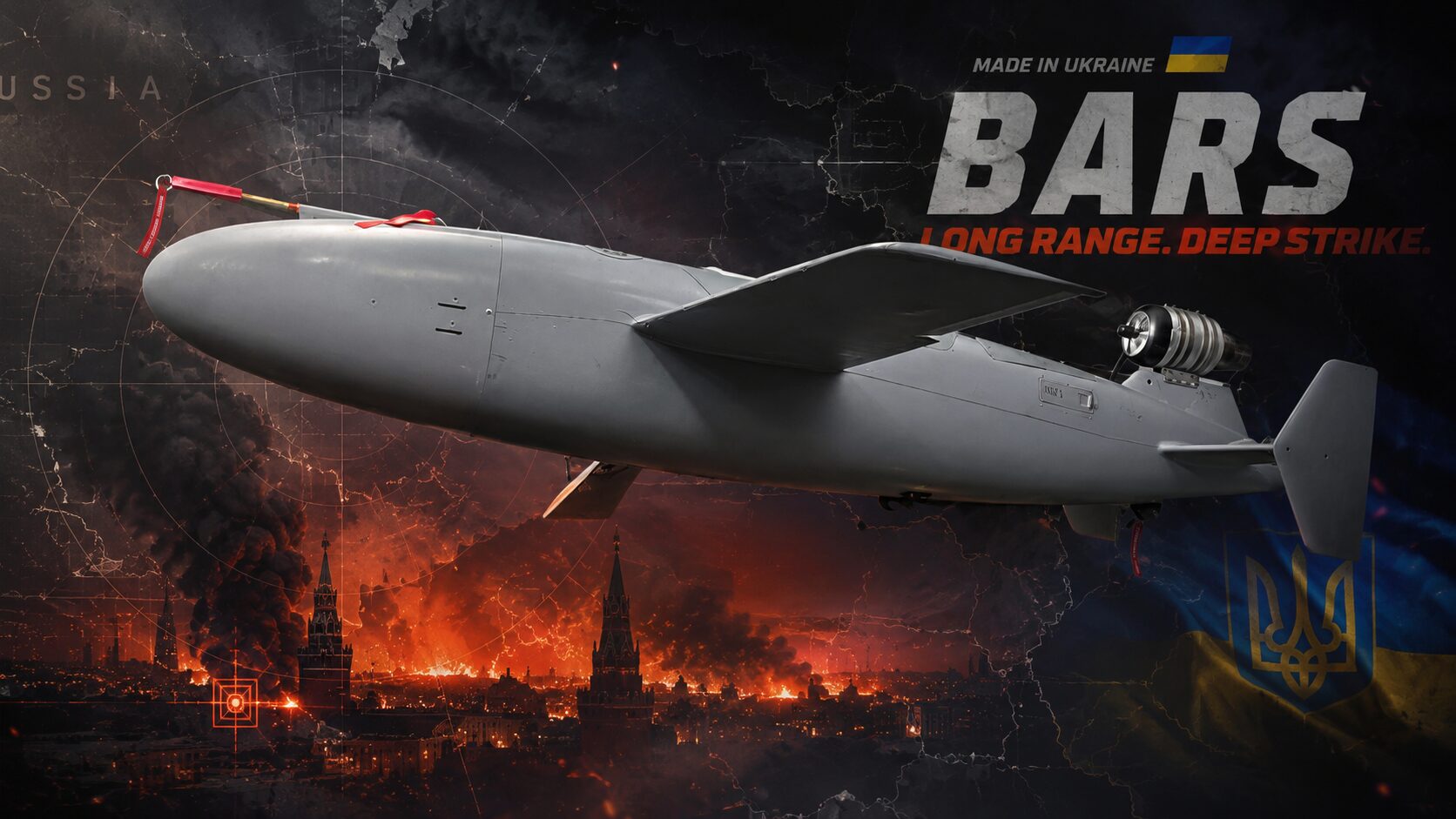
Ukraine’s long-range unmanned strike systems are gradually moving from experimental projects into full-scale production programs. The latest sign of this transition is an agreement between Ukraine and Germany to jointly manufacture the Bars missile-drone, one of Ukraine’s newest long-range strike systems. According to Ukrainian reports, the weapon has already been used against targets deep behind the front line.
The decision to organize production outside Ukraine may ultimately prove just as important as the characteristics of the weapon itself. It demonstrates how Ukrainian defense technologies are beginning to integrate into the broader European industrial base.
What Is Known About the Bars System
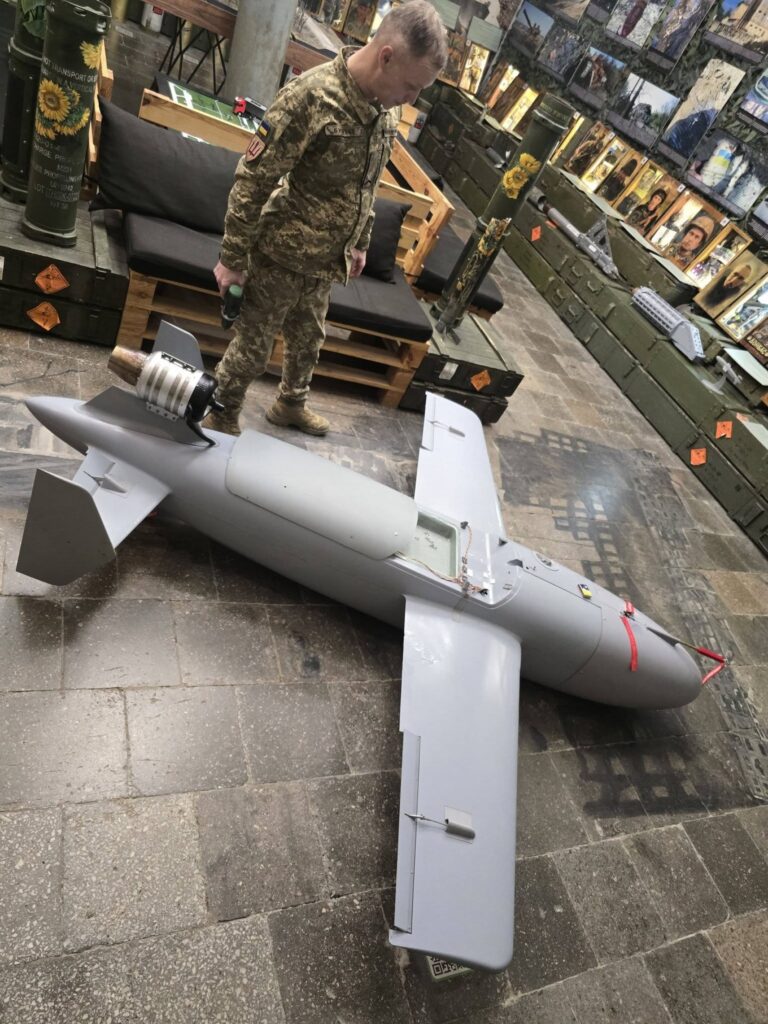
Very little official technical information about Bars has been released.
Open-source reports describe it as a jet-powered, long-range unmanned aircraft intended to strike fixed targets at significant distances. In terms of concept, it appears to occupy the space between a cruise missile and a heavy one-way attack drone.
Unlike FPV drones or short-range loitering munitions, systems of this type are designed for operational and strategic missions. Their potential targets may include infrastructure, command centers, industrial facilities, and other fixed high-value sites.
Why Germany Is Interested
The agreement reportedly provides for joint production of the Bars system in Germany.
During the initial phase, the German side is expected to finance the establishment of production, while the completed weapons will be supplied to Ukraine.
For Berlin, this arrangement offers several advantages.
First, German industry gains access to a weapon design that has reportedly already undergone operational use.
Second, Europe expands its own capacity to manufacture long-range strike weapons and reduces reliance on external suppliers.
Finally, moving part of the production process outside Ukraine lowers the risk to manufacturing facilities that remain vulnerable to attack.
Why More Ukrainian Weapons Are Being Produced Abroad
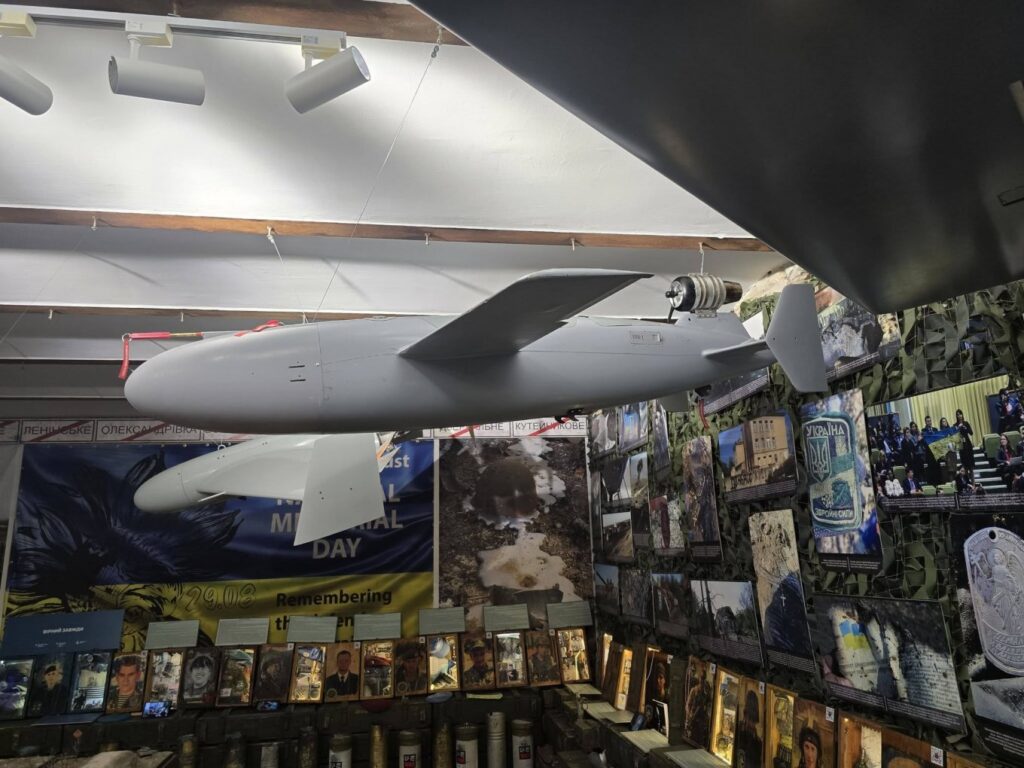
The relocation of part of Ukraine’s defense production to European countries is becoming a broader trend.
Ukraine has already announced several joint drone-production projects with European partners. Similar programs have been discussed or launched in Finland and other EU countries.
This model provides several practical benefits:
- Reduced risk to production facilities;
- Access to Europe’s industrial base;
- Easier access to financing;
- Higher potential production rates;
- More stable supply chains.
In effect, a distributed defense industry is emerging, with development taking place in one country and serial production in another.
A New Class of Missile-Drone
Recent conflicts have accelerated the development of a new category of weapon.
These systems combine characteristics of unmanned aircraft and cruise missiles.
They can:
- Travel over long distances;
- Follow a pre-programmed route;
- Avoid heavily defended areas;
- Strike fixed targets with considerable accuracy.
At the same time, they are generally expected to cost less than conventional cruise missiles, making large-scale use more practical.
That combination of range, precision, and comparatively low cost has made missile-drones increasingly attractive to militaries around the world.
Mass Production Matters as Much as Performance
Modern warfare has demonstrated that technical performance alone does not determine the value of a weapon.
The ability to manufacture it in hundreds or thousands of units can be equally important.
This is where joint production becomes strategically significant.
German manufacturing facilities could increase output while reducing dependence on factories operating under wartime conditions in Ukraine.
European participation may also improve access to industrial equipment, quality-control systems, financing, and more reliable component supplies.
What This Means for Europe’s Defense Industry
For most of the war, European defense companies primarily supplied Ukraine with weapons of their own design.
Now the process is beginning to work in the opposite direction.
Ukrainian systems are increasingly being selected for production at European facilities.
This could gradually reshape the traditional relationship between European suppliers and Ukraine.
Instead of a simple buyer-seller model, a shared industrial ecosystem is emerging in which technology, financing, production capacity, and operational experience are distributed among several countries.
Many Questions Remain
Despite the announced agreement, the most important characteristics of Bars remain classified or undisclosed.
Publicly available information does not confirm:
- Exact range;
- Maximum speed;
- Warhead weight;
- Engine type;
- Guidance system;
- Planned production volume.
For that reason, any detailed assessment of the system’s true capabilities would be premature.
More information may become available only after serial production expands or the weapon is officially presented in greater detail.
The Broader Significance
Joint production of Bars is important not merely because it represents another contract for military equipment.
It reflects a wider transformation in Europe’s defense industry.
Technologies and engineering solutions developed under wartime conditions are increasingly being incorporated into NATO countries’ production programs.
Only a few years ago, Ukraine was primarily an importer of Western weapons. Today, some Ukrainian designs are becoming the subject of international industrial cooperation.
That may be the most important development of all.






