Imagine France at the end of the eleventh century.
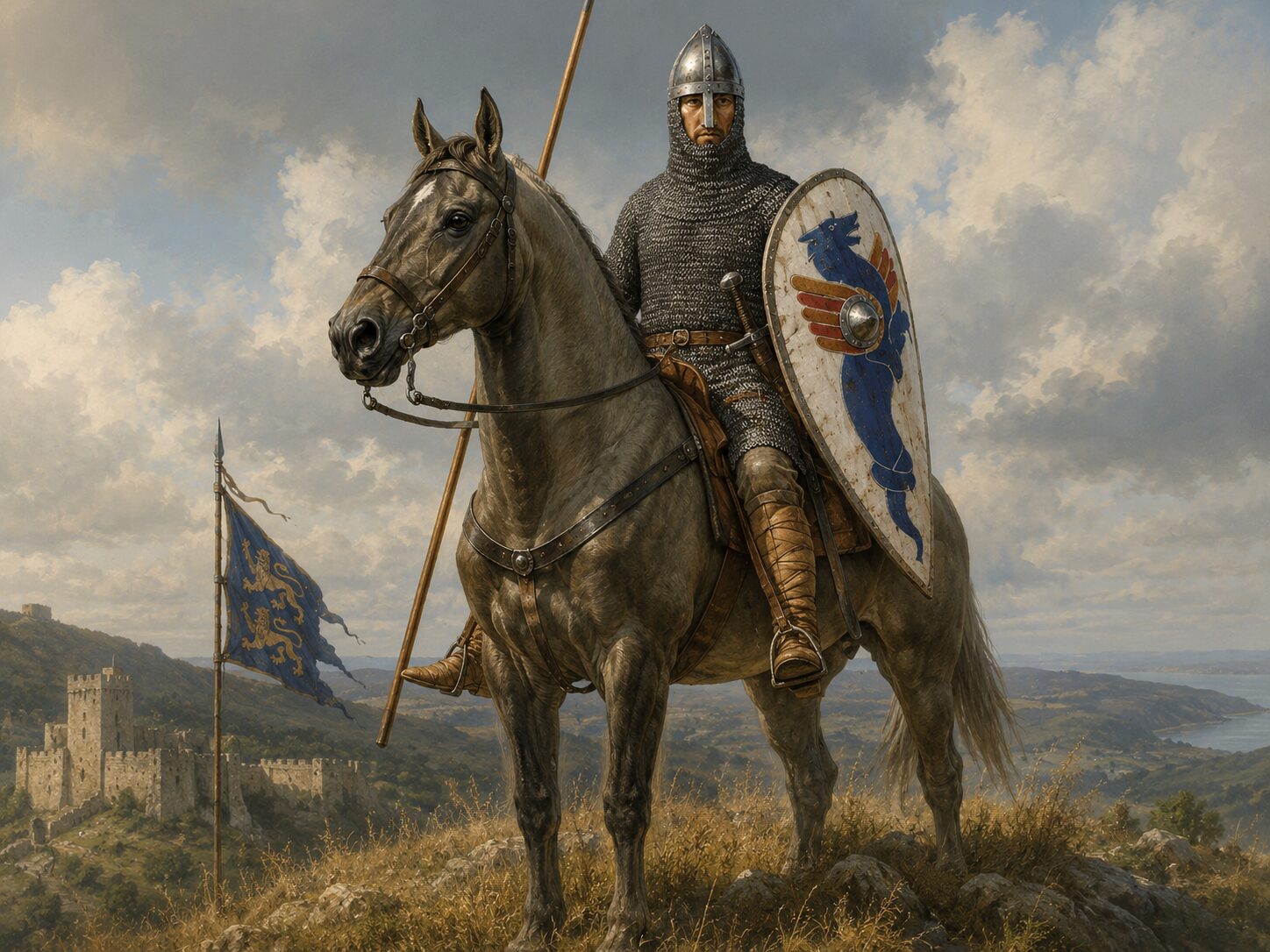
In the castle of a powerful feudal lord, three sons are growing up. One day, the eldest will inherit the fortress, the lands, the vassals, and the family title. The second may receive a small fief or a position at the court of a relative. But the youngest will simply be handed a sword, a horse, a mail hauberk, and a few words from his father:
“Now you must make your own fortune.”
There were thousands of such young noblemen across medieval Europe.
They were not poor, yet neither were they wealthy. They were well-trained horsemen, skilled with weapons, and born into noble families. But the system of inheritance left them with little hope of ever acquiring estates of their own.
These were the men who became the human foundation of the Crusades.
They formed the core of the conroi—small brotherhoods of heavy cavalry that became one of the most formidable military institutions of medieval Europe.
Today, the word conroi is familiar only to specialists. Yet without understanding it, it is impossible to explain how only a few hundred knights managed to establish kingdoms in the Holy Land and defend them for nearly two centuries against far larger armies.
Why Europe Produced “Surplus” Knights

To understand the origins of the conroi, we must begin not with warfare, but with inheritance.
During the eleventh and twelfth centuries, much of Western Europe gradually adopted the principle of primogeniture, whereby the eldest son inherited the family’s principal estates.
The system made perfect sense.
If every generation divided castles, villages, and revenues among all heirs, each noble estate would eventually become too fragmented to support a mounted warrior.
The lands remained intact.
But a new problem emerged.
What should be done with the younger sons?
Some entered monasteries.
Others sought advantageous marriages.
Many remained in the service of their elder brothers.
For an ambitious young knight, however, such a life offered little future.
There remained only one path.
War.
A Sword Instead of an Inheritance
A younger son rarely entered military service alone.
Instead, he joined the retinue of his lord.
This was how the conroi gradually took shape.
The word conroi derives from Old French and literally means “joint movement,” “formation,” or “company.”
Yet behind this simple term stood something far more significant.
The conroi was simultaneously a tactical cavalry unit, a military brotherhood, and a school of knighthood.
A typical conroi consisted of twenty to fifty heavily armed horsemen.
But it was much more than a collection of knights.
It included squires.
Mounted sergeants.
Servants.
Blacksmiths.
Farriers.
Priests.
Pack horses.
Supply wagons.
In practice, every conroi functioned as a small, self-contained army.
Not Mercenaries, but a Family
Modern armies are composed of individuals brought together by military service.
A medieval conroi worked differently.
Its members often knew one another from childhood.
They had grown up in neighboring castles.
They had learned to joust together.
Hunted together.
Celebrated feast days together.
And eventually fought together.
They were bound not merely by feudal obligation.
They were united by personal trust.
If one knight fell in battle, the others often knew his parents, brothers, wife, and children.
The conroi was not simply a military formation.
It was a true brotherhood.
Why a Conroi Was More Dangerous Than a Single Knight
Popular culture often depicts medieval knights charging individually across the battlefield with lowered lances.
Reality was very different.
One mounted knight could be stopped.
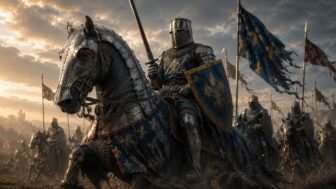
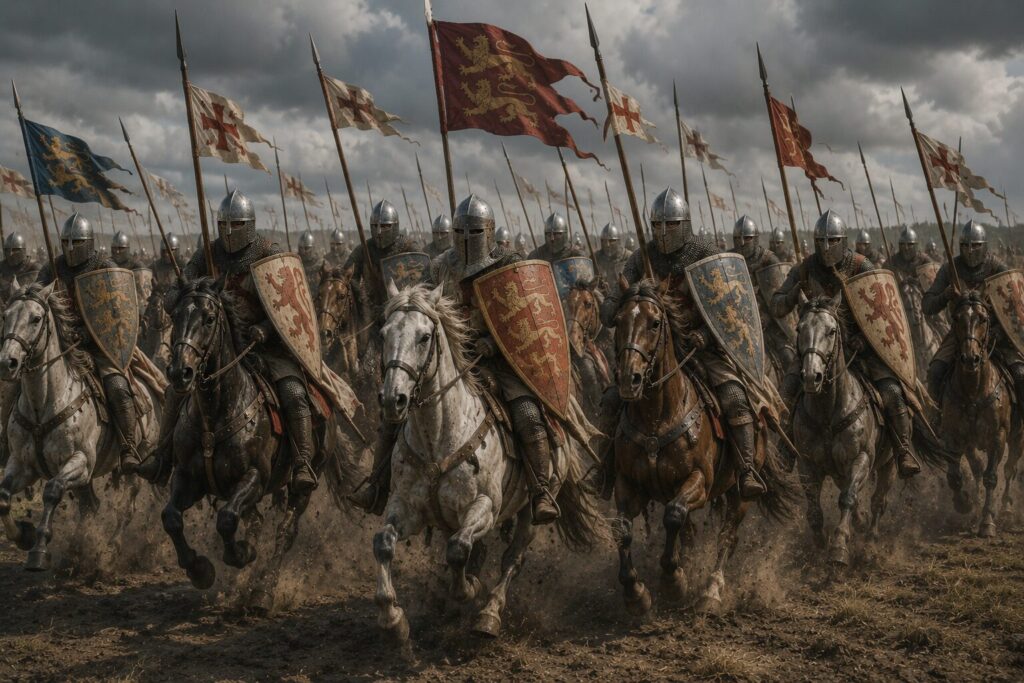
Several dozen disciplined horsemen charging together were another matter entirely.
The true strength of the conroi lay not in individual skill.
It lay in discipline.
Imagine forty armored warhorses, each weighing over half a ton.
Moving at the same pace.
Maintaining perfect alignment.
Keeping equal intervals.
Lowering their lances at precisely the same moment.
The enemy no longer faced individual warriors.
It faced a moving wall of steel and horseflesh.
That is why medieval commanders valued discipline far more than reckless courage.
One premature charge could destroy the cohesion of the entire formation.
The greatest knight was not the one who sought personal glory.
He was the one who held the line.
The Conroi Conquers the Holy Land
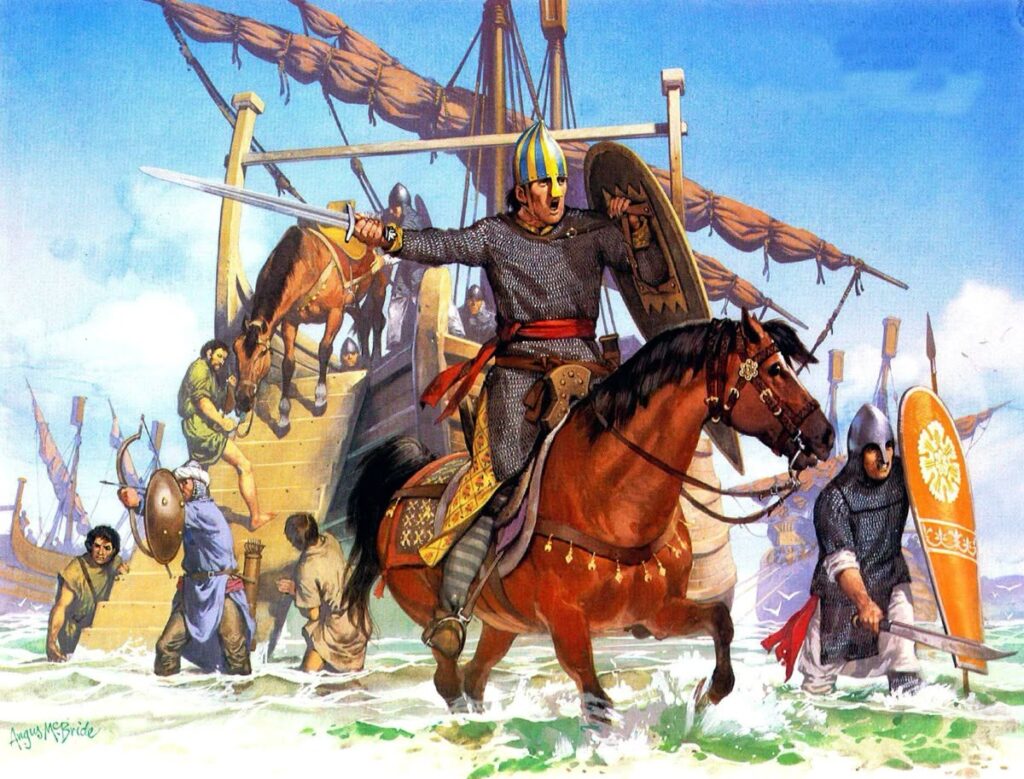
The conroi achieved legendary status during the Crusades.
The Crusader armies were never particularly large.
Even at its height, the Kingdom of Jerusalem could rarely field more than a thousand heavy cavalry.
By Middle Eastern standards, this was a remarkably small force.
Yet superior organization compensated for limited numbers.
Every baron brought his own conroi.
Every count arrived with his own military household.
On the battlefield, these units merged into a single devastating cavalry line.
At the Battle of Dorylaeum, coordinated charges by multiple conrois helped the Crusaders survive repeated Seljuk attacks.
At Arsuf in 1191, Richard the Lionheart held his army in formation under relentless pressure from Saladin’s forces. Only when he finally gave the order did several conrois charge simultaneously into the Muslim cavalry.
That single coordinated assault changed the course of the battle.
Victory belonged not to individual heroes.
It belonged to disciplined formations.
The Conroi as a Social Elevator
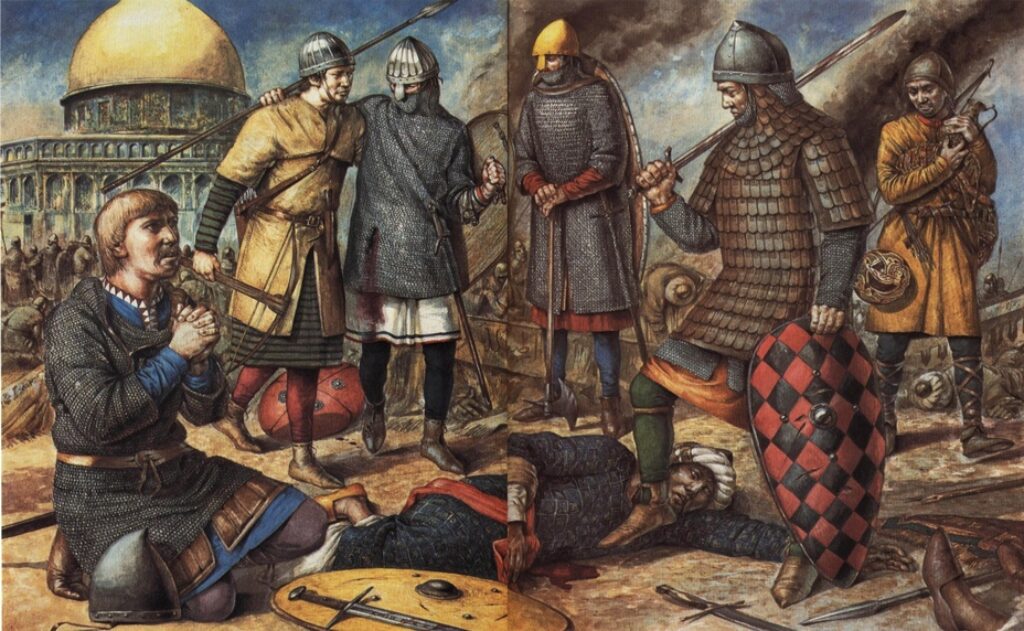
For many young knights, the Crusades represented far more than a religious pilgrimage.
They offered a chance to begin life anew.
In the East, a successful warrior might acquire land.
A castle.
A title.
Vassals of his own.
Many future rulers of the Crusader states began exactly this way.
Bohemond of Taranto came from a family where inheritance had become the source of bitter conflict.
Tancred possessed little wealth of his own.
Baldwin of Boulogne had originally been intended for a career in the Church before joining the First Crusade.
Each of them had once been nothing more than a knight serving in another man’s conroi.
A few years later, some commanded kingdoms.
In this sense, the Crusades became more than a religious movement.
They became one of medieval Europe’s greatest engines of social mobility for ambitious younger sons of the nobility.
Why the Conroi Disappeared
Over time, Europe changed.
Feudal retinues gradually gave way to permanent standing armies.
Personal feudal bonds were replaced by centralized military institutions.
At the same time, military technology evolved.
Swiss pike formations.
Powerful crossbows.
Eventually firearms.
These developments steadily reduced the effectiveness of the traditional heavy cavalry charge.
By the fifteenth century, the term conroi had largely disappeared from military vocabulary.
Yet its fundamental idea survived.
Modern armies still depend upon small units whose success is determined less by individual heroism than by teamwork and mutual trust.
In that sense, the conroi can be seen as one of Europe’s earliest truly professional tactical formations.
More Than a Formation—A Generation
Today, historians usually define the conroi simply as a small unit of heavy cavalry.
The definition is accurate.
But it is incomplete.
The conroi was far more than a battlefield formation.
It became a home for young noblemen whose inheritance laws offered them little future.
It was where younger sons learned command, survived their first campaigns, forged lifelong friendships, and gradually transformed themselves into independent lords.
Within these brotherhoods grew the generation that founded the Principality of Antioch, the County of Edessa, the County of Tripoli, and the Kingdom of Jerusalem.
They left Europe with no lands or titles.
Often, all they possessed fit into their saddlebags: a horse, a mail hauberk, a lance, and a sword.
But they carried something more valuable than gold.
They possessed experience gained through fighting together, complete trust in one another, and the discipline to stand shoulder to shoulder in battle.
Perhaps that is why the word conroi deserves to be remembered alongside the great battles of the Crusades.
For it was within these small brotherhoods that the military power was forged that shaped the destiny of the Holy Land for nearly two centuries.