Why the Crusaders Failed to Hold the Holy Land: Seven Mistakes That Destroyed the Kingdom of Jerusalem

In popular culture, the fall of the Kingdom of Jerusalem is often reduced to a single disaster—the Battle of Hattin in 1187. Saladin crushed the Crusader army, captured Jerusalem, and, at first glance, the story of the Latin Kingdom in the Holy Land came to an end.
The reality, however, was far more complex.
The Crusader states survived for nearly two centuries. Even after the loss of Jerusalem, the Latins retained their coastal strongholds, made Acre their new capital, and endured until 1291, when the Mamluks captured the last major Crusader fortress on the mainland. This was not the story of a state destroyed overnight, but of a long process of decline in which a kingdom that had succeeded in conquest ultimately failed at the far more difficult task of becoming a stable and self-sustaining state.
Winning the War Was Easier Than Building a Kingdom
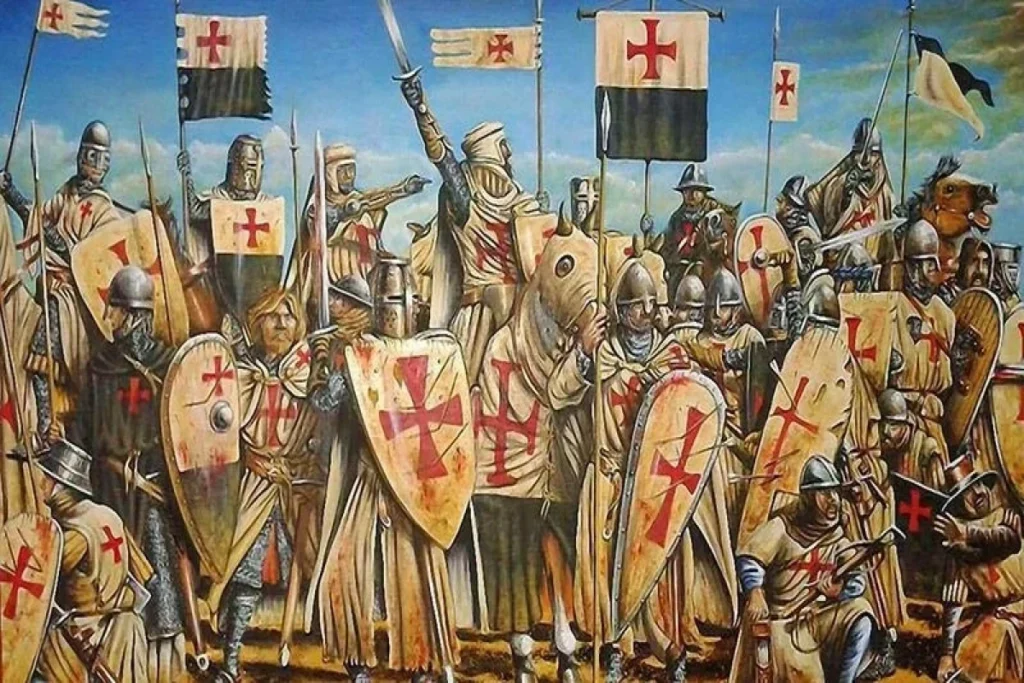
The First Crusade ended in what seemed like an almost miraculous victory. In 1099, the Crusaders captured Jerusalem and established several Latin states in the Levant: the Kingdom of Jerusalem, the County of Edessa, the Principality of Antioch, and the County of Tripoli.
Yet the first major problem emerged almost immediately.
Most participants in the First Crusade had never intended to remain in Palestine permanently. For many, the expedition was an armed pilgrimage—a sacred vow fulfilled, a path toward salvation—not the beginning of a new life. Once Jerusalem had been secured, a large portion of the Crusaders simply returned home.
As a result, defending and settling the Holy Land fell upon a much smaller population than the one that had conquered it.
The Kingdom of Jerusalem became a state founded by conquerors but lacking enough settlers to sustain it.
The Demographic Trap
This was the greatest weakness of the Latin East.
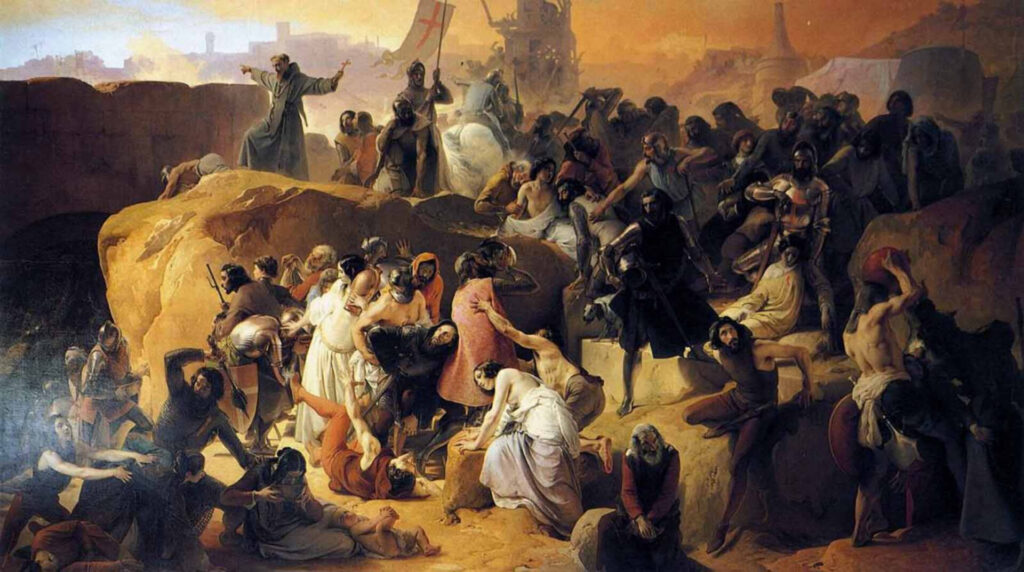
The Franks never formed the majority of the population. Although historians continue to debate the exact numbers, even the most generous estimates suggest that the Latin settlers represented only a minority. Alongside them lived hundreds of thousands of local inhabitants: Muslims, Eastern Christians, Armenians, Syrians, Greeks, Jews, Druze, and many other communities.
In practice, this meant that the Crusaders ruled as a military elite over a country whose population spoke different languages, followed different customs, and generally did not view the Latins as their own rulers.
Such a state could survive only under three conditions: a continuous flow of settlers from Europe, a strong centralized government, and a successful policy of integrating the local population.
The Crusaders ultimately achieved none of these.
They Never Became a Settler Society
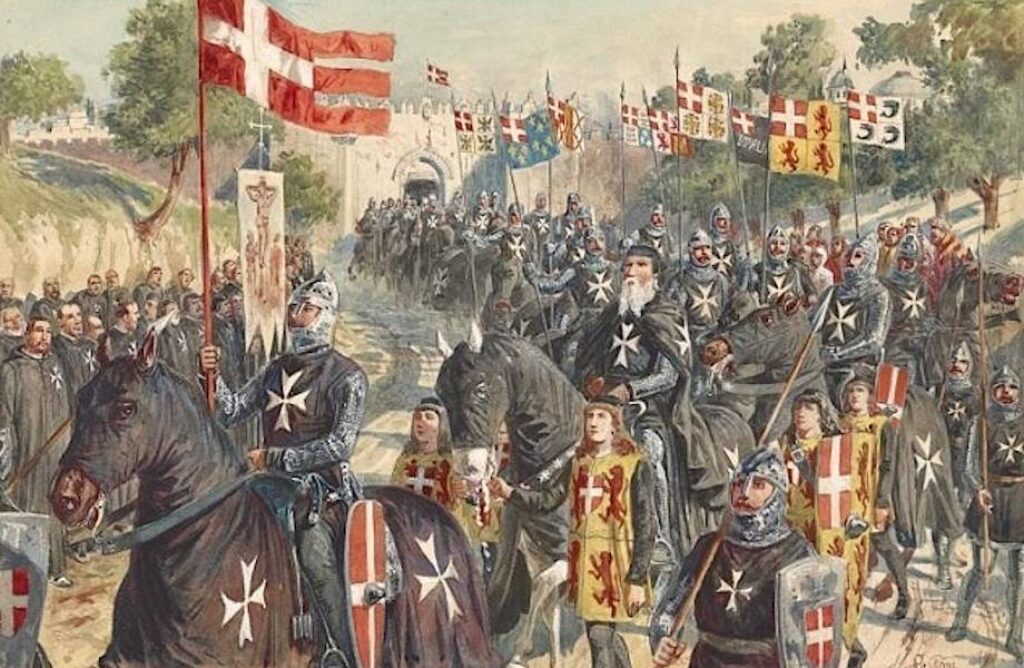
Compared to other successful colonial projects of the Middle Ages, one difference immediately stands out: there was never a large-scale migration to the Holy Land.
Frankish settlements certainly existed beyond the major cities, and historians have identified rural villages inhabited by Latin settlers as well. Nevertheless, these communities were too small to alter the region’s demographic balance.
The Crusaders never transformed Palestine into a “New France.”
There was no massive influx of farmers, craftsmen, merchants, shipbuilders, or families prepared to make the Levant their permanent home. No comprehensive land settlement program emerged, nor did the kingdom develop long-term immigration policies capable of turning a military frontier into a thriving society.
The Crusader states remained military outposts rather than true settler kingdoms.
An Economy Dependent on the Sea
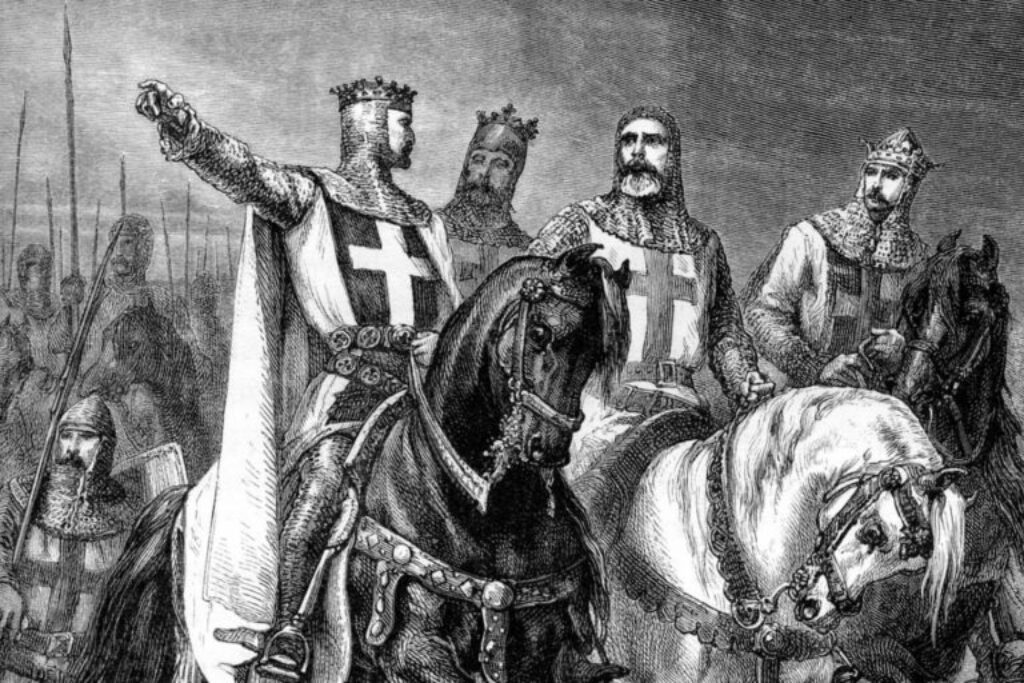
The Kingdom of Jerusalem was tied to Europe primarily through maritime trade.
Its ports served as gateways for pilgrims, money, weapons, reinforcements, merchants, and luxury goods. Coastal cities became the kingdom’s economic heart, while the Italian maritime republics—Venice, Genoa, and Pisa—gradually became indispensable partners.
The Crusader economy was deeply integrated into commercial routes linking Europe with Syria, Egypt, and the wider Islamic world. Trade, customs duties, and the movement of eastern goods generated considerable wealth. Before Saladin’s conquests, agriculture also played an important role, producing olives, grapes, wheat, and barley across much of the kingdom.
Yet the Crusaders never fully embraced the implications of this reality.
If a state’s prosperity depends upon the sea, then its greatest investments should naturally be directed toward fleets, ports, shipyards, commerce, and maritime diplomacy.
Instead, the Kingdom of Jerusalem continued to think of itself primarily as a feudal land kingdom rather than as a great commercial power of the eastern Mediterranean.
A European State in the Wrong Environment
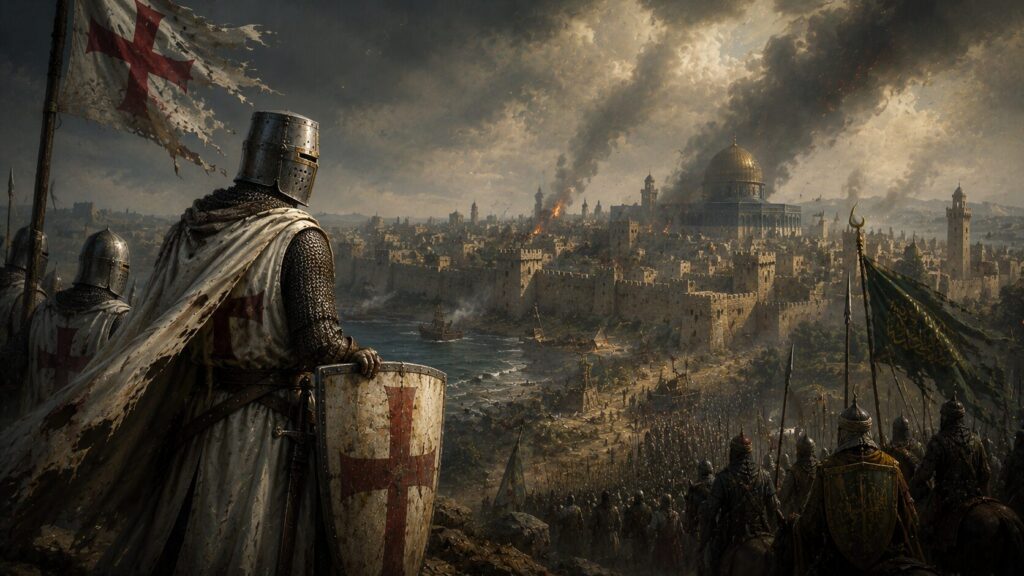
The Crusaders transplanted the familiar institutions of Western European feudalism into the Levant.
During its early decades, the kings of Jerusalem exercised considerable authority. Over time, however, powerful barons strengthened their own positions, while royal power weakened. Major feudal lords controlled extensive territories and castles, and important political decisions increasingly passed through the Haute Cour—the High Court of the kingdom.
Such a system functioned reasonably well in France or England.
On a hostile frontier surrounded by ambitious enemies, however, it proved dangerously inefficient.
The Kingdom of Jerusalem required a centralized military administration capable of raising armies quickly, coordinating defenses, controlling fortresses, and maintaining coherent foreign policy.
Instead, it became increasingly consumed by noble rivalries, dynastic disputes, factional politics, and competing personal ambitions.
As long as the Muslim world remained divided, these weaknesses could be tolerated.
Once it became politically united, they became fatal.
They Failed to Integrate the Local Population
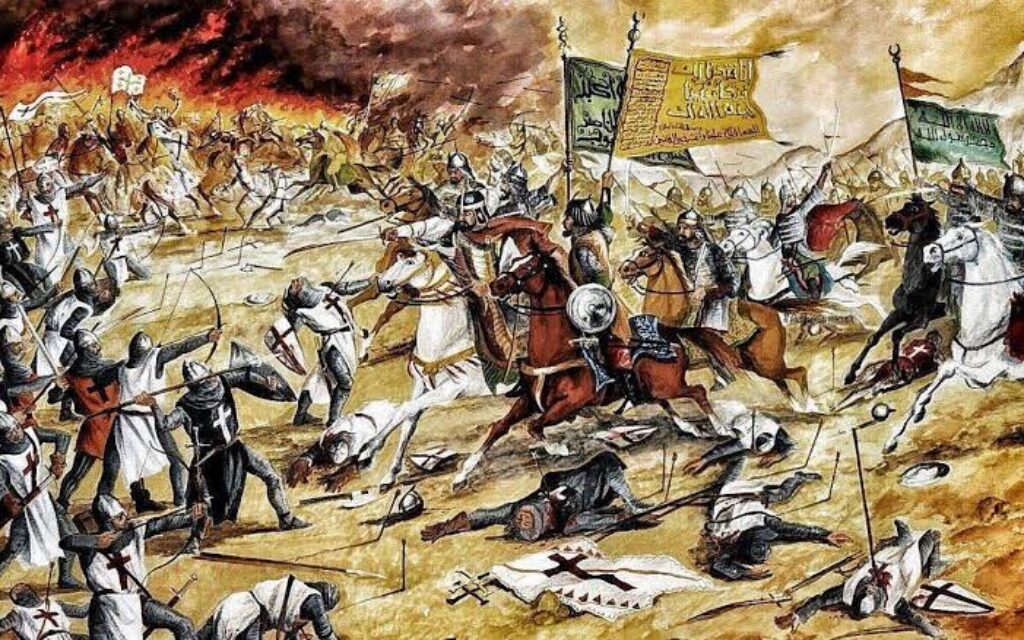
Another critical weakness was the limited integration of the kingdom’s native inhabitants.
This problem extended well beyond relations with Muslims.
The Crusader states were home to numerous Eastern Christian communities, including Greeks, Syriac Christians, Armenians, and Maronites. These populations could have become a natural social foundation for the Latin kingdoms. They possessed their own traditions, church hierarchies, urban culture, and centuries of experience living between Byzantium and the Islamic world.
Yet the Franks never succeeded in forging a genuinely shared political identity.
The kingdom remained fundamentally Latin in both its ruling elite and its legal institutions. Local inhabitants could trade, pay taxes, serve in various capacities, and live alongside the Franks, but they rarely became part of the political establishment itself.
In this respect, the Crusaders contrasted sharply with the Norman rulers of Sicily, who—despite many tensions—created a remarkably flexible multicultural kingdom where Latins, Greeks, and Muslims all played meaningful roles.
No comparable synthesis ever emerged in the Kingdom of Jerusalem.
Saladin Was Not the Cause—He Was the Catalyst
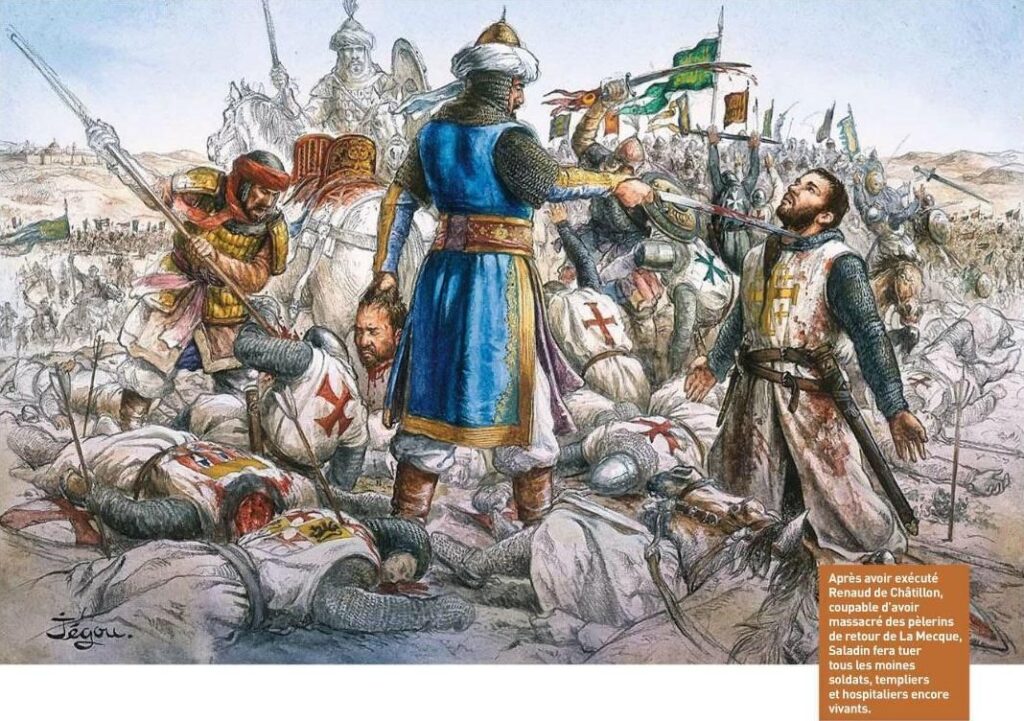
There is no question that Saladin was an exceptional military and political leader.
He succeeded in uniting Egypt and Syria into a powerful state and exploited the moment when the Kingdom of Jerusalem had become weakened by internal divisions. The disaster at Hattin resulted not only from Saladin’s military brilliance but also from the fact that the Crusaders committed nearly all of their available forces to a single campaign.
When that army was destroyed, there was simply no reserve left to replace it.
This was the kingdom’s fundamental weakness.
A strong state can lose a battle and recover.
The Kingdom of Jerusalem lost far more than an army at Hattin—it lost the narrow military elite upon which its entire political system depended.
Saladin did not create the structural weaknesses of the Crusader states.
He merely became the leader capable of exploiting them at precisely the right moment.
Why the Crusaders Lost the Holy Land
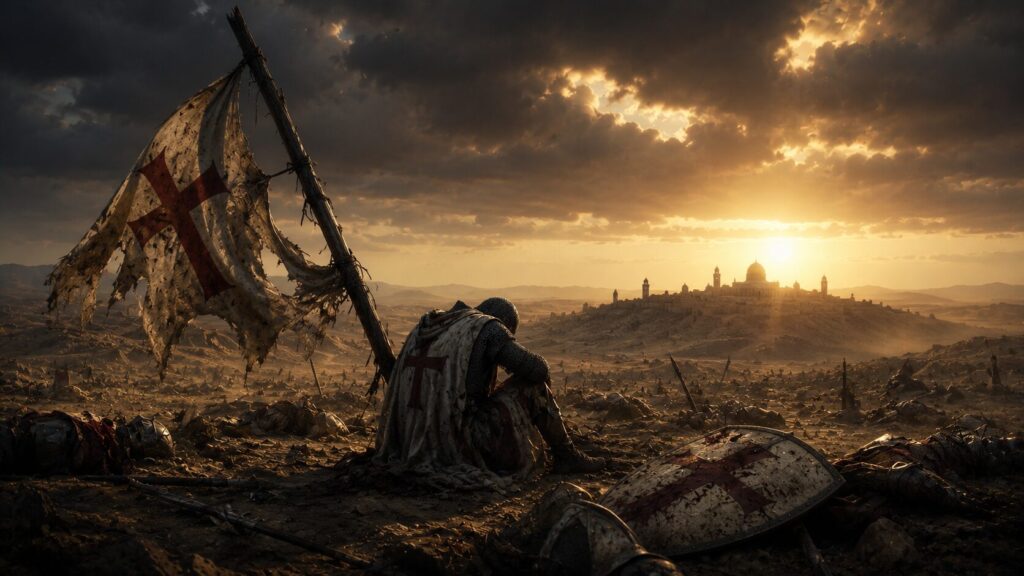
The Kingdom of Jerusalem was not doomed from the moment it was founded. It possessed formidable castles, enjoyed the support of Europe, occupied one of the world’s most strategically valuable regions, and fielded experienced warriors. Its resilience was remarkable: even after losing Jerusalem itself, the Crusader states survived for more than another century.
Yet the model upon which they were built ultimately proved unsustainable.
They failed to create a strong demographic foundation.
They never developed into a true settler society.
They did not successfully integrate the local population into their political system.
They allowed centralized royal authority to weaken.
Most importantly, they continued trying to build a miniature version of feudal France in the Levant, even though the geography, economy, and politics of the region demanded an entirely different kind of state.
Perhaps the Crusaders’ greatest missed opportunity was not their inability to defend every fortress in Palestine, but their failure to transform their realm into a maritime commercial power—with Acre as its capital, a powerful navy, fortified ports, strong alliances with the Italian maritime republics, and a central role as the intermediary between Christian Europe and the Islamic East.
But that is another story.
It is the story of what might have happened if the Crusaders had abandoned the dream of recreating France in the Holy Land—and instead built an eastern Venice.