
Sarmat Returns Again: Russia Promises to Deploy the Heaviest Nuclear Missile of the Modern Era

The Missile That Was Supposed to Enter Service Years Ago
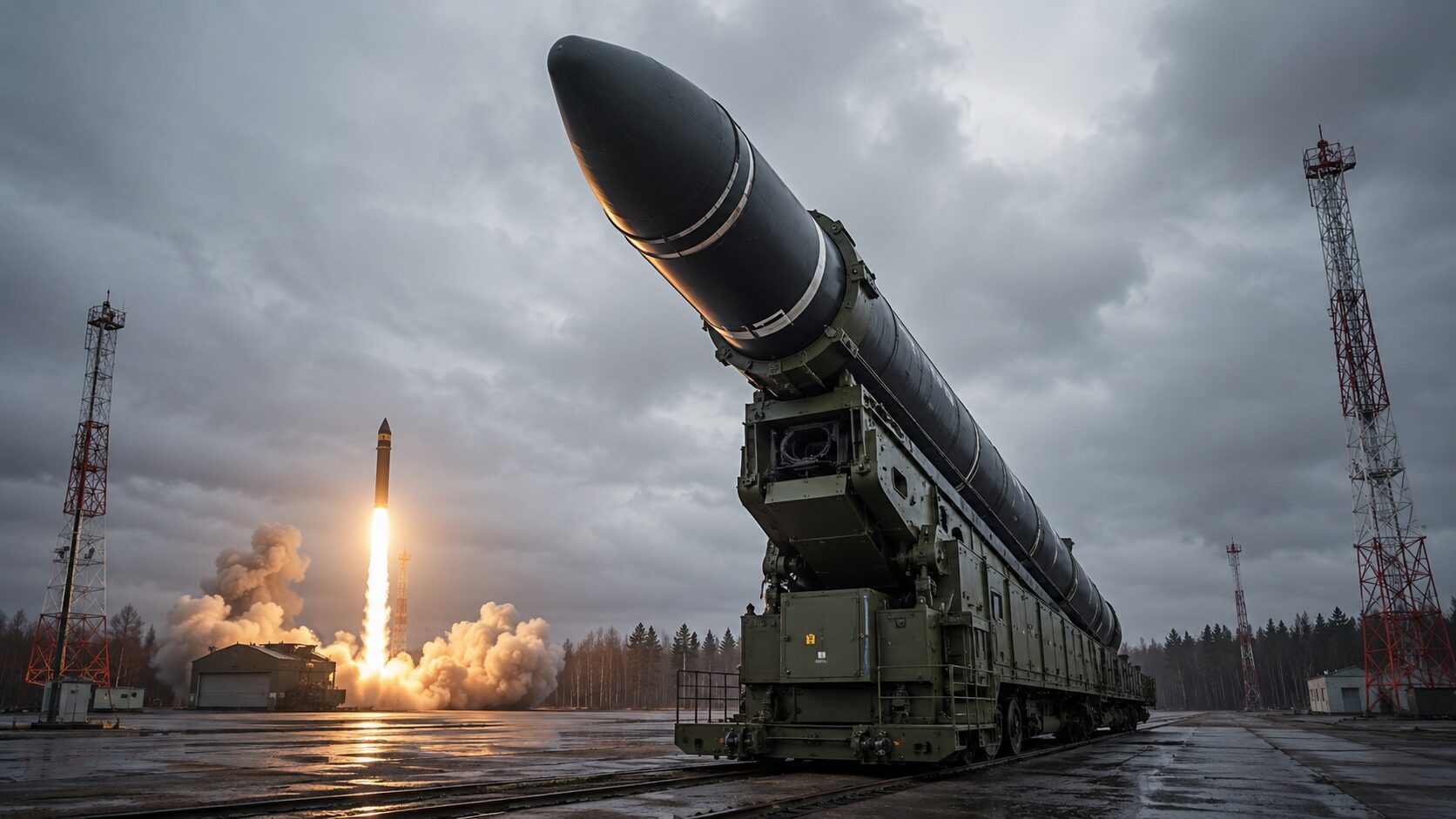
The RS-28 Sarmat has long occupied a strange position in modern military history.
On the one hand, it is presented by Russia as the ultimate symbol of nuclear deterrence — a super-heavy intercontinental ballistic missile capable of carrying massive payloads across global distances. On the other, the program has been plagued by delays, failed tests, technical problems, and repeated postponements.
Now, Moscow once again claims that the missile is finally ready.
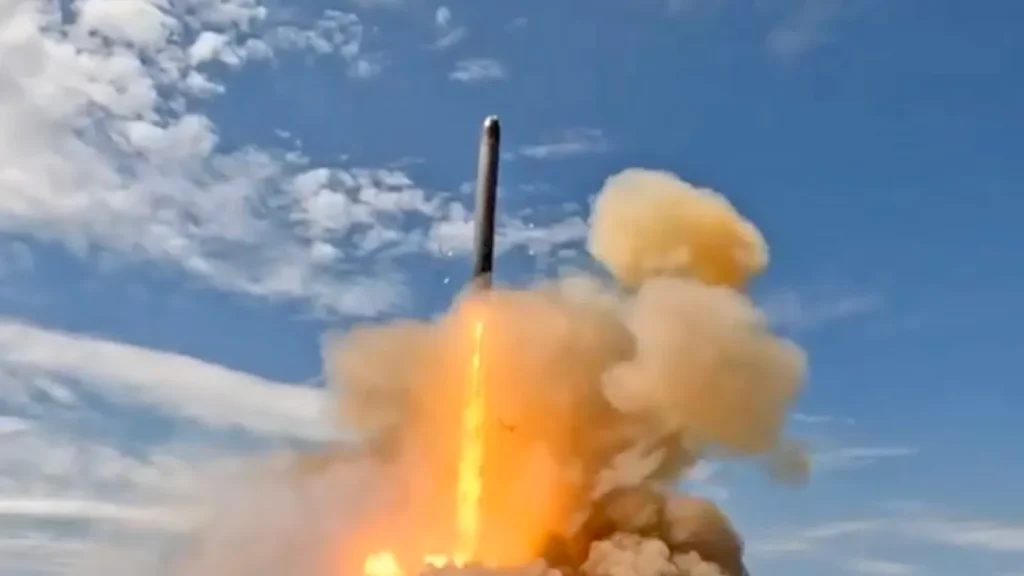
On May 12, 2026, Russian President Vladimir Putin announced that the Sarmat would be placed on combat duty by the end of the year following what Russian officials described as a successful test launch.
If that actually happens, Russia will finally deploy one of the most ambitious strategic weapons systems of the post-Soviet era.
The Heaviest Missile of the Nuclear Age
The Sarmat was designed as the replacement for the Soviet-era R-36M Voevoda — known in NATO terminology as “Satan.” The comparison is not accidental. The Sarmat belongs to the same category of super-heavy silo-based intercontinental ballistic missiles built around overwhelming payload capacity rather than compact efficiency.
And in terms of raw size, it is enormous.
The missile reportedly weighs more than 200 tons, stretches over 35 meters in length, and is capable of carrying multiple independently targetable nuclear warheads, hypersonic glide vehicles, or combinations of penetration aids designed to overwhelm missile defense systems.
In many ways, the Sarmat feels less like a “modern” missile and more like the final evolution of Cold War nuclear gigantism.
A Weapon Built for the Post–Cold War Nuclear Era
Unlike smaller mobile missiles designed primarily for survivability and flexibility, the Sarmat emphasizes maximum destructive potential. Russian officials claim the missile can carry extremely heavy MIRV payloads or Avangard hypersonic glide vehicles capable of maneuvering during flight.
Particularly important is its supposed ability to attack along non-traditional trajectories, including southern polar approaches intended to complicate American missile defense planning.
In essence, the missile was designed not simply to guarantee retaliation — but to guarantee penetration.
The Endless Delays
The Sarmat program officially began in the 2000s, with deployment originally expected around 2020.
That did not happen.
Instead, the missile became associated with a long chain of setbacks. Some tests succeeded, others reportedly failed, and several incidents attracted particular attention among Western analysts. One failed launch in 2024 reportedly destroyed a test silo, while another problematic test was reported in late 2025.
This created growing skepticism around the project.
The Sarmat increasingly resembled one of those massive strategic weapons programs that existed more effectively in propaganda than in operational reality.
Which is precisely why the latest Russian announcement matters.
Why the Timing Matters
The renewed focus on the Sarmat comes at a particularly important moment.
The last major U.S.–Russian nuclear arms control agreement, New START, expired in February 2026. At the same time, the war in Ukraine and the broader confrontation between Russia and the West have pushed nuclear signaling back into the center of geopolitical rhetoric.
In this environment, strategic weapons serve not only military purposes, but political and psychological ones as well.
The Sarmat is part of that message.
Its deployment would symbolize that Russia continues to modernize its nuclear triad despite sanctions, war, and industrial strain.
The Myth and Reality of “Invincible” Weapons
Russian officials often describe the Sarmat in almost apocalyptic terms.
Putin himself has repeatedly referred to it as the “most powerful missile in the world,” claiming it can bypass all existing and future missile defense systems.
Western analysts are far more cautious.
Many experts note that Moscow has made similarly sweeping claims about other strategic systems in the past, and that the Sarmat’s troubled testing history suggests the program remains more complicated than official rhetoric implies.
Still, even critics generally agree on one thing:
If successfully deployed at scale, the Sarmat would become one of the most powerful nuclear delivery systems on Earth.
The Last Giant of the Missile Age
What makes the Sarmat especially interesting is how anachronistic it feels.
Modern military technology increasingly emphasizes precision, miniaturization, drones, cyberwarfare, and distributed systems. The Sarmat moves in the opposite direction — toward overwhelming size, payload, and destructive capacity.
It is a weapon born from Cold War logic surviving deep into the 21st century.
A giant liquid-fueled missile designed not for limited war, but for civilization-ending deterrence.
A Missile From Another Era
Whether the Sarmat truly becomes fully operational this time remains to be seen.
The program has already missed multiple deadlines, and independent verification of Russian claims remains limited.
But the missile already occupies an important symbolic role.
The Sarmat is not just another ICBM.
It is the embodiment of an older nuclear philosophy — one built around the idea that absolute destructive power itself guarantees strategic stability.
A weapon from the Cold War.
Still trying to enter service in a very different world.






