Cities That Could Not Be Conquered: The Fortress Cities of the Middle Ages

The Middle Ages were an era in which security was worth more than gold. Kingdoms collapsed within a single generation, kings died in civil wars, nomadic armies emerged from the степи, pirates came from the sea, and warfare seemed almost endless. In such a world, a city without walls was effectively doomed. That is why Europe, the Middle East, and Asia produced one of the most remarkable phenomena of the medieval world — fortress cities transformed into gigantic defensive machines.
Some of them were so heavily fortified that their sieges became legends. Others were built in places that seemed almost absurd from a military perspective: atop sheer cliffs, deep within deserts, surrounded by the sea, or hidden high in the mountains. And the more dangerous the world became, the more extraordinary these fortifications appeared.
Many of them still survive today as stone monuments to an age when a city literally had to be capable of surviving the end of the world.
Carcassonne — The Stone Monster of France
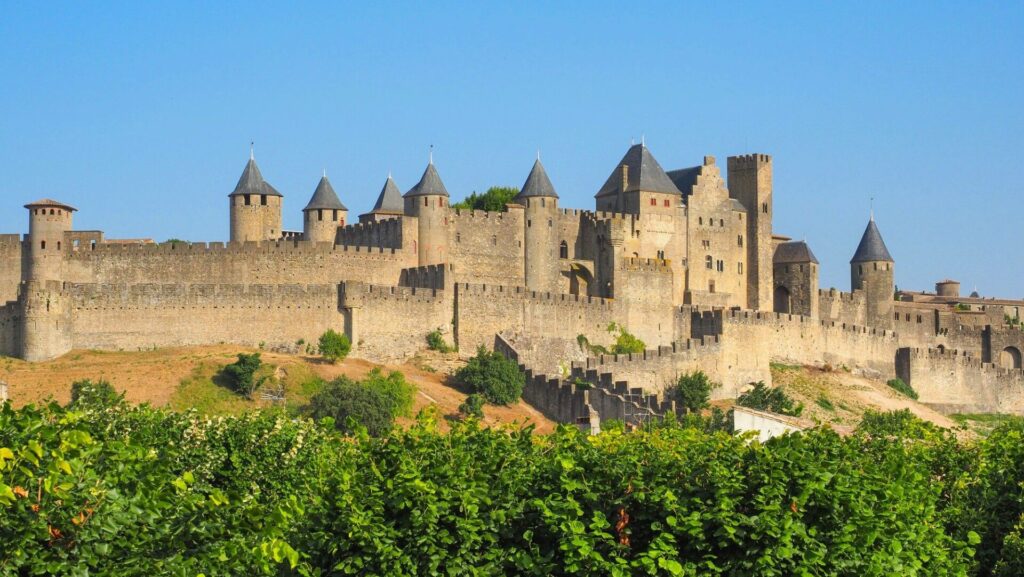
In France there is a place that looks less like a real city and more like something built from medieval imagination itself. Carcassonne rises above the Aude Valley almost like a fantasy film set. Double walls, massive towers, endless battlements — the city is preserved so perfectly that modern visitors often struggle to believe they are looking at an authentic medieval fortress rather than an enormous historical reconstruction.
Yet in the thirteenth century, Carcassonne was not a tourist attraction but one of the most important strongholds in southern France. During the Albigensian Crusade, it became one of the centers of Cathar resistance against the armies of northern French nobles and papal forces.
The strength of Carcassonne lay not only in its walls. Medieval engineers understood perfectly well that a single defensive line would eventually fail. The city therefore received two separate rings of fortifications. The outer wall was designed to slow attackers and expose them to archers and crossbowmen positioned on the inner defenses. The space between the walls became a deadly killing ground during any assault.
For the thirteenth century, it was almost a perfect defensive system.
Mont-Saint-Michel — The Fortress Protected by the Sea
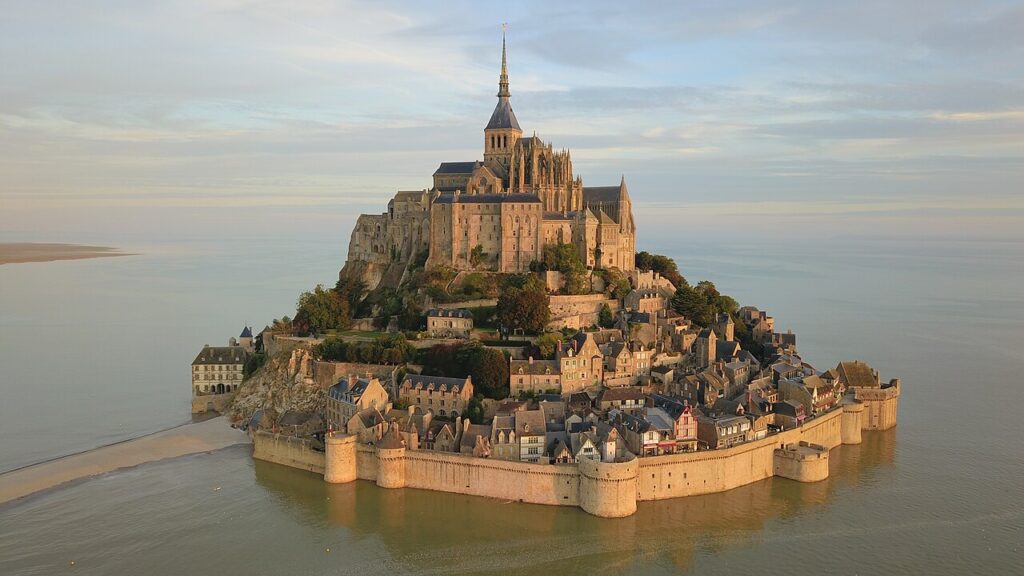
If Carcassonne resembles the ideal medieval city, then Mont-Saint-Michel feels almost impossible. The great abbey and fortress were built atop a tiny rocky island off the coast of Normandy.
At high tide, the sea completely isolated Mont-Saint-Michel from the mainland. During low tide, it became possible to walk to the island — but only for those who knew the safe route. The surrounding sands were notoriously dangerous and could easily swallow both horses and travelers.
During the Hundred Years’ War, the English attempted to capture the fortress for years but never succeeded. A relatively small garrison held the island even while large parts of France fell under English control.
What makes Mont-Saint-Michel especially remarkable is that it was simultaneously both fortress and monastery. While wars raged outside, monks inside continued copying manuscripts and conducting religious services. In the medieval world, such a fusion of spiritual center and military stronghold was not unusual. The age was simply too dangerous for religion to exist separately from war.
Masada — The City That Chose Death Over Captivity
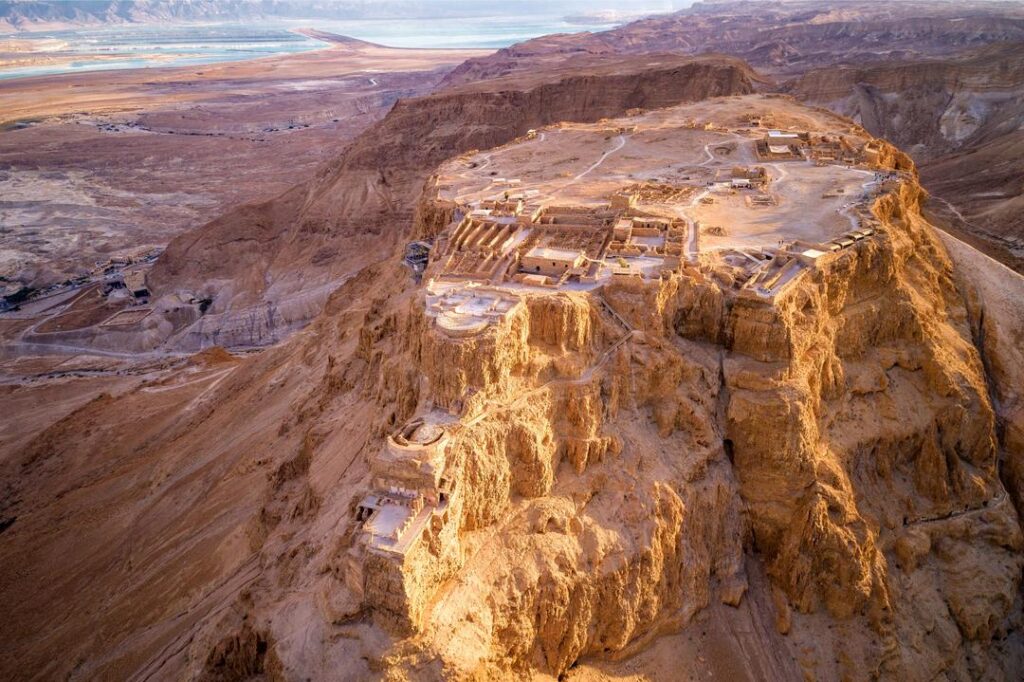
Although Masada technically belongs to antiquity rather than the Middle Ages, medieval imagination transformed it into an almost mythical fortress. The very concept of a city perched atop a colossal desert plateau appeared extraordinary even by ancient standards.
Masada stood high above the Judean Desert, accessible only by narrow paths where a small group of defenders could hold back an entire army.
During the Jewish revolt against Rome, Roman forces were forced to construct an enormous siege ramp simply to bring their war machines close enough to attack the walls. It was one of the most ambitious engineering projects of the ancient world, and its remains are still visible today.
Yet Masada became legendary because of its final chapter. When the defenders realized the fortress was about to fall, many reportedly chose death over slavery and captivity. The story quickly became a symbol of resistance, while the fortress itself entered history as one of the most famous citadels ever built.
Derbent — The Gate Between Worlds
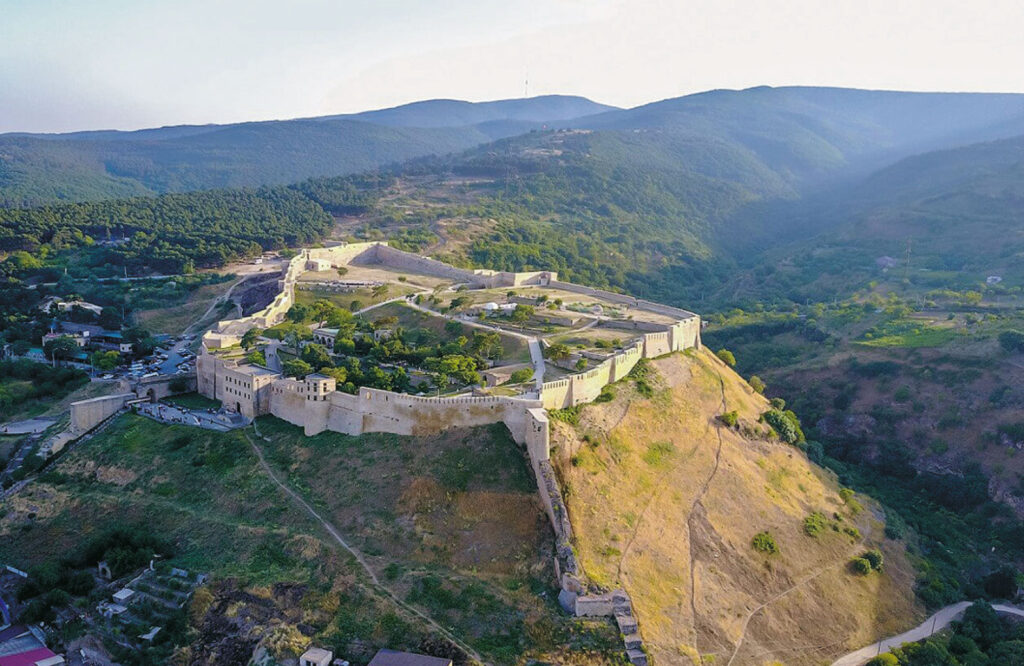
On the shores of the Caspian Sea stands one of the strangest fortified cities in Eurasia — Derbent. Its uniqueness was not merely in its walls, but in its geography. Between the sea and the Caucasus Mountains lay a narrow corridor only a few kilometers wide. For centuries, armies, traders, and conquerors passed through this route.
Whoever controlled Derbent effectively controlled the gateway between the north and south of Eurasia.
Persian rulers transformed the city into an immense defensive system. Massive stone walls stretched directly into the sea and extended far into the mountains on the opposite side. To invaders, it appeared almost as though humanity had artificially sealed the passage between entire worlds.
It is hardly surprising that Derbent was fought over for centuries. Arabs, Khazars, Mongols, Persians, Turks, and Russian armies all passed through its gates.
Kumbhalgarh — The Great Wall of India
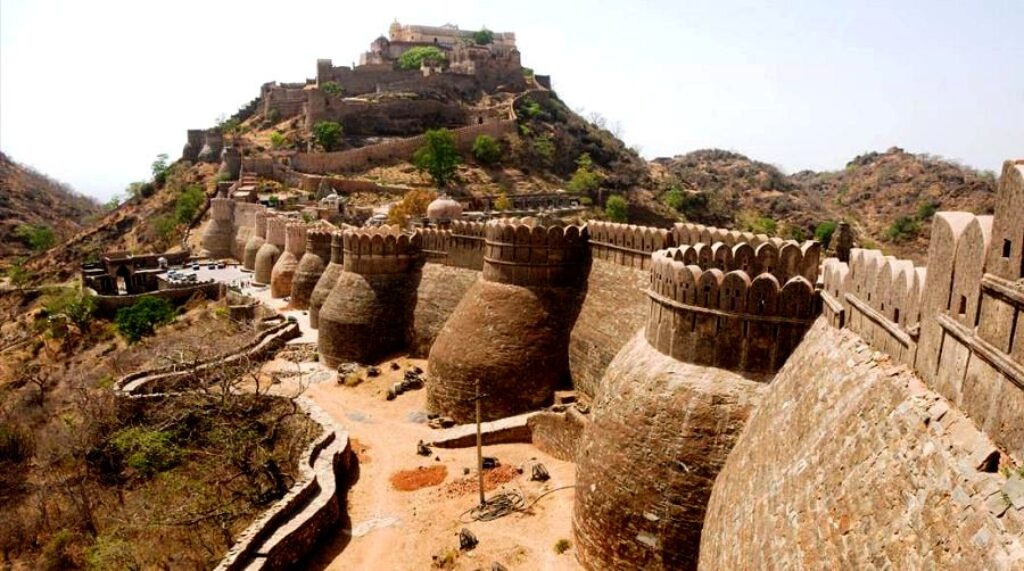
When people think of gigantic fortresses, they usually imagine Europe or China. Yet one of the most impressive defensive systems of the medieval world stands in India. Kumbhalgarh Fort is surrounded by walls stretching more than 36 kilometers.
The fortress is so enormous that it is often called “The Great Wall of India.”
Kumbhalgarh was constructed in the fifteenth century by the rulers of Mewar, a kingdom constantly at war with the Muslim sultanates of northern India. Built high in the Aravalli hills, the fortress possessed walls so wide in places that several horsemen could ride side by side across them.
Inside the fortifications stood palaces, temples, water reservoirs, and entire settlements. Kumbhalgarh was not merely a fortress — it was a fully functioning city capable of surviving long sieges in near-total isolation.
A World Where Cities Had to Survive the Apocalypse
Today, most fortresses appear romantic. Tourists walk along the walls, photograph towers, and buy souvenirs. But medieval people saw them very differently.
To them, a fortress represented the final boundary between life and chaos.
Beyond the walls lay famine, war, raids, and massacre. That is why medieval cities gradually transformed into enormous stone organisms, where every tower, loophole, and curve of a wall existed for a single purpose — to give people a chance to survive.
And the darker the age became, the more extraordinary the fortresses themselves grew.
source https://alternathistory.ru/goroda-kotorye-nevozmozhno-bylo-vzyat-kreposti-srednevekovya/