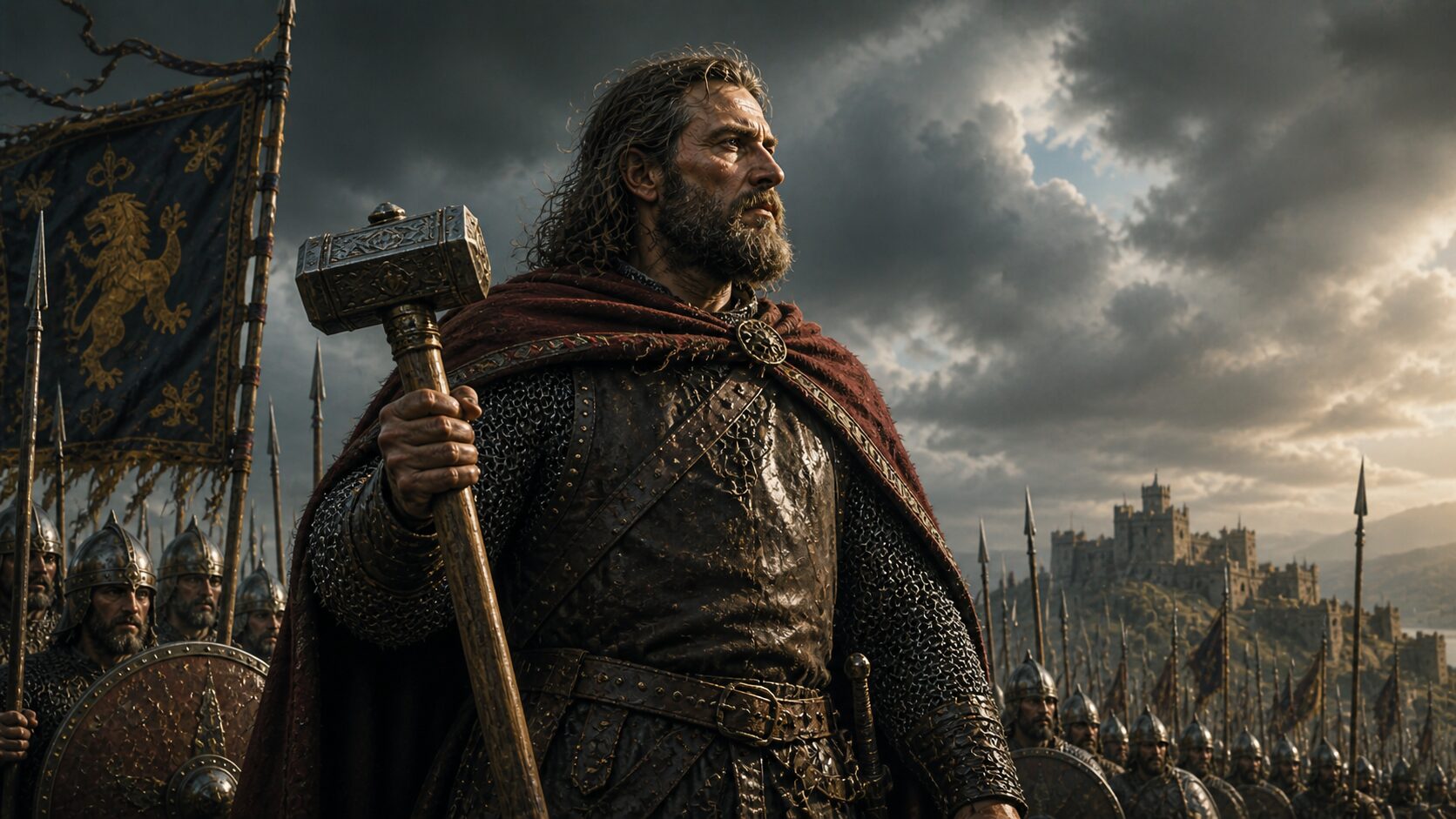
A World on the Edge of Change
The early 8th century was a time when the balance of power in Western Europe had not yet been decided. The Frankish realms were formally united, but in reality remained a loose structure of competing elites, where real authority increasingly concentrated not in the hands of kings, but in those who commanded armies.
At the same time, a new force was advancing from the south.
The Arab Caliphate, having conquered North Africa and the Iberian Peninsula, was pushing beyond the Pyrenees. Campaigns into Gaul were no longer raids on the periphery — they were probing strikes toward the heart of Europe.
In this moment of uncertainty, one figure emerged — a man who would later be called “the Hammer.”
The Rise of Charles Martel
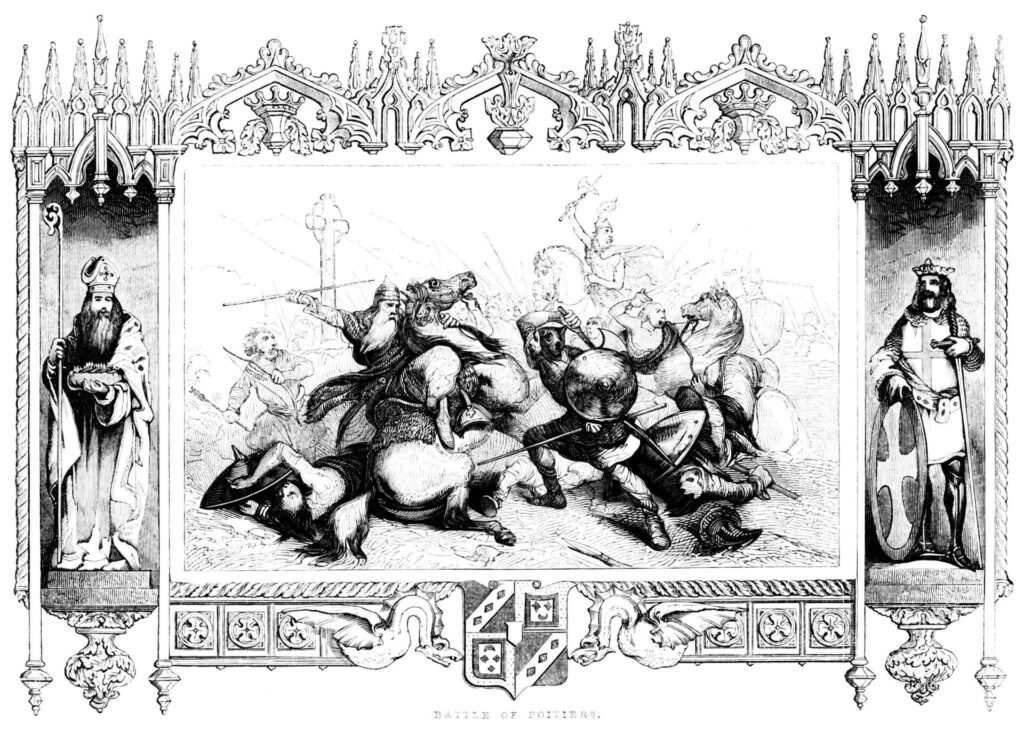
Charles Martel was not a king in the formal sense. He held the title of mayor of the palace, but in practice he became the real ruler of the Frankish state. Rising from a position that was once administrative, he turned it into a military dictatorship in everything but name.
His path to power was not smooth. Internal conflicts, rival factions, and regional fragmentation forced him to rely not on tradition, but on force. Yet it was precisely this environment that forged his style of rule — pragmatic, жесткий, and uncompromising.
By the 720s, Martel had effectively reunited the Frankish lands under his authority, laying the foundation for what would later become the Carolingian Empire.
The Threat from the South
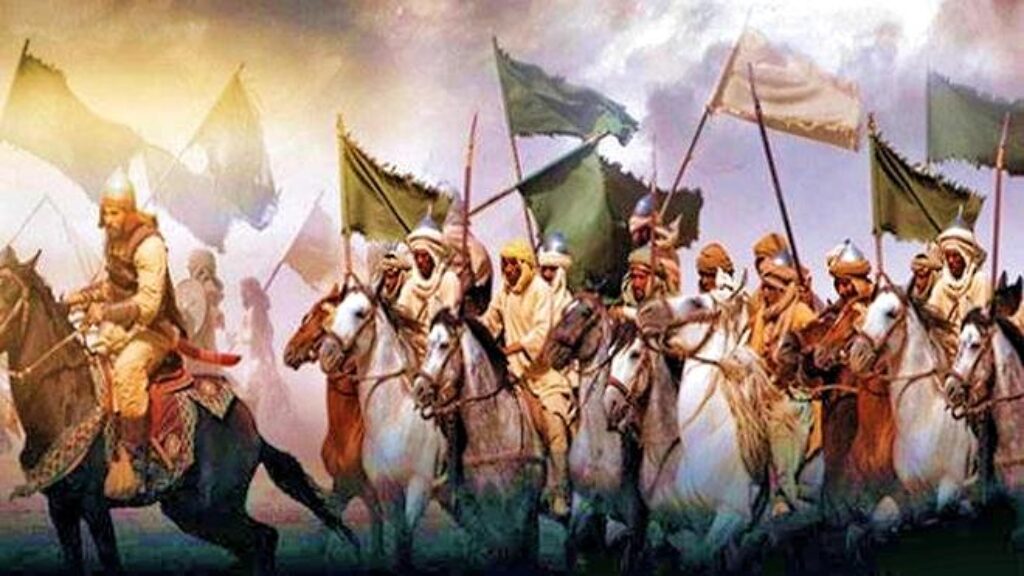
The Umayyad expansion into Western Europe was not accidental. After the rapid conquest of Iberia in the early 8th century, Muslim forces began moving northward, crossing the Pyrenees and striking into Aquitaine.
These were not isolated raids. They were part of a broader expansion of a vast empire that stretched from Spain to Central Asia.
In 732, a large army under the command of Abd al-Rahman advanced deep into Gaul. Its objective was not entirely clear — plunder, expansion, or both — but its direction was unmistakable.
The road led north.
The Battle That Became Legend
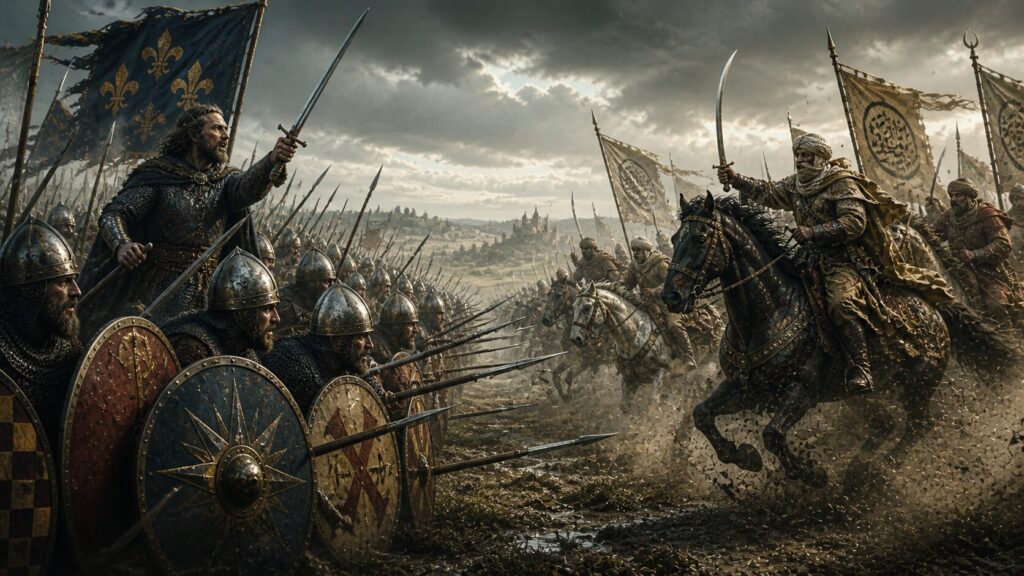
The confrontation took place somewhere between Tours and Poitiers.
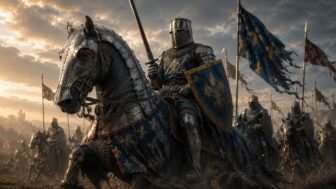
Here, Martel made a decision that would define his legacy. Instead of seeking maneuver warfare, he chose position and discipline. His army — largely infantry — took up a defensive formation, absorbing the attacks of the Umayyad cavalry.
The battle was long, tense, and uncertain.
But in the end, the Frankish line held.
The Muslim army was defeated, and its commander killed. The advance into Gaul was halted, and the invaders retreated beyond the Pyrenees.
Did He “Save Europe”?
The significance of the Battle of Tours has been debated for centuries.
Some historians have called it one of the decisive battles of world history, arguing that it stopped the expansion of the Caliphate into Western Europe. Others suggest that its importance has been exaggerated, pointing out that logistical limits and internal problems may have already constrained further expansion.
The truth likely lies somewhere in between.
What is undeniable is that Martel’s victory secured his power and strengthened the Frankish state. It also marked a turning point after which large-scale incursions beyond the Pyrenees became far less likely.
The Hammer and His Legacy
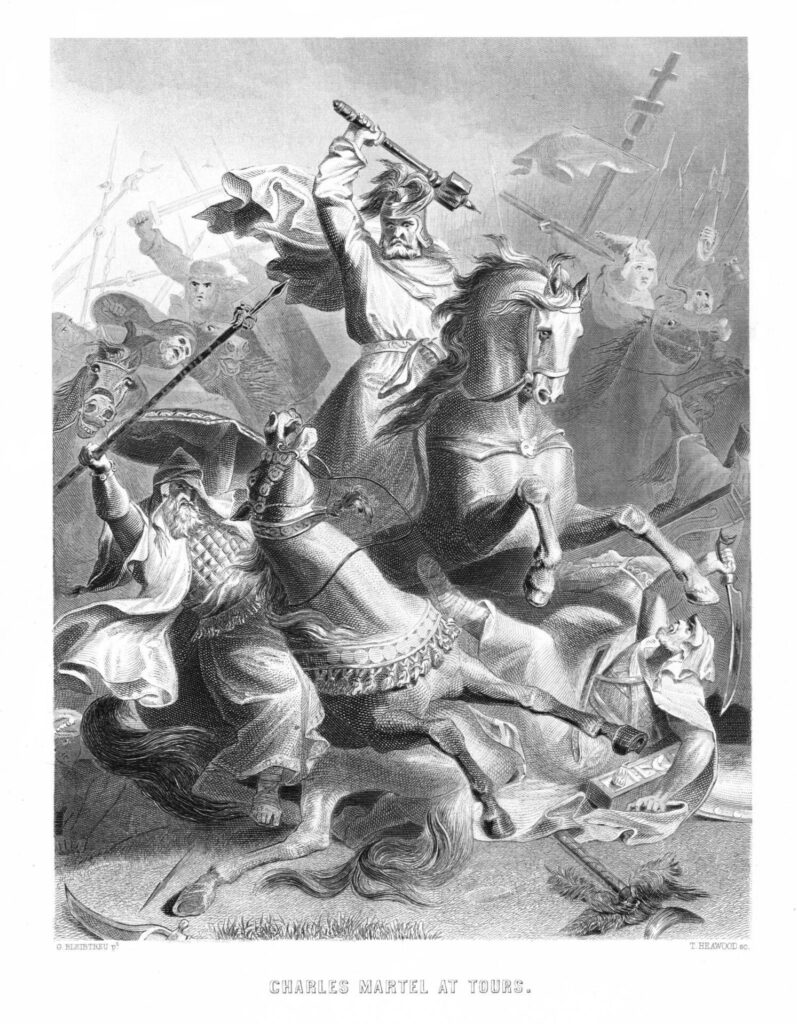
The nickname “Martel” — “the Hammer” — was given to him later, a reflection not of a single battle, but of his entire career as a commander who repeatedly broke his enemies.
Yet his most important legacy was not the battle itself.
It was what came after.
Martel created the military and political foundation upon which his descendants would build. His son, Pepin the Short, would become king. His grandson, Charlemagne, would create an empire that defined medieval Europe.
Without Martel, that chain might never have formed.
A Man at the Turning Point of History
Charles Martel stands at a crossroads where several possible Europes intersect.
Without him, the political consolidation of the Frankish world might have failed. Without his victory, the southern frontier of Europe might have looked very different. Without his reforms, the Carolingian Renaissance might never have taken place.
He did not create Europe as we know it.
But he held the line long enough for it to emerge.
source – https://alternathistory.ru/karl-martell-molot-kotoryj-uderzhal-evropu/